











IT Consulting Hourly Rates | 2026 Pricing Trends

Understanding IT consulting fees can be like attempting to read a translation from another country. Each company has its own rule, each consultant professes a different value, and each project appears to operate on its own terms. Still, learning how these fees are structured is the key to making good business sense.
Here’s the thing. IT consulting isn’t just about hiring someone to fix your systems or write a few lines of code. It’s about bringing in specialized knowledge that can help your company grow, cut costs, and keep up with technology that changes faster than most teams can handle.
According to recent forecasts, the global technology consulting market is expected to exceed $400 billion in revenue in 2026, underlining the growing demand for external technology expertise and digital transformation support.
In this guide, we’ll break down what shapes IT consulting rates, why they vary so widely, and how to know what’s actually worth paying for. Whether you’re a startup looking for technical direction or an established business planning a digital overhaul, this will help you see what fair pricing looks like and how to get the most value from your investment.
- IT consulting rates vary widely based on experience, project complexity, industry, company size, and location.
- The value of IT consulting comes from expertise, strategic guidance, and long-term business impact, not just hourly cost.
- Businesses should evaluate consultants on scope of services, reliability, and alignment with growth objectives.
- Calgary offers cost-effective IT consulting options without compromising quality.
- IT consulting involves guiding businesses on technology strategy, system implementation, and operational efficiency rather than just fixing technical issues.
- Rates depend on factors such as project scope, consultant expertise, industry compliance requirements, geographic location, engagement type, and client size.
- Digital transformation initiatives, including cloud adoption, automation, and cybersecurity, benefit significantly from IT consulting support.
- Industry-specific needs influence consulting rates, with highly regulated or technology-intensive sectors commanding higher fees.
- Company size affects rates, with small businesses paying less for simpler solutions and large enterprises paying more for complex, strategic guidance.
- Consultant experience impacts pricing, with junior consultants charging lower rates and senior consultants delivering high-value solutions for higher fees.
- Evaluating IT consulting costs should focus on outcomes, long-term ROI, communication, and strategic alignment rather than hourly rates alone.
- Choosing the right consultant ensures efficient project execution, reduced risk, and sustainable growth in a technology-driven environment.
What is IT Consulting?
IT consulting is the professional service of guiding businesses on how to best use technology to achieve their goals. It’s not limited to fixing issues or installing software. It’s about analyzing how a company operates, identifying opportunities to improve efficiency and building the right tech strategy to support long-term growth.
An IT consultant bridges the gap between business needs and technical execution. They help organizations choose the right tools, design secure systems, implement new technologies, and ensure everything works together smoothly. This often involves assessing current infrastructure, managing digital transformation, and advising on cloud solutions, cybersecurity, automation, or software development.
What this really means is that IT consulting helps companies make smarter technology decisions. Instead of guessing what might work, they rely on data-driven insights and expert planning. The result is not just better systems but a more competitive, adaptable, and future-ready business.
Also Read: Avail Right Calgary IT Support for Your App Development Needs
Why Businesses Need IT Consulting Services
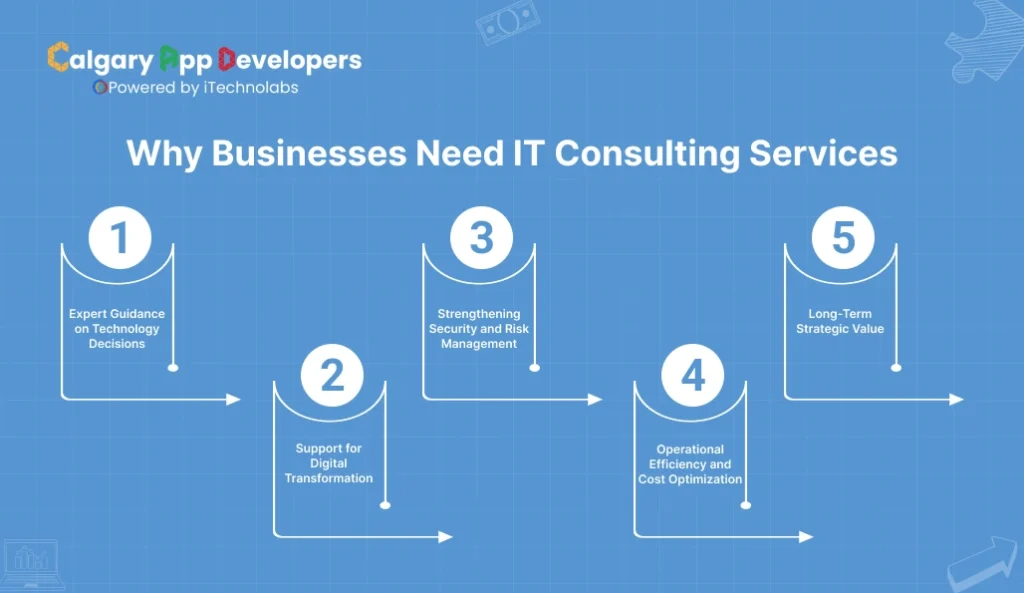
In today’s technology-driven world, businesses face constant pressure to adopt the right tools and maintain efficient systems. IT consulting services provide the expertise needed to navigate these challenges and ensure that technology supports business objectives rather than creating obstacles.
- Expert Guidance on Technology Decisions
Many organizations lack the in-house knowledge to evaluate and implement complex IT solutions. IT consultants assess existing systems, identify gaps, and recommend technologies that align with business goals. This reduces the risk of costly mistakes and ensures that investments deliver real value.
- Support for Digital Transformation
Adopting new technologies and modernizing processes is essential for growth, but it can be complicated. IT consultants create strategies for digital transformation, including cloud adoption, software upgrades, and process automation, helping businesses stay competitive and efficient.
- Strengthening Security and Risk Management
Cybersecurity threats and data breaches are major concerns for any organization. IT consulting services help design secure systems, enforce best practices, and ensure compliance with industry standards, protecting both data and reputation.
- Operational Efficiency and Cost Optimization
Beyond technology strategy, consultants identify inefficiencies in IT operations and recommend improvements that save time and reduce costs. This allows internal teams to focus on core business priorities without being weighed down by technical challenges.
- Long-Term Strategic Value
Investing in IT consulting is not just about solving immediate problems. It provides a foundation for future growth, helping businesses adapt to changing technology trends and make informed, strategic decisions over time.
By leveraging IT consulting services, businesses gain access to expertise, improve operational performance, and position themselves for sustainable growth in an increasingly digital environment.
The Role of IT Consulting in Digital Transformation
Digital transformation is no longer optional for businesses aiming to stay competitive. It involves rethinking processes, adopting new technologies, and creating systems that are flexible, efficient, and data-driven. IT consulting plays a critical role in making this transformation successful.
- Assessing Current Technology and Processes
Before any transformation can begin, it is essential to understand the existing technology landscape. IT consultants evaluate current systems, workflows, and infrastructure to identify gaps and inefficiencies. This analysis provides a clear starting point for planning the transformation.
- Strategic Planning and Roadmapping
IT consultants help organizations create a structured roadmap for digital transformation. They prioritize initiatives, set achievable goals, and ensure that technology investments align with business objectives. This structured approach reduces risks and maximizes return on investment.
- Implementing Technology Solutions
Whether it involves migrating to the cloud, integrating automation, or deploying advanced analytics, IT consultants guide the implementation of new technologies. They ensure systems are compatible, secure, and optimized for performance.
- Change Management and Training
Technology adoption requires more than installation; employees must adapt to new tools and workflows. IT consulting includes training programs and support to ensure smooth transitions, minimizing disruption and improving adoption rates.
- Continuous Improvement and Optimization
Digital transformation is an ongoing process. IT consultants provide ongoing guidance, monitor performance, and suggest improvements as business needs evolve. This ensures that technology continues to drive efficiency, innovation, and growth.
In essence, IT consulting serves as both the architect and the guide for digital transformation. It turns complex technology initiatives into structured, achievable strategies that deliver measurable business value.
Read Also: IT Outsourcing Calgary: A Smart Move for U.S. Businesses
Key Factors That Influence IT Consulting Rates
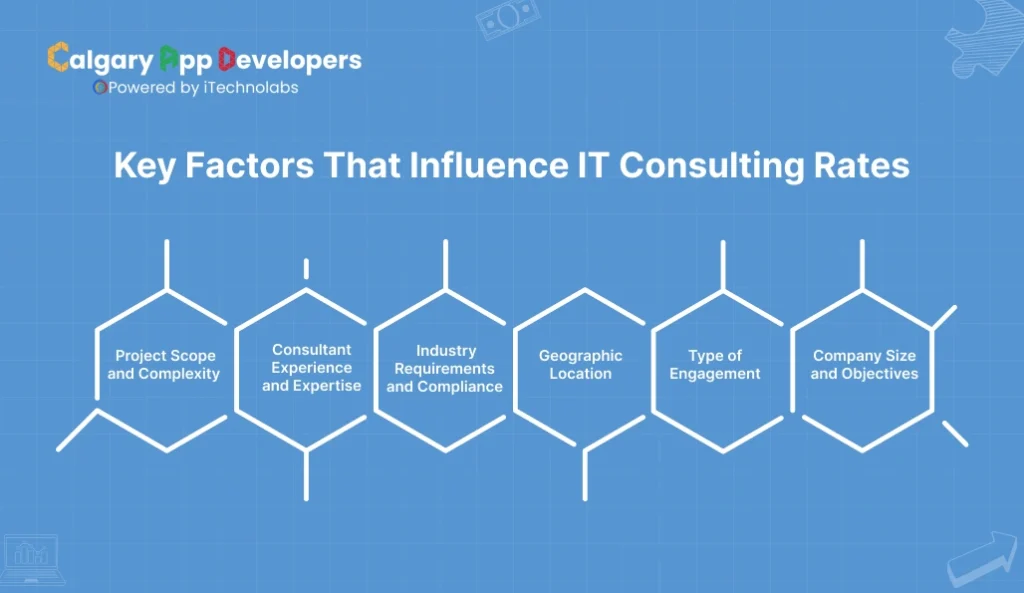
IT consulting rates vary widely, and the price you see is rarely arbitrary. Rates are influenced by several factors that reflect the complexity of the project, the consultant’s expertise, and the business value delivered. Understanding these factors helps you make informed decisions and ensures that you are paying for results rather than just hours worked.
- Project Scope and Complexity
The size and difficulty of the project play a major role in determining IT consulting rates. A simple system upgrade or troubleshooting task requires minimal planning and fewer hours, resulting in a lower rate. In contrast, projects that involve multiple systems, custom software development, advanced integrations, or migration to new platforms demand more time, specialized skills, and careful project management. Larger or more complex projects also involve higher risk, which consultants factor into their pricing. - Consultant Experience and Expertise
The level of experience and specialized knowledge a consultant brings has a direct impact on rates. Seasoned IT consultants have worked on diverse projects, understand industry best practices, and can foresee potential pitfalls. This experience allows them to implement solutions more efficiently and with fewer errors. Consultants with rare or specialized skills, such as cybersecurity, cloud architecture, or AI integration, typically command higher rates because their expertise significantly reduces risk and accelerates project delivery. - Industry Requirements and Compliance
Certain industries have strict regulatory, security, or data privacy standards. Finance, healthcare, and e-commerce are prime examples of where compliance requirements are critical. Consultants working in these sectors must ensure that systems meet legal standards, protect sensitive data, and follow specific protocols. This additional responsibility and specialized knowledge increases consulting rates, reflecting the higher stakes involved. - Geographic Location
Rates also vary depending on the consultant’s location. In regions with a higher cost of living or a strong demand for IT talent, rates tend to be higher. For example, consultants in major metropolitan areas or tech hubs often charge more than those in smaller cities or regions with lower living costs. However, cost should not be the only factor; consultants in lower-cost areas may offer competitive rates, but quality and experience remain critical considerations. - Type of Engagement
The structure of the consulting arrangement affects rates. Hourly engagements are common for short-term tasks or advisory services and usually reflect the consultant’s specialized expertise. Project-based fees are used for clearly defined deliverables, providing predictable budgeting. Long-term retainers are often negotiated for ongoing support or advisory services and may offer cost advantages for continuous engagement. Each type of engagement comes with its own pricing logic, so it is important to match the model to your project needs. - Company Size and Objectives
The size and objectives of the client organization also influence consulting rates. Large enterprises often require more complex IT solutions, greater integration across departments, and higher-level strategic input, which raises costs. Smaller businesses may have simpler needs but still require tailored solutions that fit their budget and goals. Consultants adjust their pricing based on the client’s requirements, expected impact, and the scale of resources involved.
Understanding these factors shows that IT consulting rates are not just numbers on a page; they reflect the value, expertise, and effort required to deliver effective solutions. By evaluating each factor carefully, businesses can select the right consultant and ensure their investment drives real results.
Also Check: Top Reasons USA Firms Choose Calgary App Developers
IT Consulting Rates by Country
IT consulting rates vary significantly across the globe, influenced by factors such as local demand, cost of living, and the availability of skilled professionals. Understanding these variations is crucial for businesses seeking to optimize their IT budgets without compromising on quality.
Global IT Consulting Rate Overview
The following table provides a snapshot of average hourly IT consulting rates by region, reflecting the diverse pricing landscapes:
| Region | Average Hourly Rate (USD) |
| North America | $100 – $250 |
| Western Europe | $80 – $200 |
| Eastern Europe | $50 – $100 |
| India & Southeast Asia | $25 – $75 |
| Latin America | $40 – $90 |
Note: Rates can vary based on consultant expertise, project complexity, and specific industry requirements.
Spotlight on Calgary: A Cost-Effective Choice
Among North American cities, Calgary stands out as a more affordable option for IT consulting services. Businesses seeking quality support at a lower cost often turn to IT consulting Calgary, where average hourly rates range from approximately $68 to $127 USD. This is significantly lower than other major Canadian cities like Toronto and Vancouver, where rates can reach up to $150 USD per hour.
This cost-effectiveness, combined with a strong pool of skilled IT professionals, makes Calgary an attractive destination for businesses looking to balance quality and budget in their IT consulting needs.
IT Consulting Rates by Industry
IT consulting rates vary significantly depending on the industry because each sector has unique technology needs, compliance requirements, and operational challenges. Understanding how rates differ by industry helps businesses set realistic budgets and select the right consulting services for their specific needs.
Key Industry Factors Affecting IT Consulting Rates
- Regulatory Requirements: Industries such as finance, healthcare, and government have strict regulations around data privacy, security, and reporting. Consultants working in these sectors often charge more due to the additional expertise required to ensure compliance.
- Technology Complexity: Some industries rely heavily on complex software, advanced analytics, or custom solutions. Manufacturing, logistics, and energy sectors often require consultants who can integrate multiple systems, which increases rates.
- Business Impact: Industries where technology directly affects revenue or customer experience, such as e-commerce and retail, often see higher IT consulting rates because the stakes of implementation are higher.
Average IT Consulting Rates by Industry
| Industry | Average Hourly Rate (USD) | Notes |
| Finance & Banking | $120 – $250 | High security and regulatory compliance required |
| Healthcare & Pharma | $110 – $230 | HIPAA and other data privacy standards apply |
| E-commerce & Retail | $90 – $180 | Focus on digital platforms and customer experience |
| Manufacturing | $85 – $170 | Integration of ERP, automation, and IoT solutions |
| Energy & Utilities | $100 – $200 | Complex infrastructure and operational technology needs |
| Education | $70 – $150 | Budget-conscious but growing demand for digital transformation |
What this really shows is that IT consulting rates are closely tied to the industry’s requirements and complexity. Sectors with high compliance, critical operations, or advanced technology needs naturally command higher rates. Evaluating rates by industry ensures businesses pay appropriately for the expertise and value provided rather than just the hours worked.
Read Also: How Mobile App Development Is Evolving in Calgary
IT Consulting Rates by Company Size
The size of a company significantly influences IT consulting hourly rates. Larger organizations often require more complex solutions, advanced integrations, and extensive planning, which can increase costs. Smaller businesses, while generally requiring less complex systems, still need tailored IT support that aligns with their budgets and objectives. Understanding how rates differ by company size helps businesses make informed decisions and set realistic budgets.
How Company Size Affects IT Consulting Hourly Rates
- Small Businesses (1–100 Employees)
Small businesses usually need basic IT support, system setup, and occasional consulting for software selection or cloud adoption. Consultants can work on shorter-term projects or hourly engagements, which generally keeps costs lower.
- Medium Businesses (101–500 Employees)
Medium-sized companies often require more robust solutions, including workflow automation, cybersecurity, and ERP integrations. This level of complexity increases its consulting hourly rates because consultants need to plan, implement, and coordinate across multiple departments.
- Large Enterprises (500+ Employees)
Large organizations demand enterprise-level solutions, custom integrations, and ongoing strategic IT guidance. The higher stakes, complexity, and responsibility involved in these projects result in the highest hourly rates.
Average IT Consulting Hourly Rates by Company Size
| Company Size | Average Hourly Rate (USD) | Notes |
| Small (1–100) | $70 – $120 | Focus on basic IT support, software setup, and advisory services |
| Medium (101–500) | $100 – $180 | Integration, automation, and cybersecurity planning included |
| Large (500+) | $150 – $250 | Enterprise-level solutions, strategic guidance, and ongoing support |
It consulting hourly rates are not uniform and vary based on the company’s size and IT requirements. Smaller companies can access cost-effective solutions tailored to immediate needs, while medium and large businesses require comprehensive strategies that justify higher rates. By evaluating rates according to company size, businesses can ensure they receive the right level of expertise without overspending.
IT Consulting Rates by Experience Level
The experience level of an IT consultant is one of the most significant factors affecting it consulting hourly rates. More experienced consultants bring advanced skills, proven strategies, and industry insights that allow them to deliver solutions efficiently and with fewer risks. Understanding how rates vary by experience helps businesses make informed decisions and select the right consultant for their project needs.
How Experience Influences IT Consulting Hourly Rates
- Junior Consultants (0–3 Years)
Junior consultants are typically newer to the field and focus on supporting roles, troubleshooting, or executing predefined tasks. They offer cost-effective solutions for smaller projects, but complex tasks may require supervision.
- Mid-Level Consultants (4–7 Years)
Mid-level consultants have developed specialized skills and experience managing projects independently. They can handle moderate to complex projects, provide strategic recommendations, and often coordinate with other teams or departments.
- Senior Consultants (8+ Years)
Senior consultants bring extensive expertise, leadership, and industry knowledge. They design and implement large-scale solutions, lead digital transformation initiatives, and provide strategic guidance. Their higher rates reflect their ability to minimize risk and deliver significant business impact.
Average IT Consulting Hourly Rates by Experience Level
| Experience Level | Average Hourly Rate (USD) | Notes |
| Junior (0–3 Years) | $50 – $90 | Supports smaller projects, executes predefined tasks |
| Mid-Level (4–7 Years) | $90 – $150 | Handles moderate to complex projects, provides strategic input |
| Senior (8+ Years) | $150 – $250 | Leads enterprise projects, offers strategic guidance, reduces risk |
It consulting hourly rates increase with experience because seasoned consultants bring higher efficiency, strategic insight, and reduced risk to projects. Businesses should balance budget constraints with the complexity of their project to choose the appropriate level of expertise. For high-stakes initiatives, investing in experienced consultants can save time, reduce errors, and ensure successful outcomes.
Also Read: Building Canadian Startup on Budget: Tips for New Founders
How to Evaluate IT Consulting Costs and Measure Value
Understanding IT consulting rates is important, but focusing solely on the hourly price can be misleading. The true value of IT consulting lies in the outcomes, efficiency, and long-term benefits it delivers to your business. Evaluating costs effectively means analyzing what you get for your investment, not just how much you pay per hour.
Key Factors to Consider
- Scope of Services
The breadth of services included in a consulting engagement directly affects value. Some consultants offer only basic support or troubleshooting, while others provide end-to-end services, including strategic planning, implementation, training, and ongoing support. Paying slightly higher rates for comprehensive services often results in a smoother project, fewer mistakes, and less need for additional resources.
- Experience and Expertise
Consultants with extensive experience and specialized skills can solve problems faster and design more effective solutions. Their expertise reduces the likelihood of errors, project delays, and costly rework. Higher IT consulting rates for experienced professionals often translate to higher quality outcomes and more efficient project completion.
- Project Complexity
Complex projects involving multiple systems, integrations, cybersecurity, or compliance requirements require advanced technical knowledge and careful planning. While rates may be higher, these consultants manage risk more effectively and ensure that the systems work seamlessly, which can save significant time and money in the long run.
- Long-Term Business Impact
The real measure of value is the long-term benefit to your business. Effective IT consulting can streamline operations, improve system reliability, enhance security, and enable growth. When a consultant’s work results in measurable efficiency gains or revenue growth, the initial higher rate becomes a worthwhile investment.
- Consultant Reliability and Communication
A consultant’s ability to communicate clearly, manage deadlines, and coordinate with internal teams is crucial. Consultants who provide structured updates, transparent reporting, and proactive problem-solving add value beyond technical skills, which is reflected in their rates.
Evaluating Costs and Value: A Comparative Table
| Factor | What to Evaluate | How It Impacts Value |
| Scope of Services | End-to-end vs. limited support | Comprehensive services can reduce project time and cost overruns |
| Experience & Expertise | Years of experience, certifications, proven results | Higher efficiency, fewer errors, and better strategic solutions |
| Project Complexity | Number of systems, integrations, security requirements | More complex projects justify higher it consulting rates |
| Long-Term Impact | Operational efficiency, cost savings, scalability | Greater ROI over time compared to initial cost |
| Reliability & Communication | Timely updates, collaboration, transparency | Smooth execution, fewer delays, and less risk |
When evaluating IT consulting rates, the focus should not be on finding the cheapest option. True value comes from understanding how a consultant’s experience, service scope, project complexity, and long-term impact align with your business goals. Higher rates can be justified if they result in faster delivery, reduced risk, improved system performance, and measurable business outcomes.
Paying attention to these factors ensures that your IT consulting investment delivers both immediate solutions and long-term advantages.
How to Judge IT Consulting Rates Beyond the Price
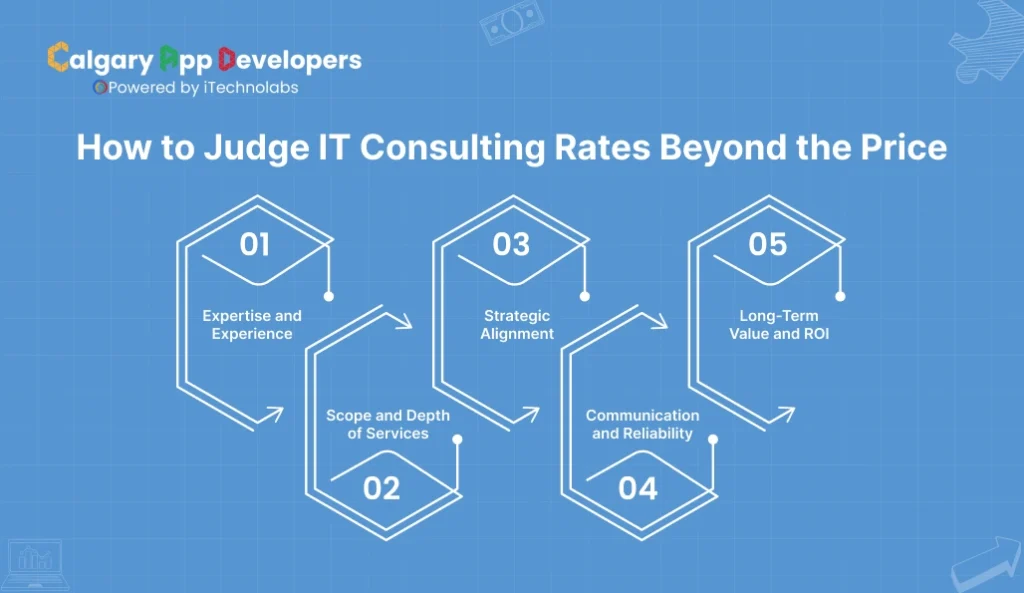
When evaluating IT consulting rates, it is important to remember that the hourly price alone does not reflect the true value of a consultant. Several factors determine the overall impact of the services, and considering these can help businesses make smarter investments.
- Expertise and Experience
-
-
- Experienced consultants bring years of technical knowledge and industry-specific insights.
- They can anticipate challenges before they arise and provide solutions that avoid costly errors.
- Higher rates often reflect the consultant’s ability to deliver projects efficiently and effectively, reducing the risk of delays and rework.
-
- Scope and Depth of Services
-
-
- Some consultants only handle isolated tasks, such as software troubleshooting or system setup, while others manage entire projects from start to finish.
- End-to-end consulting includes planning, implementation, integration, training, and ongoing support.
- A broader scope ensures that the project is cohesive, reduces the need for multiple vendors, and often results in smoother implementation.
-
- Strategic Alignment
-
-
- Consultants who understand your business goals design solutions that support growth, efficiency, and scalability.
- Their work is not just about completing technical tasks but about creating systems and strategies that generate long-term value.
- Strategic alignment ensures that IT investments drive measurable business outcomes rather than short-term fixes.
-
- Communication and Reliability
-
-
- Clear communication and proactive updates are critical for successful projects.
- Reliable consultants manage deadlines, report progress transparently, and coordinate effectively with internal teams.
- Good communication prevents misunderstandings, minimizes delays, and keeps projects on track and factors that are not reflected in hourly rates but are crucial for overall value.
-
- Long-Term Value and ROI
-
- Evaluate the potential long-term benefits of the consultant’s work, including increased efficiency, reduced downtime, better security, and scalability for future growth.
- Paying slightly higher IT consulting rates can be justified if it results in solutions that save time, reduce costs, or enhance business performance over the long term.
- The best consultants focus on providing solutions that have a lasting impact, not just immediate fixes.
It consulting rates are only one component of the decision-making process. True value comes from expertise, comprehensive services, strategic insight, reliable execution, and long-term benefits. Businesses that evaluate consultants on these factors are more likely to achieve efficient, effective, and future-ready technology solutions.
Conclusion
Understanding IT consulting rates goes far beyond comparing hourly numbers. True value comes from the consultant’s expertise, the scope of services, strategic alignment, and the long-term benefits they deliver. By considering these factors, businesses can make informed decisions, optimize budgets, and ensure that technology investments drive growth, efficiency, and competitive advantage.
For companies seeking high-quality solutions at cost-effective rates, Calgary IT consulting offers access to skilled professionals who combine expertise with affordability, making it an ideal choice for businesses of all sizes.
FAQs:
1. What is the average hourly rate for an IT consultant?
The average hourly rate for an IT consultant typically ranges from $70 to $250 USD, depending on factors such as experience, project complexity, and industry. Junior consultants may charge lower rates, while senior consultants with specialized skills command higher fees. Rates also vary by location, with cities like Calgary offering more cost-effective options.
2. What makes up the average hourly rate for IT consulting?
The average hourly rate for IT consulting is influenced by multiple factors, including the consultant’s experience, technical expertise, project complexity, industry requirements, geographic location, and the scope of services provided. Rates also reflect strategic value, risk management, and long-term business impact, rather than just the time spent on tasks.
3. What are the average IT consulting rates by industry?
IT consulting rates vary by industry due to differing compliance, security, and operational needs. Finance and healthcare command higher rates ($110–$250 USD/hr) because of regulatory requirements, while sectors like education and small-scale retail are lower ($70–$150 USD/hr). Complex industries such as manufacturing or energy fall in between, reflecting integration and technology demands.


Pankaj Arora is a seasoned technology leader and the Founder of Calgary App Developer, with 10+ years of expertise in crafting high-performance digital solutions. His core competencies include full-stack app development, cloud-native architecture, API integration, and agile product delivery. Under his leadership, Calgary App Developers has empowered startups and enterprises alike with scalable mobile applications, secure web platforms, and AI-driven SaaS products.