









Blockchain Wallet Development: An Ultimate Guide 2026
Imagine carrying a digital safe in your pocket. It doesn’t hold gold or jewelry. It stores your digital assets, from crypto tokens to NFTs and keys for blockchain-based apps. That is what a Blockchain Wallet does. Once you start using cryptocurrencies or Web3 platforms, your wallet becomes your gateway to the digital economy.
The market for these wallets isn’t a niche anymore; it’s growing fast. As of 2025, the global blockchain wallet user base is estimated at over 420 million wallets, reflecting a surge of roughly 700 % since 2016. On the market value side, one report sees the crypto wallet sector growing to more than US$56 billion by 2035, from just a few billion today.
In case you’ve been considering the development of a blockchain wallet, or you just want to know how they work and why they are important, then you should check out this particular guide. We’ll start from the very beginning, uncover the mechanics of wallet operations, compare their different kinds, illustrate how to create one, and most importantly, speak about the essential security practices that you should never ignore.
By the end, you’ll feel confident about where blockchain wallets fit into the digital asset landscape and how you might build one that stands out. Let’s get started.
TL;DR
- A blockchain wallet is a digital solution for the safe storage, transfer, and reception of cryptocurrencies.
- Cryptography-based wallets with public and private keys are the only ones able to authorize and track the transactions on the blockchain.
- There are various types of wallets, such as software, hardware, paper, web, and multi-currency wallets.
- For effective digital asset management, security, backup, and correct wallet selection are obligatory.
Key Points
- A blockchain wallet makes it possible for a user to have complete control over his/her digital assets without the need to involve banks or other intermediaries.
- A wallet holds a pair of keys, where the public key is for receiving money, and the private key is to provide a secure transaction approval.
- A wallet execution of a transaction goes through cryptography verification and is subsequently drowned on the blockchain for invisible clarity and durability.
- There is a wide range of wallets which can cater to different users’ requirements, such as convenience, security, multi-asset management, etc.
- Creating a blockchain wallet requires defining features, generating cryptographic keys, developing architecture, implementing security measures, and ongoing maintenance.
- Some smart security practices are encryption of keys, multi-factor authentication, data backup, and transaction monitoring on a regular basis.
- The decision to go with either a single-currency or a multi-currency wallet is based on the user’s cryptocurrency holdings, the number of trades, and the balance between simplicity and flexibility they want.
- A comprehensive knowledge of different wallet types, security measures, and mechanisms of operation is a prerequisite for the safe handling of digital assets within the blockchain ecosystem.
What Is a Blockchain Wallet and Why Does It Matter
A Blockchain Wallet is a digital instrument that gives users a chance to keep their cryptocurrencies in the safest way possible and to send and receive them. It integrates users to blockchains and records the ownership of their coins without the necessity of banks or middlemen. Every wallet has two primary keys: one is the public key that usually functions as an address for receiving cryptocurrencies, and the second one is the private key that grants the user access to their funds.
The major point that makes a Blockchain Wallet significant is that it empowers users with full control of their money. Banks or payment gateways are the ones whom users have to trust in the case of the traditional financial system. A blockchain wallet chooses to trust in cryptography and transparency instead. A transaction takes place on a public ledger where the transaction is recorded, and thus it becomes both traceable and secure.
For companies, these wallets are not merely a place to keep the money. Rather, they are the vital conduits to payments, smart contracts, and Web3 applications. When blockchain technology is adopted more widely across various sectors, having a wallet that is both secure and functional becomes the groundwork for digital value management.
To put it in less complicated terms, a Blockchain Wallet still functions like a simple technical necessity. It is a personal banking system created for the decentralized world.
Also Check: Top Cold Crypto Wallets: Ultimate Security Guide
How a Blockchain Wallet Works
The Blockchain Wallet is a wonderful package that handles all the users’ cryptographic keys and allows them to get their digital assets on the blockchain. A public key and a private key are included in every wallet. The public key serves as an address for funds to be sent, while the private key enables the owner to sign transactions and thus prove his right to the assets. A transaction cannot be authorized if the private key is absent.
The moment a user requests a transaction, the wallet uses the private key to produce a digital signature. This signature then acts as proof of the transaction on the blockchain network and accordingly gives security against any attempt to alter it. The next step in the process is that the transaction is recorded in the blockchain ledger, which means that it is visible to everyone and very hard to tamper with.
There are various types of blockchain wallets: software wallets, hardware wallets, and paper wallets. Software wallets provide quick access on either a desktop or a mobile device. The hardware ones keep the keys offline, thus offering more security. No matter which type is used, the main purpose is doing safe and easy transactions on the blockchain network through the proper management of access to digital assets.
Basically, the blockchain wallet is a combination of a secure storage device and a means to communicate with the decentralized network.
The Core Mechanism Behind Every Crypto Wallet
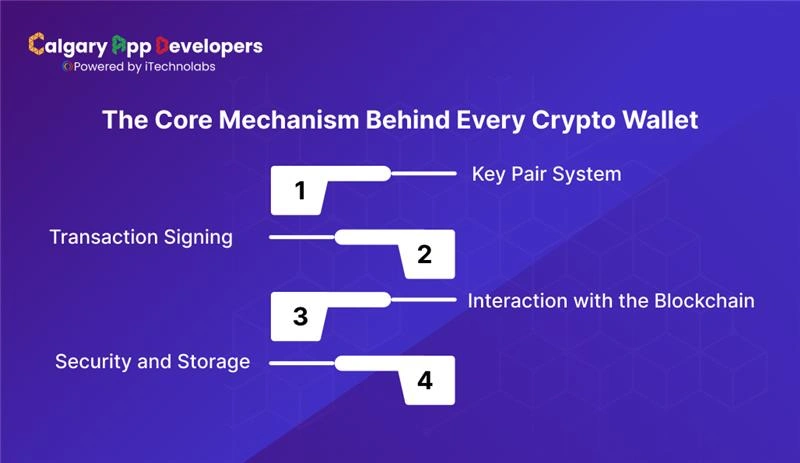
A Blockchain Wallet may seem like a simple app or device, but underneath it relies on a precise combination of cryptography and blockchain protocols. Understanding this mechanism is key to appreciating how wallets keep digital assets secure and functional.
- Key Pair System
Every wallet generates a pair of cryptographic keys: a public key and a private key. The public key works like a digital address that others use to send cryptocurrency. The private key is the critical piece that proves ownership and allows the wallet holder to authorize transactions. Losing the private key means losing access to the assets, highlighting its importance in the wallet’s security.
- Transaction Signing
When a user wants to send cryptocurrency, the wallet uses the private key to create a digital signature. This signature verifies the transaction’s authenticity without revealing the private key itself. The signed transaction is then broadcast to the blockchain network for validation by nodes, ensuring it cannot be tampered with once recorded.
- Interaction with the Blockchain
The wallet continuously communicates with the blockchain network to track balances, confirm incoming and outgoing transactions, and provide real-time updates. Some advanced wallets also connect with smart contracts or decentralized applications, allowing users to perform complex operations beyond simple transfers.
- Security and Storage
Wallets differ in how they store keys. Software wallets keep keys on computers or mobile devices for convenience. Hardware wallets store keys offline, minimizing exposure to hacks. Even paper wallets, which print keys physically, follow the same cryptographic principles.
The core mechanism of a Blockchain Wallet combines secure key management, transaction authentication, and real-time interaction with the blockchain. This structure ensures that users have full control over their assets while safely participating in a decentralized network.
Why You Need a Blockchain Wallet for Your Digital Assets
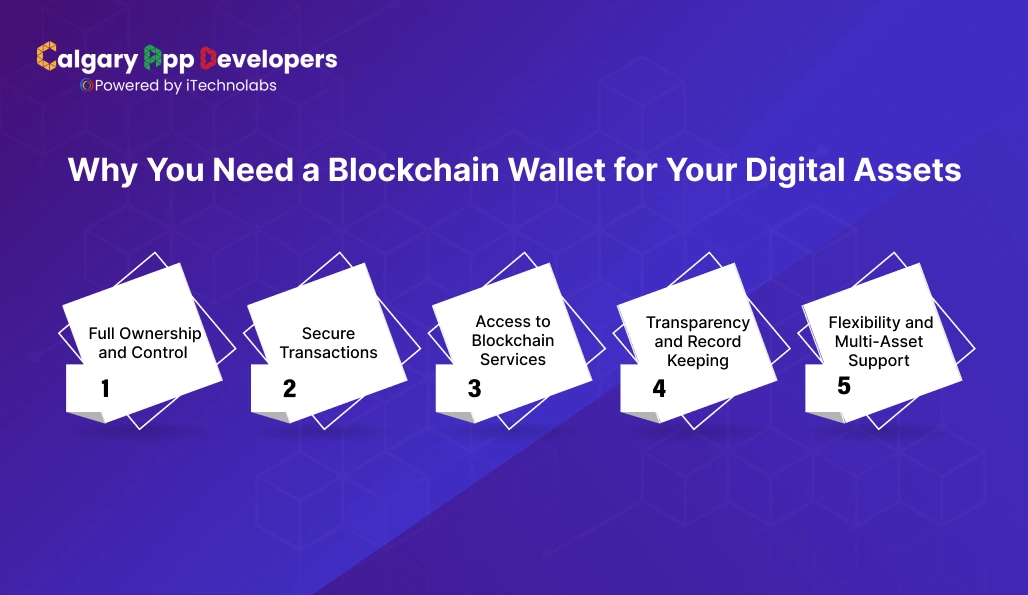
A Blockchain Wallet is more than just a storage tool. It is the foundation for managing, securing, and using digital assets. Whether you are an individual investor or a business, a wallet ensures control, accessibility, and security over your cryptocurrencies and other blockchain-based assets.
- Full Ownership and Control
With a blockchain wallet, you hold the private keys to your assets. This means you do not rely on third-party services such as banks or exchanges to access or move your funds. Full ownership reduces dependency on intermediaries and protects your assets from platform failures or restrictions. - Secure Transactions
Every transaction made through a blockchain wallet is verified by cryptographic protocols. The wallet generates digital signatures that ensure authenticity and prevent unauthorized access. Combined with blockchain’s decentralized ledger, this creates a system that is highly resistant to fraud and tampering. - Access to Blockchain Services
A blockchain wallet is the gateway to the decentralized economy. It allows participation in activities such as trading cryptocurrencies, interacting with smart contracts, using decentralized finance applications, and managing NFTs. Without a wallet, access to these services is limited or impossible. - Transparency and Record Keeping
Transactions made through a blockchain wallet are recorded on the blockchain. Users can verify their history and balances at any time, providing transparency that traditional financial systems cannot match. This makes wallets essential for auditing, reporting, and personal tracking of digital assets. - Flexibility and Multi-Asset Support
Modern blockchain wallets support multiple cryptocurrencies and digital assets in a single interface. Users can manage different tokens, track their portfolio, and even participate in staking or lending programs. This flexibility makes the wallet a central hub for all digital asset activities.
A blockchain wallet is not optional for anyone serious about digital assets. It provides security, control, and access, transforming the way individuals and businesses manage value in the decentralized world.
Types of Blockchain Wallets Explained
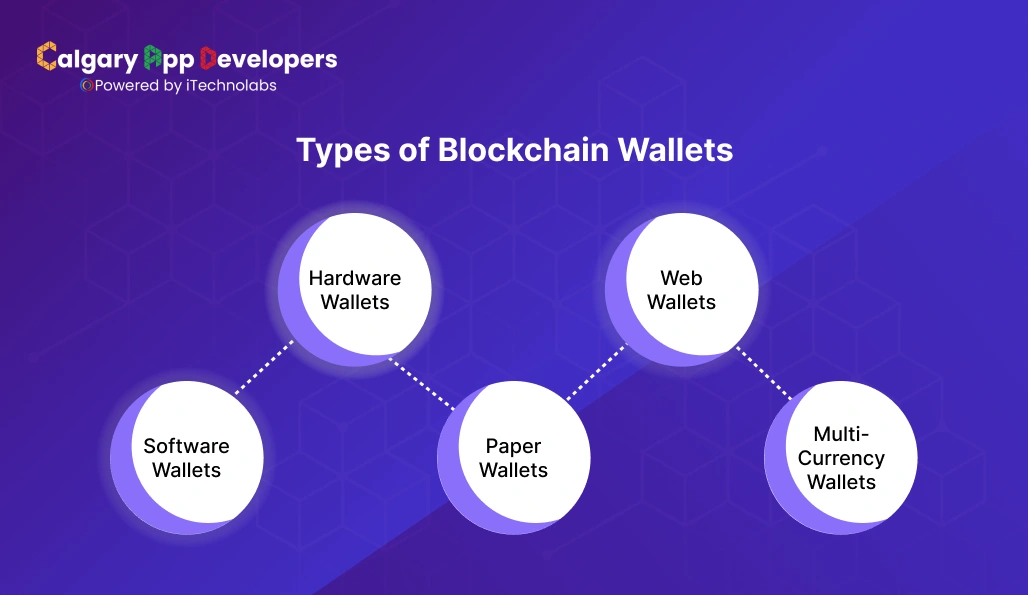
A Blockchain Wallet is not a one-size-fits-all solution. Different types of wallets offer varying levels of security, accessibility, and functionality depending on the user’s needs. Understanding these types is essential for choosing the right wallet for managing digital assets.
- Software Wallets
Software wallets are applications installed on desktops, laptops, or mobile devices. They provide easy access to digital assets and support sending and receiving cryptocurrencies. Software wallets can be further divided into hot wallets and cold wallets. Hot wallets remain connected to the internet, offering convenience for frequent transactions but exposing users to potential online threats. Cold wallets operate offline, offering increased security at the expense of instant accessibility.
Examples: MetaMask, Trust Wallet, Exodus
- Hardware Wallets
Hardware wallets store private keys on physical devices that remain offline until connected to a computer or mobile device for transactions. They are considered one of the most secure wallet types because they limit exposure to malware or phishing attacks. Users can manage multiple cryptocurrencies while maintaining strong protection against cyber threats.
Examples: Ledger Nano X, Trezor Model T, SafePal S1
- Paper Wallets
Paper wallets are physical prints of public and private keys. They are entirely offline, making them immune to hacking. However, they require careful handling to prevent loss, damage, or theft. Paper wallets are ideal for long-term storage but are less convenient for frequent transactions.
Examples: BitcoinPaperWallet, WalletGenerator.net
- Web Wallets
Web wallets operate through browsers and cloud services, allowing access from any device with an internet connection. They provide convenience but require trust in the hosting provider for security. Many exchanges offer web wallets as part of their services, making them suitable for beginners but less secure than hardware or software wallets with local key storage.
Examples: Coinbase Wallet, Blockchain.com Wallet, Binance Web Wallet
- Multi-Currency Wallets
Some blockchain wallets support multiple cryptocurrencies within a single interface. This type of wallet simplifies management for users with diverse portfolios and enables easy conversion and tracking of different digital assets.
Examples: Atomic Wallet, Guarda Wallet, Coinomi
Each type of blockchain wallet balances convenience, security, and functionality differently. Choosing the right wallet depends on how frequently you transact, how much security you require, and the type of assets you hold. Selecting the appropriate wallet ensures effective management and protection of your digital assets.
Step-by-Step Guide to Building a Blockchain Wallet
Creating a Blockchain Wallet requires a structured approach to ensure security, usability, and compatibility with blockchain networks. Here is a detailed step-by-step process for building a functional wallet:
- Define the Wallet Type and Features
- Decide whether the wallet will be software, hardware, web-based, or multi-currency.
- Determine features such as transaction history, multi-asset support, staking options, QR code scanning, and notifications.
- Consider the target audience and platform: desktop, mobile, or both.
- Choose the Blockchain Network
- Select the blockchain network(s) the wallet will support, such as Bitcoin, Ethereum, Binance Smart Chain, or multiple chains.
- Ensure compatibility with network protocols, smart contracts, and token standards.
- Generate Cryptographic Keys
- Implement a secure method to generate public and private keys for each user.
- Use strong encryption algorithms such as the Elliptic Curve Digital Signature Algorithm (ECDSA) for key generation.
- Ensure keys are stored securely, either locally on the device or in encrypted cloud storage, depending on wallet type.
- Develop Wallet Architecture
- Design the user interface (UI) for ease of use, allowing users to check balances, send and receive assets, and monitor transactions.
- Build the backend system to interact with the blockchain, broadcast transactions, and confirm balances.
- Incorporate APIs for blockchain data, exchange rates, and additional services like token swaps.
- Implement Transaction Functionality
- Enable sending and receiving cryptocurrencies using the wallet.
- Include digital signature creation with private keys to authorize transactions.
- Implement verification mechanisms to ensure transactions are valid before broadcasting to the blockchain.
- Integrate Security Measures
- The step of encryption for private keys and sensitive data should be taken.
- Multi-factor authentication for user accounts should be implemented.
- Biometric access or PIN-based security should be imposed for mobile wallets.
- The wallet’s security should be regularly checked by pentesting and auditing methods.
- Add Backup and Recovery Options
- Provide seed phrases or recovery keys to restore access in case the wallet is lost or the device is damaged.
- Educate users about safely storing recovery information offline.
- Conduct Testing and Quality Assurance
- Test wallet functionality on different devices and operating systems.
- Simulate transactions to ensure reliability and accuracy.
- Check security features against common attack vectors.
- Deploy the Wallet
- Launch the wallet on the chosen platform.
- Ensure integration with blockchain networks and APIs is fully functional.
- Provide clear instructions and customer support for users.
- Maintain and Update the Wallet
- Regularly release updates to fix bugs, enhance security, and add new features.
- Monitor network changes and ensure compatibility with blockchain upgrades.
- Collect user feedback for continuous improvement.
Building a blockchain wallet is a complex process that combines cryptography, blockchain protocols, user experience, and security practices. Following this step-by-step approach ensures the wallet is reliable, secure, and user-friendly for managing digital assets.
Smart Security Practices for Blockchain Wallets
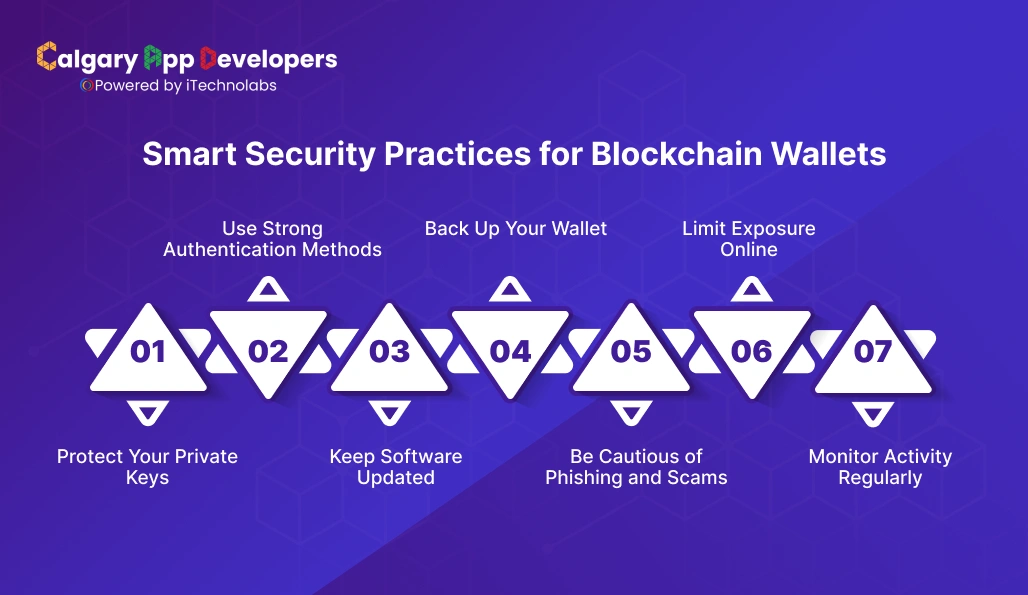
Security is the foundation of any Blockchain Wallet. Without strong protection, digital assets are vulnerable to theft, loss, or unauthorized access. Implementing smart security practices ensures that your wallet remains safe and your funds stay under your control.
- Protect Your Private Keys
- Never share your private keys or seed phrases with anyone.
- Store keys offline whenever possible using hardware wallets or encrypted storage.
- Avoid storing private keys in cloud services or unsecured digital files.
- Use Strong Authentication Methods
- Enable multi-factor authentication for all wallet access points.
- Use complex passwords and change them regularly.
- Consider biometric verification such as fingerprint or facial recognition for mobile wallets.
- Keep Software Updated
- Regularly update wallet software to the latest version to patch vulnerabilities.
- Update operating systems and antivirus programs on devices used to access wallets.
- Back Up Your Wallet
- Create secure backups of your wallet data and recovery phrases.
- Store backups in multiple safe locations, ideally offline, to protect against device loss or failure.
- Test backup restoration periodically to ensure accessibility.
- Be Cautious of Phishing and Scams
- Only access your wallet through official websites or apps.
- Verify the authenticity of emails, messages, or links requesting wallet information.
- Avoid entering wallet credentials on public or shared computers.
- Limit Exposure Online
- Use hardware wallets for long-term storage and offline signing of transactions.
- Keep only small amounts of cryptocurrency in hot wallets used for daily transactions.
- Monitor Activity Regularly
- Check transaction history and balances frequently for any unauthorized activity.
- Set up notifications for incoming or outgoing transactions if supported by the wallet.
Following these security practices helps maintain the integrity of your Blockchain Wallet and reduces the risk of financial loss. In the world of digital assets, security is not optional; it is essential for protecting value and maintaining trust in the system.
Choosing Between Single-Currency and Multi-Currency Blockchain Wallets
When selecting a Blockchain Wallet, one of the key decisions is whether to use a single-currency wallet or a multi-currency wallet. Each option offers distinct advantages and trade-offs depending on the user’s needs, security preferences, and transaction habits. Understanding the differences helps in choosing the wallet that best fits your digital asset strategy.
Single-Currency Wallets
- Designed to support only one type of cryptocurrency.
- Often provide optimized performance and features specific to that currency.
- Typically simpler to use for beginners or users focused on a single asset.
- May have higher security for that specific asset because the system is streamlined.
Multi-Currency Wallets
- Support multiple cryptocurrencies in a single interface.
- Ideal for users with diverse portfolios or who trade between assets frequently.
- Provide convenience by allowing management of all assets without multiple wallets.
- Slightly more complex to operate and may expose more risk if security is compromised.
Comparison Table: Single-Currency vs Multi-Currency Blockchain Wallets
| Feature | Single-Currency Wallet | Multi-Currency Wallet |
| Supported Assets | One cryptocurrency | Multiple cryptocurrencies |
| Ease of Use | High simplicity | Moderate complexity |
| Security | High due to focused design | Good, but wider exposure |
| Best For | Beginners or single-asset users | Traders and diversified portfolios |
| Features | Optimized for one asset | Portfolio management, swaps, multi-chain support |
| Backup and Recovery | Simple | Slightly more complex |
The choice between single-currency and multi-currency Blockchain Wallets depends on your investment strategy, transaction frequency, and need for convenience versus focused security. Single-currency wallets are straightforward and secure for managing one asset, while multi-currency wallets offer flexibility for handling multiple digital assets efficiently.
Our Experience in Blockchain Development
Strong blockchain development is not just about writing smart contracts. It is about designing infrastructure that handles real capital, real compliance, and real investor expectations. One of the clearest examples of our capability in this space is Zult.io.
Zult.io: Rebuilding Private Credit Infrastructure on Blockchain
Zult.io is a next-generation blockchain platform built to modernize access, ownership, and liquidity in private credit markets. Private credit is one of the largest and most complex asset classes globally, yet it has traditionally been opaque and illiquid. Zult.io addresses this gap by introducing transparency, efficiency, and programmable infrastructure powered by blockchain and artificial intelligence.
As part of Zult Inc., a Delaware-based financial technology company, Zult.io enables investors, asset managers, and institutions to participate in private markets through secure digital rails.
Strategic Focus
The platform is designed to democratize access to traditionally illiquid asset classes. It does this by combining compliant tokenization infrastructure with structured finance expertise. The initial focus is private credit, with a roadmap to expand into broader real-world assets and alternative investments.
Core Capabilities Delivered
- Tokenization Infrastructure: We built secure mechanisms for issuing digital securities backed by real-world assets. Each asset is represented on chain with verifiable ownership and lifecycle tracking.
- Compliant Architecture: Regulatory compliance and investor protection were embedded at the infrastructure level. The system supports structured onboarding, access controls, and transparent reporting mechanisms.
- Liquidity Enablement: Blockchain based ownership records allow for more efficient transferability and secondary market potential compared to traditional private credit structures.
- AI-Powered Insights: The platform integrates intelligent analytics to improve risk assessment, asset monitoring, and capital allocation decisions.
- Lifecycle Management: From issuance and distribution to servicing and reporting, Zult.io provides full lifecycle management of tokenized private credit instruments.
Business Impact
- Zult.io bridges traditional finance and decentralized infrastructure without sacrificing trust or control. Accredited investors gain structured access to diversified private credit opportunities.
- Asset managers gain scalable digital rails for capital formation and distribution. Institutions benefit from improved transparency and operational efficiency.
This project reflects our ability to design blockchain systems that go beyond simple wallets or exchanges. We at Calgary App Developer build regulated-grade platforms capable of handling structured financial products, digital securities, and complex asset servicing workflows.
Our experience with Zult.io demonstrates how blockchain can transform private markets when combined with compliance, domain expertise, and robust technical architecture.
Conclusion
A Blockchain Wallet is more than just a tool for storing digital assets. It is the gateway to the decentralized economy, offering security, control, and access to a growing range of blockchain-based services. From understanding how wallets work to choosing the right type and implementing strong security practices, every step is essential for managing digital assets effectively.
If you are looking to develop a reliable and secure blockchain wallet, Calgary App Developers can help. Our team specializes in creating custom blockchain solutions tailored to your needs, combining robust security, seamless functionality, and user-friendly design. Partnering with us ensures your wallet not only meets industry standards but also provides a superior experience for your users.
With the right strategy and development partner, you can confidently enter the blockchain ecosystem and offer a wallet that users trust and rely on.
FAQs:
1. What is a blockchain wallet?
A blockchain wallet is a digital tool that allows users to store, send, and receive cryptocurrencies. It manages public and private keys, enabling secure transactions on a blockchain network. Beyond storage, it acts as a gateway to decentralized services, allowing users to interact with digital assets, smart contracts, and decentralized applications.
2. Why is the development of blockchain wallets important?
Developing blockchain wallets is crucial because they provide secure access to digital assets and the broader decentralized ecosystem. They empower users with full control over their funds, facilitate transparent transactions, and support blockchain adoption. Reliable wallet development ensures safety, usability, and compatibility with multiple cryptocurrencies and blockchain services.
3. Which characteristics make up a blockchain wallet?
A blockchain wallet is defined by secure key management, transaction capability, and blockchain integration. It contains a public key for receiving funds and a private key for authorizing transactions. Other key characteristics include a user-friendly interface, transaction tracking, multi-currency support, backup options, and the ability to interact with decentralized applications.
4. How are blockchain wallets operated?
Blockchain wallets operate by managing cryptographic keys and connecting to blockchain networks. Users initiate transactions, which are signed with private keys to verify authenticity. The wallet then broadcasts the transaction to the network for validation. Wallets may be software, hardware, or web-based, each offering varying levels of security and accessibility.
5. What kinds of blockchain wallets exist?
Blockchain wallets can be categorized as software wallets, hardware wallets, paper wallets, web wallets, and multi-currency wallets. Software wallets are convenient for daily use, hardware wallets offer high security, paper wallets are fully offline, web wallets provide browser-based access, and multi-currency wallets support several cryptocurrencies in a single interface.
6. What security precautions are taken when developing a blockchain wallet?
Key security measures include encrypting private keys, enabling multi-factor authentication, using secure key generation methods, and implementing backup and recovery options. Developers also conduct penetration testing, monitor vulnerabilities, and educate users on phishing risks. Hardware wallets and offline storage further enhance security against cyber attacks.
7. Which programming languages are employed in the creation of blockchain wallets?
Blockchain wallets are typically built using languages such as JavaScript, Python, C++, and Java for core wallet logic and interfaces. Solidity or Rust may be used for blockchain-specific smart contract interactions. Mobile wallets often use Swift for iOS and Kotlin or Java for Android, while secure backend services may rely on Node.js or Go.


Pankaj Arora is a seasoned technology leader and the Founder of Calgary App Developer, with 10+ years of expertise in crafting high-performance digital solutions. His core competencies include full-stack app development, cloud-native architecture, API integration, and agile product delivery. Under his leadership, Calgary App Developers has empowered startups and enterprises alike with scalable mobile applications, secure web platforms, and AI-driven SaaS products.