





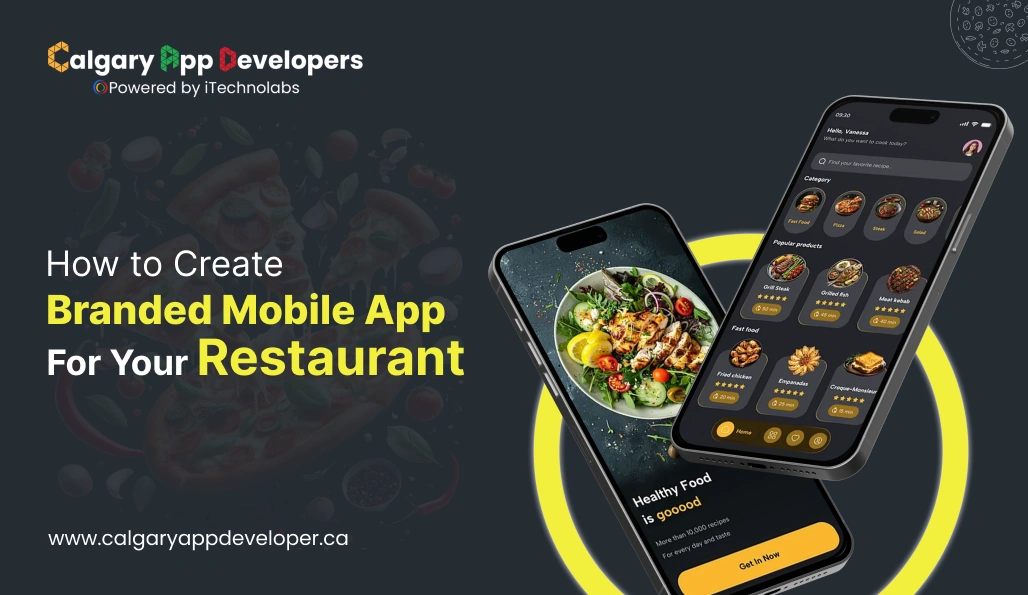
How to Create a Branded Mobile App for Restaurants?
A powerful mobile application placement for restaurants has changed from being just a nice extra to a genuine advantage. Customers demand speed, transparency and a personal touch every time they order food through their mobile devices. You are already on their home screen and thus are included in their daily activities.
A well-built app can turn casual visitors into loyal diners, streamline ordering, reduce dependency on marketplaces, and present your brand exactly the way you want it.
This guide sets the stage for how you can create an mobile app for restaurants that feels inviting, reflects your identity, and supports real growth.
- A branded mobile app helps restaurants build loyalty, increase revenue, and reduce dependence on marketplaces.
- Customers prefer ordering directly through restaurant apps because they offer speed, clarity, and convenience.
- You can build an app from scratch or use a ready-made platform to launch faster with proven features.
- Core features like digital menus, smooth checkout, tracking, loyalty, and personalization shape a strong user experience.
- A mobile app gives restaurants a direct relationship with customers, which leads to higher retention and repeat business.
- Digital ordering through mobile apps consistently produces higher average order values and stronger revenue growth.
- A well-planned development process includes goal setting, feature selection, design, testing, and ongoing updates.
- Ready-made app solutions provide a faster and more affordable alternative while still supporting customization and scalability.
- Essential features such as real-time tracking, push notifications, user profiles, and loyalty tools improve satisfaction and ease of use.
Why a Mobile App for Restaurants Matters for Your Business
In the current landscape of dining and food service, having your own branded mobile app is no longer optional; it is a strategic tool. Here are the key reasons backed by recent data and emerging forecasts.
Strong consumer preference for direct restaurant apps
- More than 70 % of consumers say they prefer ordering directly through a restaurant’s website or mobile app rather than via third-party marketplaces.
Revenue gains and higher order values
- Restaurants that integrate ordering via an app or digital channel saw average incremental revenue growth of about 42 % in their first year of adoption.
- Orders placed through mobile/digital channels tend to have values up to ~32 % higher than in-dine orders.
Market size and growth potential
- The market for restaurant digitalization (including mobile apps) is projected to grow at roughly 16.7 % compound annual growth rate (CAGR) from 2024 through 2033, rising from about US $7.9-billion in 2023 to roughly US $37.0-billion by 2033.
Engagement and retention opportunities
- The average smartphone user engages with around 30 applications each month, and roughly half of users check their apps between 2 and 10 times daily.
- If you do it right (branding, loyalty features, convenience), you increase the chance customers return, not just once but repeatedly.
By tapping into these trends, a restaurant-branded mobile app becomes a platform for deeper customer relationships, direct revenue growth, and brand control.
Also Read: Best Restaurant Online Ordering Systems For Owners
Challenges Restaurants Face Without a Branded Mobile App
Running a restaurant without a branded mobile app puts you at a growing disadvantage. As customer habits shift toward digital convenience, relying only on walk-ins, phone orders, or third-party platforms creates friction that impacts revenue, loyalty, and long-term growth.
- Limited customer ownership: Without your own app, customer relationships belong to aggregators. You do not own the data, the communication channel, or the loyalty. This makes it harder to build repeat business or personalize experiences.
- High commission costs: Third-party food delivery platforms charge significant commissions on every order. Over time, these fees eat into margins and reduce profitability, especially for high-volume restaurants.
- Inconsistent brand experience: Marketplace platforms limit how your restaurant appears. Your menu, visuals, and offers sit beside competitors, making it harder to stand out or communicate your brand story clearly.
- Missed repeat orders: Without a direct digital channel, customers have fewer reasons to come back. There is no built-in loyalty, no personalized offers, and no easy way to stay top of mind after the first order.
- Slower and error-prone ordering: Phone orders and manual processes increase the risk of mistakes, delays, and staff overload during peak hours. This impacts customer satisfaction and operational efficiency.
- Lack of actionable insights: Without an app, you miss valuable data on customer preferences, ordering patterns, and peak demand. Decisions are often based on guesswork instead of clear insights.
- Limited communication reach: Promotions rely heavily on social media or third-party visibility. Algorithm changes and platform policies can limit how often customers actually see your updates.
These challenges make growth harder and more expensive than it needs to be. That is where a branded mobile app becomes a strategic advantage, not just a technology upgrade.
Key Reasons Your Restaurant Should Invest in a Mobile App
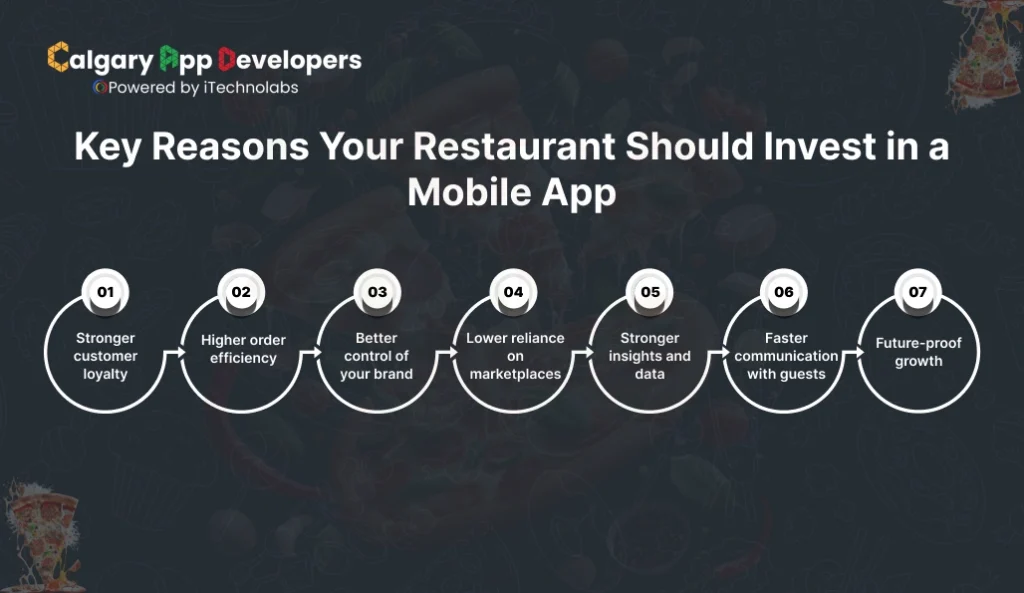
A Mobile App for Restaurants has become a practical tool for improving service, strengthening loyalty, and driving predictable revenue. Customers want convenience, speed, and a direct line to the places they trust for food. An app gives your restaurant that channel and helps you stay competitive in a crowded market.
- Stronger customer loyalty: A dedicated app creates a direct connection with your guests. You can offer points, rewards, personalized recommendations, and exclusive deals. This encourages repeat visits and keeps your brand top of mind.
- Higher order efficiency: Apps reduce friction in the ordering journey. Customers browse your menu, customize dishes, and place orders without delays. This improves order accuracy and lowers wait time for both dine-in and delivery.
- Better control of your brand: A branded app presents your restaurant the way you want it to be seen. Colors, design, menu layout, imagery, tone, and user flow reflect your identity. You are not competing for attention alongside dozens of other outlets on third-party platforms.
- Lower reliance on marketplaces: Commission fees from aggregator platforms cut into profit. A mobile app gives customers a way to order directly from you, allowing you to retain more revenue and build a more sustainable business model.
- Stronger insights and data: An app gives access to clear data on buying patterns, popular items, cart drop-offs, and order timing. This supports smarter menu decisions, targeted promotions, and better forecasting.
- Faster communication with guests: Push notifications help you announce specials, seasonal menus, discounts, and new items instantly. This keeps engagement active without depending on social media algorithms.
- Future-proof growth: The global food ordering market continues to shift toward mobile use. Restaurants with their own apps are better prepared to meet this demand and adapt to upcoming digital expectations.
A Mobile App for Restaurants is no longer a bonus feature. It is a practical strategy to grow your customer base, increase revenue, and stay relevant as customer habits evolve.
Read Also: How to Boost Sales With Online Ordering Platform for Restaurants
How to Build a Mobile App for Your Restaurant?
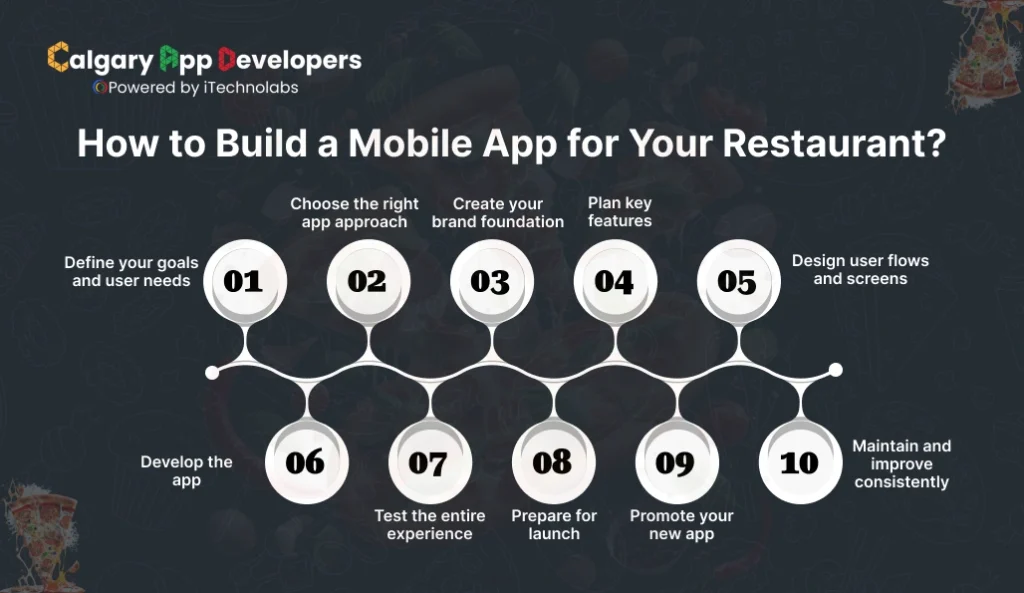
A strong plan helps you move from a simple idea to a fully functional Mobile App for Restaurants that delivers convenience for customers and control for your business. The process works best when every stage is intentional and built around real user behavior.
1. Define your goals and user needs
- Clarify the purpose of the app. Decide whether you want to focus on online ordering, table reservations, loyalty rewards, or an all-in-one experience.
- Study your customers. Look at their ordering patterns, preferred payment methods, and how often they repeat orders.
- Identify the core problems your app should solve, such as long phone order queues, slow table turnover, inaccurate delivery instructions, or low retention.
- Finalize your must-have features for the first version and list secondary features for future updates.
2. Choose the right app approach
- Native development provides top performance, better responsiveness, and deeper device-level capabilities.
- Cross-platform development helps you launch on Android and iOS with a shared codebase, lowering cost and reducing build time.
- No-code and low-code builders let you launch a basic app fast, which works well for small restaurants testing digital ordering.
- Consider long-term scalability so your app can grow with your menu, branches, and customer volume.
3. Create your brand foundation
- Build a style guide that includes colors, fonts, icons, spacing rules, and image guidelines so your app looks polished.
- Prepare appealing images and detailed descriptions for each dish to help users order with confidence.
- Craft a consistent tone for instructions, buttons, and messages so every part of the app feels familiar and trustworthy.
- If your restaurant has a theme or story, bring that into the visual language of the app.
4. Plan key features
- Online ordering with customization options, add-ons, and special instructions.
- Digital menu that updates instantly when you run out of stock or introduce new items.
- Table reservations with time slots, guest count, and special request fields.
- Loyalty points, milestone rewards, referral bonuses, and automated offers.
- User profiles with saved addresses, favorites, and past orders for quick repeat ordering.
- Push notifications for reminders, promotions, and new menu announcements.
- Payment integrations with cards, UPI, wallets, and cash on delivery if needed.
- Real-time order tracking that shows preparation, dispatch, and delivery progress.
5. Design user flows and screens
- Map how users move through the app from home screen to confirmation page.
- Build wireframes to understand screen layout and hierarchy before investing in design.
- Keep navigation simple so users can place an order within a few taps.
- Use large images, readable text, and easy-to-reach buttons to reduce friction
- Test early drafts with a few customers or staff members.
6. Develop the app
- Create the interface based on your approved designs.
- Build backend systems for menu management, customer accounts, orders, and notifications.
- Integrate your POS so orders flow directly into the kitchen without manual entry.
- Set up delivery management tools if you use in-house riders.
- Add security layers to protect customer data and enable safe payments.
7. Test the entire experience
- Test all major functions such as browsing, adding to cart, payments, loyalty, and notifications.
- Try the app on different screen sizes and devices to check layout consistency.
- Simulate heavy traffic to see how the system performs during peak hours.
- Fix bugs, slow loading screens, and any confusing steps before launch.
8. Prepare for launch
- Upload your app to the Google Play Store and Apple App Store with clear descriptions and keywords like Mobile App for Restaurants.
- Create strong visuals for the store listing, including screenshots, menu previews, and feature highlights.
- Run internal and soft launches to staff and close customers for final feedback.
9. Promote your new app
- Advertise your app inside the restaurant using table cards, takeaway boxes, and billing receipts.
- Use social media, influencer tie-ups, and email campaigns to encourage downloads.
- Provide a welcome reward to first-time app users to build immediate traction.
- Highlight the benefits such as lower prices, exclusive access, or faster ordering, when customers use your app.
10. Maintain and improve consistently
- Monitor analytics to see which menu items sell the most, where users drop off, and which offers perform best.
- Release updates regularly to keep the app stable and relevant.
- Add seasonal features, new loyalty perks, and UI improvements to keep users engaged.
- Gather feedback from customers and use it to guide your next upgrade.
A well-planned and well-executed mobile app helps your restaurant stay ahead of shifting customer habits. It strengthens loyalty, improves efficiency, reduces dependency on aggregators, and turns your brand into a daily touchpoint on every customer’s phone.
Also Read: How to Create Restaurant Inventory Tracking Software
Alternatively, Use a Custom, Ready-Made Mobile App Built on Proven Best Practices
A custom, ready-made mobile app gives your restaurant a faster and more cost-friendly path to digital ordering. Instead of building everything from the ground up, you start with a foundation that already includes industry-tested features, smooth user flows, and reliable performance. This approach helps you move quickly while still keeping your brand identity intact.
A ready-made system comes with essential elements already built. Online ordering, menu management, payment integrations, loyalty tools, table reservations, delivery tracking, and push notifications are available from day one. You only need to add your branding, menu, photos, and business rules. This shortens development time and reduces project risk.
The advantage is that you are using a framework shaped by real restaurant behavior. Every feature is refined through data from thousands of orders and user journeys. You get a cleaner interface, fewer errors, and a smoother customer experience compared to starting from scratch.
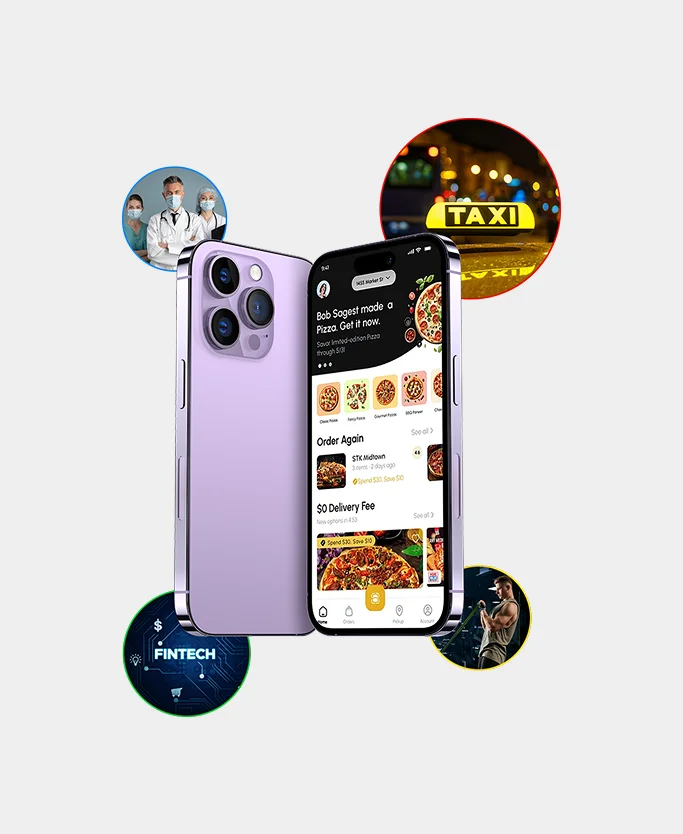
This is exactly the thinking behind iShopo, a restaurant mobile app platform developed by Calgary App Developer. We built iShopo specifically for restaurants that want speed without sacrificing control. It provides a fully customizable mobile app where you can adjust design, colors, layout, menu logic, and ordering flows, all on top of performance-tested, production-ready technology.
This means that even small and mid-sized restaurants can launch a professional mobile app with confidence, without long development cycles or heavy upfront costs.
A ready-made app like iShopo also simplifies long-term maintenance. Updates, security patches, feature upgrades, and performance improvements are handled centrally, so your team stays focused on food and service instead of managing technology.
For restaurants that want the speed of a template and the flexibility of custom design, iShopo delivers the best mix of reliability, affordability, and brand control.
- Estimated cost: $299—$499 per month
- Estimated timeline: With iShopo, you can get set up instantly.
Read Also: Top 10 POS Systems for Restaurants with AI Tools
Essential Features Every Restaurant Mobile App Should Include
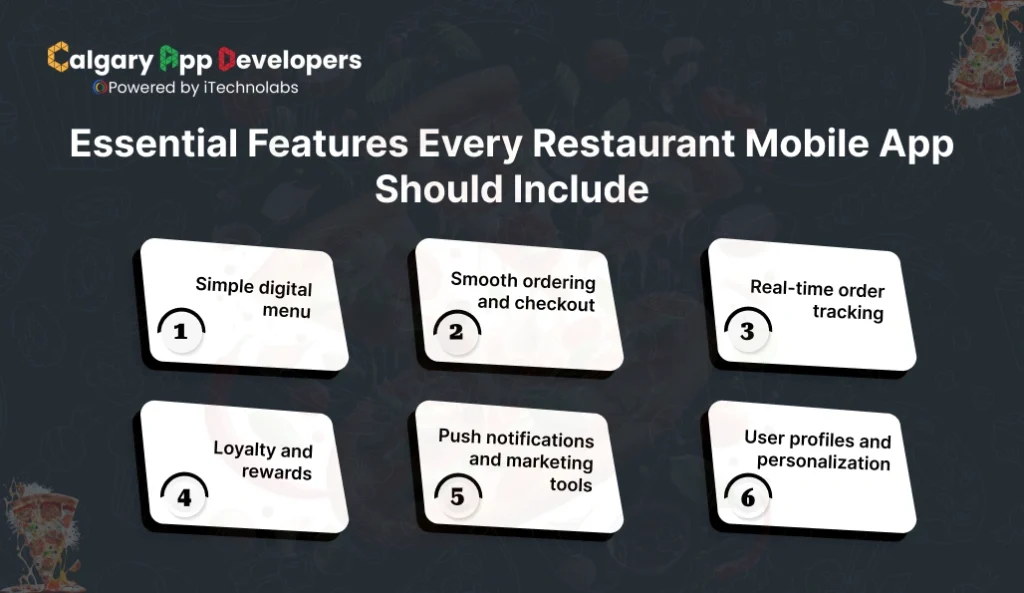
A strong Mobile App for Restaurants depends on a set of core features that make ordering easy, communication smooth, and loyalty stronger. These features shape the customer experience and determine whether users return to your app or move to a marketplace. Here are the essentials that every restaurant should include.
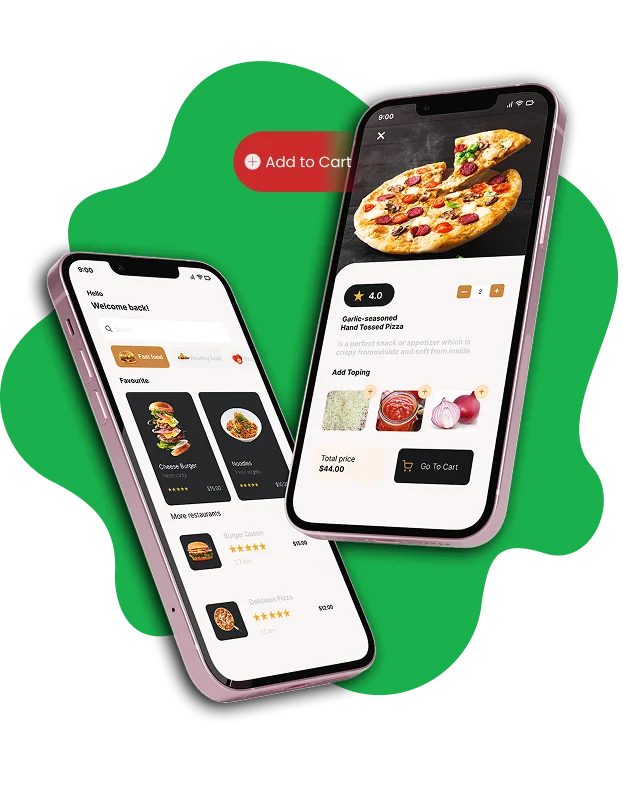
- Simple digital menu: Customers want to browse dishes quickly with clear photos, readable descriptions, and accurate pricing. A digital menu inside your app helps them explore your food without confusion. Filters, categories, and search options guide users to the right items faster.
- Smooth ordering and checkout: A good restaurant app makes the entire ordering flow feel natural. Users should add items to the cart, customize dishes, and select delivery or pickup in a few taps. A clean checkout page that supports major payment methods increases order completion.
- Real-time order tracking: Tracking helps customers see preparation stages and delivery status. It reduces follow-up calls and builds trust. Showing updates like “accepted,” “being prepared,” “dispatched,” and “arriving soon” gives users a sense of control over their order.
- Loyalty and rewards: Customers like earning something back with every order. Points, cashbacks, coupons, and tier-based rewards encourage frequent purchases. A built-in loyalty program shifts customers from third-party platforms to your direct ordering app.
- Push notifications and marketing tools: Notifications help you bring users back at the right moments. You can send updates about new dishes, festival specials, discounts, and limited-time offers. When used responsibly, this feature increases engagement and repeat orders.
- User profiles and personalization: Profiles allow customers to save addresses, reorder past meals, and store payment preferences. This reduces friction and saves time. Personal recommendations based on past orders improve satisfaction and help customers discover dishes they might enjoy.
These essentials create a Mobile App for Restaurants that feels complete, polished, and relevant to how users order food today. When these elements work together, your app becomes a trusted place where customers return for reliable service and a familiar experience.
Also Read: Top Restaurant Mobile App Features to Boost Your Food Business
Why Restaurants Should Partner With Us for Branded Mobile App Development
Restaurants choose us for branded mobile app development because we focus on real operational impact, not just attractive screens. Our approach is built around improving order flow, increasing repeat business, and giving restaurants full control over their digital presence. Every app we deliver is designed to support daily restaurant operations and long term growth.
- Built for Real Restaurant Workflows: We design apps around how restaurants actually operate. From menu updates and peak hour ordering to delivery coordination and repeat customers, every feature supports speed, accuracy, and ease of use for both staff and guests.
- Brand First App Design: Your app reflects your restaurant, not a generic template. Colors, layouts, menu structure, imagery, and tone are tailored to your brand identity so customers recognize and trust your app from the first interaction.
- Conversion Focused Ordering Experience: We optimize the full ordering journey, from menu browsing to checkout. Clear navigation, smart item customization, and fast payments reduce friction and increase completed orders without adding complexity.
- Transparent Pricing and Clear Timelines: Restaurants get clear cost expectations upfront. We outline what is included, how long setup takes, and what ongoing costs look like so there are no surprises after launch.
- Scalable and Reliable Technology: Every branded restaurant app is built to handle growth. Whether you add locations, increase order volume, or introduce new features like loyalty programs or table reservations, the app scales without performance issues.
- Ongoing Support and Ownership: You work with a dedicated team that stays accountable beyond launch. Updates, performance improvements, and feature enhancements are handled smoothly while you retain full ownership of your brand and customer data.
- Free Restaurant App Consultation: We offer a free consultation in Calgary to help restaurant owners evaluate whether a branded mobile app fits their goals. This includes feature planning, cost estimation, and a clear roadmap tailored to your business.
Our goal at Calgary App Developer is simple. We help restaurants build branded mobile apps that drive direct orders, strengthen customer loyalty, and reduce dependence on third party platforms, all while keeping technology practical and manageable.
Final Words:
A well-planned Mobile App for Restaurants gives your business a direct path to stronger loyalty, higher margins, and a more controlled customer experience. When customers can order with confidence and convenience, they return more often and build a deeper connection with your brand. The right app also helps your team work smarter through efficient ordering systems, better data, and more predictable demand.
If you are ready to take the next step, Calgary App Developers can help you build or customize a restaurant app that fits your vision. Our team creates polished, reliable mobile experiences that support online ordering, loyalty, reservations, and everything your restaurant needs to grow. With the right technology partner, your app becomes a long-term asset that strengthens your brand and keeps customers coming back.
FAQ’s About Create an App for Your Restaurant
1. Do restaurants really need a branded mobile app?
Yes. Restaurants without a branded app lose control over customers, data, and margins. A mobile app creates a direct ordering channel, improves repeat business, and reduces dependency on third-party platforms. With mobile ordering now driving a major share of food sales, a branded app is a growth tool, not a luxury.
2. How much does it cost to build a restaurant mobile app?
A custom-built restaurant app typically costs between $15,000 and $50,000+ depending on features and platforms. A ready-made branded app solution usually costs $299 to $499 per month, with no heavy upfront investment. The exact range depends on customization, integrations, and scale.
3. How long does it take to launch a restaurant mobile app?
Custom app development usually takes 8 to 16 weeks including design, development, and testing. A ready-made branded app can be launched within a few days or instantly, since core features like ordering, payments, and loyalty are already built and only branding and menu setup are required.
4. Will a mobile app really reduce third-party commission costs?
Yes. Third-party platforms often charge 15% to 30% commission per order. A branded app allows direct ordering, helping restaurants retain that margin. Even shifting a portion of repeat customers to your own app can save thousands annually and significantly improve profitability.
5. What are the must-have features in a restaurant mobile app?
Every restaurant app should include a digital menu, online ordering, secure payments, real-time order tracking, loyalty rewards, push notifications, and user profiles. These features reduce ordering friction, increase repeat orders, and improve customer satisfaction without adding operational complexity.
6. Can small or single-location restaurants benefit from a mobile app?
Yes. Small restaurants often see faster ROI because they avoid marketplace commissions and build loyal repeat customers. With ready-made solutions costing $299 to $499 per month, even single-location restaurants can launch a professional app without large upfront costs or technical overhead.


Pankaj Arora is a seasoned technology leader and the Founder of Calgary App Developer, with 10+ years of expertise in crafting high-performance digital solutions. His core competencies include full-stack app development, cloud-native architecture, API integration, and agile product delivery. Under his leadership, Calgary App Developers has empowered startups and enterprises alike with scalable mobile applications, secure web platforms, and AI-driven SaaS products.