










How Much Does It Cost to Maintain an App?
Building an app is only the first step. Once it’s live, the real work begins. Just like a car needs regular servicing or a website needs updates, mobile apps need ongoing care too. That’s where mobile app maintenance comes in.
Here’s the deal. Users assume that apps should function well, remain secure, and provide new features every now and again. If your app crashes, takes forever to load, or appears outdated, users will not linger. Maintenance makes your app shipshape and enables your business to remain competitive.
In this blog, we’ll walk you through the journey of how much does it cost to maintain an app in 2026, what contributes to those costs, and how you can keep them in check without burning out your budget.
- App maintenance is an ongoing cost that keeps apps secure, fast, and compatible in 2026.
- Most apps require yearly maintenance equal to 15 to 25 percent of development cost.
- Skipping maintenance leads to higher long-term expenses and user churn.
- Smart planning and regular updates keep costs predictable and manageable.
- Mobile app maintenance includes bug fixes, security updates, performance tuning, and OS compatibility changes that keep apps functional after launch.
- In 2026, small to mid-sized apps typically cost between $3,000 and $6,000 per year to maintain, while complex apps can exceed $20,000 annually.
- The first year after launch is usually the most expensive due to user feedback, stability fixes, and real-world performance adjustments.
- Regular maintenance improves app ratings, user retention, and long-term business credibility in competitive app stores.
- Factors like app complexity, backend infrastructure, third-party integrations, and user scale directly impact maintenance costs.
- Proactive maintenance prevents costly emergency fixes, security breaches, and full app rebuilds later on.
What Is App Maintenance and Why It Matters
Mobile app maintenance is the constant process of ensuring your app remains running, safe, and current once it’s live. It spans everything from patching bugs and optimizing performance to refining the design, introducing new features, and ensuring the app is compatible with the newest devices and operating systems.
Think of it as taking care of a house. You don’t just build it and walk away. Over time, things break, trends change, and your needs evolve. Apps are no different. Without regular upkeep, even the most well-built app can become slow, buggy, or irrelevant.
Here’s why it matters. User expectations are high. If your app crashes, lags, or doesn’t match current standards, users will delete it without a second thought. Plus, outdated apps are more vulnerable to security threats, which can put user data and your reputation at risk.
Mobile app maintenance isn’t just about fixing what’s broken. It’s about making sure your app stays useful, safe, and competitive in a fast-moving market. If your app is part of your business strategy, maintaining it should be non-negotiable.
Also Read: How to Find a Trustworthy App Developer & Protect Your App Idea?
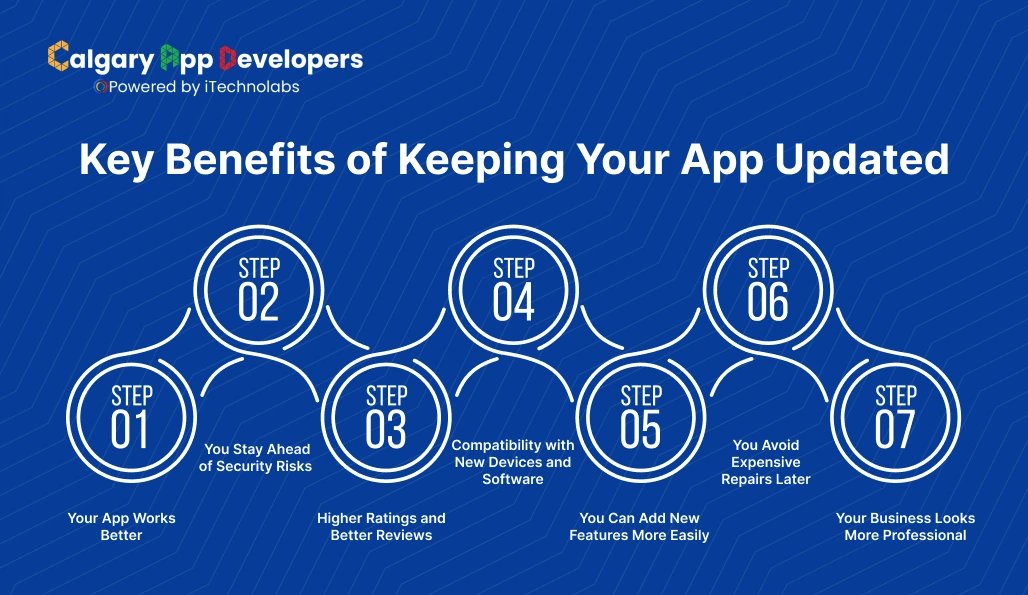
Key Benefits of Keeping Your App Updated
Updating your app regularly is not just about fixing bugs or making small tweaks. It is about protecting your investment, improving how your app performs, and making sure it continues to deliver value to users. This is where mobile app maintenance makes all the difference.
Let’s look at why keeping your app updated is one of the smartest things you can do for long-term success.
- Your App Works Better
An updated app runs faster, responds smoothly, and causes fewer problems for users. Whether it is a small design adjustment or a performance upgrade, these changes make your app easier to use. If your app is slow, unresponsive, or frustrating, users will leave. Regular maintenance keeps everything working the way it should.
- You Stay Ahead of Security Risks
Every app is exposed to some level of risk. Without updates, your app becomes an easy target for hackers, especially if it collects or stores user data. Security flaws do not fix themselves. Mobile app maintenance helps you patch vulnerabilities, stay compliant with data protection laws, and keep your users safe. This also protects your reputation and builds trust with your audience.
- Higher Ratings and Better Reviews
People are quick to leave reviews, especially when an app crashes or fails to deliver. A poor user experience often leads to negative ratings, which can drag down your visibility in app stores. On the flip side, apps that are regularly maintained tend to get better reviews, more downloads, and a stronger presence in search results. Keeping your app updated shows users that you care and that you are actively improving the experience.
- Compatibility with New Devices and Software
Mobile operating systems like iOS and Android release updates every year. New phones and tablets also bring hardware changes that can affect how your app performs. If your app is not updated to match these changes, it may stop working correctly or not work at all. Regular mobile app maintenance ensures your app stays compatible with the latest devices and system versions, so users do not run into problems after an update.
- You Can Add New Features More Easily
Your users may want new features. Your business might shift focus. Technology may offer new possibilities that improve how your app works. If your app is well maintained, adding new features or making changes becomes much simpler. This flexibility helps you stay relevant and respond quickly to changing needs without starting from scratch.
- You Avoid Expensive Repairs Later
Many app owners skip maintenance, thinking they are saving money. In reality, this often leads to bigger problems that cost more to fix later. Outdated code, broken features, or security breaches can all result in emergency repairs, downtime, or even a full rebuild. With regular maintenance, small issues are caught early, which keeps long-term costs lower and easier to manage.
- Your Business Looks More Professional
Users pay attention to how apps are maintained. An app that feels neglected can damage your brand. On the other hand, a well-maintained app sends the message that your business is reliable, trustworthy, and focused on quality. In a crowded app market, this is a powerful advantage.
Read Also: Steps to Choose the Best Mobile App Developers for Your Project
Why Ongoing Maintenance Is Crucial for Mobile Apps
Building an app is not a one-time project. The moment it goes live, it becomes a living product. It needs attention, updates, and continuous support to stay relevant and functional. This is where ongoing mobile app maintenance comes in.
Many businesses pour time and money into app development but fail to plan for what comes next. The result is an app that slowly breaks down, falls behind, and loses users. Regular maintenance prevents this.
Here is why it matters.
1. Technology Never Stands Still
Mobile operating systems like iOS and Android are updated several times a year. These updates often bring changes to security, functionality, and design. If your app does not keep up, it can quickly become outdated or stop working altogether.
Ongoing maintenance ensures that your app stays compatible with the latest software and devices. Without it, users may run into bugs or performance issues that push them to find better alternatives.
2. User Expectations Keep Rising
Today’s users expect more from mobile apps. They want fast loading times, clean interfaces, and a seamless experience. They do not care if an app worked perfectly last year. If it feels slow, buggy, or outdated now, they will uninstall it without a second thought.
With regular maintenance, you can fine-tune the user experience, fix small issues before they become big problems, and keep people engaged.
3. Security Risks Are Constant
Every app is a potential target for cyber threats. If your app handles user data, payment information, or personal content, then security is not optional. Outdated code and old frameworks can expose your app to attacks.
Mobile app maintenance helps you monitor for threats, apply security patches, and make sure your app follows current safety standards. This protects your users and builds trust in your brand.
4. Your App Grows With Your Business
Your business is not standing still, and your app should not either. Maybe you want to introduce a new feature, respond to customer feedback, or adapt to a new market trend. Regular maintenance makes it easier to evolve and scale your app as your business changes.
When an app is maintained properly, you can build on top of a strong foundation instead of constantly fixing what is broken.
5. Downtime Can Cost You
If your app suddenly stops working, it can damage your reputation, frustrate users, and lead to lost revenue. Emergency fixes are also more expensive and stressful than planned updates.
Ongoing maintenance helps you catch problems early, reduce the risk of sudden outages, and keep your app running without disruption.
Also Read: How Much Money Can You Make if You Own an App?
The Real Cost of App Maintenance in 2026
Maintaining an app is not free, and it is not something you can ignore once the app is live. Mobile app maintenance is an ongoing investment that directly affects how your app performs, how secure it is, and how happy your users are. If you want your app to stay relevant and reliable, you need to budget for it just like you did for development.
Let’s break down what mobile app maintenance really costs in 2026.
Cost to Maintain an App
On average, app owners should expect to spend between $250 and $500 per month to maintain a small- to mid-sized app. That adds up to around $3,000 to $6,000 per year just to cover the basics. This includes server hosting, routine bug fixes, performance monitoring, and small updates.
If your app is larger, has a complex backend, or handles sensitive data, the yearly cost can reach $15,000 to $25,000 or more. For example, if you spent $100,000 to build your app, expect to spend about $20,000 per year on maintenance, at least in the first year.
This is because the first year after launch often involves heavy work. You will likely need to:
- Add or remove features based on user behavior
- Respond to bug reports and fix errors quickly
- Adjust the app to meet real-world usage and performance demands
- Implement feedback and improve UX based on analytics
In the first year, maintenance costs can reach up to 50% of the total development cost. After that, the expense typically drops by 15 to 20 percent each year as the app becomes more stable and mature.
Breaking Down the Typical App Maintenance Costs
Mobile app maintenance includes a mix of ongoing services that keep your app secure, updated, and running smoothly. If you’re budgeting for post-launch expenses, here’s where your money typically goes.
- Hosting and Server Costs
Every app needs a backend to manage user data, load content, and handle requests.
- Cost range: $70 to $500 per month
- What affects cost: Traffic volume, data usage, file storage, and real-time features
Apps with high user activity, video streaming, or real-time chat will need more powerful servers, which leads to higher costs.
- Bug Fixes and Performance Optimization
Bugs are inevitable, especially after launch. Fixing crashes, glitches, or performance lags is part of ongoing mobile app maintenance.
- Cost range: Varies by issue complexity, typically a few hundred to a few thousand dollars monthly
- What’s included: Debugging, crash reports, UI fixes, speed improvements
- OS and Device Compatibility Updates
iOS and Android both release regular updates. If your app doesn’t adapt, features may break, or the app may stop working entirely.
- Update frequency: 2 to 4 times per year
- Typical cost: Depends on the scope of changes required per update
Staying current ensures users can keep using your app smoothly across all new devices and operating systems.
- Third-Party Service Maintenance
Many apps rely on third-party tools for payments, logins, maps, or analytics. These tools update often, and your app must adapt to those changes.
- Common integrations: Stripe, Google Maps, Facebook Login, Firebase
- Risk of skipping: Broken features, security issues, outdated functionality
- Push Notifications and Messaging Tools
Push notifications are a key part of user engagement. They also need maintenance.
- Cost range: Free to $200 per month, depending on the platform and volume
- Popular tools: OneSignal, Firebase Cloud Messaging
For large-scale apps, advanced features or custom notification logic may raise costs.
- Security Patches and Compliance
Security issues evolve constantly. If your app handles sensitive data, this is one of the most critical areas of maintenance.
- Tasks include: Patching vulnerabilities, encrypting data, following data protection laws
- Compliance examples: GDPR, HIPAA, PCI-DSS
Failure to maintain security can lead to user trust issues or legal trouble.
- Feature Updates and User Feedback Implementation
As users start interacting with your app, you’ll likely need to make improvements. These may be feature upgrades, interface changes, or workflow refinements.
- Common triggers: User reviews, analytics, business changes
- Cost impact: Varies depending on the scale and complexity of the update
The first year after launch is when you’ll likely invest most in refining the app based on feedback.
- Analytics and App Monitoring
Analytics tools help you understand user behavior and app performance. Proper maintenance ensures data accuracy and actionable insights.
- Tools used: Firebase Analytics, Mixpanel, AppDynamics
- Cost: Some tools are free with limited features, while advanced tools come with monthly fees
Analytics also help you identify bugs and performance issues before users complain.
- Customer Support and Technical Help
If your app serves a large user base, you may need a support team to handle issues or questions.
- Support models: In-app chat, email support, help desk integrations
- Cost factors: Number of users, response time goals, third-party services used
Customer support can also help you gather valuable feedback for future updates.
Where the Money Goes
Here’s a quick recap of the most common mobile app maintenance costs:
| Maintenance Task | Estimated Cost (Monthly) |
| Hosting and Servers | $70 to $500 |
| Bug Fixes and Performance | $300 to $2,000+ |
| OS and Device Updates | Varies (per update cycle) |
| Third-Party Integrations | $0 to $300 |
| Push Notifications | $0 to $200 |
| Security and Compliance | $500 to $2,000+ annually |
| Feature Enhancements | Varies |
| Analytics and Monitoring | $0 to $250 |
| Customer Support | $200 to $1,000+ |
These costs will vary depending on the complexity of your app, how often you update it, and the scale of your user base. But no matter the size of your app, mobile app maintenance is what keeps it alive, secure, and competitive over time.
Read Also: How Long Does it Take to Develop an App?
What Drives App Maintenance Prices Up (or Down)
Mobile app maintenance is not a fixed cost. It can vary widely depending on what your app does, how it was built, and who is maintaining it. If you are wondering why one app costs more to maintain than another, here are the key factors that influence the final price.
- App Complexity
The more features your app has, the more maintenance it needs.
- Basic apps with simple navigation and limited screens are cheaper to maintain
- Complex apps with live chat, real-time updates, media uploads, or third-party integrations require more frequent updates and testing
The more moving parts your app has, the higher your monthly upkeep will be.
- Number of Platforms
Maintaining one app for Android is cheaper than maintaining separate apps for Android and iOS.
- Single-platform apps are easier to test and update
- Multi-platform apps require duplicate work for each platform
Native apps built separately for each platform also tend to cost more than cross-platform apps built with shared code.
- Backend Infrastructure
Apps that rely on a backend to manage user data, transactions, or real-time services need regular server maintenance.
- Cloud services like AWS, Firebase, or Azure offer flexibility but add ongoing hosting costs
- Custom backend systems can require constant monitoring, scaling, and patching
A heavier backend setup means higher mobile app maintenance costs.
- Frequency of Updates
Some apps only need a few updates per year. Others require updates every few weeks to stay current.
- If your app is part of a fast-changing market
- If it relies on user feedback and data
- Or if you want to roll out regular feature improvements
Then you will need to invest more in ongoing maintenance and development.
- Third-Party Services
Many apps use external services for things like payments, logins, analytics, or messaging.
- These services have their own update cycles
- Your app needs to stay compatible with them
Every time one of these services changes its API or terms, you may need to make changes on your side too.
- Developer Location and Rates
Where your development team is based plays a big role in pricing.
- Developers in North America or Western Europe typically charge $75 to $150 per hour
- Developers in Eastern Europe, Latin America, or South Asia may charge $25 to $60 per hour
Working with a local team may offer easier communication, but offshore teams can significantly reduce long-term costs if managed well.
- User Base and Scale
Apps with a small, local user base cost less to maintain than apps serving thousands or millions of users.
- A larger audience means more support requests
- More usage often leads to more bugs and performance issues
- High traffic can drive up hosting and data storage fees
If your app is scaling fast, your maintenance budget needs to grow with it.
- Security and Compliance Requirements
Apps that handle personal data, payments, or health information must follow strict legal and security standards.
- Regular audits, encryption updates, and compliance checks add to maintenance costs
- Failing to stay compliant can lead to fines or legal issues
The more sensitive your app’s data, the more you will need to spend on staying secure and compliant.
- Quality of Initial Development
If your app was built quickly or with shortcuts, you are more likely to face maintenance problems.
- Clean code and good documentation make updates easier
- Poorly built apps often need more fixes, more time, and more money
Investing in quality development from the start reduces mobile app maintenance costs later on.
App maintenance costs go up when your app is complex, large, or built on unstable foundations. They go down when your code is clean, your app is simple, and your systems are efficient. Knowing what drives these costs helps you make smarter decisions and avoid surprises down the road.
Whether your app is just starting out or already live, understanding these factors will help you manage mobile app maintenance more effectively and keep your costs under control.
Also Read: How Much Does it Cost to Hire App Developers in Canada?
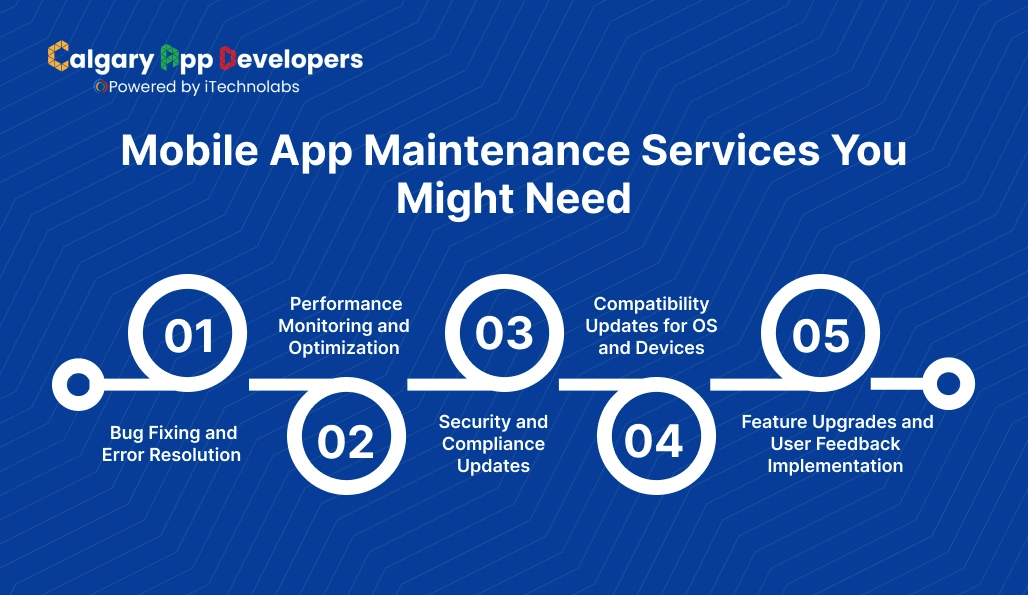
Mobile App Maintenance Services You Might Need
Not all apps require the same level of support, but most need a core set of maintenance services to stay functional and secure. Here are a few you should expect to use regularly.
- Bug Fixing and Error Resolution
Even well-tested apps can crash or behave unexpectedly once real users start using them. Ongoing mobile app maintenance ensures these bugs are identified quickly and fixed before they frustrate users or damage your reputation. - Performance Monitoring and Optimization
Slow load times and laggy screens can drive users away. Regular performance checks help improve speed, reduce crashes, and create a smoother experience. This service keeps your app responsive and stable as traffic increases or new features are added. - Security and Compliance Updates
Security risks evolve constantly. Regular maintenance includes patching vulnerabilities, updating encryption standards, and ensuring your app stays compliant with data protection regulations like GDPR or PCI-DSS. - Compatibility Updates for OS and Devices
When iOS or Android pushes updates, your app must be adjusted to work properly on the latest devices. Mobile app maintenance services keep your app up-to-date with current system requirements and device specifications. - Feature Upgrades and User Feedback Implementation
User expectations change, and your app should keep up. Maintenance often includes making small improvements, tweaking features, or redesigning screens based on real feedback and usage data. This helps your app stay relevant and competitive.
Smart Ways to Cut Down on App Maintenance Costs
Mobile app maintenance is a long-term commitment, but there are smart ways to reduce the cost without cutting quality. Here are four effective strategies that can help you stay efficient and save money.
- Start with Clean, Scalable Code
Good maintenance begins with how the app is built. Clean, well-structured code makes it easier to fix bugs, roll out updates, and avoid major rebuilds later. Investing in proper development upfront reduces the chances of technical debt that can inflate your costs down the road.
- Use Cross-Platform Development
If your app is going on both Android and iOS, using a cross-platform framework like Flutter or React Native can cut development and maintenance costs in half. You only need one codebase to update, test, and manage. This saves time and reduces the effort required to maintain separate platforms.
- Automate Testing and Monitoring
Automated tools help detect issues early, so you can fix them before they affect users. Instead of relying on manual testing or waiting for negative feedback, automated monitoring keeps your app stable and reduces emergency maintenance work. Fewer surprises mean fewer high-cost fixes.
- Plan Regular, Small Updates
Don’t wait until your app breaks or falls behind. Instead, schedule consistent check-ins to update dependencies, fix minor bugs, and test performance. This keeps your app healthy and spreads the workload evenly, helping you avoid expensive last-minute overhauls.
These simple steps can make a big difference. When you approach mobile app maintenance with the right strategy, it becomes easier to manage, more affordable over time, and better aligned with your business goals.
Read Also: How to Develop an iOS App
Wrapping Up
Mobile app maintenance is not something you do once and forget. It is what keeps your app running smoothly, secure against threats, and aligned with what users expect over time. Without regular upkeep, even the best apps can quickly become slow, outdated, or unusable.
Maintaining an app does come with costs, but those costs are manageable when you build smart, update consistently, and avoid unnecessary complexity. With the right approach, maintenance becomes a steady part of growth rather than a burden.
If your app is part of your business, mobile app maintenance is not optional. It is how you protect your investment and keep your users coming back.
Want Affordable App Development & Maintenance Services
At Calgary App Developer, we provide cost-effective app development solutions that include:
- Ongoing mobile app support & maintenance
- Performance monitoring
- Scalability improvements
- Optimization & version upgrades
- Security enhancements
Partner with our experts to lower your app maintenance costs while keeping your app running smoothly, securely, and efficiently — all at flexible and budget-friendly rates.
FAQ’s on Mobile App Maintenance Costs
1. What does mobile app maintenance actually include?
Mobile app maintenance covers everything needed to keep an app functional after launch. This includes bug fixes, performance optimization, security updates, OS compatibility changes, server upkeep, third-party integration updates, analytics monitoring, and small feature improvements. It ensures the app stays stable, secure, and usable as technology and user expectations evolve.
2. How often should an app be maintained?
App maintenance is an ongoing process, not a one-time task. Performance and security monitoring should happen continuously. Minor updates are usually handled monthly, while OS compatibility updates are required several times a year. Feature improvements depend on user feedback and business goals, but skipping regular maintenance often leads to higher costs later.
3. Is app maintenance required even if the app works fine?
Yes. An app can appear stable while still becoming outdated or vulnerable behind the scenes. Operating system updates, security threats, and third-party service changes happen regularly. Without maintenance, issues may surface suddenly, causing crashes or data risks. Proactive maintenance prevents unexpected failures and protects long-term app performance.
4. How much should startups budget for app maintenance in 2026?
Startups should plan to spend around 15 to 25 percent of the original development cost annually on maintenance. For smaller apps, this often means $3,000 to $6,000 per year. More complex apps with backends, integrations, or user data may require $15,000 or more, especially during the first year after launch.
5. Does maintenance cost less after the first year?
In most cases, yes. The first year typically involves more fixes, user feedback adjustments, and performance tuning. Once the app stabilizes, maintenance costs often decrease by 15 to 20 percent annually. However, apps that scale quickly or add new features frequently may continue to require higher ongoing investment.
6. Can skipping maintenance hurt app store rankings?
Absolutely. Apps that crash, lag, or fail after OS updates tend to receive poor reviews and lower ratings. App stores factor user experience into visibility and rankings. Regular maintenance improves performance, reduces negative reviews, and signals that the app is actively supported, which helps maintain a stronger store presence.
7. Is maintenance cheaper with cross-platform apps?
Generally, yes. Cross-platform apps use a shared codebase for iOS and Android, which reduces duplicate work during updates and bug fixes. This lowers maintenance effort compared to maintaining two separate native apps. However, complex features or platform-specific behavior can still increase costs depending on app requirements.
8. What happens if maintenance is ignored for too long?
Ignoring maintenance leads to technical debt, security vulnerabilities, broken features, and poor user experience. Over time, fixing accumulated issues can cost more than regular upkeep. In extreme cases, the app may require a full rebuild. Consistent maintenance is far more cost-effective than emergency fixes or starting over.


Pankaj Arora is a seasoned technology leader and the Founder of Calgary App Developer, with 10+ years of expertise in crafting high-performance digital solutions. His core competencies include full-stack app development, cloud-native architecture, API integration, and agile product delivery. Under his leadership, Calgary App Developers has empowered startups and enterprises alike with scalable mobile applications, secure web platforms, and AI-driven SaaS products.