







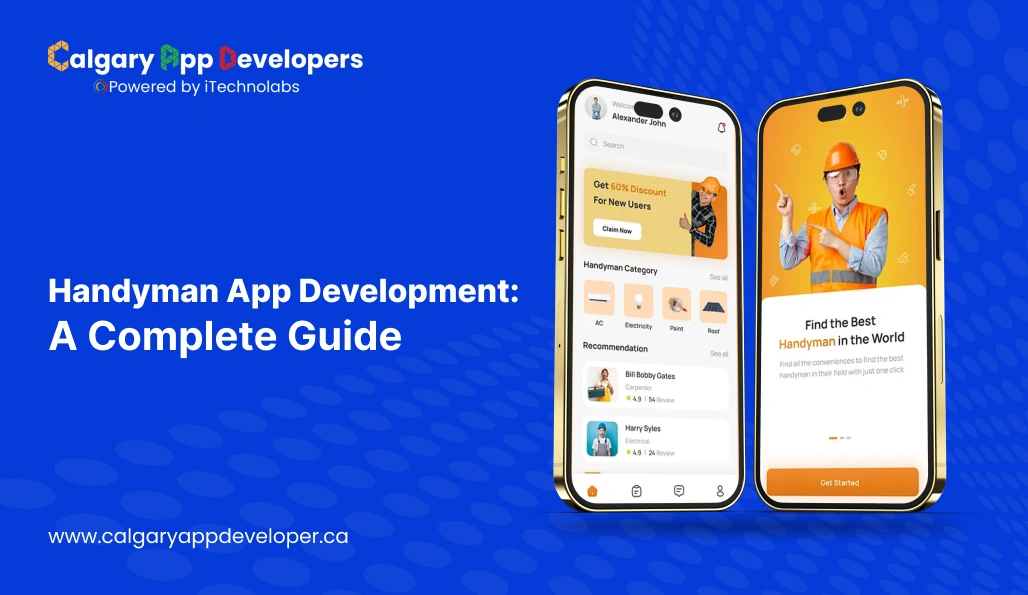
Handyman App Development: A Complete Guide
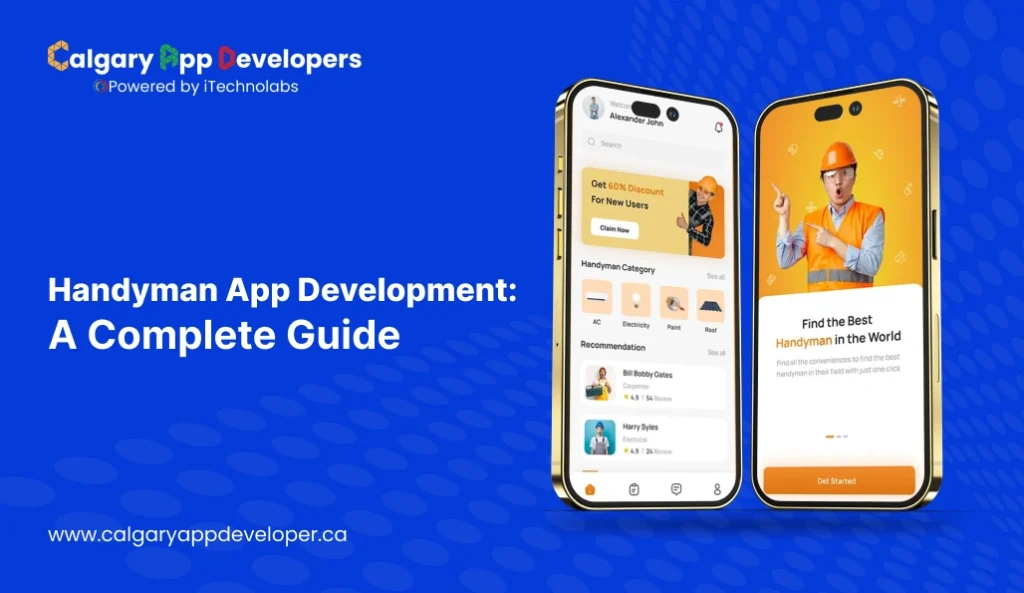
Imagine that drip in your kitchen sink is gone in minutes, not hours or days. You open an app, tap a few buttons, and a trusted local handyman is on the way. That’s not a fantasy. It’s what modern users expect when they need help around the house.
The market for on-demand handyman apps is growing fast. In 2024, it was already worth about 1.5 billion USD. And the forecast? It’s expected to climb all the way to 5.2 billion USD by 2033. That’s a compound annual growth rate of over 15 percent
So, you’re writing or developing for this space. You don’t want generic. You want something that connects and tells readers why this matters, how it’s changing homes and expectations, and what to watch next. This guide walks through exactly that: the trends, the smart features, and how to build an app people actually need.
TL;DR
- The handyman app market is growing fast, driven by on-demand services and changing user expectations.
- Successful handyman apps focus on trust, speed, and simple booking experiences.
- Development costs vary widely based on features, platforms, and region.
- Monetization works best when multiple revenue models are combined.
Key Points
- Handyman apps connect users with verified professionals, reducing friction in booking home services and improving reliability for both customers and providers.
- The market includes on-demand, marketplace, branded, and niche apps, and choosing the right model depends on audience behavior and regional demand.
- Core features such as real-time booking, secure payments, ratings, GPS tracking, and admin dashboards are essential for usability and scale.
- Building a handyman app follows a structured process from market research and feature planning to testing, launch, and post-launch scaling.
- Development costs typically range from 15,000 USD to over 100,000 USD, with ongoing maintenance requiring an annual budget of 15 to 20 percent.
- Revenue can be generated through commissions, subscriptions, featured listings, surge pricing, ads, and affiliate partnerships.
- Leading apps like TaskRabbit, Thumbtack, and Urban Company set clear benchmarks for trust, design quality, and regional adaptability.
Handyman Apps Explained and Why They Matter
Think of a handyman app as a bridge between people who need quick fixes and professionals who can actually get the job done. Instead of searching endlessly for reliable help, users open an app, browse through verified service providers, check ratings, and book a handyman in minutes. It saves time, cuts out the uncertainty, and puts convenience at the center.
What really makes these apps matter is how they reshape both sides of the equation. For homeowners and renters, it means fewer headaches when something breaks down. For service providers, it opens up a steady stream of work, better visibility, and the ability to build trust with digital reviews and repeat customers.
The way people live is changing. More urban living, tighter schedules, and an expectation of on-demand solutions have made these apps more than just nice to have. They are becoming the standard for how people want services delivered. In short, handyman apps matter because they bring order and simplicity to one of the most common frustrations of daily life and home maintenance.
Different Types of Handyman Applications
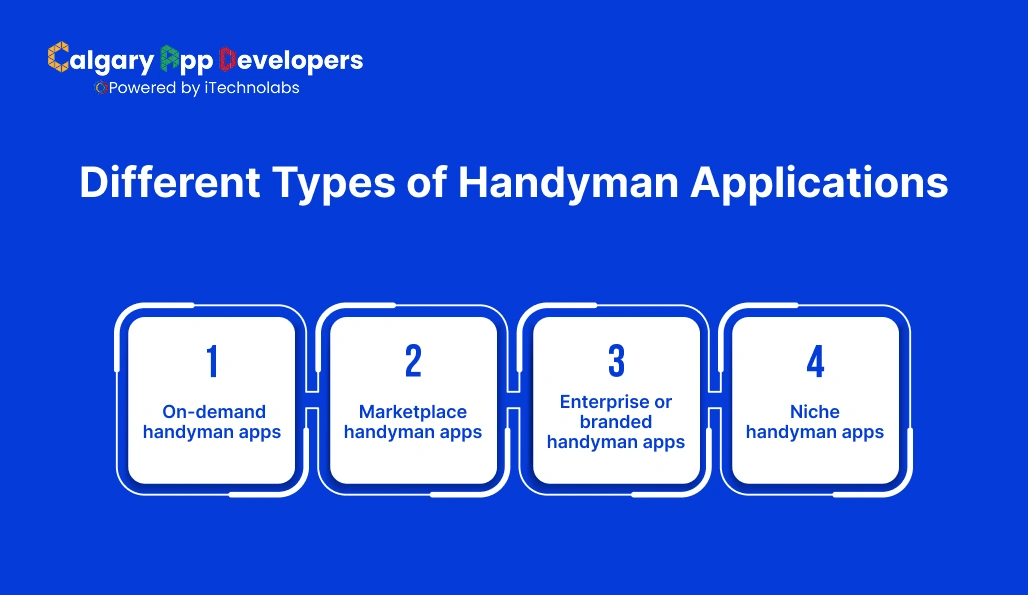
Not all handyman apps work the same way. Some focus on connecting people with nearby professionals, while others build full-service marketplaces that cover everything from plumbing to furniture assembly. When you look at handyman app development, you’ll notice a few common types that dominate the market.
- On-demand handyman apps: These are the most familiar. Users open the app, describe the problem, and a nearby professional accepts the request. Apps like TaskRabbit in the USA and Urban Company in India have set the standard here. They focus on speed, trust, and verified workers.
- Marketplace handyman apps: Instead of assigning a worker instantly, these apps give users options. Customers can browse profiles, compare reviews, and choose the professional they prefer. Thumbtack in the US and Angi (formerly Angie’s List) are popular examples of this model.
- Enterprise or branded handyman apps: Some large service providers or franchises develop their own apps to manage bookings and customer relationships. For instance, Mr. Handyman in North America uses its branded app to handle requests directly, without relying on third-party platforms.
- Niche handyman apps: These focus on specific tasks like plumbing, electrical work, or appliance repair. In Europe, apps like Helpling started with home cleaning and then expanded into handyman services. Their approach shows how specialization can attract a loyal customer base.
The type of handyman app you choose to build depends on your audience and market conditions. Whether you aim for an on-demand solution or a niche platform, smart handyman app development means aligning features with real user needs and local demand.
Also Read: Custom On-Demand App Development Guide
Must-Have Features in a Handyman App
When it comes to handyman app development, the features you choose shape the entire experience. A good app should feel effortless for customers who just want their problem fixed while also giving service providers the right tools to deliver quickly and professionally. Here are the must-haves explained in detail.
- Simple registration and login
The first step in any app should feel light, not like filling out a form at the bank. A handyman app needs a quick and secure way for users to get started. Options like mobile number verification, email signup, or social logins through Google or Facebook make the process painless. For service providers, the signup process should also include background checks or document uploads to maintain trust without overwhelming them. - Service search and filters
Nobody has time to scroll through dozens of irrelevant listings. A structured service menu with smart filters is essential. Categories such as plumbing, electrical, furniture assembly, or home cleaning let users find the right help in seconds. Adding search by price, ratings, or availability makes it even more useful. This feature is one of the biggest drivers of customer satisfaction because it puts control in the user’s hands. - Real-time booking and scheduling
Convenience is the promise these apps make, and real-time booking is what delivers it. Users should be able to book instantly if they need urgent help or schedule a service for later in the week. A built-in calendar that syncs availability with handyman schedules reduces back-and-forth communication. For providers, having a clear view of upcoming jobs helps them plan routes and maximize daily earnings. - Secure payments
Trust is built not just through services but also through smooth financial transactions. Multiple payment methods like debit and credit cards, digital wallets, and UPI in markets like India are critical. Adding features like one-click payments, digital invoices, and refunds for cancellations makes the process reliable. Secure payment gateways with encryption reassure users that their money and data are safe. - Ratings and reviews
People trust other people’s experiences more than any marketing claim. A transparent ratings and reviews system helps customers feel confident in their choice. Service providers also benefit because good reviews strengthen their reputation and lead to repeat bookings. Handyman app development should make this system simple, honest, and tamper-proof so it reflects genuine customer experiences. - GPS tracking and location services
The frustration of waiting endlessly for a service provider is real. Live GPS tracking solves this problem. Customers can see the handyman’s current location and estimated arrival time, which reduces anxiety and increases transparency. Providers also save time with accurate navigation that helps them avoid delays. For businesses, location data can be used to optimize operations and assign the nearest handyman to new requests. - Push notifications
Staying connected without being intrusive is an art. Push notifications keep users informed about important updates like booking confirmations, handyman arrival times, or special discounts. They also help reduce no-shows by reminding both customers and providers of upcoming jobs. For developers, the trick is to strike the right balance: valuable updates, not spam. - In-app chat or call option
Communication is where many service bookings break down. Giving users the option to chat or call directly within the app clears up doubts about the task, pricing, or location before the handyman arrives. This feature also creates a sense of security because both sides know they can easily connect if needed. For international apps, adding real-time translation features can be a smart touch. - Admin dashboard
Behind the scenes, the admin dashboard is the command center of handyman app development. It allows business owners to track user activity, manage service providers, view payments, resolve disputes, and monitor overall performance. A good dashboard offers data-driven insights that help businesses improve customer satisfaction while also scaling efficiently. - Customer support
No matter how smooth the app, issues will happen. A strong customer support feature is non-negotiable. Whether it’s through live chat, FAQs, or direct call options, users should always feel they have someone to reach out to when things go wrong. Quick and empathetic support builds long-term trust and sets the app apart from competitors that leave customers hanging.
On-Demand Handyman Apps and How They Work
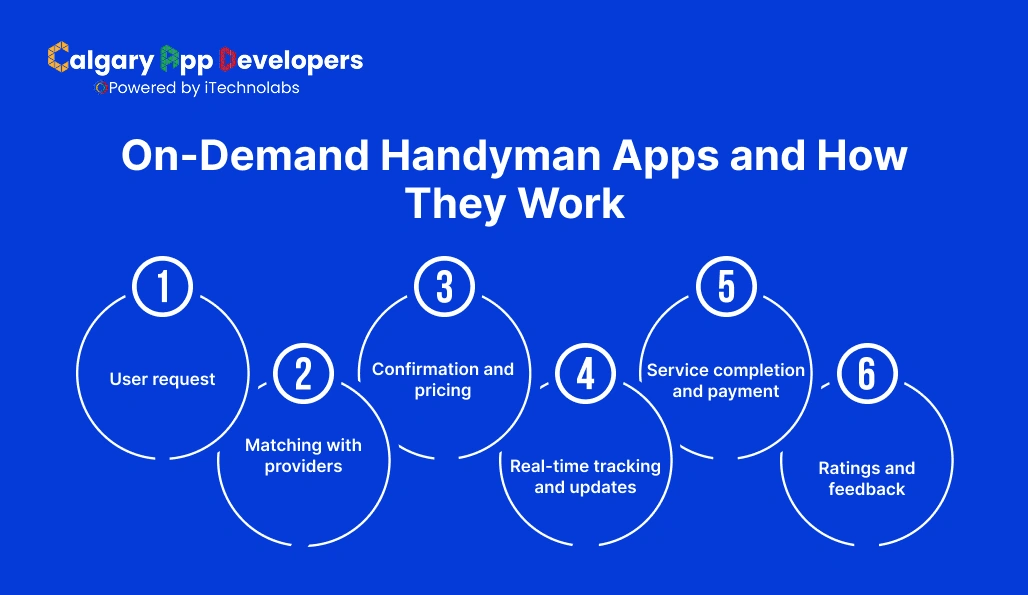
In handyman app development, the on-demand model is the most popular. These apps work on a simple idea: connect people who need quick help with professionals who are ready to provide the service in real time. Think of it as booking a ride, but for home repairs and maintenance. The process feels simple to the customer, yet there are multiple steps happening behind the scenes to make it seamless.
- User request
The process begins when the customer opens the app and selects the service they need. Categories usually include plumbing, carpentry, appliance repair, painting, or electrical work. Many apps allow customers to upload photos or short videos of the issue so the handyman knows exactly what to expect. The user also selects a preferred time slot and enters their location. This step matters because it ensures the right handyman with the right skills shows up prepared. - Matching with providers
Once the request is placed, the app searches for available handymen nearby. This step relies on the app’s algorithm, which checks location, availability, skill set, and sometimes past ratings. In some apps, the system automatically assigns the nearest available handyman to speed things up. In others, customers can browse profiles and select a provider based on reviews, pricing, and experience. Effective handyman app development focuses on striking a balance between quick response times and giving customers enough choice to feel confident. - Confirmation and pricing
After the app suggests a provider, the customer receives a price estimate. Some apps display flat rates, while others offer hourly pricing or custom quotes depending on the task. Customers then confirm the booking or reschedule if the time does not work. Transparent pricing is critical here because users want to know upfront what they will be paying. From a development standpoint, having flexible pricing options makes the app suitable for different kinds of tasks, from small repairs to more detailed work. - Real-time tracking and updates
This is where on-demand apps stand out compared to traditional booking. Customers can track the handyman’s location once the booking is confirmed. The app shows the estimated arrival time and sends notifications at different stages, such as when the handyman accepts the job, when they are on the way and when they arrive. This builds trust because the customer is never left wondering if help will arrive. For providers, location tracking helps with navigation and planning, which improves efficiency. - Service completion and payment
Once the handyman finishes the job, payment is completed directly through the app. Customers can choose from multiple payment options such as debit or credit cards, digital wallets, or UPI. Secure payment gateways make transactions reliable, while instant invoices provide customers with proof of service. For providers, automated payments mean they do not have to worry about delayed collections. In handyman app development, this step is crucial because payment security is one of the first things users evaluate when deciding whether to trust a new platform. - Ratings and feedback
The final step is feedback. Customers rate the handyman on punctuality, professionalism, and quality of work. They can also leave written reviews to describe their experience. These reviews create accountability and guide future customers when choosing a provider. For handymen, consistently good ratings lead to more jobs and higher earnings. For the business, this system is a valuable source of insights about what customers appreciate and where improvements are needed. A transparent review system is what turns a one-time booking into long-term trust.
Read Also: How to Create a Food Delivery App
Why Handyman App Development Is a Smart Move for Businesses
Home services have always been in demand, but the way people book those services has changed completely. Instead of relying on word of mouth or long phone calls, customers now want solutions that are instant, transparent, and reliable. This shift has created a huge opportunity for businesses to step into the digital space with handyman app development.
- Growing market demand
The home services industry is expanding worldwide. Reports show billions of dollars are being spent each year on repairs, installations, and maintenance. Customers are moving toward digital platforms because they want faster and more convenient solutions. By investing in handyman app development, businesses position themselves at the heart of this growing demand. - Steady revenue streams
An app is not just a booking tool. It can become a consistent revenue engine. Businesses can earn through service fees, commissions from providers, premium listings, and even subscription models for loyal customers. The more customers use the app, the stronger and more predictable the revenue becomes. - Better visibility and brand value
Having an app puts your brand directly on your customer’s phone. That constant visibility increases brand recall and builds trust. For small businesses or startups, this can be a game-changer, as customers are more likely to book through a professional platform than make calls to unknown providers. - Improved customer trust and loyalty
Apps with verified professionals, secure payments, and transparent reviews make customers feel safe. When customers know they can rely on your platform, they are more likely to return for repeat services. Strong customer retention reduces marketing costs and strengthens the long-term business model. - Efficient operations
Managing bookings through phone calls or manual logs often leads to errors and missed opportunities. With handyman app development, businesses get access to powerful admin dashboards, real-time data, and automated scheduling. This improves efficiency, reduces overhead costs, and helps businesses scale without losing control. - Competitive edge
More people are entering the handyman service space every year. Businesses that adopt digital platforms quickly stand out from traditional competitors. A well-designed app shows professionalism, builds credibility, and creates a smoother experience that attracts both customers and top-quality service providers.
Handyman app development is not just about creating another mobile application. It is about meeting customers where they already are, creating long-term business growth, and staying ahead of competitors in a fast-growing industry. For businesses that want to build trust, expand reach, and generate steady revenue, this is one of the smartest investments to make right now.
Step-by-Step Guide to Building a Handyman App
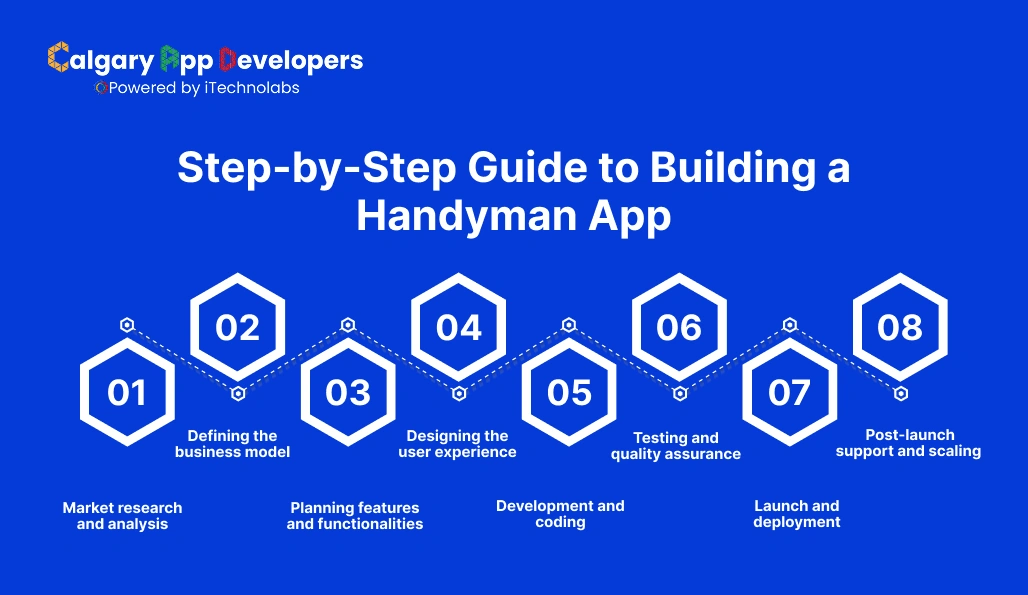
Developing an effective handyman app is less about leaping into coding and more about having a logical process that progresses from research to launching and continuing on. Every phase contributes to the app’s reliability, usability, and profitability.
Step 1: Market research and analysis
Before a single line of code is written, companies must know the market they’re stepping into.
- Define customer pain points like a lack of trusted providers, surprise costs, or delayed service
- Analyze competitors like TaskRabbit, Urban Company, or Thumbtack to see what works and what does not
- Study regional trends since user expectations and service demands differ from one location to another
Step 2: Defining the business model
A handyman app can work in several ways. Businesses need to choose the right model before development begins.
- On-demand model where the nearest provider is assigned instantly
- Marketplace model where customers browse and select providers
- Niche model focused on specific services like plumbing, cleaning, or electrical work
- Hybrid model combining multiple approaches for flexibility
Step 3: Planning features and functionalities
Once the model is decided, the next step is planning what the app should include.
- Core features: Registration, service booking, payment, reviews, notifications, and support
- Provider features: Job management, profile setup, earnings dashboard, and scheduling
- Admin features: Analytics dashboard, provider management, user management, and dispute resolution
- Optional advanced features: AI-driven job matching, loyalty programs, or AR-based problem diagnosis
Step 4: Designing the user experience
A handyman app should feel simple to use for both customers and service providers.
- Wireframes are created to map the layout of the app
- Designers focus on intuitive navigation, clean visuals, and easy booking flows
- Attention is given to color schemes, fonts, and icons to build brand identity
- Accessibility features such as larger fonts and voice commands may be included for broader reach
Step 5: Development and coding
This is where the technical foundation is built. App developers create the actual app based on the planned features and design.
- Backend development ensures secure databases, algorithms for matching, and smooth server performance
- Frontend development creates the user-facing interface for customers and providers
- APIs are integrated for payments, maps, notifications, and communication features
- Security protocols are added to protect user data and financial transactions
Step 6: Testing and quality assurance
No app should launch without rigorous testing.
- Functional testing checks whether every feature works as expected
- Usability testing ensures the app feels easy and intuitive to navigate
- Performance testing measures how the app handles heavy traffic and multiple bookings
- Security testing verifies that data and payments are fully protected
Step 7: Launch and deployment
Once testing is complete, the app is prepared for release.
- The app is published on platforms like Google Play and Apple App Store
- Marketing campaigns are launched to attract the first users
- Initial feedback is collected from early customers to identify improvements
Step 8: Post-launch support and scaling
Handyman app development does not stop at launch. Ongoing updates and improvements are essential.
- Regular bug fixes and security updates keep the app stable
- New features are added over time to stay ahead of competitors
- Analytics help track user behavior, identify trends, and guide future growth
- Scaling strategies allow the app to expand into new markets or service categories
Handyman app development is a step-by-step journey that starts with research and continues long after launch. By following these stages carefully, businesses can create an app that not only solves real customer problems but also grows into a profitable and trusted platform.
Also Check: Top 10 Business Mobile App Features to Scale Your Business
Cost of Building a Handyman App
The cost of handyman app development usually ranges from 15,000 USD to 60,000 USD for a basic to mid-level application. For highly advanced apps with premium features and custom integrations, the cost can even cross 100,000 USD. The actual figure depends on complexity, features, and region of development.
Estimated Cost Breakdown
| Component | Estimated Cost Range | Notes |
| Basic app with core features | 15,000 to 25,000 USD | Includes registration, booking, payments, and reviews |
| Mid-level app with extra features | 25,000 to 60,000 USD | Includes GPS, notifications, scheduling, and admin panel |
| Advanced app with custom features | 60,000 to 100,000+ USD | Includes AI, analytics, loyalty programs, and multi-language support |
| Ongoing maintenance per year | 15% to 20% of total cost | Covers bug fixes, updates, and server management |
Key Factors Affecting Cost
The total cost of handyman app development depends on several factors. Here are the main ones explained.
- Development team location
The hourly rate of developers varies widely across regions.
| Region | Average Hourly Rate (USD) |
| North America | 80 to 150 |
| Western Europe | 60 to 120 |
| Eastern Europe | 40 to 80 |
| South Asia (India) | 20 to 50 |
Calgary has become one of the best places to build reliable development teams. The city combines competitive rates with a highly skilled workforce, strong English proficiency, and time zone alignment with North America. You also gain the advantage of stable infrastructure and a business-friendly environment.
- App complexity and features
- Basic features like user registration, booking, payments, and reviews cost less since they are standard in most apps
- Advanced features like AI-driven matching, AR problem detection, loyalty programs, and advanced analytics require more time and budget
- The more complex the app, the longer the development timeline and the higher the overall cost
- Platforms chosen
- Single-platform apps for either Android or iOS are cheaper and faster to build
- Cross-platform or native for both Android and iOS increases cost but expands reach and user base
- UI and UX design
- Simple designs with standard templates are more affordable
- Custom-designed interfaces with unique animations, graphics, and advanced navigation add significantly to the cost but improve user engagement
- Ongoing maintenance and updates
Handyman app development does not end at launch. Regular updates, security patches, server management, and customer support add to the cost. On average, businesses should budget 15 to 20 percent of the original development cost per year for maintenance.
The cost of handyman app development is not a fixed figure but a range that depends on business goals, required features, and chosen technology stack. Businesses should start with a clear budget and prioritize must-have features first, leaving room for advanced functions in later updates. This approach ensures a practical launch while keeping long-term growth in focus.
Read Also: How Much Money Can You Make if You Own an App?
Ways to Monetize a Handyman App
Handyman app development is not only about creating a platform for booking services. It is also about building a sustainable business model. A well-planned app can generate revenue from multiple sources, which makes it more profitable and attractive for long-term growth.
- Commission on services
The most common model is charging a commission on every completed service. Each time a customer books a handyman through the app, the platform earns a percentage of the transaction. This ensures consistent income as bookings increase.
- Subscription plans
Both customers and providers can be offered subscription options.
- For customers: monthly or yearly plans with benefits such as priority booking, discounts, or free service calls.
- For providers: premium plans that unlock higher visibility, access to more job requests, or marketing support within the app.
- Featured listings
Service providers who want to stand out can pay to have their profiles highlighted. A featured listing places them at the top of search results or in special recommendation sections. This creates steady extra income for the business while giving providers more visibility.
- Surge pricing
During times of high demand such as weekends or festive seasons, the app can adjust service charges. Customers who need urgent services are often willing to pay a higher rate. Surge pricing allows the business to capture additional revenue when demand peaks.
- In-app advertisements
As the user base grows, the app becomes a valuable platform for targeted ads. Hardware stores, cleaning brands, or home improvement companies may pay to promote their products inside the app. If managed carefully, ads can add revenue without disrupting the customer experience.
- Affiliate partnerships
The app can recommend products like cleaning kits, small tools, or home repair supplies. When customers purchase these items through affiliate links, the app earns a commission. This works especially well if the app targets homeowners who regularly need such products.
- Data insights and analytics
Over time, handyman apps collect valuable data on user behavior, service demand, and seasonal trends. Businesses can create anonymized reports and sell insights to third parties such as market researchers or suppliers. This adds a new revenue stream while improving internal strategy.
15 Best Handyman Apps to Look at in 2026
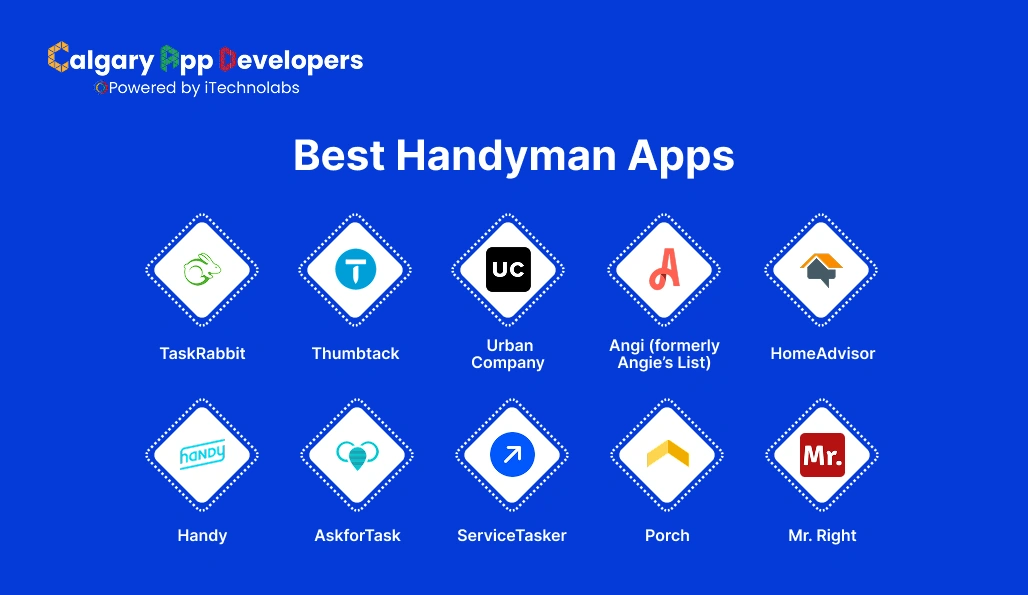
When you think about handyman app development, it helps to study the platforms that are leading the way. These apps combine practical design with reliable features, setting the standard for what works. Here are the top handyman apps shaping the market in 2026.
- TaskRabbit: A go-to app for same-day handyman services, TaskRabbit connects users with trusted Taskers for tasks like furniture assembly, repairs, and cleaning. Users appreciate the transparent pricing and reliable communication tools built into the app.
- Thumbtack: Thumbtack stands out with its versatility. It lets users compare local professionals by reading reviews, checking detailed profiles, and booking directly. The app covers everything from home improvement to event planning.
- Urban Company: Growing fast across Asia and beyond, Urban Company brings high ratings and polished design to handyman services. The app focuses on quality, customer experience, and professional service delivery.
- Angi (formerly Angie’s List): Angi combines a rich database of pros with content resources such as cost guides and articles. It helps customers make informed decisions based on verified reviews and expert advice.
- HomeAdvisor: Now part of ANGI HomeServices, HomeAdvisor allows homeowners to book professionals instantly. Features such as background checks and real-time booking tools elevate trust and convenience.
- Handy: Handy Technologies is a strong presence in the U.S., U.K., and Canada. With a simple interface and wide service range from cleaning to repairs, it stands out for usability and reach.
- AskforTask: In Canada, AskforTask appeals by offering task outsourcing and a peer-to-peer matching model. It’s available across 100-plus cities and is praised for its algorithm-driven matching system.
- ServiceTasker: Leading the Australian market, ServiceTasker supports wide-ranging services beyond traditional handyman work. It allows customers to post tasks for free and receive quotes from verified tradespeople.
- Porch: Popular in the U.S., Porch integrates directly with retailers like Lowe’s and helps homeowners connect with professionals for installations, maintenance, and remodeling. Its strong partnerships and project-focused features make it a trusted name.
- Mr. Right: A rising option in India, Mr. Right caters to a wide range of household services, including appliance repair, plumbing, and electrical work. The app is known for affordability, easy booking, and reliable customer support.
- Fixer: Fixer focuses on fast, vetted handyman services in major U.S. cities. The app emphasizes upfront pricing, skilled professionals, and predictable service quality. Its streamlined booking flow and strict professional screening make it a strong example of trust-first marketplace design.
- Houzz: Houzz blends inspiration with execution. Beyond browsing designs and products, users can hire contractors and handymen directly through the app. The tight integration between discovery, reviews, messaging, and project management shows how content and services can live in one ecosystem.
- Zaarly: Zaarly positions itself as a premium home services app. It focuses on quality over volume, pairing homeowners with highly vetted professionals. The app’s clean UI and concierge-style service model appeal to users who value reliability more than bargain pricing.
- Helpling: Helpling is widely used across Europe for cleaning and handyman services. Its strength lies in localization. The app adapts pricing, language, and service categories country by country. This makes it a strong reference for developers targeting multi-region expansion.
- Housejoy: Housejoy is a popular on-demand services app in India, covering repairs, maintenance, and renovation support. It stands out for its bundled service offerings and subscription-style maintenance plans, which help drive repeat usage and predictable revenue.
Why These Apps Matter for Handyman App Development
| App | What Makes It Stand Out |
| TaskRabbit | Instant booking and transparent pricing |
| Thumbtack | Rich pro profiles and user-focused navigation |
| Urban Company | High-service standards and rapid growth in emerging markets |
| Angi | Strong content support and cost guidance |
| HomeAdvisor | Instant booking with trust-building features |
| Handy | Wide geographic reach with a clean, accessible design |
| AskforTask | Localized matching with flexible pricing and task posting |
| ServiceTasker | Broad service categories and strong local presence |
| Porch | Retail partnerships with project-focused support tools |
| Mr. Right | Affordable household services with simple booking and reliable support |
| Fixer | Vetted professionals with upfront pricing and fast turnaround |
| Houzz | Discovery-led experience combining inspiration with service hiring |
| Zaarly | Premium positioning with concierge-style service quality |
| Helpling | Strong localization across regions with scalable service models |
| Housejoy | Bundled services and subscription-style maintenance plans |
What This Means for Developers
These apps show that successful handyman app development requires:
- Clear navigation and user-friendly design
- Trust-building features like reviews, background checks, and profile transparency
- Fast response and booking options
- Regional adaptation, including language, services, and payment systems
Look at these leaders not just as services to emulate, but as experiences to learn from. Their success points you toward clear design, trust, and alignment with local expectations.
Read Also: How Long Does it Take to Develop an App?
Conclusion
Handyman app development has transformed the way people access reliable home services. From global leaders like TaskRabbit, Thumbtack, and Urban Company to regional players building strong customer bases, the trend is clear. Customers want quick, trustworthy, and accessible solutions, and businesses that adapt to this demand stand to gain not just growth but long-term sustainability.
What this really means is that launching a handyman app is more than keeping up with technology. It is about creating a platform that builds trust, simplifies service booking, and generates consistent revenue streams through features like subscriptions, commissions, and premium listings. With the global handyman services market expected to reach over USD 1.5 billion by 2033, the opportunity is only getting bigger.
If you are looking to build your own handyman app, choosing the right handyman app development company is crucial. Calgary App Developers specializes in building user-friendly, scalable, and revenue-focused mobile applications tailored for businesses of all sizes. Our team understands not only the technical side of app creation but also the market strategy needed to make your app stand out in a competitive space.
FAQ’s About Handyman App Development:
1. What are the best handyman apps?
Some of the best handyman apps to explore in 2026 are:
- TaskRabbit
- Thumbtack
- Urban Company
- Angi (formerly Angie’s List)
- HomeAdvisor
- Handy
- AskforTask (popular in Canada)
- ServiceTasker (Australia)
- Porch
- Mr. Right
These apps are known for connecting users with trusted professionals, offering features like instant booking, verified reviews, and transparent pricing.
2. Is there a handyman app in Canada to hire people for home services?
Yes, Canada has several apps for hiring handymen and other home service providers. Popular ones include AskforTask, which operates across more than 100 Canadian cities, and Handy, which serves multiple regions in North America. These apps allow users to book trusted professionals for repairs, installations, or cleaning. For businesses, Canada’s growing demand shows strong potential for investing in handyman app development tailored to local needs.
3. How do you get leads for a handyman?
Getting leads as a handyman often involves using digital platforms. Apps like Thumbtack, TaskRabbit, and Angi are designed to connect professionals with clients actively looking for services. Creating a profile with strong reviews, clear service descriptions, and competitive pricing helps increase visibility. Beyond apps, local SEO, social media promotion, and referral networks remain powerful tools for consistent handyman leads.
4. Is Thumbtack a free app?
Yes, Thumbtack is free to download and use for customers. Users can browse service providers, request quotes, and book professionals without paying to use the platform. For service providers, however, Thumbtack uses a pay-per-lead model, meaning pros pay when they connect with potential customers. This system has made Thumbtack a major player in handyman app development and one of the most widely used service platforms in the U.S.
5. How much does it cost to develop a home service app?
The cost of developing a home service app depends on its complexity and features. A basic app with core functions like booking and payments can cost between 15,000 and 25,000 USD. Mid-level apps with GPS and scheduling may range from 25,000 to 60,000 USD, while advanced apps with AI and multi-language support can exceed 100,000 USD. In addition, expect annual maintenance costs of about 15 to 20 percent of the total build.


Pankaj Arora is a seasoned technology leader and the Founder of Calgary App Developer, with 10+ years of expertise in crafting high-performance digital solutions. His core competencies include full-stack app development, cloud-native architecture, API integration, and agile product delivery. Under his leadership, Calgary App Developers has empowered startups and enterprises alike with scalable mobile applications, secure web platforms, and AI-driven SaaS products.