









How Long Does it Take to Build an App?
Ever thought of an app and wondered how long it would take to make it happen? Perhaps it began as a fleeting thought on your way to work. Or perhaps you noticed a problem no one is fixing and thought, “Someone needs to make an app for that.” Now you’re considering that someone could be you.
Before you get started with planning features and picking colors, there’s one thing on your mind. How long does it really take to develop an app?
The short answer is that. It depends.
But don’t worry, we’re not leaving you in suspense. Let’s outline what actually goes into app development for Android and iOS and how the timeline can change based on your idea, your team, and your goals. The insights shared here come from our hands-on experience building and delivering mobile applications across different industries, with lessons shaped by real projects, not theory.
- App development timelines vary based on features, platforms, and project complexity.
- Simple apps can launch in a few months, while complex apps take longer.
- Clear planning and structured execution reduce delays significantly.
- Smart development choices help speed up delivery without sacrificing quality.
- Mobile app development follows clear phases, including ideation, design, development, testing, and release, each affecting the overall timeline.
- Simple apps usually take two to three months, while complex, feature-rich apps can take six to twelve months or more.
- Unclear requirements, frequent changes, complex integrations, and inadequate testing are the most common causes of delays.
- Building an MVP first allows faster launches and reduces risk by validating ideas early.
- Cross-platform development can shorten timelines when targeting both Android and iOS.
- Experienced teams, reusable tools, and realistic schedules are critical for delivering apps on time.
How Long Does It Take to Build a Mobile App?
Mobile app development is a step-by-step process. Each stage serves a clear purpose, from shaping the idea to launching it on the app stores. Let’s walk through what each phase involves and how much time it typically takes.
-
Ideation
Every app starts with an idea. This stage is all about understanding the purpose of the app, the audience it’s for, and what problems it will solve.
The team gathers requirements, studies competitors, and identifies the app’s core strengths. Wireframes and design mockups are created to show how the app might look and function. This is also where decisions about user interface, user experience, and app architecture are made.
Estimated time: 1 to 3 weeks
-
Design and Development
Once the plan is in place, the actual building begins. Designers work on the look and feel of the app. Developers start writing the code. The goal here is to create a working version of the app known as the MVP, or Minimum Viable Product.
The MVP includes the basic features needed for the app to function. It’s shared with the client for early feedback. Based on that feedback, improvements are made, bugs are fixed, and additional features can be added in future updates.
Estimated time: 4 to 10 weeks
-
User Acceptance Testing (UAT)
Before launching the app publicly, it needs to be tested in the real world. During this phase, the app is tested by a mix of team members and early users to find any issues that may have been missed.
A trial version may be released to a small audience to collect feedback. The development team uses this input to make final adjustments and polish the app for release.
Estimated time: 1 to 2 weeks
-
App Release
With development and testing complete, the final step is to publish the app on platforms like the Google Play Store and Apple App Store.
Each store has its own review process, and approval can take some time. The project team usually assists with this step, making sure everything goes smoothly and the app becomes available for download.
Estimated time: 2 to 3 weeks
Quick Summary of App Development Timeline
| Phase | Time Required |
| Ideation | 1 to 3 weeks |
| Design and Development | 4 to 10 weeks |
| User Acceptance Testing | 1 to 2 weeks |
| App Release | 2 to 3 weeks |
Also Read: How to Find a Trustworthy App Developer & Protect Your App Idea?
Timelines Based on App Type and Complexity
Not every app takes the same amount of time to build. A simple to-do list app and a full-scale e-commerce platform are two very different projects. The more features, integrations, and user interactions an app includes, the longer it takes to develop.
Here’s how timelines usually stack up based on the type and complexity of the app.
-
Simple Apps
These are apps with basic features and minimal user interaction. Think calculators, note-taking apps, or basic timers. They don’t require backend systems, user logins, or real-time updates.
Examples:
- Flashlight app
- Tip calculator
- Habit tracker
Estimated timeline: 2 to 3 months
-
Moderately Complex Apps
These apps involve user accounts, real-time data, notifications, or basic integrations with third-party tools. They might also include a simple backend for storing user data.
Examples:
- Fitness tracker with user profiles
- Food delivery app with live tracking
- Event booking app
Estimated timeline: 3 to 6 months
-
Complex Apps
These are large-scale apps with multiple user roles, custom animations, real-time communication, advanced security, and complex backend systems. Building these often involves third-party APIs, payment systems, admin dashboards, and ongoing iterations.
Examples:
- Social media platforms
- On-demand service apps like Uber
- Large e-commerce apps
Estimated timeline: 6 to 12 months or more
A Quick Look at Timelines by Complexity
| App Complexity | Estimated Timeframe |
| Simple App | 2 to 3 months |
| Moderately Complex App | 3 to 6 months |
| Complex App | 6 to 12 months or longer |
If you’re still wondering where your app idea fits on this scale, think about the number of features, user roles, and backend requirements. That alone can give you a rough idea of the time and effort it might take.
Read Also: How Much Does it Cost to Hire App Developers in Canada?
What Can Delay App Development?
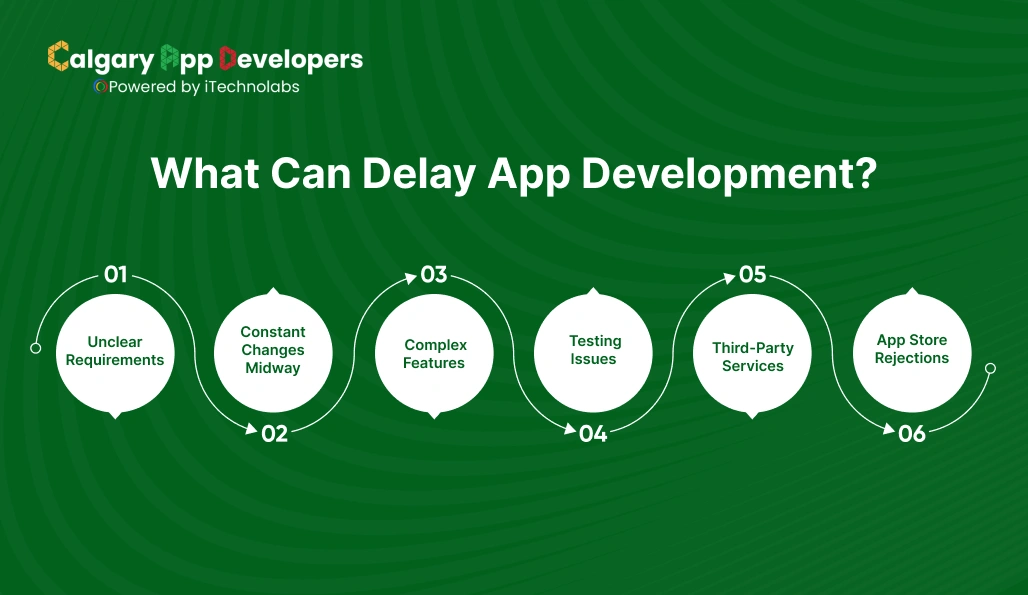
Even with solid planning, things don’t always stay on track. App development involves many people, platforms, and moving parts. Some delays are avoidable. Others come out of nowhere. But knowing what slows things down can help you plan smarter.
Here are the most common reasons timelines get pushed.
-
Unclear Requirements
If the app idea isn’t fully thought through at the start, the team ends up guessing or making changes later. Vague goals or changing expectations often lead to extra work that wasn’t part of the original plan.
How to avoid it
Get clear on your goals and must-have features before anyone starts designing or coding.
-
Constant Changes Midway
Some changes are normal. But nonstop feedback during development makes it harder to finish anything. It’s like painting a room while someone keeps picking new colors every hour.
How to avoid it
Gather feedback at key points, not all the time.
-
Complex Features
Some features naturally take longer. Real-time chat, payment systems, and custom animations all need more coding and testing.
How to avoid it:
Decide early which features are essential for launch and which ones can wait.
-
Testing Issues
Skipping or rushing testing often leads to more work later. Bugs found late in the process can delay the launch, especially if they affect core functions.
How to avoid it:
Build in time for proper testing with each update.
-
Third-Party Services
If your app uses external tools or services, things can get delayed if those tools fail or update their systems. You might have to wait until the issue is fixed before you can move forward.
How to avoid it:
Use reliable tools and have a backup plan when possible.
-
App Store Rejections
After all the work is done, your app still has to pass through the App Store or Play Store review. If it doesn’t follow their rules, it can get rejected or sent back for changes.
How to avoid it:
Follow each platform’s guidelines closely and test your app on multiple devices before submission.
Delays happen. But most of them can be avoided with clear goals, strong communication, and realistic expectations. The goal isn’t to move fast. It’s to build an app that works well and lasts.
Also Read: How to Choose the Best Company for Calgary Mobile App Development
How to Speed Up the Development Process
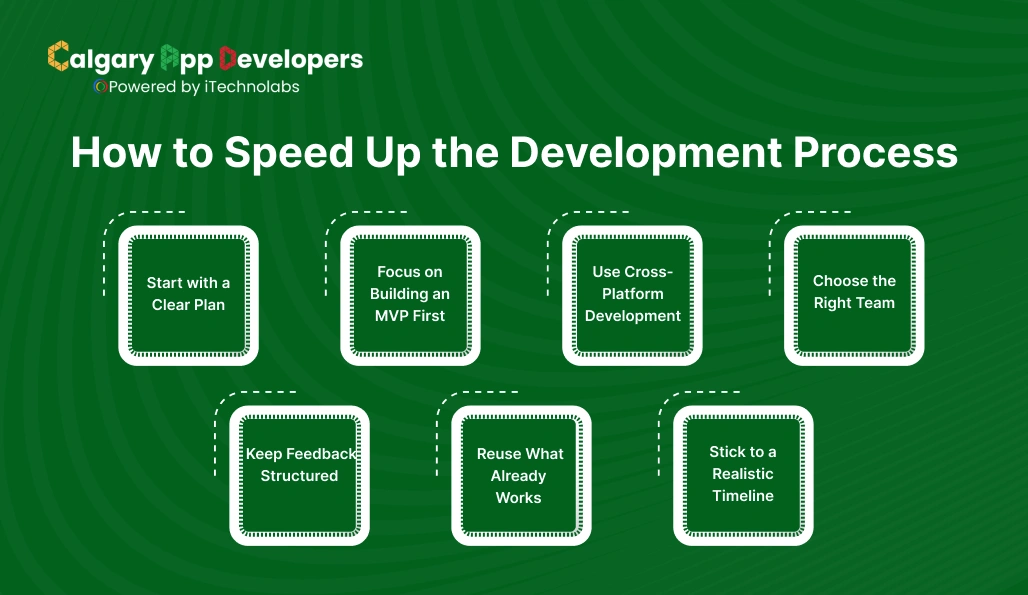
You don’t need to rush through development to move faster. In fact, trying to cut corners often creates more delays. The real secret is working smarter. With the right approach, you can save weeks without sacrificing quality.
Here’s how to do it.
-
Start with a Clear Plan
The more decisions you make upfront, the fewer surprises you’ll face later. Define your goals, target audience, must-have features, and budget before the team writes a single line of code. A clear roadmap keeps everyone aligned and focused.
Why it matters
If the team knows exactly what needs to be built, they won’t waste time guessing, changing direction, or rebuilding parts of the app halfway through.
-
Focus on Building an MVP First
You don’t need every feature ready at launch. Start with a Minimum Viable Product that delivers your core value to users. You can always add more later based on real feedback.
Why it matters
Trying to build everything at once leads to longer timelines, higher costs, and more chances for bugs. Starting small keeps things lean and efficient.
-
Use Cross-Platform Development
If you’re building for both Android and iOS, consider using a cross-platform framework like Flutter or React Native. This allows developers to write one codebase that works on both platforms.
Why it matters
It cuts development time in half and reduces testing work while still delivering a native-like experience.
-
Choose the Right Team
Experience matters. A skilled team knows how to avoid common mistakes, solve problems faster, and make better decisions. Whether you’re hiring a company or working with freelancers, look for people who have built similar apps before.
Why it matters
An experienced team will need less hand-holding and will know how to work efficiently without cutting corners.
-
Keep Feedback Structured
Feedback is essential, but it needs to be managed properly. Set clear checkpoints for reviews instead of giving input at random stages. This keeps the workflow clean and avoids constant rework.
Why it matters
Frequent last-minute changes are one of the biggest causes of delays. Structured feedback prevents that.
-
Reuse What Already Works
You don’t always need to build from scratch. Many tools, templates, and APIs can handle things like authentication, payments, analytics, and notifications. Use them wherever it makes sense.
Why it matters
Reusing existing solutions saves time and ensures stability. It also lets your developers focus on the features that make your app unique.
-
Stick to a Realistic Timeline
Setting an overly aggressive deadline just adds pressure without helping the process. A realistic, well-paced schedule allows the team to do better work and avoid costly mistakes.
Why it matters
Good work takes time. A well-managed timeline avoids burnout and builds momentum that lasts.
Speed comes from clarity, smart choices, and a solid process. You don’t have to cut quality to hit your launch goals. You just need to plan right, build smart, and work with people who know what they’re doing.
Conclusion
Building a mobile app is not just about writing code. It’s a process that moves through planning, design, development, testing, and launch. The timeline can range from a few weeks to several months depending on how complex the app is, how well the project is managed, and how clear the goals are from the start.
If you want to move faster without cutting corners, focus on building an MVP, keep feedback structured, and work with an experienced team. Use proven tools when possible and stick to a clear development plan.
At the end of the day, quality apps take time. But with the right approach, you can avoid unnecessary delays and get to launch with confidence. Whether you’re building something simple or planning the next big thing, understanding the timeline is the first step to building it right.
If you’re in need of an app development team, Calgary App Developer is here to help. We’re a mobile app development company with years of experience building high-quality, cross-platform applications. Whether you’re a startup or an established brand, we can help you scale your team and deliver exceptional digital solutions.
Looking to speed up your app development process? Get in touch with us for a custom quote.
FAQ’s About How Long Does it Take to Develop an App
1. How long does it take to build a basic mobile app?
A basic mobile app usually takes 8 to 12 weeks to develop. This includes planning, design, development, testing, and store submission. These apps have limited features, no complex backend, and minimal integrations, making them faster to build and easier to maintain after launch.
2. Does building for both Android and iOS take twice the time?
Not necessarily. Using cross-platform frameworks like React Native or Flutter allows one shared codebase for both platforms. This can reduce development time by 30 to 40 percent compared to building two separate native apps, while still delivering strong performance and consistent user experience.
3. What factors increase app development time the most?
The biggest time drivers are complex features, frequent requirement changes, third-party integrations, and poor initial planning. Features like real-time chat, payments, GPS tracking, and custom animations require extra development and testing, which directly extends the overall timeline.
4. How long does app store approval usually take?
Google Play approvals typically take 1 to 3 days, while the Apple App Store review process can take 3 to 7 days. Delays happen if the app violates store guidelines, has performance issues, or lacks proper documentation, so careful preparation is important.
5. Can an app be launched faster with an MVP approach?
Yes. An MVP can be launched in 6 to 10 weeks by focusing only on essential features. This approach allows you to test the idea, gather real user feedback, and iterate quickly without spending months building features users may not need.
6. Does app maintenance affect the overall timeline?
Yes. Development does not end at launch. Ongoing maintenance, updates, and performance improvements are continuous. While maintenance does not delay launch, planning for it ensures the app stays compatible with OS updates, secure, and stable as user demand grows.
7. Is it possible to speed up development without losing quality?
Yes. Clear requirements, structured feedback, experienced developers, and reuse of proven tools significantly reduce delays. Working with a skilled team and following an agile process helps move faster while maintaining code quality and user experience.


Pankaj Arora is a seasoned technology leader and the Founder of Calgary App Developer, with 10+ years of expertise in crafting high-performance digital solutions. His core competencies include full-stack app development, cloud-native architecture, API integration, and agile product delivery. Under his leadership, Calgary App Developers has empowered startups and enterprises alike with scalable mobile applications, secure web platforms, and AI-driven SaaS products.