










How to Create an App – Key Steps to Make an App in 2026

Mobile applications have become essential for businesses to establish permanent connections with their customers. Users today expect to access all services through two or three taps, which include ordering services, managing their finances, and building their communities. The current business environment requires all companies to develop an application because it has become a fundamental strategic requirement for maintaining their industry presence.
The numbers make this clear. As per Mordor intelligence, the global mobile app market is expected to reach USD 391.3 billion in 2026, growing rapidly toward USD 864.5 billion by 2031.
User behavior reinforces this growth. People are spending trillions of hours inside apps every year, with mobile becoming the primary digital touchpoint for most industries. This level of engagement signals one thing clearly: businesses that invest in mobile experiences are positioning themselves where their customers already are.
In this blog, we break down exactly how to make an app in 2026, from idea validation to launch and beyond. The insights shared here are shaped by our hands-on experience in mobile app development, working with businesses across industries to build scalable, user-focused applications that deliver real results.
TL;DR
- Mobile apps are essential for businesses to stay competitive and meet evolving customer expectations.
- Creating an app requires clear planning, the right development approach, and a structured process.
- App costs in 2026 range widely based on complexity, features, and scalability.
- Long-term success depends on continuous optimization, user experience, and adapting to future trends.
Key Points
- Businesses face challenges such as low customer engagement, rising competition, and a lack of data-driven decision-making, which limit growth and efficiency.
- Mobile apps help solve these challenges by improving accessibility, enabling real-time engagement, and streamlining business operations.
- Choosing the right type of app, whether native, cross-platform, or based on a specific business use case, is critical for performance and scalability.
- Before you develop an app, defining clear goals, understanding your target audience, and selecting the right technology stack are essential steps.
- A structured development process that includes planning, design, development, testing, and launch ensures better outcomes and reduces risks.
- The cost to make an app in 2026 typically ranges from $15,000 to $400,000+, depending on features, platform, and complexity.
- Future trends such as AI, 5G, AR, and IoT are shaping how mobile apps are built and how users interact with them.
- Continuous post-launch optimization, including performance improvements, feature updates, and user feedback, is necessary for long-term app success.
Major Challenges Businesses Face Today
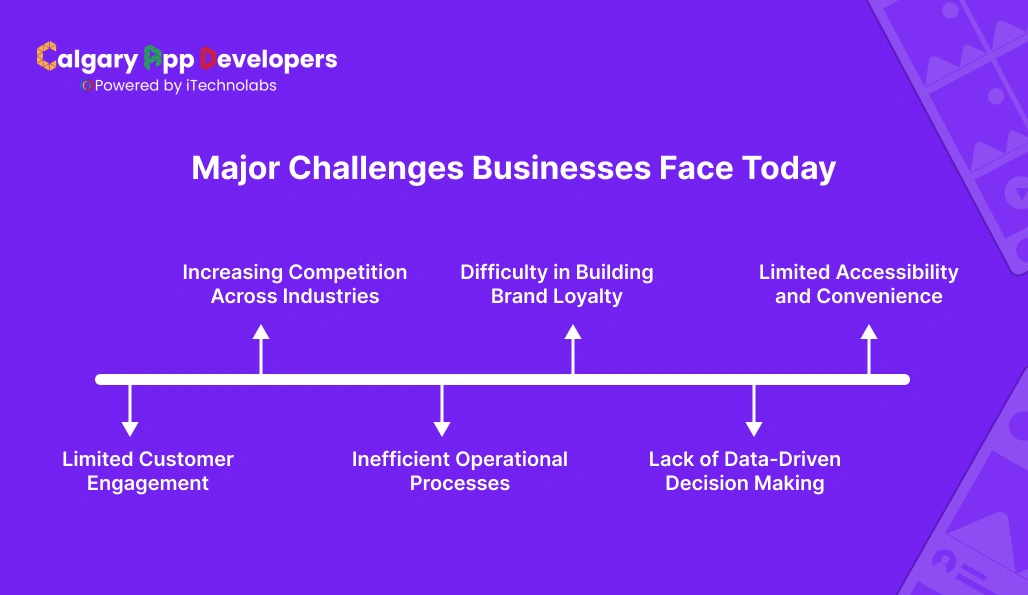
Businesses today operate in a market shaped by constant digital disruption, rising customer expectations, and intense competition. As industries evolve rapidly, companies are under pressure to adapt faster while maintaining efficiency and relevance. Several challenges continue to limit sustainable growth and long-term success:
- Limited Customer Engagement: Customers expect real-time interaction, personalized communication, and seamless digital experiences across platforms. Traditional channels such as email or basic websites often fail to deliver consistent engagement, resulting in reduced user interaction, lower retention rates, and missed opportunities to build meaningful relationships.
- Increasing Competition Across Industries: Digital transformation has lowered entry barriers, allowing new players to enter the market quickly. Businesses are now competing not only with local competitors but also with global brands that offer similar products or services. This makes it harder to stand out, capture attention, and maintain a strong market position.
- Inefficient Operational Processes: Many businesses still rely on manual workflows or disconnected systems that slow down daily operations. These inefficiencies lead to higher operational costs, increased chances of human error, and delays in service delivery, ultimately impacting customer satisfaction and overall productivity.
- Difficulty in Building Brand Loyalty: With a wide range of options available, customers can easily switch between brands. Without consistent engagement, personalized experiences, and value-driven interactions, businesses struggle to build trust and long-term loyalty among their users.
- Lack of Data-Driven Decision Making: Access to accurate and actionable data is essential for growth. However, many businesses lack the tools or systems required to collect and analyze user data effectively. This limits their ability to understand customer behavior, predict trends, and make informed strategic decisions.
- Limited Accessibility and Convenience: Modern consumers expect instant access to services from any location at any time. Businesses that rely only on physical presence or limited digital platforms often fail to meet these expectations, leading to lost opportunities and reduced customer satisfaction.
These challenges highlight the growing gap between customer expectations and current business capabilities.
Also Check: How to Find Mobile App Investors
How Mobile Apps Help Businesses Overcome These Challenges
Mobile apps offer a direct and scalable solution to these challenges by transforming how businesses operate, communicate, and deliver value to users. They create a centralized platform that improves both customer experience and internal efficiency:
- Enhanced Customer Engagement: Mobile apps enable businesses to interact with users in real-time through push notifications, in-app messaging, and personalized content. This continuous connection helps maintain user interest, improve engagement levels, and create more meaningful customer relationships.
- Stronger Competitive Positioning: A well-designed mobile app establishes a clear digital presence and strengthens brand identity. It allows businesses to offer unique features, faster services, and a more personalized experience, helping them stand out in competitive markets.
- Streamlined Operations: Apps can automate essential business processes such as bookings, payments, order management, and customer support. This reduces manual effort, minimizes errors, and improves overall efficiency, allowing businesses to scale operations more effectively.
- Improved Customer Retention and Loyalty: Features like loyalty programs, exclusive in-app offers, and smooth user experiences encourage customers to return regularly. Mobile apps make it easier to build long-term relationships by consistently delivering value and convenience.
- Access to Valuable Insights: Mobile apps provide real-time data on user behavior, preferences, and interactions. Businesses can use these insights to refine strategies, improve services, and make informed decisions that drive growth and performance.
- 24/7 Accessibility for Users: A mobile app ensures that customers can access products or services anytime without limitations. This level of convenience not only improves user satisfaction but also increases conversion rates and overall business revenue.
Mobile apps bridge this gap by combining accessibility, personalization, and operational efficiency in one platform. For businesses aiming to stay competitive, the decision to make an app is not just about technology; it is about creating a stronger, more connected customer experience that drives long-term growth.
Read Also: How Much Does It Cost to Maintain an App?
Types of Apps You Can Create
Before you create an app, you need clarity on one thing first. What kind of app actually fits your business model and user expectations? The type you choose will directly impact performance, cost, scalability, and user experience.
Below are the main types of apps, structured to help you make the right decision.
- Based on Development Approach
- Native Apps: These apps are built specifically for a single platform, such as Android or iOS. They deliver the best performance, faster load times, and smooth interactions because they are optimized for the platform. Native apps are ideal when your focus is on high performance, complex features, or a premium user experience.
- Cross-Platform Apps: These apps use a single codebase to run on multiple platforms. This reduces development time and cost while maintaining consistency across devices. Businesses often choose this approach when they want to create an app quickly and reach both Android and iOS users without building separate versions.
- Web Apps: Web apps run inside a browser and do not need to be downloaded from app stores. They are easier to maintain and update, making them a cost-effective option. However, they offer limited access to device features and may not deliver the same performance as native apps.
- Progressive Web Apps: Progressive web apps combine the accessibility of web apps with the experience of mobile apps. They support offline access, faster loading, and app-like interactions. This option works well for businesses that want a broader reach without full-scale app development costs.
- Based on Business Use Case
- E-Commerce Apps: Designed for selling products or services, these apps focus on smooth navigation, secure payments, and personalized recommendations. They help increase conversions and improve customer retention.
- On-Demand Service Apps: These apps connect users with services such as ride booking, food delivery, or home services. Key features include real-time tracking, instant booking, and integrated payments.
- Enterprise Apps: Built for internal business use, enterprise apps streamline operations such as employee management, communication, and workflow automation. They improve efficiency and reduce manual work.
- Social Networking Apps: These apps are designed for interaction and engagement. Features like messaging, content sharing, and notifications help build active user communities and increase time spent on the platform.
When you create an app, the decision is not just technical. It is strategic. You need to balance budget, timeline, feature complexity, and user expectations.
Selecting the right type early ensures smoother development, better performance, and a product that aligns with your long-term business goals.
Also Check: Mobile App Startup Costs: A Brief Guide
Key Factors to Identify Before You Develop an App
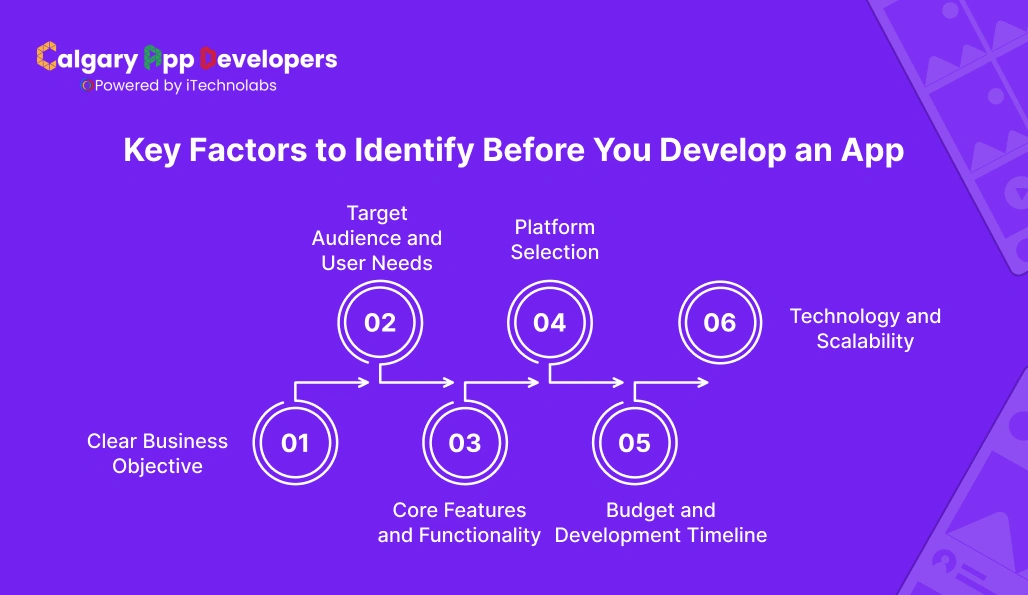
Before you develop an app, clarity at the planning stage determines how successful your product will be after launch. Skipping this step often leads to wasted resources, poor user adoption, and costly revisions. The following factors help you build a strong foundation:
- Clear Business Objective: Start with a well-defined purpose. Identify what problem your app will solve and how it aligns with your business goals. Whether it is increasing revenue, improving customer engagement, or streamlining operations, a clear objective keeps development focused and measurable.
- Target Audience and User Needs: Understanding your users is critical. Define who will use the app, what challenges they face, and what they expect from a mobile experience. This insight helps shape features, design, and functionality that actually deliver value.
- Core Features and Functionality: List the essential features your app must have at launch. Focus on solving the primary problem instead of adding unnecessary complexity. A well-planned feature set ensures faster development and a better user experience.
- Platform Selection: Decide whether you want to develop for Android, iOS, or both. This decision depends on your target audience, budget, and market reach. Choosing the right platform early helps optimize development time and resources.
- Budget and Development Timeline: Estimate how much you are willing to invest and how quickly you want to go to market. Budget impacts design quality, feature scope, and technology choices, while timelines influence development strategy and team structure.
- Technology and Scalability: Choose a technology stack that supports future growth. Your app should be able to handle increasing users, new features, and evolving business needs without major rework. Planning for scalability early prevents limitations later.
Identifying these factors before you develop an app ensures a smoother process, better decision-making, and a product that is built for long-term success rather than short-term execution.
Read Also: How Much Money Can You Earn if You Own an App?
Step-by-Step Process to Create an App
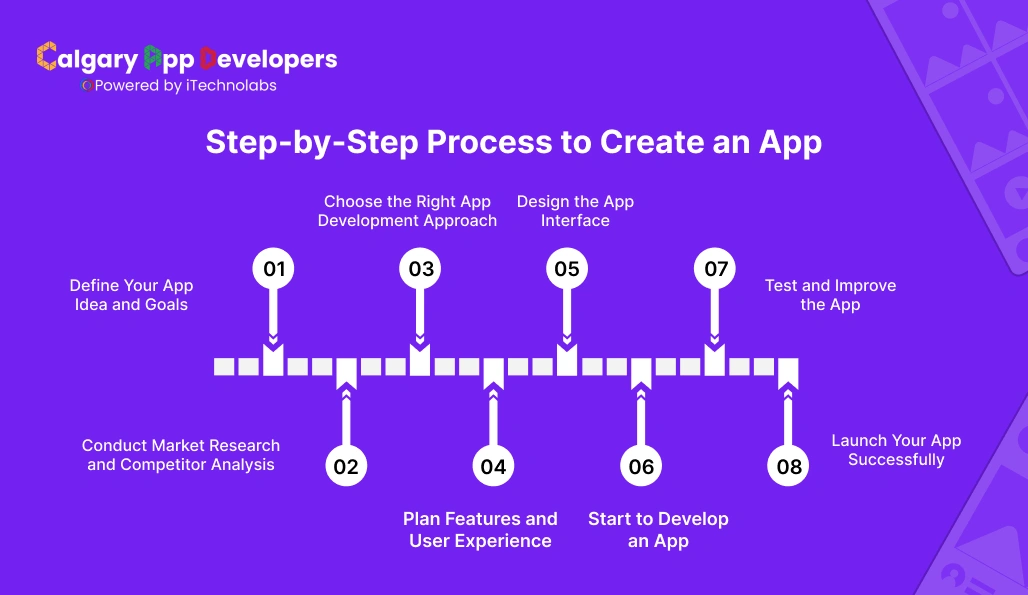
Creating a successful mobile app is a structured journey that moves from idea validation to launch and continuous improvement. Each stage plays a critical role in shaping the final product, from defining the core purpose to ensuring long-term scalability. When approached strategically, this process helps reduce risks, control costs, and deliver an app that meets both business objectives and user expectations.
Below is a detailed breakdown of each step involved when you create an app in 2026.
- Define Your App Idea and Goals
This is the most critical stage, as it lays the foundation for everything that follows. A clearly defined idea ensures that your app is built with purpose rather than assumptions.
- Identify the exact problem your app will solve and why it is relevant in the current market.
- Understand the gap in existing solutions and how your app can fill it effectively.
- Define your primary audience, including demographics, behavior patterns, and preferences.
- Set specific and measurable business goals such as increasing revenue, improving retention, or expanding digital presence.
- Establish key performance indicators that will help track success after launch.
- Clarify your app’s unique value proposition and what makes it worth using over alternatives.
- Validate your idea through surveys, early feedback, or prototype testing to reduce uncertainty.
A well-defined idea reduces confusion during development and ensures that every feature contributes to a clear objective.
- Conduct Market Research and Competitor Analysis
Thorough research allows you to make informed decisions instead of relying on guesswork. It helps you understand both opportunities and potential risks.
- Analyze top-performing apps in your category to understand what works well.
- Study competitor features, user interfaces, and overall user experience.
- Go through user reviews to identify common complaints and unmet needs.
- Evaluate market demand to confirm whether your idea has strong potential.
- Identify emerging trends that could influence your app’s success.
- Understand competitor monetization strategies and pricing models.
- Map out your positioning and define how your app will stand out in a crowded market.
This step ensures that when you create an app, it is built with a clear understanding of the competitive landscape.
- Choose the Right App Development Approach
Selecting the right development approach is a strategic decision that affects performance, scalability, and cost efficiency.
- Decide whether a native, cross-platform, or web-based solution aligns with your goals.
- Assess the level of performance and responsiveness required for your app.
- Consider your available budget and how it impacts development choices.
- Evaluate the timeline for development and the expected launch date.
- Choose technologies and frameworks that support your feature requirements.
- Plan for long-term maintenance, updates, and scalability.
- Ensure compatibility with third-party integrations such as payment systems or analytics tools.
Making the right choice at this stage prevents technical limitations and costly changes later.
- Plan Features and User Experience
A successful app focuses on delivering value without overwhelming the user. Careful planning ensures that your app remains simple, functional, and engaging.
- Identify the core features that directly address the main user problem.
- Prioritize features for the initial version to enable faster development and launch.
- Avoid adding unnecessary features that can complicate the user experience.
- Create detailed user journeys to understand how users will navigate the app.
- Focus on minimizing friction and making interactions intuitive.
- Consider personalization options to enhance engagement.
- Plan how additional features can be introduced in future updates without disrupting the experience.
This stage ensures that your app remains focused and user-centric from the beginning.
- Design the App Interface
Design plays a major role in user adoption and retention. A well-designed app not only looks good but also feels easy to use.
- Create wireframes to outline the structure and flow of the app.
- Develop high-fidelity UI designs that reflect your brand identity.
- Ensure consistency in layout, typography, and visual elements.
- Design for different screen sizes and device types.
- Focus on accessibility to make the app usable for a wider audience.
- Optimize navigation to ensure users can complete tasks quickly.
- Incorporate feedback from early design reviews to improve usability.
A strong design enhances user satisfaction and encourages continued usage.
- Start to Develop an App
This is the execution phase where your concept turns into a working product through structured development.
- Set up the development environment and define the architecture.
- Build frontend components that users interact with.
- Develop backend systems that handle data processing and logic.
- Integrate databases, APIs, and external services.
- Implement security measures to protect user data and transactions.
- Follow an iterative development approach to test features continuously.
- Maintain collaboration between designers, developers, and stakeholders.
Efficient development ensures that your app is stable, scalable, and ready for real-world usage.
- Test and Improve the App
Testing is essential to ensure that your app performs reliably and delivers a smooth user experience across different conditions.
- Conduct functional testing to ensure all features work as expected.
- Perform usability testing to identify issues in navigation or interaction.
- Test performance under different loads to ensure stability.
- Check compatibility across devices, operating systems, and screen sizes.
- Identify and fix bugs, errors, and performance bottlenecks.
- Run beta testing with real users to gather valuable feedback.
- Continuously refine the app based on insights and testing results.
A well-tested app reduces the risk of negative user experiences after launch.
- Launch Your App Successfully
Launching your app is not just about making it available. It requires a strategic approach to ensure visibility and user adoption.
- Prepare app store listings with optimized descriptions, keywords, and visuals.
- Ensure compliance with all platform guidelines and submission requirements.
- Plan a marketing strategy that includes pre-launch and post-launch activities.
- Use social media, paid campaigns, and partnerships to generate awareness.
- Monitor downloads, engagement, and user feedback from the start.
- Address early issues quickly through updates and improvements.
- Continue optimizing the app based on user behavior and performance data.
A well-planned launch sets the stage for long-term growth and success.
Following this structured process ensures that when you create an app, it is not only functional but also strategically aligned with business goals, user needs, and future scalability.
Also Read: How Long Does it Take to Build an App?
Post-Launch Optimization Tips for Mobile Apps
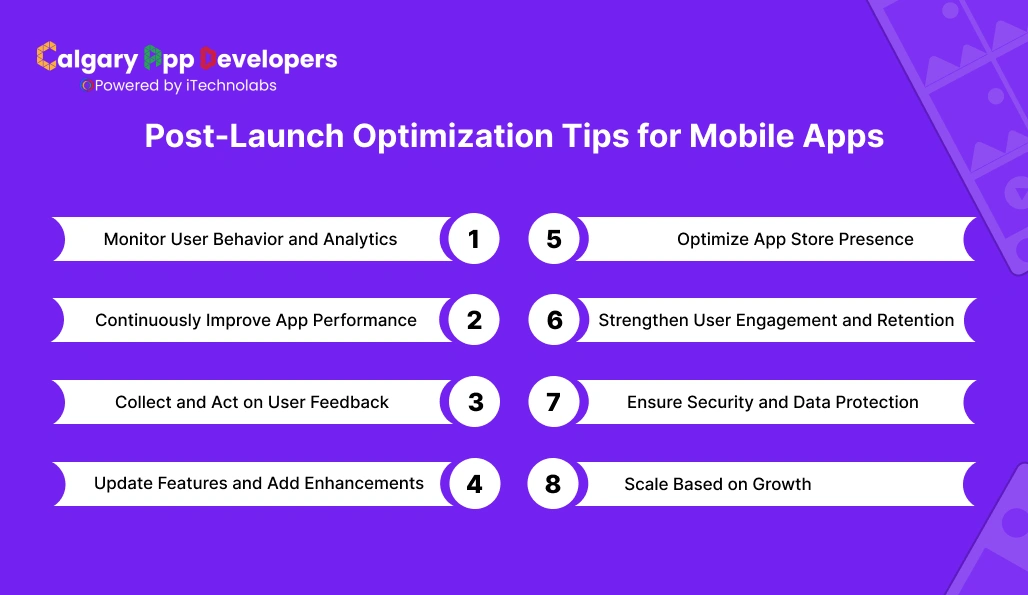
Launching your app is only the beginning. Real success comes from how well you refine, optimize, and grow the app after it reaches users. Post-launch optimization ensures your app stays relevant, improves performance, and continues to deliver value over time.
Below are key strategies to help you optimize your app effectively after launch:
- Monitor User Behavior and Analytics
Understanding how users interact with your app helps you make informed improvements.
- Track key metrics such as active users, session duration, and retention rates.
- Identify user drop-off points within the app flow.
- Analyze which features are used most and which are ignored.
- Use insights to improve navigation and overall experience.
- Continuously Improve App Performance
Performance directly impacts user satisfaction and retention.
- Monitor app speed, load times, and responsiveness.
- Fix bugs and technical issues as quickly as possible.
- Optimize backend processes to handle increasing user traffic.
- Ensure smooth performance across different devices and operating systems.
- Collect and Act on User Feedback
User feedback provides direct insight into what works and what needs improvement.
- Encourage users to share reviews and ratings.
- Gather feedback through in-app prompts or surveys.
- Identify recurring issues or feature requests.
- Implement meaningful updates based on user input.
- Update Features and Add Enhancements
Regular updates keep your app fresh and competitive.
- Introduce new features based on user needs and market trends.
- Improve existing features for better usability.
- Remove or refine underperforming elements.
- Keep the app aligned with evolving user expectations.
- Optimize App Store Presence
Visibility in app stores plays a major role in user acquisition.
- Update app descriptions with relevant keywords.
- Improve visuals, such as screenshots and preview content.
- Monitor ratings and respond to user reviews.
- Continuously refine your app store strategy to improve discoverability.
- Strengthen User Engagement and Retention
Keeping users engaged is essential for long-term success.
- Use push notifications strategically to re-engage users.
- Offer personalized content and recommendations.
- Introduce loyalty programs, rewards, or exclusive offers.
- Create a consistent and valuable user experience.
- Ensure Security and Data Protection
Maintaining user trust is critical as your app grows.
- Regularly update security protocols and frameworks.
- Protect user data with strong encryption and compliance practices.
- Monitor for potential vulnerabilities or threats.
- Stay aligned with data privacy regulations.
- Scale Based on Growth
As your user base expands, your app must be ready to handle increased demand.
- Upgrade infrastructure to support higher traffic.
- Optimize database performance and server capacity.
- Plan for future feature expansion.
- Ensure your app remains stable as it grows.
Post-launch optimization is an ongoing process. Businesses that continuously refine their apps based on data, feedback, and performance insights are the ones that achieve sustained growth and long-term success.
Also Check: How to Find a Trustworthy App Developer & Protect Your App Idea?
How Much Does It Cost To Make An App In 2026
The cost to make an app in 2026 typically ranges from $15,000 to $400,000+, depending on complexity, features, and development approach. This wide range exists because every app is different. A simple MVP with basic features costs significantly less than a complex, feature-rich platform with integrations, real-time data, and scalability requirements.
Total Cost Estimation Breakdown
Below is a structured estimate of how costs are distributed across the complete app development process:
| Development Stage | Basic App | Moderate App | Advanced App |
| Planning and Research | $1,000 – $3,000 | $3,000 – $6,000 | $6,000 – $10,000 |
| UI UX Design | $2,000 – $5,000 | $5,000 – $10,000 | $10,000 – $20,000 |
| App Development | $8,000 – $40,000 | $40,000 – $120,000 | $120,000 – $250,000 |
| Testing and QA | $2,000 – $8,000 | $8,000 – $20,000 | $20,000 – $40,000 |
| Launch and Deployment | $1,000 – $5,000 | $5,000 – $10,000 | $10,000 – $20,000 |
| Post Launch Maintenance | $2,000 – $10,000 | $10,000 – $30,000 | $30,000 – $80,000 |
| Total Estimated Cost | $15,000 – $70,000 | $70,000 – $200,000 | $200,000 – $400,000+ |
Key Factors That Affect the Cost to Develop an App
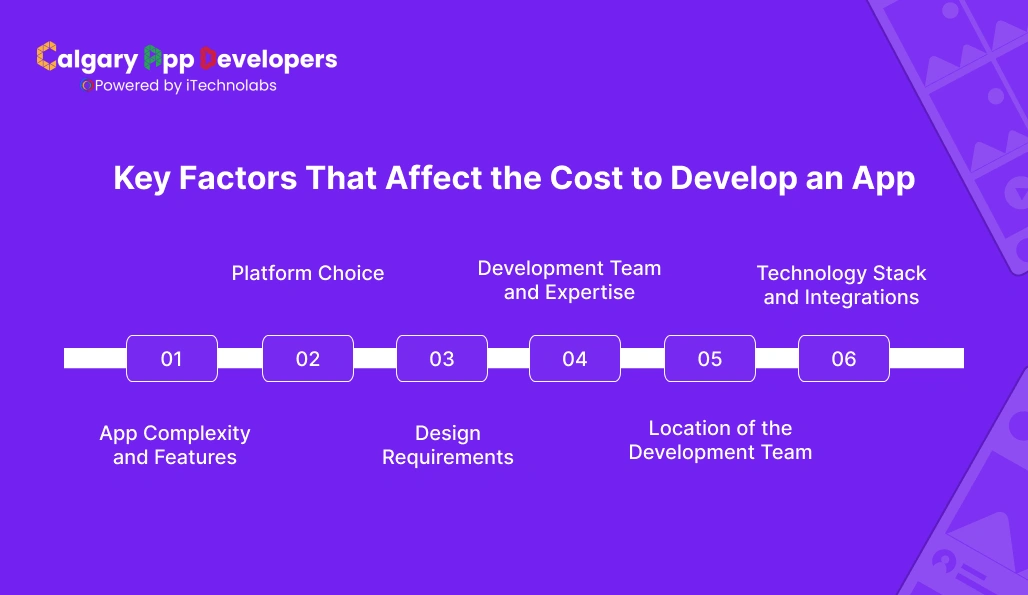
Understanding these factors helps you plan your budget more accurately and avoid unexpected expenses.
- App Complexity and Features
The more complex your app, the higher the cost. A basic app with limited screens and simple functionality is significantly cheaper than an app with real-time tracking, payment systems, AI features, or multiple user roles. Advanced features require more development time, deeper backend architecture, and extensive testing.
- Platform Choice
Building for a single platform costs less than developing for both Android and iOS. Native apps often require separate codebases, which increases cost. Cross-platform development can reduce expenses by using a shared codebase, but it may require additional optimization depending on the app’s complexity.
- Design Requirements
Simple designs with standard layouts are quicker to build. Custom interfaces, animations, and highly interactive designs increase both design and development costs. A well-crafted design improves user experience, but it also requires more time and expertise.
- Development Team and Expertise
The experience level of your development team directly impacts pricing. Hiring experienced developers or agencies may cost more upfront, but it often results in better quality, fewer bugs, and lower long-term maintenance costs.
- Location of the Development Team
Development costs vary significantly based on location. Teams in regions like North America typically charge higher rates due to expertise, quality standards, and advanced infrastructure.
For example, working with a skilled team in a market like Calgary offers a balance of high-quality development, strong communication, and reliable delivery, making it a strategic choice for businesses aiming for scalable and well-engineered apps.
- Technology Stack and Integrations
The choice of technologies, frameworks, and third-party integrations also affects cost. Apps that require APIs, payment gateways, cloud infrastructure, or AI capabilities demand additional development effort and ongoing maintenance.
The cost to develop an app is not a fixed number. It is a combination of strategic decisions made during planning, design, and development. Businesses that invest in the right features, scalable technology, and experienced teams are more likely to build apps that deliver long-term value and strong returns.
Read Also: Why Your Business Needs Custom Mobile App Development
Future Trends Shaping App Development
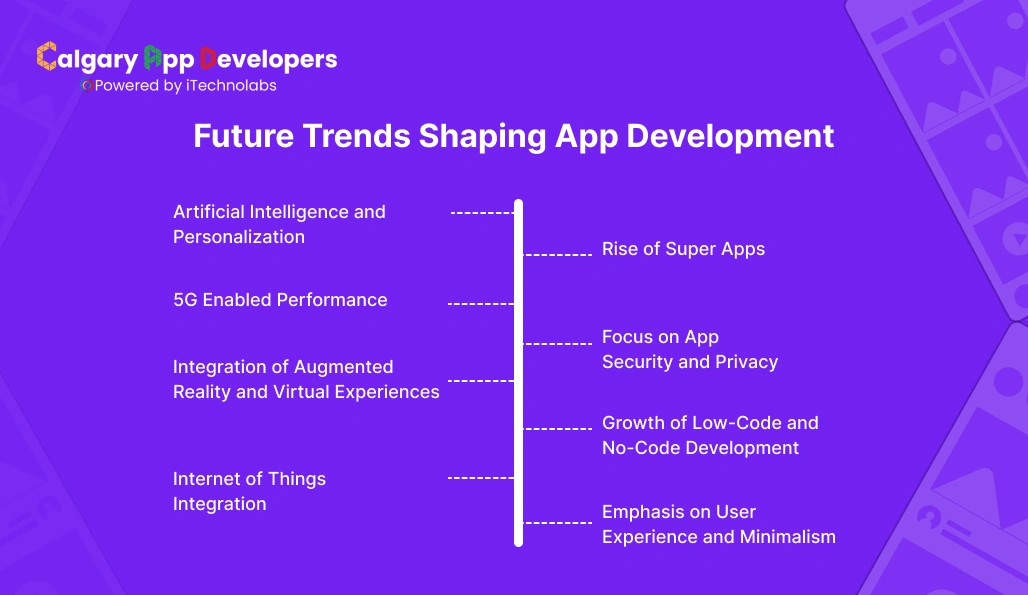
App development continues to evolve as technology advances and user expectations grow. Businesses planning to create an app in 2026 and beyond need to align with these trends to remain competitive and future-ready.
- Artificial Intelligence and Personalization: AI is becoming a core part of mobile apps, enabling smarter and more personalized user experiences. From chatbots to recommendation engines, apps can now analyze user behavior and deliver tailored content in real-time. This not only improves engagement but also increases conversion rates by making interactions more relevant.
- Rise of Super Apps: Users increasingly prefer platforms that offer multiple services within a single app. Super apps combine features like payments, messaging, shopping, and services in one ecosystem. This trend is pushing businesses to expand functionality and create more integrated digital experiences.
- 5G Enabled Performance: With the expansion of 5G networks, apps can deliver faster speeds, lower latency, and enhanced real-time capabilities. This opens the door for high-performance features such as live streaming, augmented reality, and instant data processing without delays.
- Focus on App Security and Privacy: As data usage grows, so does the need for strong security measures. Future apps will place greater emphasis on data protection, secure authentication, and compliance with privacy regulations. Users are becoming more aware of how their data is handled, making security a key factor in trust and adoption.
- Integration of Augmented Reality and Virtual Experiences: Augmented reality is no longer limited to gaming. It is being used in retail, real estate, education, and healthcare to create immersive user experiences. Businesses can use AR features to allow users to visualize products, explore services, or interact with digital environments in a more engaging way.
- Growth of Low-Code and No-Code Development: Low-code and no-code platforms are making app development more accessible. While they may not replace full-scale development for complex apps, they allow businesses to prototype ideas faster and reduce initial development time.
- Internet of Things Integration: Apps are increasingly connected with smart devices through IoT. From home automation to wearable technology, mobile apps act as control centers for connected ecosystems. This trend expands the role of apps beyond screens into real-world interactions.
- Emphasis on User Experience and Minimalism: Modern users prefer clean, fast, and intuitive apps. Future app design will focus on simplicity, faster navigation, and reducing unnecessary steps. A strong user experience will remain one of the biggest factors in app success.
These trends highlight a clear direction. Businesses that adapt early and incorporate these innovations when they create an app will be better positioned to meet user expectations and sustain long-term growth.
Also Check: Top Mobile Application Development Platforms
Our Expertise in Creating Scalable Mobile Apps
Building a successful app requires more than development skills. It demands a deep understanding of user behavior, scalable architecture, and business-driven execution. Our experience spans multiple industries where we have helped businesses create an app that not only performs reliably but also delivers measurable growth.
Below are some of the products we have built and scaled, along with their key features and business outcomes.
1. Bazzarista
Bazzarista is a mobile platform designed to redefine how users discover, rent, and purchase cultural and event-based fashion across global markets. It brings together fashion, culture, and commerce into a single digital experience.
Key Features
- An interactive global map interface to explore fashion by region.
- Curated collections showcasing traditional and modern outfits.
- Designer profiles with detailed insights and offerings.
- Integrated rental and purchase functionality.
- Personalized browsing based on user preferences.
Business Outcome
Bazzarista created a unique niche by combining cultural discovery with commerce. It increased user engagement through an interactive interface and enabled global access to regional fashion markets, helping drive both rentals and direct purchases.
2. Go Grocer
Go Grocer is an online grocery marketplace built to simplify everyday shopping through convenience and speed. The platform connects users with local vendors and enables seamless ordering.
Key Features
- Real-time product browsing with category-based navigation.
- Smooth checkout and secure payment integration.
- Order tracking and delivery updates.
- Vendor management system for inventory and pricing.
- Personalized recommendations for repeat purchases.
Business Outcome
The platform improved customer convenience and increased order frequency by reducing friction in the buying process. It also enabled vendors to expand their reach digitally, resulting in higher sales and improved operational efficiency.
3. Zefir
Zefir is a taxi booking app designed to provide reliable and efficient transportation services through a user-friendly mobile experience.
Key Features
- Real-time ride booking with location tracking.
- Fare estimation and transparent pricing.
- Driver and user profile management.
- Secure payment options with multiple methods.
- Ride history and in-app communication.
Business Outcome
Zefir enhanced accessibility and convenience for users while improving driver utilization. The app streamlined the booking process, reduced waiting times, and created a scalable model for expanding transportation services.
Our approach at Calgary App Developers focuses on building apps that are not only functional but also scalable and aligned with business goals. From concept to launch and beyond, we ensure that every app we develop is designed to handle growth, adapt to user needs, and deliver long-term value.
Conclusion
Creating a successful mobile app in 2026 requires more than just an idea. It demands a clear strategy, the right technology choices, and a deep understanding of user expectations. From identifying business challenges to selecting the right app type and following a structured development process, every step plays a role in building an app that delivers real value.
Businesses that take a thoughtful approach when they create an app are better positioned to improve engagement, streamline operations, and unlock new revenue opportunities. The key is to focus on scalability, performance, and continuous optimization rather than just launching quickly.
This is where the right development partner makes a difference. At Calgary App Developer, we combine industry experience, technical expertise, and a business-first approach to help companies develop high-performing mobile apps tailored to their goals. Whether you are starting from scratch or scaling an existing product, our team ensures your app is built for long-term success.
If you are planning to create an app, now is the time to turn your idea into a product that drives growth and delivers measurable results.
FAQs
- How much does it cost to make an app in 2026?
The cost to make an app in 2026 typically ranges between $15,000 and $400,000+. A basic app with limited features costs around $15,000 to $70,000, a mid-level app ranges from $70,000 to $200,000, and a complex, feature rich app can exceed $200,000 depending on functionality, integrations, and scalability requirements.
- How long does it take to develop an app?
The time to develop an app usually ranges from 3 to 12 months. A simple app can take around 3 to 4 months, a moderately complex app may take 4 to 8 months, while advanced apps with custom features, integrations, and scalability requirements can take 8 to 12 months or more.
- What is the best platform to develop an app?
The best platform depends on your target audience and budget. Developing for a single platform like Android or iOS is more cost-effective initially, while building for both platforms increases reach. Many businesses choose cross-platform development to balance cost and performance while covering both user bases effectively.
- What are the must-have features in a mobile app?
Must have features depend on your business model, but typically include user registration, intuitive navigation, secure payment integration, push notifications, and analytics tracking. These features ensure usability, engagement, and performance, forming the foundation of a successful app that meets user expectations and business goals.
- How do I validate my app idea before development?
You can validate your app idea by conducting market research, analyzing competitors, and gathering feedback from potential users. Creating a prototype or minimum viable product also helps test demand. This process reduces risk and ensures that your app solves a real problem before investing in full-scale development.
- How do mobile apps help businesses grow?
Mobile apps help businesses improve customer engagement, streamline operations, and increase revenue opportunities. They provide direct communication channels, enable personalized experiences, and offer valuable data insights. This allows businesses to build stronger relationships with users and make better decisions that support long-term growth.
- What factors affect the cost to develop an app?
The cost to develop an app depends on factors such as app complexity, feature set, platform choice, design requirements, development team expertise, and location. Additional elements like third-party integrations, security features, and scalability planning can also increase overall costs depending on project requirements.


Pankaj Arora is a seasoned technology leader and the Founder of Calgary App Developer, with 10+ years of expertise in crafting high-performance digital solutions. His core competencies include full-stack app development, cloud-native architecture, API integration, and agile product delivery. Under his leadership, Calgary App Developers has empowered startups and enterprises alike with scalable mobile applications, secure web platforms, and AI-driven SaaS products.