








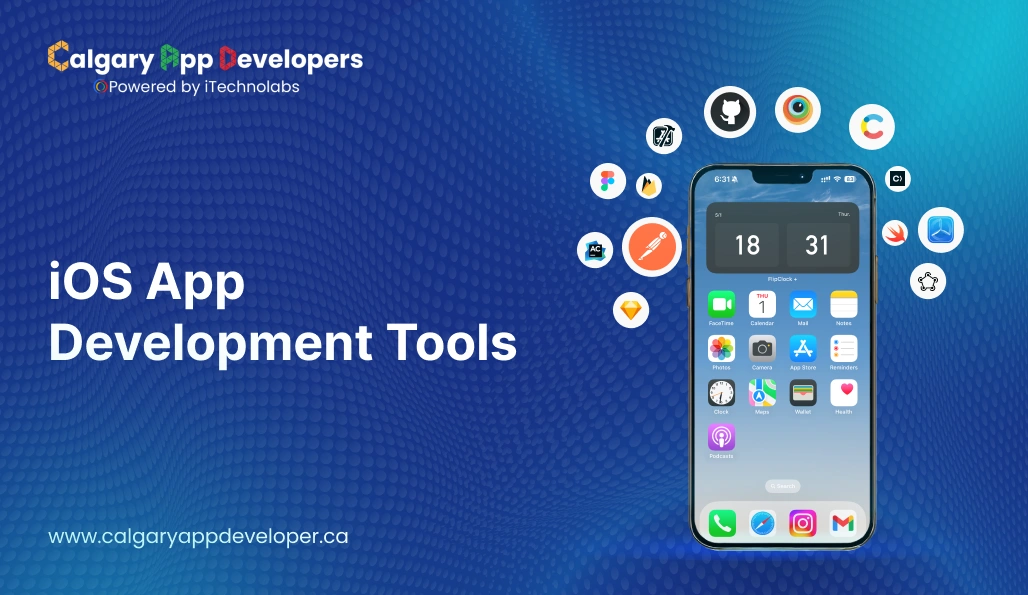
15 Best iOS App Development Tools For Developers
Building an iOS app today is more than writing clean Swift code. It involves designing polished interfaces, managing dynamic content, debugging edge cases, testing across multiple devices, and navigating Apple’s strict review process. Each step adds complexity, and without the right setup, development can slow down fast.
That is why tools matter. The right iOS app development tools remove friction from your workflow. They help you design faster, debug smarter, test thoroughly, and ship with confidence. Whether you are a solo developer or part of a growing product team, a well-chosen tool stack saves time, reduces rework, and keeps quality consistent.
This blog brings together the iOS app development tools developers will rely on in 2026, from core IDEs and design platforms to testing, automation, and content management tools. The recommendations are shaped by our hands-on experience building and scaling multiple iOS mobile applications, where tool choices directly impact speed, stability, and long-term maintainability.
- The right iOS development tools save time and reduce errors across the entire workflow.
- Core tools cover coding, design, testing, automation, and deployment.
- Tool choice depends on team size, app complexity, and release frequency.
- A well-chosen tool stack helps ship faster and maintain quality at scale.
- iOS app development requires a mix of IDEs, design tools, libraries, testing platforms, and automation utilities.
- Xcode remains the foundation for building, debugging, and publishing iOS apps within the Apple ecosystem.
- Design tools like Figma and Sketch play a critical role in delivering clean, intuitive iOS user experiences.
- Dependency managers such as Swift Package Manager and CocoaPods simplify library management and project maintenance.
- Performance and stability tools like Instruments and Crashlytics help detect issues before and after release.
- Automation, testing, and content tools streamline deployment, reduce manual work, and support long-term scalability.
How We Selected the Top iOS App Development Tools
Choosing the right tools is not about popularity alone. It is about what actually works in real projects. Here is how we shortlisted the tools featured in this guide.
- Real-world usage in production projects: Every tool on this list has been used in live applications, not just demos or side projects. We focused on tools that hold up under real deadlines, real users, and real production pressure.
- Decades of hands-on development experience: Our selection is shaped by decades of our experience in iOS application development. Over the years, we have seen tools come and go. The ones included here have proven their value through multiple technology cycles and platform changes.
- Impact on development speed and reliability: Tools were evaluated based on how much time they save and how well they reduce errors. Faster builds, clearer debugging, smoother testing, and simpler deployments mattered more than flashy features.
- Fit within modern iOS workflows: We prioritized tools that integrate cleanly with the Apple ecosystem and modern iOS practices. Strong support for Swift, SwiftUI, CI pipelines, and current iOS versions was a must.
- Scalability for teams and growing products: A good tool should work for a solo developer and still scale for larger teams. We favored tools that support collaboration, automation, and long-term maintainability as apps grow in complexity.
- Active adoption and future readiness: Tools with active communities, regular updates, and clear roadmaps ranked higher. This ensures developers are not locked into outdated solutions and can adapt as iOS development evolves.
This approach keeps the list practical, experience-driven, and focused on tools that genuinely improve how iOS apps are built and shipped.
Top 15 iOS App Development Tools in 2026
| Tool Name | Launch Year | Pricing | Pros | Cons |
| Xcode | 2003 | Free | Native support for Swift and Objective-C, full-featured IDE | macOS only, resource-heavy |
| AppCode | 2011 | Paid (starts at $99/year) | Smart code analysis, multi-language support | Slower Swift support, requires Xcode to compile |
| Sketch | 2010 | Paid (starts at $120/year) | Great for UI design, lightweight and intuitive | Mac-only, limited collaboration tools |
| Figma | 2016 | Free for individuals, Paid for teams | Real-time collaboration, cross-platform, browser-based | Performance lags with complex files, limited offline support |
| Swift Package Manager | 2016 | Free | Simple, built into Xcode, no extra setup | Smaller ecosystem than CocoaPods or Carthage |
| CocoaPods | 2011 | Free | Wide adoption, integrates easily with thousands of libraries | Slows down build time, adds workspace complexity |
| Carthage | 2014 | Free | Lightweight, decentralized, avoids Xcode workspace clutter | Manual setup, not actively maintained |
| Instruments (via Xcode) | 2007 | Free (bundled with Xcode) | Advanced profiling for memory, performance, energy usage | Steep learning curve |
| Firebase Crashlytics | 2017 | Free tier, usage-based pricing | Real-time crash tracking, good Firebase integration | Google-hosted data, setup can be clunky outside Firebase stack |
| GitHub | 2008 | Free for public use, Paid for teams | Widely adopted, excellent version control and CI/CD support | Can overwhelm beginners, paid plans for private repos |
| Postman | 2012 | Free tier, Paid from $14/user/month | Great for API testing and automation | Heavy desktop app, slower for quick requests |
| Fastlane | 2014 | Free (open-source) | Automates tedious deployment tasks, integrates with CI/CD | Initial setup requires time and technical know-how |
| TestFlight | 2014 (acquired by Apple) | Free | Easy beta testing for iOS, official Apple support | The build expires after 90 days, with a 10k tester limit |
| BrowserStack | 2011 | Paid (starts at $29/month) | Real device cloud, no need for local testing infrastructure | Expensive for individuals and small teams |
| Contentful | 2013 | Free tier, Paid from $300/month | Flexible headless CMS, good for dynamic content delivery | High cost at scale, developer setup required |
IDEs for iOS App Development
If you’re building an iOS app, your choice of IDE (Integrated Development Environment) will shape your entire development workflow. From writing code and managing assets to running simulators and shipping the app, the IDE is where it all happens. In 2025, two major tools lead the way: Xcode and AppCode.
1. Xcode
Xcode is Apple’s own IDE for macOS that every iOS developer uses. It natively supports Swift, Objective-C, and even C and C++. If you’re making an app for iPhone, iPad, Apple Watch, or Apple TV, this is what Apple expects you to use.
Key Features
- Swift and Objective-C support: Native support with both Apple languages
- Interface Builder: Drag-and-drop visual UI editor to design screens
- Simulators: Integration testing on virtual iPads and iPhones on various versions of iOS
- Instruments: Monitoring performance for memory leaks, CPU load, and so on
- Source Control: Git integration right within the interface
- Playgrounds: Prototyping Swift code and viewing live results
- App Store Integration: Submit to TestFlight and the App Store directly
Why it’s essential:
Xcode is deeply embedded in the Apple ecosystem. iOS, Swift, and new Apple hardware updates are always supported here first. Whether debugging layout or utilizing SwiftUI to create an adaptive interface, Xcode is where the new tools and SDKs reside.
Best for:
Anyone from beginner to enterprise-level developers. It’s free, capable, and always changing.
What to keep in mind:
Xcode is exclusively for macOS and can be resource-intensive. It has a large download size, and build time can become sluggish on older machines.
2. AppCode
AppCode is another IDE created by JetBrains, the makers of IntelliJ IDEA and WebStorm. It targets code intelligence and professional development features that many developers miss in Xcode.
Key Features
- Smart Code Assistance: Autocomplete, real-time error checking, and quick fixes
- Refactoring Tools: Project-wide, safe refactoring with minimal mouse clicks
- Multi-language Support: Supports Objective-C, Swift, C++, and even JavaScript
- Built-in Unit Testing: Supports XCTest, Google Test, and Catch testing frameworks
- Keyboard-driven Workflow: JetBrains’ characteristic shortcut-driven interface
- CocoaPods and SwiftPM Integration: Integrated package manager support
Why developers like it:
AppCode offers deep code analysis, smarter refactoring, and a consistent experience across JetBrains tools. If you’re working on a large codebase or switching between platforms, AppCode often feels faster and more intelligent.
Best for:
Experienced developers who want a more customizable and flexible development environment, especially if they already use JetBrains tools.
What to keep in mind:
AppCode is not independent . It also relies on the background use of Xcode to execute simulators and manage SDKs. SwiftUI support and updates are sometimes slower than Xcode releases.
Also Read: How to Develop an iOS App
Design Tools for Crafting iPhone UI/UX
Design is one of the most defining parts of iOS development. Users expect apps that are clean, intuitive, and beautifully laid out; anything less stands out in a bad way. That’s why design tools are just as important as your code editor. In the world of iOS app development tools, Sketch and Figma are two names you’ll hear again and again. Each brings its own strengths to the UI/UX workflow.
1. Sketch
Sketch is a vector design application built on the macOS platform specifically for user interface and experience design. It’s been a go-to tool in the Apple design community for years due to its speed, simplicity, and pixel-perfect output.
Key Features
- Vector Editing: Scalable, crisp designs that respond to various screen sizes
- Symbols and Shared Styles: Reusable elements that ensure consistency is easy
- Plugins and Integrations: Massive ecosystem for prototyping, exporting, and handoff
- Artboards: Work on multiple iPhone and iPad screen designs in a single environment
- Mirror App: Live preview your designs on an actual iOS device
Why it’s popular:
Sketch is designed with Apple platforms in mind. It behaves like a native, lightweight, and calibrated tool for mobile app developers. For solo developers and teams working mostly on Mac, Sketch is quick, streamlined, and easy to use.
Best for:
Designers and developers looking for a no-frills UI design tool specifically optimized for Apple devices.
What to keep in mind:
Sketch only runs on macOS. Real-time collaboration is limited unless you’re using Sketch’s paid cloud features. Teams may find it less flexible than Figma when it comes to design handoff and remote work.
2. Figma
Figma is a cloud-based interface design tool that works right in your browser. It’s built for collaboration from the ground up, allowing designers and developers to work together in real time with no syncing and no exporting, just shared live files.
Key Features
- Collaboration in Real Time: Multiple persons can design, comment, and review simultaneously
- Cross-Platform: Supports macOS, Windows, Linux, and even ChromeOS
- Auto Layout: Create responsive frames and layouts that dynamically adapt to various devices
- Design Systems: Reusable components, styles, and libraries that scale across teams
- Dev Handoff Tools: Inspect, paste CSS/Swift properties, and download assets in one click
Why developers love it:
Back-and-forth between design and development is a breeze with Figma. Devs no longer wait for files or run after specs. Everything’s at their fingertips. It’s a godsend for remote teams or speed-friendly startups.
Best for:
Cross-functional teams that value speed, transparency, and flexibility in the design process.
What to keep in mind:
While Figma is powerful, it relies on an internet connection. Offline mode is limited, and large design files can occasionally slow down in the browser.
Also Check: Best iOS App Development Companies in Calgary, Canada
Libraries and Frameworks for iOS Projects
Nobody constructs an iOS app from scratch anymore. Libraries and frameworks are crucial in today’s development, allowing you to add functionality quicker, handle dependencies, and not reinvent the wheel. Of the best iOS app development tools, package managers such as Swift Package Manager, CocoaPods, and Carthage assist you more in incorporating third-party code and keeping it up to date throughout your project.
1. Swift Package Manager (SPM)
Swift Package Manager is the official library and dependency management tool by Apple. It comes pre-installed with Xcode and has native support for Swift projects.
Key Features
- Native Integration: Included in Xcode without requiring any external tools or configurations
- Automatic Dependency Management: Installs and updates packages from Git repositories
- Streamlined Project Setup: No manual modifications to workspace or project files are required
- Cross-platform Support: Also supports macOS, tvOS, and watchOS projects
- Fast and Lightweight: Less overhead than older tools
Why it’s gaining traction:
Since it’s native, SPM simply works. It minimizes dependency hell, sidesteps third-party config headaches, and keeps pace with Swift updates better than out-of-box tools.
Best for:
Developers building exclusively in Swift, or those embarking on new projects who prefer something rock-solid and uncomplicated.
What to keep in mind:
SPM still has no support for some more complex use cases, and some legacy libraries may not yet support it. But adoption is developing very quickly.
2. CocoaPods
CocoaPods is a popular dependency manager for iOS and macOS development. It’s been on the scene for well over ten years and has a huge library ecosystem backing it.
Key Features
- Thousands of Libraries: The majority of open-source iOS projects have CocoaPods support
- Central Specs Repository: Easy discovery and addition of packages
- Automatic Installation: Handles versioning, dependencies, and configuration
- Podfile System: Allows you to decide which libraries end up in which targets
Why developers rely on it:
CocoaPods has proven itself. It remains one of the simplest ways to bolt on everything from analytics SDKs to bespoke UI frameworks.
Best for:
Developers with established codebases or working with libraries that have yet to move to SPM.
What to keep in mind:
It changes your Xcode workspace, which in large projects may result in confusion. It may also make building slower than SPM.
3. Carthage
Carthage is a lightweight, decentralized dependency manager for iOS. It never touches your Xcode project. Instead, it constructs frameworks that you manually embed, giving you more power and less noise.
Key Features
- Decentralized Setup: No need for a central specs repository
- Binary Framework Support: Keeps builds faster and cleaner
- Simple Command-line Tool: Add dependencies using Cartfile and build from the CLI
- Compatible with CI Systems: Works well with automation pipelines
Why it stands out:
Carthage provides you with flexibility. If you prefer not to touch project files or would like a tidier build system, Carthage has got you covered.
Best for:
Advanced developers who prefer control over convenience, or users dealing with custom-built systems.
What to keep in mind:
Setup is more manual than CocoaPods or SPM. And since it’s no longer actively maintained, it may not support the latest Swift features or newer libraries.
Read Also: Hire iPhone (iOS) App Developers: Top Sites to Hire
Debugging and Performance Monitoring Tools
Creating the app is one task. Ensuring it loads quickly, runs smoothly, and doesn’t crash when put under stress is a completely different story. That’s where debugging and performance tracking come in. These iOS app development tools enable you to detect problems early, monitor real-world performance, and ensure your app remains stable on any iPhone it’s used on. Two of the most critical tools in this group are Instruments and Firebase Crashlytics.
1. Instruments (via Xcode)
Instruments is a robust collection of performance analysis tools packaged with Xcode. It instrumented simultaneously with your app to enable you to monitor CPU usage, memory leaks, energy usage, and other metrics that have a direct impact on performance.
Key Features
- Time Profiler: Examine CPU usage and method call time in real-time
- Allocations Tool: Identify memory leaks, retain cycles, and excessive memory consumption
- Leaks Instrument: Traps memory that’s allocated but never freed
- Energy Log: Detect characteristics that rapidly consume battery life
- File Activity and Network Profiling: Track file reads/writes and app network activity
- Automation Recording: Replay user interaction for performance under load
Why developers use it:
Instruments provides you with fine-grained information about what your app is doing beneath the surface. You can identify slow functions, high memory usage, and CPU spikes, problems that don’t always appear in routine testing.
Best for:
iOS developers looking to optimize performance, find elusive bugs, or scale up.
What to keep in mind:
Instruments is overwhelming when you first encounter it. There is a learning curve if you are a first-timer when it comes to profiling. But after a while, it becomes an essential tool in your performance arsenal.
2. Firebase Crashlytics
Firebase Crashlytics is a minimal crash reporting library that provides you with real-time feedback on how your app is running in the wild. It is a part of the Firebase suite, owned by Google, and fits into any iOS project seamlessly.
Key Features
- Real-time Crash Reporting: Get alerts and full stack traces instantly after a crash
- Breadcrumbs: Log user actions leading up to the crash
- Custom Keys and Logs: Add context to each crash for faster debugging
- Crash Grouping: Automatically groups similar crashes for easier prioritization
- User Impact Reporting: Shows how many users are affected by each issue
- Free to Start: No cost for basic usage, even at scale
Why developers like it:
Crashlytics is fast, reliable, and easy to set up. It tells you not just that a crash happened, but exactly where and why, with context that actually helps you fix it.
Best for:
Any iOS developer who wants production-level crash insights with minimal setup effort.
What to keep in mind:
Because Crashlytics is part of the Firebase ecosystem, your app will rely on Google’s backend. This might be a privacy or compliance consideration for some teams.
Version Control and Collaboration Tools
No serious iOS project happens without version control. Whether you’re working solo or in a large team, you need a reliable way to track changes, roll back mistakes, and collaborate without stepping on each other’s code. For most developers, Git is the standard, and when it comes to hosting and collaboration, GitHub is the go-to among iOS app development tools.
1. GitHub
GitHub is a web-based platform for version control using Git. It’s where millions of developers store their code, manage branches, collaborate on pull requests, and handle project planning. For iOS developers, GitHub serves as both a source control tool and a collaboration hub.
Key Features
- Code Hosting: Store your iOS projects in private or public repositories
- Pull Requests: Review, comment, and merge code with built-in collaboration workflows
- Branch Management: Isolate features, experiments, and fixes without disrupting main code
- Actions (CI/CD): Automate testing, builds, and deployments using GitHub Actions
- Issue Tracking: Manage bugs, feature requests, and to-dos in one place
- Code Review Tools: Inline comments, suggestions, and approvals for clean merges
- Project Boards: Organize work with Kanban-style boards or GitHub Projects
Why developers rely on it:
GitHub makes it easy to manage code changes while keeping your team aligned. Whether you’re fixing bugs or shipping new features, it keeps everything visible and under control. Plus, GitHub integrates with tools like Xcode, Fastlane, TestFlight, and third-party CI systems.
Best for:
Solo iOS developers, indie teams, and large product squads who want clean workflows, transparency, and automation across the development process.
What to keep in mind
While GitHub’s interface is beginner-friendly, Git itself has a learning curve. And if you’re using private repositories with multiple collaborators, you may need a paid plan.
Also Read: How Much Does it Cost to Hire App Developers in Canada?
Backend Integration and API Tools
Most iOS apps don’t live in isolation; they talk to servers, fetch data, send user input, and sync with cloud services. Whether you’re working with REST APIs, GraphQL, or third-party SDKs, you need tools that help you test those connections fast and reliably. One of the most trusted iOS app development tools for backend and API testing is Postman.
1. Postman
Postman is a collaborative platform for API development and testing. It allows you to build, send, and inspect HTTP requests so you can understand exactly how your app is communicating with any backend service. It’s a must-have for any mobile developer working with APIs.
Key Features
- Request Builder: Easily create and send GET, POST, PUT, DELETE, and PATCH requests
- Environment Variables: Test the same request across staging, development, and production
- Collections: Organize API requests into reusable workflows
- Automated Testing: Write tests in JavaScript to validate API responses
- Mock Servers: Simulate backend responses when the real server isn’t ready
- API Documentation: Auto-generate and share docs with your team
- Team Collaboration: Comment, version, and share test environments and scripts
Why developers depend on it:
Postman helps you catch integration issues before they reach your app. You can test authentication flows, simulate failed responses, inspect headers and payloads, and validate error handling without ever touching your app’s code.
Best for
iOS developers working on data-driven apps or integrating third-party APIs. It’s also great for backend teams who need to collaborate with frontend developers in real time.
What to keep in mind:
Postman is a powerful desktop app, but it can get heavy and slow when dealing with large test suites. It also has a lot of advanced features that might feel overwhelming at first.
Automation and Deployment Tools
Deploying an iOS app is not just about writing great code. You also have to deal with provisioning profiles, certificates, test builds, screenshots, and finally submitting your app to the App Store. Doing all this manually is time-consuming and error-prone. That’s where automation comes in. Among all iOS app development tools, Fastlane is the one that saves developers the most time when it comes to shipping apps.
1. Fastlane
Fastlane is an open-source automation tool that handles all the tedious and repetitive tasks involved in building, signing, testing, and deploying iOS apps. It connects directly with Xcode, App Store Connect, TestFlight, and your CI pipeline to keep everything running smoothly.
Key Features
- Automated Code Signing: Manages provisioning profiles and certificates with match
- Beta Deployment: Push your build to TestFlight or Firebase App Distribution with one command
- App Store Screenshots: Automatically generate and upload localized screenshots for all devices
- Build and Release Pipelines: Chain tasks together with simple, readable configuration files
- Crash Reporting Integration: Hook into tools like Crashlytics or Sentry as part of your pipeline
- Third-Party Plugins: Extend functionality with plugins for Slack, Jira, or GitHub
Why developers rely on it:
Fastlane takes hours of manual release work and turns it into a single command. It’s especially useful for teams managing multiple apps or frequent updates. It also reduces the risk of human error when pushing updates under a deadline.
Best for:
iOS developers who want to automate releases, manage multiple environments, or set up CI/CD. Whether you’re solo or working in a large team, Fastlane scales with your workflow.
What to keep in mind:
Initial setup can be complex, especially for code signing. It requires some scripting knowledge, and misconfigurations can lead to frustrating errors if you’re not familiar with Apple’s deployment rules.
Also Check: iPhone / iOS App Development Cost in Canada | Complete Guide
User Testing and QA Tools
You can write perfect code, but until real people use your app on real devices, you’re only guessing. User testing and quality assurance are where your app either holds up or falls apart. These iOS app development tools help you catch bugs, performance issues, and UX problems before they ever hit the App Store. Two of the most reliable tools in this space are TestFlight and BrowserStack.
1. TestFlight
TestFlight is Apple’s official beta testing platform for iOS apps. It allows developers to distribute prerelease builds to testers, gather feedback, and monitor stability all through a system built into the App Store ecosystem.
Key Features
- Up to 10,000 Testers: Invite internal or external users via email or public links
- Test Multiple Builds: Run tests on different versions of the same app
- Detailed Tester Feedback: Collect notes, screenshots, and logs from users
- Crash Reporting: Automatic reporting of app crashes during test sessions
- Seamless iOS Integration: Testers install your app directly through the TestFlight app
- 90-day Build Window: Each version remains live for testing for up to three months
Why developers use it:
TestFlight is the fastest way to get your app onto real devices before launch. It’s free, tightly integrated with App Store Connect, and gives you crash data and user feedback in one place.
Best for:
Any iOS developer preparing for public release. Whether you’re testing new features or doing final bug sweeps, TestFlight is the simplest way to beta test with real users.
What to keep in mind:
TestFlight has limitations. Each build expires after 90 days, and you’re capped at 10,000 external testers per app. It’s also Apple-only, so it won’t help if you’re building cross-platform.
2. BrowserStack
BrowserStack is a cloud-based testing platform that gives you instant access to hundreds of real iOS (and Android) devices. It lets you test your app across multiple screen sizes, OS versions, and hardware types without needing a physical device lab.
Key Features
- Real Device Cloud: Test on actual iPhones and iPads hosted in the cloud
- App Live Testing: Upload your iOS app and interact with it in real time
- App Automation: Run automated test scripts across devices and OS combinations
- Screenshot and Video Capture: Document bugs and share results with your team
- Support for Multiple Frameworks: Works with Appium, XCUITest, and other test suites
- Geolocation Testing: See how your app behaves in different regions
Why developers use it
BrowserStack helps you find device-specific bugs that would otherwise go unnoticed. It’s especially useful for teams without access to every model of iPhone or for QA engineers validating visual layout, performance, or behavior across multiple devices.
Best for
Teams that need broad device coverage or those who want to avoid the cost and hassle of managing a physical device lab.
What to keep in mind
BrowserStack is a paid service, and pricing can add up if you need a lot of hours or users. Additionally, the remote use of real devices may result in slight performance delays compared to physical device use.
Read Also: How to Choose the Best Company for Calgary Mobile App Development
Content Management Tools
Not every update should require a new App Store submission. If your app includes dynamic content like articles, banners, settings, or onboarding screens—you need a way to update it on the fly without touching the code. That’s where headless CMS platforms come in. Among the most flexible and developer-friendly iOS app development tools for content management is Contentful.
1. Contentful
Contentful is a cloud-based headless content management system that lets you create, manage, and deliver content across multiple platforms—including iOS apps. It separates your app’s content from its code, giving non-developers the ability to update in-app experiences without needing an app release.
Key Features
- Headless Architecture: Content is stored separately from presentation, giving you full control over how it’s used
- Custom Content Models: Define exactly what types of content your app will use—text, images, layouts, and more
- RESTful and GraphQL APIs: Fetch content efficiently in the format that works best for your app
- Web-Based Editor: Marketers and content teams can manage and schedule updates without dev involvement
- Localization Support: Manage content in multiple languages from a single dashboard
- Role-Based Access: Control who can edit what, reducing the chance of errors in production
Why developers use it:
With Contentful, your development team can focus on features while your content team takes care of updates. It’s a modern approach that cuts down development time, speeds up iteration, and makes it easier to scale content-heavy apps.
Best for:
iOS app developers building apps that need frequent content updates or personalized user experiences—like news apps, e-commerce platforms, or educational products.
What to keep in mind:
Contentful is powerful, but it’s also a paid service at scale. Its flexibility comes with a learning curve, especially when setting up custom content models and integrating APIs into your app.
Wrapping Up
Choosing the right iOS app development tools can make or break your workflow. Whether you’re building your first app or managing a full-scale mobile product, these 15 iOS app development tools cover every stage from design and development to testing, deployment, and content updates.
The key is to choose tools that fit your stack, team, and goals. Some tools like Xcode and TestFlight are essential if you’re working in the Apple ecosystem. Others, like Fastlane or Contentful, can take your process to the next level when you’re ready to scale.
Great apps are not just built with good code. They are built with the right tools used at the right time. So take a closer look at your current workflow. See what’s working, what’s slowing you down, and where the right tool could give you more clarity, speed, or control.
The sooner you find your stack, the faster you’ll ship apps that not only work but also stand out.
We leverage some of the best iOS development tools to build custom app solutions tailored to our clients’ needs. These tools not only enhance performance but also streamline the entire development process—making iPhone app development faster, more efficient, and scalable.
Looking to build a custom iOS app using industry-leading tools? As a top iOS app development company in Calgary, our experienced team of developers and designers is here to help. Let’s connect and turn your app idea into a reality.
FAQs
1. Which iOS app development tools are essential for beginners in 2026?
Beginners should start with Xcode, Swift Package Manager, GitHub, and TestFlight. Xcode handles coding, UI design, debugging, and deployment in one place. Swift Package Manager keeps dependencies simple. GitHub helps track code changes, and TestFlight allows safe beta testing before public release.
2. Is Xcode alone enough to build and publish an iOS app?
Yes, Xcode is technically enough to build, test, and submit an iOS app. However, most developers add tools like Fastlane for automation, GitHub for version control, and Crashlytics for real-world crash monitoring. These tools reduce manual work and improve stability at scale.
3. Should I choose Swift Package Manager or CocoaPods in 2026?
Swift Package Manager is the better default for new projects because it is built into Xcode and requires no extra setup. CocoaPods still makes sense for older projects or when using libraries that do not yet support SPM. For most modern Swift apps, SPM is cleaner and faster.
4. What tools help the most with iOS app testing and quality assurance?
TestFlight and BrowserStack are the most useful testing tools. TestFlight handles beta testing on real user devices, while BrowserStack helps test across many iPhone models and iOS versions. Together, they catch crashes, UI issues, and device-specific bugs before launch.
5. Do indie developers need paid iOS development tools?
Not at the start. Many essential tools like Xcode, Swift Package Manager, GitHub, TestFlight, and Fastlane are free. Paid tools like BrowserStack, Contentful, or AppCode become valuable later when apps grow, teams expand, or testing and content needs increase.
6. Which tools are best for automating iOS app deployment?
Fastlane is the industry standard for iOS deployment automation. It handles code signing, TestFlight uploads, App Store submissions, and screenshots. When combined with GitHub Actions or another CI tool, it can reduce release time from hours to minutes.
7. How do I choose the right iOS app development tools for my project?
Start by matching tools to your workflow, not trends. Use Xcode and TestFlight by default. Add design tools like Figma if collaboration matters. Introduce automation, testing, and CMS tools only when complexity increases. The right stack supports speed, clarity, and long-term maintainability.


Pankaj Arora is a seasoned technology leader and the Founder of Calgary App Developer, with 10+ years of expertise in crafting high-performance digital solutions. His core competencies include full-stack app development, cloud-native architecture, API integration, and agile product delivery. Under his leadership, Calgary App Developers has empowered startups and enterprises alike with scalable mobile applications, secure web platforms, and AI-driven SaaS products.