










Mobile App Startup Costs: A Brief Guide 2026

Mobile applications have become the foundation of modern digital businesses. Startups use mobile applications to launch products and expand their user base while competing against other businesses in the market.
The scale of the opportunity is enormous. The global mobile application market was valued at about $298.4 billion in 2025 and is expected to reach around $330 billion in 2026, with projections indicating growth to over $1 trillion by 2034 as smartphone adoption, digital services, and app-based economies continue expanding worldwide.
User engagement with mobile apps continues to rise. In 2024 alone, users downloaded around 137.8 billion apps globally, showing how deeply mobile experiences are embedded in everyday life across industries and regions.
This explosive growth has created massive opportunities for entrepreneurs. However, building a successful mobile product begins with a clear understanding of app startup costs. Many founders underestimate the investment required to design, develop, launch, and maintain a mobile application. Without proper planning, budgets can quickly spiral beyond expectations.
This guide explores the realistic startup costs involved in building a mobile app in 2026, including development stages, complexity levels, and ongoing operational expenses. The insights shared in this article are not based only on industry research. They also come from our practical experience in mobile app development, where we have worked with startups and enterprises to design scalable, high-performance mobile products across multiple industries.
By the end of this guide, you will understand how much it typically costs to build a mobile app, what factors influence those costs, and how startups can plan their budgets strategically before beginning development.
TL;DR
- Mobile app startup costs in 2026 typically range from $20,000 to $250,000 or more, depending on complexity, features, platform, and development approach.
- Costs increase as apps require advanced functionality, strong backend infrastructure, security frameworks, and scalable architecture.
- Different app categories, such as ecommerce, fintech, marketplaces, and social platforms, require different development budgets.
- Startups can manage costs by launching an MVP, prioritizing essential features, and choosing efficient development strategies.
Key Points
- Mobile apps have become a core growth channel for startups across industries, including ecommerce, fintech, healthcare, and on-demand services.
- Development costs depend on several factors, including app complexity, platform choice, UI and UX design requirements, backend infrastructure, and the development team structure.
- Different types of apps require different budgets. Content apps are usually more affordable, while marketplaces, fintech platforms, and social networks require higher investment.
- Mobile app development typically involves multiple stages, including planning, design, development, testing, and deployment, each contributing to the total cost.
- Hidden expenses such as cloud hosting, third-party integrations, maintenance, security compliance, and marketing can significantly affect the overall budget.
- Startups can reduce costs by launching a minimum viable product, focusing on essential features, using existing APIs, and adopting efficient development practices.
What Determines Mobile App Startup Costs
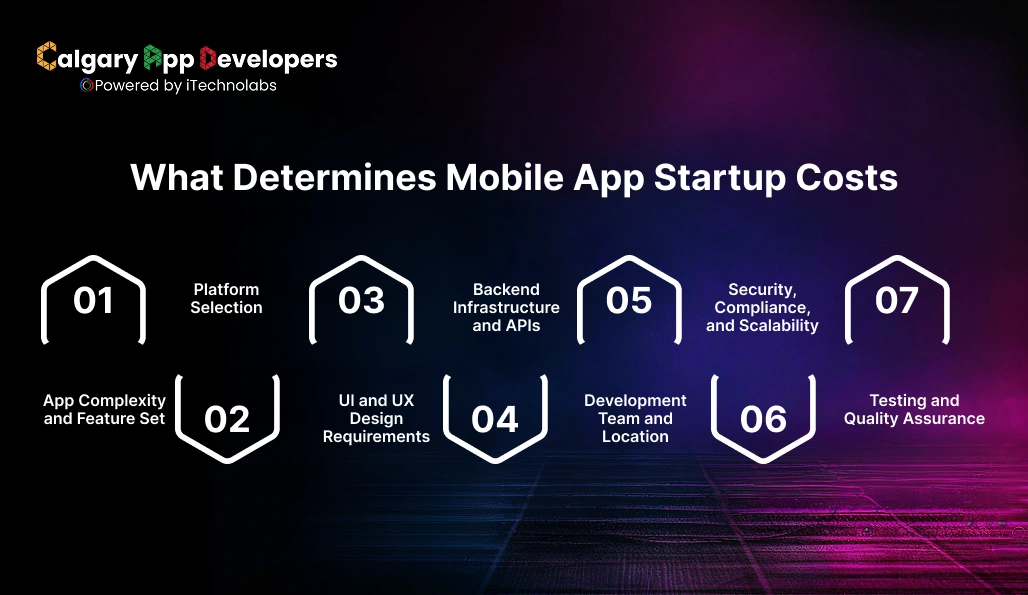
In 2026, mobile app startup costs typically range from $20,000 to $250,000 or more, depending on the app’s complexity, features, development approach, and long-term scalability requirements.
The cost of building a mobile application is influenced by several technical and strategic factors. Startups often assume that development cost is determined only by coding hours. In reality, mobile app startup costs are shaped by a combination of product planning, design requirements, development architecture, integrations, and ongoing infrastructure needs.
Below are the primary elements that determine how much a startup will spend when building a mobile app.
1. App Complexity and Feature Set
One of the most significant drivers of mobile app startup costs is the level of functionality the app requires. A simple application with limited features, such as login, basic navigation, and static content, requires far fewer resources than a platform that supports real-time communication, advanced analytics, or AI-powered capabilities.
Simple apps, such as basic utility tools or informational apps, typically require fewer development hours. Medium complexity apps often include payment systems, user profiles, APIs, and backend services. Advanced applications may involve features such as live streaming, machine learning models, location tracking, or multi-user systems, which significantly increase development time and cost.
2. Platform Selection
The platform on which the app is built also has a direct impact on the budget. Startups generally choose between iOS, Android, or cross-platform development.
Developing separate native apps for both iOS and Android increases development costs because each platform requires its own codebase and testing process. Cross-platform frameworks such as Flutter or React Native allow developers to build one codebase that works across multiple platforms, which can reduce mobile app startup costs in many cases.
However, some high-performance applications still require native development to achieve optimal performance and device integration.
3. UI and UX Design Requirements
User interface and user experience design are essential for the success of any mobile application. Well-designed apps improve usability, retention, and engagement.
The cost of design depends on factors such as the number of screens, custom animations, branding requirements, and interaction complexity. Startups that prioritize unique design systems, custom graphics, and advanced micro interactions will invest more in the design phase compared to apps that use standard interface components.
4. Backend Infrastructure and APIs
Most modern mobile applications rely on backend infrastructure to store data, manage users, process transactions, and support real-time communication. Backend development often includes database architecture, server configuration, cloud services, and API integrations.
Apps that require integrations with payment gateways, social media platforms, third-party services, or enterprise systems increase development effort. The more integrations an app requires, the higher the overall mobile app startup costs.
5. Development Team and Location
The structure and location of the development team have a direct impact on mobile app startup costs. Building an in-house team requires long-term investment in salaries, benefits, workspace, and technical infrastructure. Many startups instead collaborate with specialized development agencies or offshore teams to access experienced developers, designers, and product strategists without maintaining a full internal team.
Cities with strong technology ecosystems are also becoming popular destinations for startups seeking high-quality development expertise. Calgary, for example, has emerged as a rapidly growing technology hub with a strong developer community, startup accelerators, and innovation-driven support programs. Working with experienced teams in such ecosystems allows startups to balance cost efficiency with access to skilled professionals and scalable product development capabilities.
6. Security, Compliance, and Scalability
Security and regulatory compliance are essential considerations, particularly for applications in industries such as fintech, healthcare, and eCommerce. Implementing encryption, secure authentication systems, and compliance frameworks requires additional development effort.
Scalability is another important factor. Applications that are designed to support rapid user growth require robust architecture, optimized databases, and reliable cloud infrastructure. Building scalable systems during the initial development phase can increase startup costs but prevent expensive restructuring later.
7. Testing and Quality Assurance
Quality assurance ensures that the application works reliably across different devices, operating systems, and network environments. Comprehensive testing includes functional testing, performance testing, security testing, and usability testing.
Apps with complex functionality require extensive testing cycles, which adds to the development timeline and overall mobile app startup costs.
Understanding these factors allows startups to estimate development budgets more accurately and avoid unexpected expenses during the product development process. Proper planning at the early stages of development is essential for managing costs while building a reliable and scalable mobile application.
Also Read: Why Most Calgary Startups Fail: Missing These Key Mobile App Features
Average App Startup Costs by App Type
App startup costs can vary widely depending on the type of mobile application being developed. Different app categories require different levels of backend infrastructure, integrations, security systems, and user interface complexity. Because of this, the cost of building a mobile app is rarely fixed and often depends on the functionality required to support the core business model.
Below is a general overview of average app startup costs based on common app categories.
| App Type | Typical Features | Estimated App Startup Costs |
| Content-Based Apps | Articles, videos, simple navigation, push notifications | $20,000 to $40,000 |
| eCommerce Apps | Product catalog, shopping cart, payments, order tracking | $40,000 to $90,000 |
| Social Networking Apps | User profiles, messaging, media sharing, notifications | $70,000 to $150,000 |
| On-Demand Service Apps | Booking systems, location tracking, real time updates | $80,000 to $160,000 |
| Fintech Apps | Secure transactions, financial dashboards, and data encryption | $100,000 to $200,000 |
| Healthcare Apps | Patient data management, appointment scheduling, and compliance features | $90,000 to $180,000 |
| Marketplace Apps | Multiple vendors, payments, ratings, and advanced backend systems | $120,000 to $250,000+ |
1. Content-Based Apps
Content-focused applications are among the most affordable products for startups. These apps primarily deliver information such as articles, videos, podcasts, or news updates. They usually rely on simple navigation and limited backend infrastructure.
Typical app startup costs: $20,000 to $40,000
Key features
- User registration and login
- Content feed or category-based browsing
- Video or article viewing interface
- Push notifications for new updates
- Basic search functionality
- Admin panel for content management
These apps are commonly used by media companies, educational platforms, and blogs that want to distribute digital content through mobile platforms.
2. eCommerce Apps
eCommerce applications enable businesses to sell products directly through mobile platforms. They require secure payment processing, inventory management, and a smooth shopping experience for customers.
Typical app startup costs: $40,000 to $90,000
Key features
- Product catalog with filters and categories
- Shopping cart and checkout system
- Secure payment gateway integration
- Order tracking and notifications
- User accounts and purchase history
- Product reviews and ratings
Many retail startups invest in eCommerce apps to improve customer engagement and create a direct mobile sales channel.
3. Social Networking Apps
Social networking platforms require advanced architecture because they support large user bases, media sharing, and continuous interaction between users.
Typical app startup costs: $70,000 to $150,000
Key features
- User profiles and activity feeds
- Real-time messaging and notifications
- Photo and video sharing
- Friend or follower systems
- Content engagement through likes and comments
- Moderation and reporting tools
These apps demand strong backend infrastructure to handle large volumes of user-generated content and real-time interactions.
4. On-Demand Service Apps
On-demand apps connect users with services such as transportation, food delivery, home services, or logistics. They require location-based functionality and real-time updates.
Typical app startup costs: $80,000 to $160,000
Key features
- Real-time location tracking
- Booking and scheduling system
- Payment processing
- Push notifications and status updates
- Ratings and review systems
- Service provider and customer dashboards
Because these apps operate in real time, they require reliable backend infrastructure and scalable cloud services.
5. Fintech Apps
Financial technology apps require strong security frameworks and regulatory compliance. These platforms handle sensitive financial data and transactions, which increases development complexity.
Typical app startup costs: $100,000 to $200,000
Key features
- Secure user authentication
- Digital payments and transfers
- Financial dashboards and transaction history
- Data encryption and fraud protection
- Bank or financial API integrations
- Regulatory compliance features
Security architecture and financial data protection significantly influence development costs in fintech applications.
6. Healthcare Apps
Healthcare applications are designed to support patient care, medical services, and digital health management. These apps must often comply with strict healthcare data regulations.
Typical app startup costs: $90,000 to $180,000
Key features
- Appointment booking and scheduling
- Patient profile and medical records
- Video consultation with doctors
- Prescription management
- Health data tracking and monitoring
- Secure storage of medical information
Compliance with healthcare standards and data protection requirements plays a major role in determining development costs.
7. Marketplace Apps
Marketplace applications connect buyers and sellers on a single platform. They require advanced backend systems to manage vendors, transactions, and product listings.
Typical app startup costs: $120,000 to $250,000+
Key features
- Multi-vendor product listings
- Vendor dashboards and account management
- Secure payment and commission systems
- Ratings and reviews for sellers
- Order management and dispute resolution
- Advanced admin panel for platform control
Marketplace platforms are among the most complex mobile applications because they manage multiple user roles and large volumes of transactions.
Read Also: How Vibe Coding Helps Startups Turn Ideas into Prototypes
App Startup Costs by Development Stage
A successful mobile app is rarely built in a single step. It progresses through structured stages that include product planning, design, development, testing, and deployment. Each stage requires specialized expertise, which directly influences the overall cost of building a mobile application.
| Development Stage | Key Activities | Estimated Cost Range |
| Planning and Research | Market analysis, competitor study, feature planning, technical architecture | $3,000 to $10,000 |
| UI and UX Design | Wireframes, user flows, visual design, prototype creation | $5,000 to $20,000 |
| App Development | Frontend development, backend architecture, API integration | $15,000 to $150,000 |
| Testing and Quality Assurance | Functional testing, performance testing, bug fixing, and device testing | $5,000 to $25,000 |
| Deployment and Launch | App store submission, cloud setup, final configuration | $2,000 to $10,000 |
1. Planning and Research
This stage focuses on validating the idea and defining the product roadmap. Startups conduct market analysis, competitor research, and feature prioritization to determine the best product strategy.
Key tasks include identifying target users, defining the core feature set, selecting the technology stack, and creating the initial development plan. Proper planning helps reduce unnecessary development costs later in the project.
2. UI and UX Design
User experience plays a major role in the success of a mobile application. The design phase transforms product ideas into structured wireframes, screen layouts, and interactive prototypes.
Design teams create user journeys, interface layouts, and visual elements that ensure the application is easy to navigate and visually consistent across different devices.
3. App Development
The development phase represents the largest portion of app development startup costs. This stage involves building the core functionality of the mobile application, including frontend interfaces and backend infrastructure.
Developers write the application code, integrate APIs, configure databases, implement security features, and ensure the app functions properly across supported platforms.
4. Testing and Quality Assurance
Quality assurance ensures the application performs reliably before release. Testing identifies bugs, usability issues, and performance problems that could affect the user experience.
Testing teams evaluate the app across multiple devices, operating systems, and network environments. This stage also includes security testing and performance optimization.
5. Deployment and Launch
The final stage prepares the application for public release. Developers configure servers, finalize integrations, and submit the application to app distribution platforms.
This phase includes app store submission, deployment to cloud infrastructure, and final performance checks before the product becomes available to users. Proper deployment ensures a smooth launch and stable app performance during the initial release period.
Also Read: Building Canadian Startup on Budget: Tips for New Founders
App Startup Costs by Platform
The platform you choose plays a major role in determining app development startup costs. Startups typically decide between building an app for iOS, Android, or both platforms using cross-platform technologies. Each approach involves different development requirements, tools, and timelines, which directly influence the overall budget.
Native applications built separately for iOS and Android usually require more development time because each platform needs its own codebase and testing process. Cross-platform development can reduce development time by allowing developers to write a single codebase that works across multiple operating systems.
| Platform | Development Approach | Estimated App Development Startup Costs |
| iOS App Development | Native development using Swift and Apple frameworks | $25,000 to $150,000 |
| Android App Development | Native development using Kotlin or Java for Android devices | $25,000 to $150,000 |
| Cross-Platform App Development | Single codebase using frameworks such as Flutter or React Native | $20,000 to $120,000 |
1. iOS App Development Costs
Developing a native iOS application involves using Apple technologies such as Swift and the iOS development ecosystem. These apps are optimized for Apple devices, including iPhone and iPad.
Cost: $25,000 to $150,000
Key features
- Native performance optimized for Apple devices
- Integration with Apple services such as Apple Pay and iCloud
- Advanced security and privacy features
- Smooth interface design based on Apple guidelines
- Compatibility with the Apple device ecosystem
Many startups choose iOS first when targeting markets with strong Apple user adoption, particularly in North America and parts of Europe.
2. Android App Development Costs
Android applications are developed using technologies such as Kotlin or Java and are designed to run across a wide range of devices from different manufacturers.
Cost: $25,000 to $150,000
Key features
- Compatibility across multiple Android devices and screen sizes
- Integration with Google services and APIs
- Customizable interface and flexible design frameworks
- Support for a large global user base
- Access to the Google Play distribution ecosystem
Android apps often require additional testing due to the variety of devices and operating system versions available in the Android ecosystem.
3. Cross-Platform App Development Costs
Cross-platform development allows startups to build apps that run on both iOS and Android using a shared codebase. Frameworks such as Flutter and React Native make it possible to accelerate development while maintaining consistent functionality across platforms.
Cost: $20,000 to $120,000
Key features
- Single codebase for multiple platforms
- Faster development timelines
- Lower initial development costs
- Shared UI components and business logic
- Simplified updates and maintenance
Many startups choose cross-platform development when launching a minimum viable product because it enables faster market entry while keeping app development costs more manageable.
Read Also: MVP App Development Services for Startups in Canada
Cost Breakdown by App Complexity
One of the most important factors that influences mobile app startup costs is the overall complexity of the application. The number of features, level of backend infrastructure, integrations, and scalability requirements determine how much time and technical effort are needed to build the product.
Apps with basic functionality can be developed quickly with smaller teams, while advanced platforms require complex architectures, multiple integrations, and extensive testing. As complexity increases, development timelines and startup costs grow accordingly.
| App Complexity | Description | Estimated Mobile App Startup Costs |
| Simple Apps | Basic functionality with limited features and minimal backend systems | $20,000 to $40,000 |
| Medium Complexity Apps | Interactive features, third-party integrations, and scalable backend services | $40,000 to $120,000 |
| Advanced Apps | Complex architecture, real-time features, high security, and enterprise-level infrastructure | $120,000 to $250,000+ |
1. Simple Apps
Simple mobile applications focus on delivering a limited set of features and are usually built for straightforward user interactions. These apps typically require minimal backend infrastructure and shorter development timelines.
Simple apps are commonly used for informational platforms, utility tools, and early-stage startup products that want to validate a business idea quickly.
2. Medium Complexity Apps
Medium complexity apps include more interactive features and require a structured backend architecture to support growing user activity. These applications often integrate with third-party services and cloud infrastructure.
Many startup platforms, such as eCommerce apps, service booking apps, and content platforms, fall into this category.
3. Advanced Apps
Advanced applications require sophisticated development architecture, large-scale backend systems, and strict security frameworks. These apps often support large user bases and handle complex business logic.
Advanced apps are typically built for marketplaces, fintech platforms, social networks, and other large-scale digital ecosystems that require high performance and scalability.
Hidden Costs in Mobile App Development
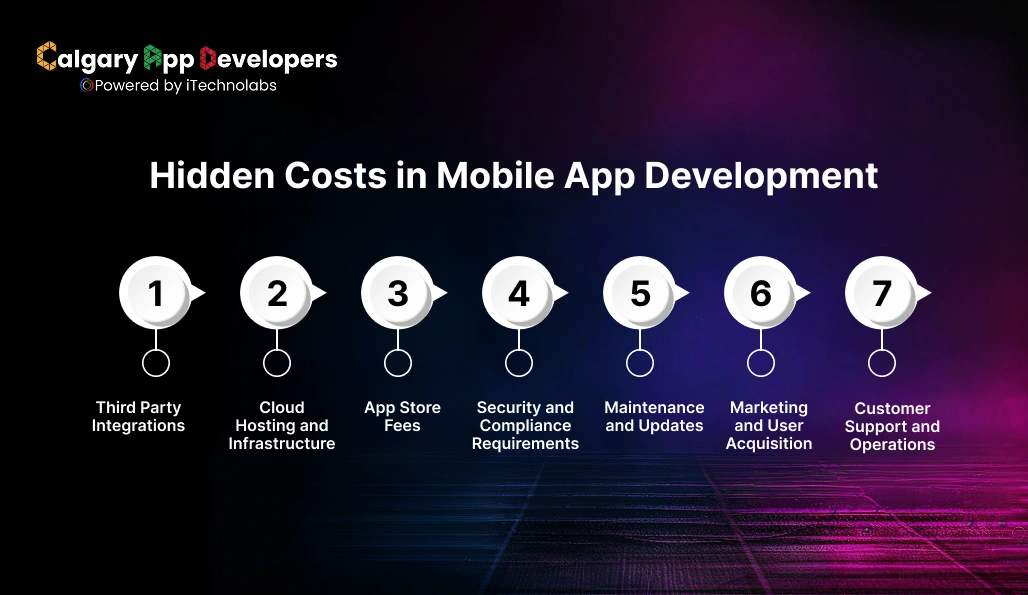
While most startups focus on initial development budgets, many overlook the additional expenses that appear throughout the product lifecycle. These overlooked elements can significantly affect mobile app startup costs, especially after the app moves from development to real-world usage.
Mobile applications require continuous infrastructure, integrations, and operational support. If these factors are not considered during early planning, the total investment required to run and scale the product can increase beyond the original budget.
Here are some of the most common hidden costs that startups encounter during mobile app development.
1. Third Party Integrations
Many apps depend on external services for essential functionality. These services often charge monthly or usage-based fees.
Examples include
- Payment gateways
- SMS and email notification services
- Maps and location services
- Authentication platforms
- Analytics and marketing tools
While integrating these services may not add significant development time, the ongoing subscription or transaction fees can accumulate as the user base grows.
2. Cloud Hosting and Infrastructure
Most modern mobile applications rely on cloud infrastructure to store data, process requests, and handle backend operations. Services such as cloud servers, databases, and content delivery networks operate on recurring billing models.
Infrastructure costs increase as the application scales and more users interact with the platform. Startups must plan for these operational expenses when calculating long-term mobile app startup costs.
3. App Store Fees
Publishing a mobile application also involves platform-specific fees. App distribution platforms charge developers for developer accounts and may take a percentage of in-app purchases or digital transactions.
These costs are relatively small compared to development expenses, but they are necessary for maintaining the app’s presence on major distribution platforms.
4. Security and Compliance Requirements
Applications that handle sensitive data require stronger security frameworks. Industries such as fintech, healthcare, and eCommerce must follow strict data protection standards and regulatory guidelines.
Implementing secure authentication, encryption protocols, and compliance frameworks requires additional development and auditing efforts, which adds to the overall cost of maintaining the application.
5. Maintenance and Updates
Launching the application is only the beginning of the product lifecycle. Mobile apps require regular updates to fix bugs, improve performance, and remain compatible with new operating system versions.
Maintenance typically includes monitoring system performance, resolving technical issues, improving user experience, and adding new features over time. These activities represent an ongoing investment that startups must account for when planning their budgets.
6. Marketing and User Acquisition
Even a well-built mobile app requires marketing to attract users. Many startups underestimate the cost of promoting their product and building an initial user base.
Common marketing expenses include
- App store optimization
- Paid advertising campaigns
- Influencer partnerships
- Content marketing and social media promotion
- User onboarding and retention campaigns
User acquisition strategies often require a separate budget that runs alongside the development investment.
7. Customer Support and Operations
As the number of users grows, startups must invest in customer support systems and operational tools. Support teams handle user inquiries, troubleshoot issues, and maintain positive user experiences.
Operational tools such as support platforms, analytics dashboards, and CRM systems may also involve recurring costs.
Understanding these hidden expenses helps startups create a more accurate budget and avoid unexpected financial pressure after launching their mobile application. Proper planning ensures that the product can continue evolving while maintaining stable performance and user satisfaction.
Also Read: Why Startups in the U.S. Are Hiring Fractional Dev Teams
Development Team Structure and Its Impact on App Startup Costs
Different team structures offer different levels of control, cost efficiency, and development speed. Startups typically choose between an in-house team, freelance developers, or a professional development agency. Each model has its own advantages and limitations that affect the overall development process.
1. In-House Development Team
Average Cost: $120,000 to $250,000+
Building an internal team gives startups direct control over product development and long-term innovation. However, it also requires significant investment in recruitment, salaries, infrastructure, and ongoing operational costs.
| Pros | Cons |
| Full control over development and product decisions | High salary and operational expenses |
| Strong internal collaboration and communication | Long hiring and onboarding timelines |
| Long-term product ownership | Higher overall startup investment |
| Dedicated team focused on one product | Requires management and HR resources |
This model is usually adopted by well-funded startups or companies planning long-term internal product development.
2. Freelance Developers
Average Cost: $20,000 to $80,000
Freelancers are often hired for specific development tasks such as UI design, frontend coding, or backend integration. This approach can reduce initial development costs but may create coordination challenges in larger projects.
| Pros | Cons |
| Lower initial development costs | Limited availability and reliability risks |
| Flexible hiring based on project needs | Difficult to manage complex projects |
| Access to specialized technical skills | Lack of structured development processes |
| Suitable for small or early-stage projects | Long-term maintenance can become challenging |
Freelancers are commonly used for smaller applications or early product prototypes where budget constraints are a major factor.
3. Development Agency
Average Cost: $40,000 to $200,000
Development agencies provide a structured environment where designers, developers, and quality assurance specialists collaborate to build the application. Agencies often manage the entire development lifecycle, including planning, design, development, testing, and launch.
| Pros | Cons |
| Access to experienced and specialized teams | Higher cost than hiring individual freelancers |
| Structured project management and delivery processes | Less direct control compared to internal teams |
| Faster development timelines with coordinated teams | Requires clear communication with the agency |
| Scalable resources for complex projects |
For many startups, working with a development agency offers a balanced approach between cost efficiency and professional execution.
An agency like Calgary App Developer brings experience from multiple projects, established workflows, and technical expertise that help startups launch reliable products without the operational challenges of building and managing a large internal team.
Ways Startups Can Reduce App Startup Costs
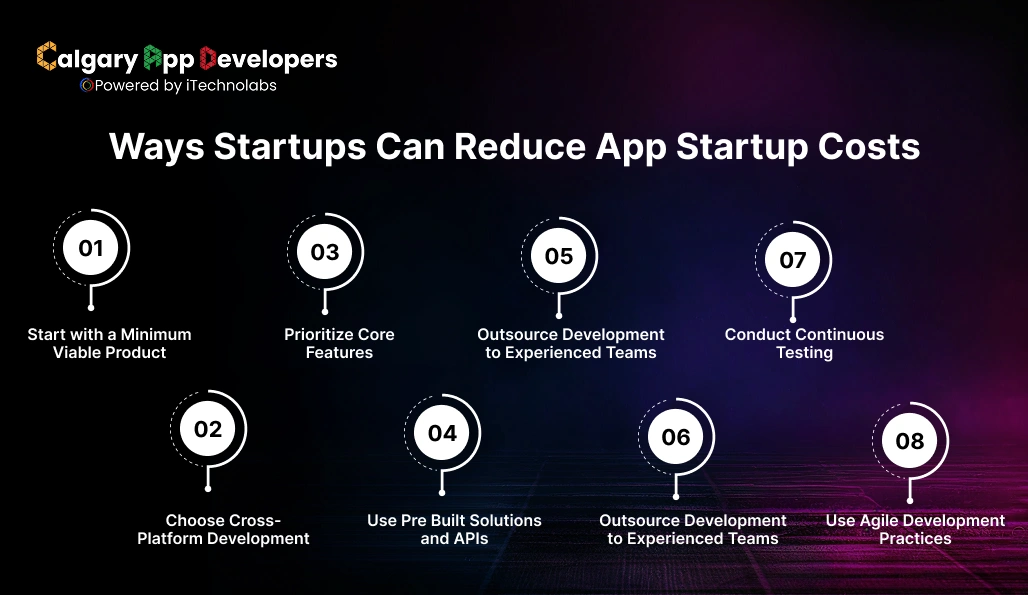
Building a mobile application requires careful financial planning, especially for early-stage companies working with limited budgets. Startups can significantly reduce expenses by making strategic decisions during the planning and development process.
The goal is not to compromise product quality but to prioritize essential features, optimize development workflows, and launch efficiently. Below are several practical approaches that help startups manage and reduce app development expenses.
1. Start with a Minimum Viable Product
Many startups make the mistake of building a fully featured product in the first release. A better approach is to launch a Minimum Viable Product that includes only the core features necessary to validate the idea.
An MVP allows startups to test market demand, gather user feedback, and refine the product before investing in additional functionality. This approach reduces initial development effort and keeps mobile app startup costs under control.
2. Choose Cross-Platform Development
Building separate native apps for iOS and Android can significantly increase development costs. Cross-platform frameworks allow developers to create a single codebase that works across multiple operating systems.
Using technologies such as Flutter or React Native helps startups reduce development time, simplify maintenance, and accelerate product launch timelines.
3. Prioritize Core Features
Successful startups focus on solving one key problem effectively rather than building an overly complex application. Prioritizing essential features prevents unnecessary development work and helps maintain a manageable budget.
Features such as advanced analytics, artificial intelligence, or complex integrations can be added later once the product gains traction and user demand becomes clear.
4. Use Pre Built Solutions and APIs
Developing every feature from scratch can increase both development time and cost. Many common functionalities are already available through reliable third-party services.
Examples include payment processing, authentication systems, messaging services, and analytics platforms. Integrating these solutions allows startups to reduce development effort while maintaining reliable functionality.
5. Outsource Development to Experienced Teams
Outsourcing development to experienced teams or agencies can help startups access skilled developers without building a large internal team. This approach reduces hiring expenses, infrastructure costs, and long-term operational commitments.
Working with experienced professionals also helps avoid costly development mistakes that often occur when projects are managed without technical guidance.
6. Plan Scalable Architecture from the Beginning
Poor architectural decisions during early development stages can lead to expensive rebuilding efforts later. Designing a scalable technical foundation ensures the app can grow with increasing user demand.
Although planning scalable infrastructure may require some upfront investment, it helps avoid large redevelopment costs in the future.
7. Conduct Continuous Testing
Identifying bugs late in the development process can increase project costs and delay product launches. Continuous testing throughout the development cycle allows teams to detect issues early and resolve them before they become complex problems.
Consistent quality assurance improves product reliability and reduces long term maintenance expenses.
8. Use Agile Development Practices
Agile development allows teams to build applications in smaller development cycles while continuously incorporating feedback. This method helps startups monitor progress, control budgets, and adjust priorities as the product evolves.
Agile workflows also ensure that development resources are focused on the most valuable features at each stage of the project.
By combining these strategies, startups can manage mobile app startup costs more effectively while still building a high-quality product. Careful planning, efficient development practices, and strategic feature prioritization allow businesses to launch competitive mobile applications without exceeding their budget.
Also Check: How to Build MVP for Startup: From Idea to Successful Launch
How to Estimate Your App Startup Costs
Estimating app development startup costs requires a clear understanding of the app idea, required features, and development approach. Many startups underestimate the resources needed to build a reliable mobile application.
A structured estimation process helps founders plan budgets realistically and avoid unexpected expenses during development.
- Define the App Idea: Start by clearly identifying the purpose of the application and the problem it solves. A well-defined concept helps development teams understand technical requirements and estimate costs more accurately.
- Identify Core Features: List the essential features required for the first version of the app. Focus on the features needed for launch rather than including every possible functionality.
- Select the Target Platform: Decide whether the app will launch on iOS, Android, or both. Platform choice directly affects development time and app development startup costs.
- Estimate Development Time: Break the app into individual features and estimate the development hours required for each component. Development time is one of the biggest cost drivers in mobile app projects.
- Choose the Development Team: Select the right development approach, such as freelancers, agencies, or an in-house team. Each option has different pricing structures and resource requirements.
- Include Infrastructure Costs: Consider additional costs such as cloud hosting, third-party integrations, maintenance, and security services. These expenses continue after the app is launched.
- Request a Professional Estimate: Consulting an experienced mobile app development team can help refine the project scope and provide a realistic cost estimate before development begins.
By following these steps, startups can create realistic development budgets and avoid unexpected expenses during the product development lifecycle. Careful planning ensures that resources are allocated efficiently while building a scalable and high-quality mobile application.
Conclusion
Understanding mobile app startup costs is essential for any startup planning to build a digital product. From initial research and design to development, testing, and launch, every stage contributes to the overall investment required to create a successful mobile application.
Startups that carefully define their product goals, prioritize essential features, and choose the right development strategy can manage costs more effectively while still building a scalable and high-quality application. Strategic planning during the early stages often prevents unnecessary expenses later in the development lifecycle.
Working with an experienced startup app development partner can also make a significant difference in how efficiently a product is built and launched. At Calgary App Developer, our team has extensive experience helping startups transform ideas into fully functional mobile applications.
From product strategy and design to development and post-launch support, we guide businesses through every stage of the app development journey while ensuring the project stays aligned with budget and business objectives.
FAQs
1. How much does it cost to build a mobile app for a startup?
Mobile app startup costs typically range between $20,000 and $250,000 or more, depending on the app’s complexity, features, and development approach. A simple app may cost around $20,000 to $40,000, while medium complexity apps usually range from $40,000 to $120,000. Advanced platforms with large-scale infrastructure can exceed $200,000.
2. How long does it take to develop a startup mobile app?
The development timeline generally ranges from 3 to 9 months. A simple application can take around 2 to 3 months, medium complexity apps often require 4 to 6 months, while advanced platforms with complex integrations, custom backend systems, and security features may take 7 to 9 months or longer.
3. What factors influence mobile app startup costs the most?
Several factors affect mobile app startup costs, including app complexity, feature set, platform selection, design requirements, and backend infrastructure. Development team structure and geographic location also influence pricing. Apps that require real time features, third-party integrations, advanced security, or scalable cloud architecture typically fall between $80,000 and $250,000+.
4. Can startups reduce app development costs?
Yes. Startups can reduce mobile app startup costs by building a Minimum Viable Product first, focusing on essential features, and choosing cross-platform development. Launching an MVP usually costs around $20,000 to $60,000, allowing startups to test the product idea before investing in advanced features and full-scale development.
5. Is it better for startups to hire freelancers or a development agency?
Freelancers typically cost $20,000 to $80,000 for smaller projects but may require strong project management. Development agencies generally charge $40,000 to $200,000, offering complete teams including designers, developers, and testers. Agencies often provide more structured workflows and technical guidance for complex startup applications.
6. How much does it cost to maintain a mobile app after launch?
Mobile app maintenance usually costs 15 percent to 25 percent of the initial development cost per year. For example, if development costs $80,000, annual maintenance may range from $12,000 to $20,000. Maintenance includes bug fixes, performance improvements, security updates, and compatibility with new operating system versions.


Pankaj Arora is a seasoned technology leader and the Founder of Calgary App Developer, with 10+ years of expertise in crafting high-performance digital solutions. His core competencies include full-stack app development, cloud-native architecture, API integration, and agile product delivery. Under his leadership, Calgary App Developers has empowered startups and enterprises alike with scalable mobile applications, secure web platforms, and AI-driven SaaS products.