








Short Video Sharing Mobile App Development Guide 2026
Short video applications have transitioned from being a mere fad to becoming a pillar of digital interaction. By 2030, the short video platform sub-market is projected to reach USD 203.77 billion dollars, demonstrating a compound annual growth rate (CAGR) of 30.33% since 2025.
This increase is more than just numbers; it is about how web users are consuming content. A recent report states that 73% of consumers utilized short-form videos to learn about products or services – with 60% watching anywhere from 41% to 80% of the video. Apps such as TikTok and Instagram Reels have now transitioned into a daily digital experience for users, with TikTok having over 1 billion monthly active users (MAU) across the world.
For builders and the startup community, there are tremendous opportunities and tremendous challenges with this ecosystem. Demand has never been higher for short video apps that are new and innovative and easy to use. But with Apple’s October 2025 discontinuation of its Clips app, it is evident that the market is changing, and change requires adaptation and significant foresight.
This guide details short video app development essentials for 2026. You will learn everything from present trends to monetization strategies so that you can develop knowledge and skill for a high-quality short video app development practice.
TL;DR
- Short video apps are a dominant force in digital entertainment, driven by user engagement, creator empowerment, and personalized content.
- Key features include intuitive UI, high-quality playback, content creation tools, live streaming, social interactions, and analytics.
- AI, AR, and cloud technologies are central to delivering smooth video processing, recommendation engines, and user-driven experiences.
- Development costs vary between $25,000 and $80,000 depending on features, platform choice, and app complexity.
Key Points
- Short video apps like TikTok, Instagram Reels, and YouTube Shorts have transformed content consumption by delivering fast, engaging, and personalized experiences.
- Successful apps provide an intuitive interface, seamless video playback, AI-powered recommendation feeds, interactive tools for creators, and social engagement features to retain users.
- Core technologies include mobile frameworks (iOS, Android, and cross-platform), backend servers, databases, video streaming tools, AI/ML for personalization, cloud hosting, and security protocols.
- Building a short video app requires a structured process: market research, feature definition, technology selection, UI/UX design, frontend and backend development, video integration, testing, deployment, and post-launch maintenance.
- Cost of development depends on app complexity, feature set, platform choice, design requirements, third-party integrations, and location of the development team.
- Revenue models include in-app advertising, purchases, subscriptions, brand collaborations, creator monetization programs, affiliate marketing, and analytics services for brands.
- Future trends in short video apps focus on AI-driven personalization, AR/VR effects, creator monetization, shoppable videos, voice/music AI integration, ethical algorithms, and integration with wearables and smart devices.
- Partnering with experienced developers ensures cost-effective, scalable, and high-quality short video apps with ongoing support and innovation.
Why Short Video Apps Are Redefining Digital Entertainment
Short video applications have revolutionized how people engage with content online. This signals a change of longer attention spans and living habits, as long-form videos are no longer taking up a user’s social feeds. Rather, users gravitate towards shorter and faster content pieces that entertain, bring information, or inspire a user – and all under a minute!
Such apps are successful because they make it easier for users to discover content, since their algorithms manage to put together sophisticated recommendations, which encourages a user to watch a longer session. For instance, TikTok indicates that on average their user spends over 80 minutes a day on the platform. Signaling both the addictiveness of the platform as well as immersive shorts.
They also empower creators. If someone has a smartphone, they can create content and have it potentially viewed by millions, breaking down the once-professional barrier of having digital fame. This enabled the democratization of content, giving rise to new genres, viral trends and actual jobs for those who understand the platform.
Short video platforms offer brands an easy route to tap directly into engaged audiences. Engaging short video clips can help build awareness, lead to conversions, and create brand loyalty. According to a report, 73 percent of consumers prefer short video content to learn about new products, proving the point that these platforms are not just for fun and are a valid marketing channel.
In the end, short video apps have revolutionized the digital entertainment landscape to be faster, more interactive, and more personalized. They are past being a trend. They are establishing a new benchmark in how audiences will expect to consume content digitally.
Must-Have Features in a Short Video App
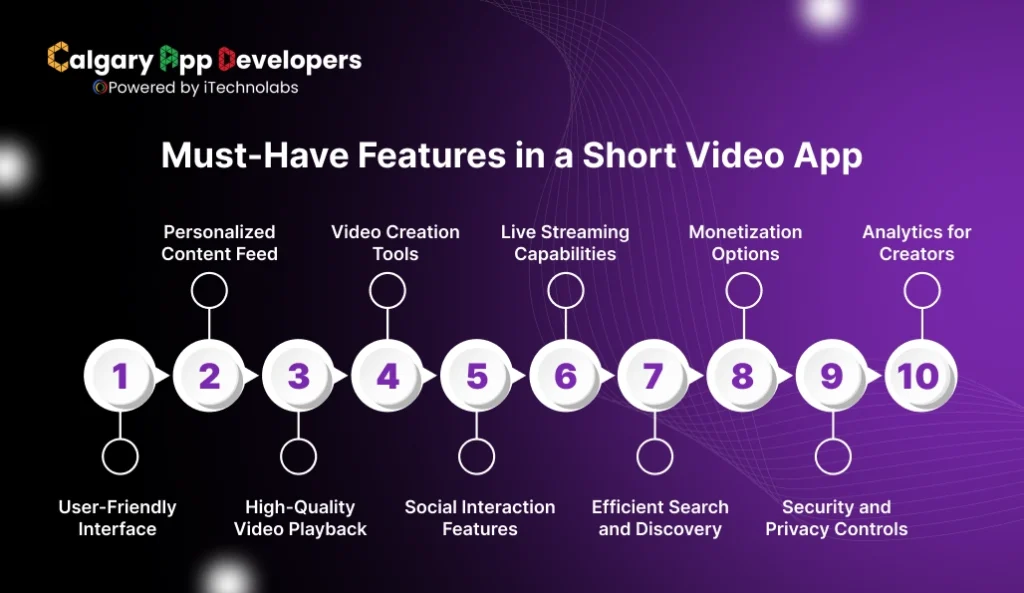
When designing an app focused on short-form video, there are definitely some core features that need to be in place for the app to attract users and maintain their interest over the long term. A good short video app has a full range of user experience features that balances ease of use, content discovery features, and tools for creators, ensuring both viewers and content creators find significant value in using the app. Below are the important features, elements and areas to focus on for every short video app:
- User-Friendly Interface: A simple and easy-to-navigate interface helps users spend more time in the app and encourages longer viewing sessions. Having menu and interface items organized, icons easy to recognize, and an easy-to-use interface that is not overloaded with noise allows users to focus on the content rather than learning how to use the app.
- Personalized Content Feed: Great recommendation engines delivering content or suggesting videos based on user preferences are critical to the long-term success of an app in the short-form video space. High user engagement is never an accident. A personalized feed that suggests videos helps users stay engaged, continually come back to the app, and discover and engage with content that users might not have found otherwise.
- High-Quality Video Playback: Sustained maximum playback times of HD video – without hitches or buffering on a variety of devices or network conditions – helps deliver a professional feel and superior user experience. Sustained playback without a hitch is critical to keeping the audience engaged as much as possible.
- Video Creation Tools: Filters, effects, and features that allow music integration and text overlays for creators allow content makers to develop engaging and useful content right in the app. The more creative opportunities and options that are in the app, the more likely the users will upload more videos.
- Social Interaction Features: Likes, comments, shares, and duet or individual collaboration content. Interaction helps retain users, getting them to connect, join in, and ultimately gain an audience.
- Live Streaming Capabilities: Live streaming allows creators and their audiences to interact in real time. Live streaming adds excitement to the app while ensuring viewers stay on the app for longer.
- Efficient Search and Discovery: A robust search feature, or the ability to find trending content easily, allows for quick and easy discovery. Discovery features such as trending hashtags, trending categories, and trending challenges create an engaging app experience.
- Monetization Options: The implementation of monetization features, whether in-app purchases, ads, or revenue sharing with creators, creates financial sustainability and encourages creators to create content on the platform.
- Security and Privacy Controls: Secure features and privacy teams that contain options for creator and viewer use. When using the app, options such as content moderation, reporting, or another “safe” mode help to build a trustworthy customer base.
- Analytics for Creators: Giving analytic insights on content for creators (or public videos) helps ambassadors to tweak their content. Analytics can help creators grow their audience as well as keep them motivated to create content for the app.
Focusing on these features during short video app development ensures the app is engaging, secure, and scalable. The combination of seamless user experience, robust creator tools, and smart personalization positions the app to thrive in the competitive short video market.
Also Read: Importance of User-Centered Design in App Development
Key Technologies Behind Short Video App Development
Technology forms the backbone of any successful short video app. Choosing the right tools and frameworks during short video app development ensures reliability, scalability, and a smooth user experience. From mobile platforms to AI-driven algorithms, each component plays a crucial role in making the app responsive, secure, and engaging.
Top Technologies:
| Category | Technology | Purpose in Short Video App Development |
| Mobile Platforms | iOS (Swift, Objective-C), Android (Kotlin, Java), Cross-platform (Flutter, React Native) | Builds the app for multiple devices while maintaining performance and a seamless user interface |
| Backend Development | Node.js, Django, Ruby on Rails, Laravel | Handles server-side logic, video processing, content storage, and API integration |
| Database | MySQL, PostgreSQL, MongoDB, Firebase | Stores user data, video metadata, comments, likes, and creator profiles securely |
| Video Streaming & Processing | FFmpeg, Wowza, AWS Media Services | Ensures smooth video upload, encoding, compression, and adaptive streaming across devices |
| Cloud & Hosting | AWS, Google Cloud, Microsoft Azure | Provides scalable infrastructure, high uptime, and fast content delivery for large volumes of videos |
| AI & Machine Learning | Python libraries, TensorFlow, PyTorch, OpenCV | Powers recommendation algorithms, content moderation, facial filters, and video effects |
| Push Notifications | Firebase Cloud Messaging, OneSignal | Sends updates about new content, trending videos, and user interactions to increase engagement |
| Analytics & Reporting | Google Analytics, Mixpanel, Amplitude | Tracks user behavior, video performance, engagement metrics, and retention trends |
| Security | SSL/TLS, OAuth 2.0, JWT | Protects user accounts, secures transactions, and prevents unauthorized access |
| Social & Interactive Features | WebRTC, Agora, Twilio | Enables live streaming, video calls, and real-time collaboration for creators and viewers |
Using these technologies strategically during short video app development ensures the platform is fast, scalable, and capable of handling millions of concurrent users. Incorporating AI-driven personalization, high-quality video processing, and robust security measures creates an app that can compete in the rapidly growing short video market.
Step-by-Step Process to Build a Short Video App
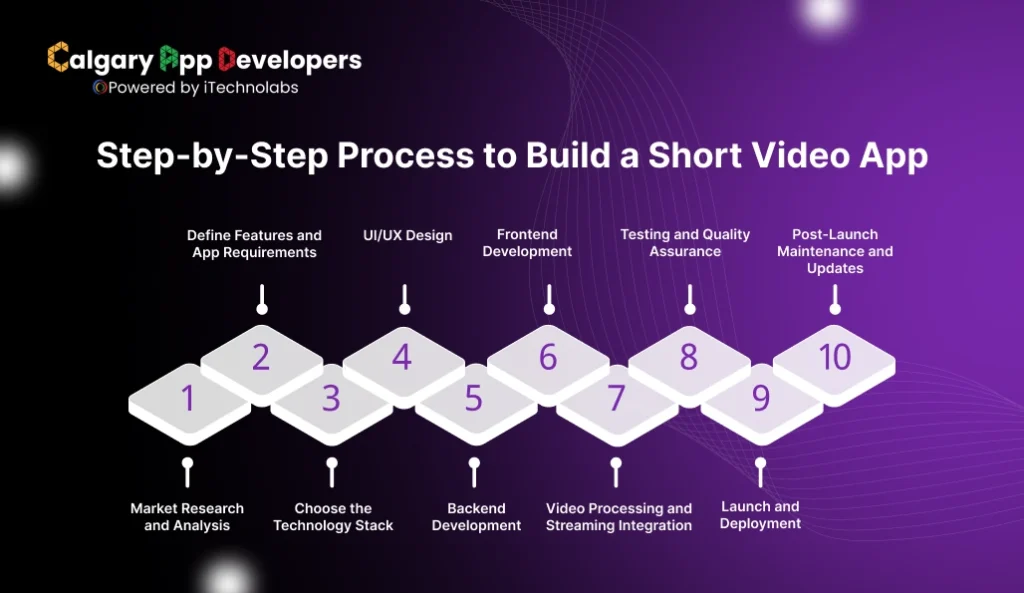
Building a short video app requires careful planning, design, and execution. Each stage of short video sharing app development contributes to creating a platform that is engaging, reliable, and scalable. Here is a detailed breakdown of the process:
Step 1: Market Research and Analysis
-
-
- Identify target audience and their preferences
- Analyze competitor apps like TikTok, Instagram Reels, and YouTube Shorts
- Determine unique selling points to differentiate your app
- Study trends in short video content and user behavior
-
Step 2: Define Features and App Requirements
-
-
- List core features such as video recording, editing tools, social interaction, and live streaming
- Decide on additional features like AR filters, challenges, analytics, and monetization options
- Create a feature roadmap prioritizing MVP (minimum viable product) functionalities
-
Step 3: Choose the Technology Stack
-
-
- Select mobile platforms (iOS, Android, or cross-platform frameworks)
- Choose backend technologies for server management, video storage, and processing
- Integrate AI and ML tools for recommendation algorithms and content moderation
- Decide on cloud hosting and CDN for fast video delivery
-
Step 4: UI/UX Design
-
-
- Develop wireframes for app screens and navigation flow
- Design an intuitive and visually appealing interface for users and creators
- Ensure easy access to video feeds, creation tools, and social features
- Focus on consistency and minimalism to enhance user engagement
-
Step 5: Backend Development
-
-
- Set up databases to store user profiles, video metadata, and engagement data
- Implement APIs for uploading, processing, and streaming videos
- Integrate security measures to protect user data and prevent content piracy
- Build admin dashboards for content management and moderation
-
Step 6: Frontend Development
-
-
- Develop mobile app screens using chosen platforms or frameworks
- Implement smooth video playback and interactive features
- Integrate push notifications, live streaming, and social sharing options
- Ensure responsive design across different devices and screen sizes
-
Step 7: Video Processing and Streaming Integration
-
-
- Implement video compression and encoding for optimal quality and size
- Set up adaptive streaming to provide seamless playback on various network conditions
- Enable real-time video editing, filters, and effects within the app
- Integrate CDN to reduce latency and improve global content delivery
-
Step 8: Testing and Quality Assurance
-
-
- Conduct functional testing for all features
- Perform performance testing to handle large user volumes
- Test security, privacy, and data protection measures
- Gather feedback from beta testers and make necessary improvements
-
Step 9: Launch and Deployment
-
-
- Publish the app on Google Play Store and Apple App Store
- Implement marketing strategies for user acquisition
- Monitor app performance and analytics to identify areas for improvement
-
Step 10: Post-Launch Maintenance and Updates
-
- Regularly fix bugs and update app features based on user feedback
- Introduce new tools, effects, and monetization options to keep users engaged
- Continuously optimize recommendation algorithms and content delivery systems
- Maintain server health and scalability to support growing user base
Following this structured approach in short video sharing app development ensures a high-quality product that meets user expectations and stands out in a competitive market.
Read Also: How Much Does It Cost to Maintain an App?
Cost of Developing a Short Video App
The cost of short video sharing app development typically ranges between $25,000 and $80,000 depending on complexity, platform, features, and content delivery requirements. The final price depends on multiple factors, including app type, design intricacy, backend infrastructure, AI integration, and advanced functionalities for video processing and user engagement.
Estimated Cost Breakdown
| Component | Cost Range (USD) | Description |
| UI/UX Design | 3,000–7,500 | Wireframes, mockups, and user interface design for viewers, creators, and admin panels |
| Frontend Development | 6,000–15,000 | Development of iOS, Android, or cross-platform apps with video playback, social interactions, and interactive features |
| Backend Development | 8,000–18,000 | Server-side logic, video storage, streaming, APIs, and admin dashboard |
| Video Streaming & Processing | 4,000–10,000 | Video upload, compression, encoding, and adaptive streaming |
| AI & Machine Learning Integration | 3,000–7,000 | Recommendation engine, content moderation, and video effects |
| Push Notifications | 1,000–2,000 | Real-time updates for trending videos, new uploads, and social interactions |
| Testing and QA | 2,000–5,000 | Functional, performance, and security testing across devices |
| Deployment | 800–1,500 | App store submission and server deployment |
| Maintenance & Updates (Annual) | 3,000–7,500 | Bug fixes, feature upgrades, and optimization for video delivery and AI algorithms |
Factors Affecting Short Video Sharing App Development Cost

1. App Complexity
- Basic App: Simple video upload and playback, social sharing. Cost: $25,000–35,000
- Medium Complexity: Includes video editing tools, filters, live streaming, and analytics. Cost: $40,000–60,000
- Advanced App: AI-driven recommendations, AR effects, monetization features, and high-volume content delivery. Cost: $65,000–80,000
| Complexity Level | Key Features | Approx. Cost (USD) |
| Basic | Upload, playback, social sharing | 25,000–35,000 |
| Medium | Editing tools, filters, live streaming, analytics | 40,000–60,000 |
| Advanced | AI recommendations, AR effects, monetization, high-volume streaming | 65,000–80,000 |
2. Platform Choice
- Single Platform (iOS or Android): Lower cost, limited reach
- Cross-Platform: Covers multiple devices with slightly higher investment
- Native iOS & Android: Highest cost, best performance and user experience
| Platform | Cost Impact |
| iOS Only | Medium |
| Android Only | Medium |
| iOS + Android | High |
| Cross-Platform | Medium-High |
3. Feature Set
The variety of features available in a short video sharing app has a major impact on the cost of development and complexity. Advanced features, like live streaming, AI-generated recommendations, in-app purchases, and video editing capabilities, will require more coding, testing, and backend support than a less complex app without those features. While these types of features may help with engagement and retention, they will add to the amount of time and resources during short video sharing app development.
4. Design Complexity
The design of a short video sharing app will influence the user experience and the overall cost of development. While high-quality, engaging designs with custom animations, transitions, and premium UI design elements will help engage users and make the app more attractive, designing these premium and custom features will add development time and cost because they require additional development hours and skilled designers, all while ensuring you’re able to adequately maintain your design and keep it fresh and easy to use.
5. Third-Party Integrations
Third-party integrations add additional functionality and capabilities to a short video sharing app. Payment gateways, cloud storage, analytics tools, and video content delivery networks not only can result in a much better experience for the user but also improve the performance of your app. However, these integrations should be considered, as each will require getting set up, ongoing subscription fees, and continued maintenance and may lead to increasing both the original investment in the app and operational awkwardness to deal with when developing short video sharing apps.
6. Location of Development Team
| City | Average Hourly Rate (USD) | Notes |
| Calgary | 35–50 | High-quality development at competitive rates, excellent for North American businesses seeking reliability and communication ease |
| Bangalore | 20–40 | Cost-effective development but time zone differences may require coordination |
| Kyiv | 25–45 | Affordable outsourcing option with strong technical skills |
| Toronto | 60–90 | Moderate cost with excellent talent pool |
| New York | 80–120 | Premium rates with top-tier talent |
| London | 70–110 | High-quality developers but steep pricing |
Calgary combines local expertise, English-speaking teams, and cost-efficiency, making it an ideal choice for businesses looking to develop a short video sharing app without compromising quality or communication.
7. Maintenance and Updates
Ongoing updates, feature enhancements, and performance optimization typically account for 15–20% of the initial development cost annually.
By analyzing these factors, businesses can plan a realistic budget for short video sharing app development while ensuring the platform is engaging, scalable, and capable of handling high volumes of users and content.
Also Read: How Much Money Can You Make if You Own an App?
Revenue Models for Short Video Apps
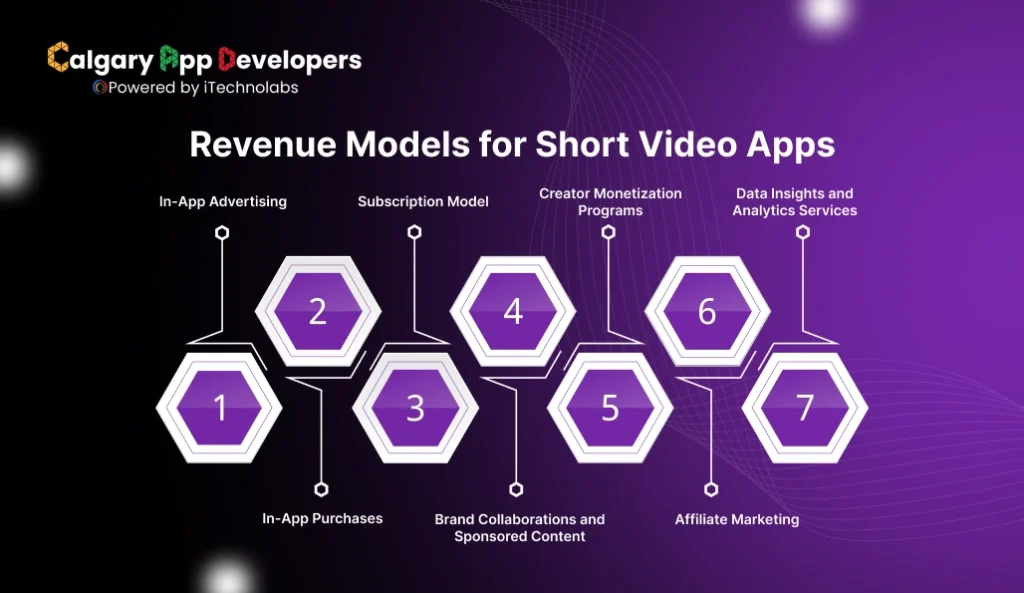
Monetization is a crucial part of short video app development. A well-designed revenue model not only sustains the platform but also motivates creators and attracts advertisers. Here are the most effective revenue models used in successful short video apps today:
-
In-App Advertising
-
-
- The most common and reliable revenue stream.
- Ads appear as short clips, banners, or sponsored content between videos.
- Options include cost-per-click (CPC), cost-per-impression (CPM), or brand sponsorship deals.
- Relevant ad placement maintains user engagement while generating steady income.
-
-
In-App Purchases
-
-
- Users can buy digital gifts, coins, or stickers to support their favorite creators.
- These microtransactions are small but consistent revenue drivers.
- Creators can earn a share of purchases, encouraging regular content uploads.
-
-
Subscription Model
-
-
- Offers premium membership for an ad-free experience or exclusive content.
- Can include early access to trending features, creator insights, or special filters.
- Provides predictable monthly revenue while maintaining user loyalty.
-
-
Brand Collaborations and Sponsored Content
-
-
- Brands pay for promotional content created by influencers or directly by the platform.
- Sponsored challenges, hashtags, and branded effects are effective engagement tools.
- Helps brands reach niche audiences while boosting app visibility.
-
-
Creator Monetization Programs
-
-
- Apps can reward creators based on views, engagement, or follower milestones.
- Encourages quality content creation and helps retain top talent on the platform.
- This model supports a self-sustaining content ecosystem.
-
-
Affiliate Marketing
-
-
- Integrating product links or affiliate offers within videos allows creators to earn commissions.
- The platform takes a percentage from each successful sale.
- Works well for fashion, beauty, and lifestyle content categories.
-
-
Data Insights and Analytics Services
-
- Aggregated and anonymized user data can be offered to brands for market insights.
- Helps companies understand consumer behavior and trends.
- Should always comply with privacy laws and transparent data usage policies.
A balanced mix of these revenue models ensures steady growth and profitability. In short video app development, the key is aligning monetization with user satisfaction—earning revenue without disrupting the viewing experience.
Leading Short Video Apps in the Market Today
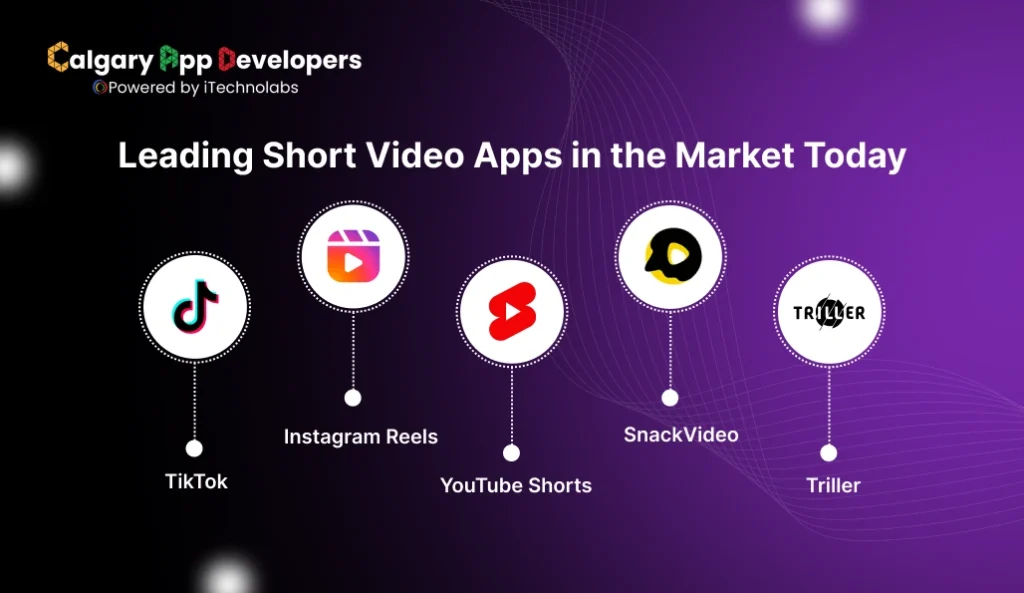
Short video app development has completely redefined how people consume and share content. A few platforms have set the benchmark for creativity, technology, and audience engagement. Here’s a look at the leading short video apps that dominate the global market today:
| App Name | Launch Date | Launched By | Key Highlights |
| TikTok | 2016 | Zhang Yiming (ByteDance) | Global leader in short-form content with advanced AI-driven recommendations and over a billion active users |
| Instagram Reels | 2020 | Meta Platforms (Mark Zuckerberg) | Integrates short video creation within Instagram’s ecosystem, combining creativity, commerce, and social influence |
| YouTube Shorts | 2021 | Leverages YouTube’s massive creator network and monetization tools to compete in short-form video entertainment | |
| SnackVideo | 2020 | Kuaishou Technology | Focused on emerging markets with localized content, simple creation tools, and fast-growing user adoption |
| Triller | 2015 | David Leiberman & Sammy Rubin | Music-focused short video platform emphasizing creator monetization and collaboration with artists and brands |
- TikTok
TikTok revolutionized content creation with its intuitive editing tools, viral trends, and precise algorithm that tailors feeds to each user’s interests. It has become a global cultural force and a model for success in short video app development, demonstrating how personalization drives engagement at scale.
- Instagram Reels
Instagram Reels extends Meta’s social ecosystem by embedding short-form videos into an established user base. The seamless connection between Reels, Stories, and Shopping features showcases how integrated design can increase engagement and monetization opportunities within short video platforms.
- YouTube Shorts
YouTube Shorts leverages the credibility of its creator community and the power of Google’s search ecosystem. It supports easy content discovery and monetization, offering creators both short- and long-form opportunities. This balance highlights the strength of diversification in short video app development.
- SnackVideo
SnackVideo has seen rapid growth in regions like India, Southeast Asia, and the Middle East. Its strategy focuses on local content, easy creation tools, and community-driven interaction. SnackVideo proves how regional understanding and localized features can define market success.
- Triller
Triller built its reputation by focusing on music-driven videos and artist collaborations. It combines entertainment with influencer marketing and creator monetization, appealing to both audiences and professionals. Triller’s evolution shows how niche positioning can sustain growth in a competitive short video landscape.
These apps highlight the power of innovation, technology, and community in shaping modern entertainment. Each represents a different strategic approach to short video app development, from global dominance to niche market specialization.
Read Also: How Long Does it Take to Develop an App?
Future Trends in Short Video App Development
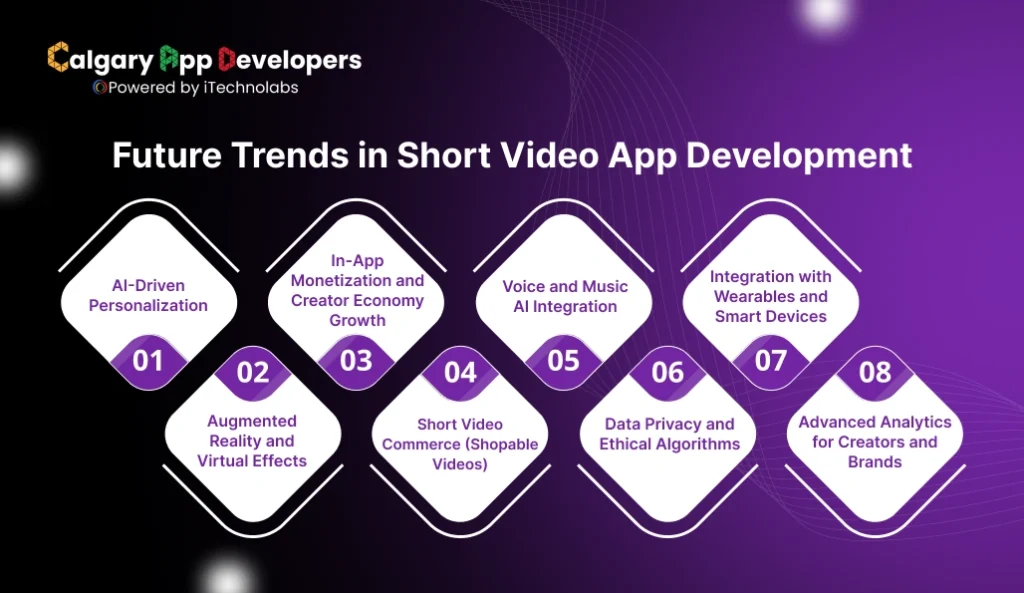
The short video industry continues to evolve rapidly, driven by innovation, user demand, and new technologies. Businesses investing in short video app development must stay ahead of these trends to remain competitive and relevant. Here are the most influential developments shaping the future of this space:
-
AI-Driven Personalization
Artificial Intelligence is transforming how users experience short videos. Future apps will use AI to deliver hyper-personalized feeds, predict content preferences, and recommend creators based on behavior patterns. Smarter algorithms will enhance engagement and retention by ensuring users see content that aligns with their interests instantly.
-
Augmented Reality and Virtual Effects
AR filters and immersive video effects are becoming central to user engagement. Short video app development now focuses on integrating advanced AR features that let users experiment with dynamic filters, virtual backgrounds, and 3D animations. These tools encourage creativity and make user-generated content more visually appealing.
-
In-App Monetization and Creator Economy Growth
Creators are the backbone of every short video platform. Future apps will include more ways to earn through features like brand collaborations, digital tipping, NFT integrations, and subscription-based models. This shift supports sustainable growth for creators while driving higher content quality and platform loyalty.
-
Short Video Commerce (Shopable Videos)
Short video apps are merging with e-commerce. Integrated shopping features allow users to buy products directly from videos without leaving the app. For businesses, this creates a direct link between content engagement and sales, turning entertainment into a powerful conversion tool.
-
Voice and Music AI Integration
AI-generated soundtracks and voiceovers are becoming common in video creation. Future apps will let users create professional-level content quickly by using voice cloning, auto-synced sound effects, and trend-based audio suggestions. This makes content production faster, simpler, and more accessible.
-
Data Privacy and Ethical Algorithms
With increased user awareness around data privacy, short video app development will emphasize transparency and ethical AI practices. Platforms that prioritize user consent, clear data usage policies, and safe content moderation will gain greater trust and long-term user retention.
-
Integration with Wearables and Smart Devices
As wearable technology grows, short video apps will expand beyond smartphones. Features like voice-activated recording, AR lenses on smart glasses, and fitness-based content creation will open new creative possibilities.
-
Advanced Analytics for Creators and Brands
Detailed insights into performance metrics are essential for both creators and advertisers. Future apps will include real-time analytics dashboards that track engagement, audience demographics, and conversion rates to optimize content strategies effectively.
In short, the future of short video app development will be defined by personalization, creativity, and monetization. Businesses that integrate these innovations early will be best positioned to attract users, retain creators, and lead the next wave of digital entertainment.
Why Choose Calgary App Developers for Your Short Video App
Choosing the right app development partner is essential for the success of your short video app development project. Calgary App Developers brings technical expertise, creativity, and market insight together to build apps that are engaging, scalable, and ready for the future of digital entertainment.
Key Advantages of Calgary App Developers
- Proven Expertise
Our team has years of experience in short video app development, building platforms with high-performance video streaming, AI-driven recommendations, and interactive content features that attract and retain users. - Cost-Effective Solutions
We offer competitive pricing while maintaining premium quality standards. Calgary App Developers helps you reduce development costs without compromising performance, design, or innovation. - End-to-End Development
From concept planning and UI/UX design to backend infrastructure, AI integration, and post-launch updates, we handle every stage of short video app development under one roof. - Customization and Flexibility
Every brand is unique, and we ensure your app reflects that. Our team builds custom features aligned with your business goals, audience preferences, and long-term monetization plans. - Timely Delivery
We use agile workflows and transparent communication to keep projects on track. Timely delivery and quality assurance are at the core of our development process. - Post-Launch Support
Our partnership doesn’t end with app deployment. We provide continuous support, updates, and performance monitoring to ensure your app evolves with user trends and technological advancements. - Local Expertise with Global Standards
Based in Calgary, we combine local reliability with international development standards. You get accessible communication, top-tier technical skills, and high-quality execution that meets global benchmarks.
Partnering with Calgary App Developers for short video app development means working with a team that understands technology, creativity, and the fast-changing entertainment landscape. We build apps designed to engage users, scale effectively, and succeed in the competitive short video market.
Our Experience in Short Video App Development
Short video platforms demand more than a scrolling feed and a record button. They require scalable architecture, real-time content delivery, creator monetization systems, moderation controls, and performance optimization across thousands or millions of concurrent users. Our experience in short video app development spans from concept validation to full-scale deployment, including AI-driven recommendations, creator tools, and cloud-native infrastructure.
Due to NDA agreements, we cannot disclose client names. However, the following examples reflect the scale and complexity of projects we have delivered.
Case Study 1: Canadian Community-Centric Short Video Platform
We partnered with a Canada-based startup focused on hyperlocal storytelling and regional creator growth. The goal was to build a short video platform that highlighted local businesses, community creators, and regional events while supporting sustainable monetization.
Project Objectives
- Launch a mobile-first short video app for iOS and Android
- Enable creators to upload, edit, and monetize short-form videos
- Build a recommendation engine tailored to regional interests
- Integrate secure ad placements for local businesses
Key Capabilities Delivered
- Vertical video feed with AI-powered content ranking
- In-app video editor with filters, music overlays, and trimming tools
- Creator dashboard with analytics, follower insights, and revenue tracking
- Local advertising module for geo-targeted promotions
- Scalable cloud backend capable of handling high upload volumes
Impact
The platform successfully onboarded thousands of regional creators within the first phase. Engagement rates improved significantly after implementing AI-driven personalization, increasing average session duration and repeat usage.
Case Study 2: US-Based Urban Creator Economy Platform
For a startup in a major US city, we developed a short video app centered around lifestyle, culture, and influencer-driven content. The platform targeted Gen Z and millennial audiences with strong social sharing and monetization features.
Project Objectives
- Build a high-performance short video streaming app
- Implement real-time engagement tools such as comments and reactions
- Enable creator monetization through subscriptions and tipping
- Ensure content moderation and safety compliance
Key Capabilities Delivered
- High-speed video processing and adaptive streaming
- AI-based content moderation and automated flagging system
- Secure wallet integration for tipping and subscription payments
- Creator monetization engine with revenue split management
- Advanced analytics panel for engagement and retention tracking
Impact
The app achieved strong early traction with influencer partnerships and saw rapid growth in user-generated content. Scalable backend infrastructure ensured smooth performance even during peak traffic events.
Conclusion
Short video app development has moved far beyond simple entertainment. It has become a driving force in shaping how audiences engage, create, and consume digital content. From AI-powered personalization and advanced analytics to e-commerce integration and AR-driven creativity, this industry continues to evolve with technology at its core.
Building a successful short video app requires a balance of technical precision, user insight, and forward-thinking design. Businesses that focus on innovation, scalability, and user experience will stand out in an increasingly competitive market. As trends shift and user expectations rise, the future of digital storytelling will belong to those who can blend technology with creativity in the most meaningful way.
FAQ’s About Short Video App Development:
1. How to build a short video app?
Building a short video app involves several stages: market research, defining features, designing UI/UX, developing the frontend and backend, integrating video processing and streaming tools, and implementing AI-driven recommendation algorithms. Testing, deployment, and post-launch maintenance are also crucial. Focusing on user experience, content discovery, and creator tools ensures the app attracts and retains users effectively.
2. What is the best app to make short videos?
The best app for creating short videos depends on your goals. TikTok and Instagram Reels are top choices for viral content and social sharing, offering built-in editing tools, effects, and music integration. For more professional or detailed editing, apps like CapCut or InShot provide advanced features for trimming, adding filters, and layering audio, making them popular among creators.
3. Is it hard to make an app like TikTok?
Developing an app like TikTok is complex because it requires advanced video processing, real-time streaming, AI-powered recommendations, and robust backend infrastructure. While building an MVP is achievable, scaling to millions of users with high engagement demands significant technical expertise, investment in cloud services, and a deep understanding of user experience and content moderation.
4. How to create a video-sharing app?
Creating a video-sharing app involves planning the core features, designing an intuitive interface, and developing a backend capable of handling high volumes of video content. Integrating streaming services, storage solutions, and AI for personalization enhances user engagement. Testing, deployment, and ongoing maintenance ensure the app remains fast, secure, and responsive for both creators and viewers.
5. Which app is best for making short videos?
For casual content creation and social reach, TikTok and Instagram Reels are top choices due to their editing tools, music libraries, and audience engagement features. For more customized or professional editing, apps like CapCut, InShot, and VivaVideo provide detailed control over effects, transitions, and audio layers, making them ideal for creators seeking high-quality short videos.
6. How much does it cost to develop a video editing app?
The cost of developing a video editing or short video app typically ranges between $25,000 and $80,000, depending on features, platform choice, AI integration, and backend infrastructure. Advanced functionalities like live streaming, AR effects, monetization options, and cloud video processing increase both complexity and investment, while simpler apps with basic editing tools fall on the lower end of the range.


Pankaj Arora is a seasoned technology leader and the Founder of Calgary App Developer, with 10+ years of expertise in crafting high-performance digital solutions. His core competencies include full-stack app development, cloud-native architecture, API integration, and agile product delivery. Under his leadership, Calgary App Developers has empowered startups and enterprises alike with scalable mobile applications, secure web platforms, and AI-driven SaaS products.