







Importance of User-Centered Design in App Development
Success in mobile application development is gauged by how readily available your app is for users to interact with and how well it serves their needs. User-centered design emphasizes putting the user at the center of every design choice such that each feature, screen, and interaction is designed to address actual user behavior and expectations. This approach goes beyond aesthetics and functionality. It is about creating meaningful experiences that feel intuitive, engaging, and valuable. Adopting user-centered design not only enhances usability but also strengthens user satisfaction, retention, and overall app performance.
- User-centered design focuses on building apps around real user needs and behavior.
- It improves usability, engagement, and long-term retention.
- Iterative testing and feedback reduce risk and development waste.
- Strong user experiences directly support better business outcomes.
- User-centered design places research, testing, and real user feedback at the core of mobile app development decisions.
- Apps built with this approach are easier to navigate, more intuitive to use, and better aligned with user expectations.
- Continuous iteration helps teams identify issues early and refine experiences before costly changes are required.
- Accessibility and inclusivity ensure apps serve users across different abilities, devices, and contexts.
- Strong user experiences increase retention, trust, and overall app performance over time.
Understanding User-Centered Design
User-centered design is a methodology that places the user at the center of the design and development process. Every decision, from app layout to navigation flow, is guided by a deep understanding of user needs, behaviors, and expectations. The goal is to create digital experiences that are intuitive, efficient, and satisfying, reducing friction and making interactions feel natural.
What sets user-centered design apart is its focus on research and feedback. Designers and developers gather insights through user testing, surveys, and behavioral analysis, then use these insights to shape the product. The process is iterative, meaning that apps are continually refined based on real user experiences. In mobile app development, this approach ensures that the final product not only meets functional requirements but also resonates with the people who use it every day.
Also Check: Calgary Web Design Prices | Affordable Website Packages
Core Principles That Guide User-Centered Design
User-centered design relies on a set of guiding principles that ensure every aspect of an app serves the user effectively. One key principle is understanding the user. This involves conducting research to identify their goals, preferences, and pain points, which provides a foundation for informed design decisions.
Another principle is simplicity. Apps should be intuitive and straightforward, allowing users to complete tasks without confusion or unnecessary steps. Consistency is equally important. Maintaining uniform design patterns, terminology, and interactions helps users feel comfortable and reduces the learning curve.
Feedback and iteration are central to user-centered design. Designers must test prototypes with real users, gather insights, and refine the product based on their responses. Accessibility is also a core principle, ensuring that apps can be used by people with diverse abilities and contexts.
By adhering to these principles, user-centered design transforms mobile apps from functional tools into experiences that are easy, engaging, and aligned with the needs of the people who use them.
Why User-Centered Design Matters for Mobile Apps
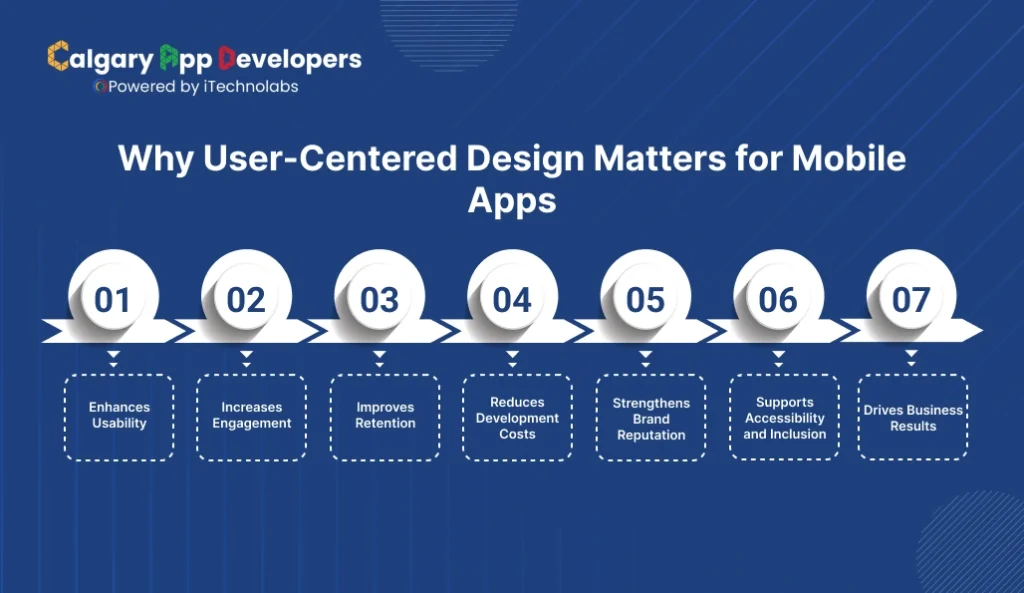
User-centered design is essential for mobile apps because it ensures usability, boosts engagement, improves retention, and creates experiences that truly meet the needs of real users.
- Enhances Usability: User-centered design ensures that apps are intuitive and easy to navigate, reducing user frustration and making interactions smooth.
- Increases Engagement: When an app meets user expectations and feels natural to use, people are more likely to spend time on it and return regularly.
- Improves Retention: Apps designed around real user needs foster loyalty, decreasing the likelihood that users will abandon the app for alternatives.
- Reduces Development Costs: By identifying user requirements early and iterating based on feedback, teams can avoid costly redesigns or feature adjustments after launch.
- Strengthens Brand Reputation: Apps that deliver seamless and meaningful experiences reflect positively on the brand, building trust and credibility with users.
- Supports Accessibility and Inclusion: User-centered design considers diverse abilities and contexts, ensuring that apps are accessible to a wider audience.
- Drives Business Results: Better user experience translates into higher conversions, increased app usage, and stronger overall performance metrics.
How We Apply User-Centered Design at Calgary App Developers
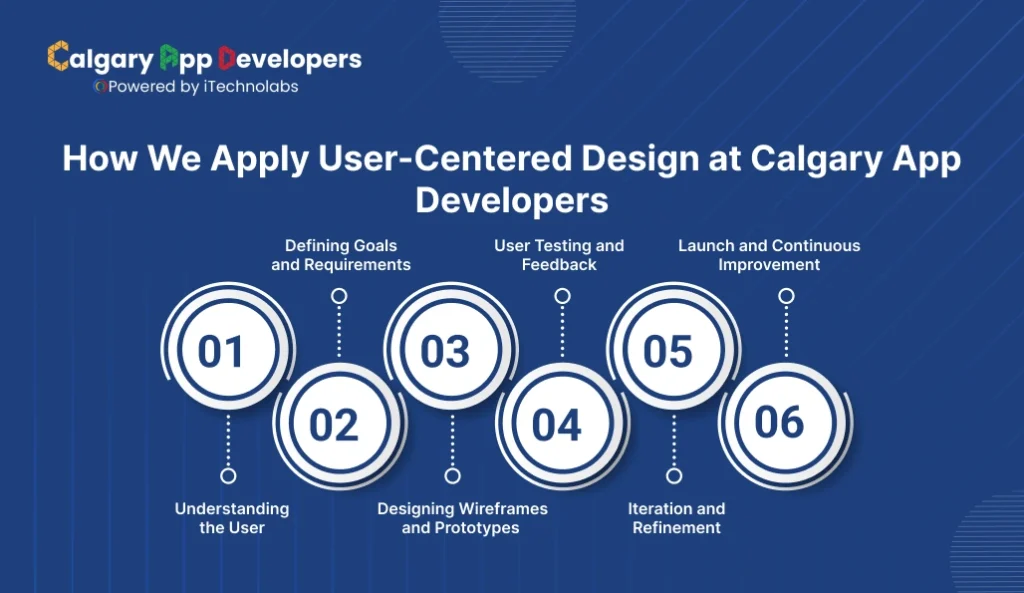
At Calgary App Developers, user-centered design is the foundation of how mobile apps are created. The approach ensures that every feature, interface, and interaction is designed with the end user in mind. Here’s how the company puts this philosophy into practice:
- Understanding the User
Before any design work begins, the team invests time in understanding the target audience. This involves detailed research, including surveys, interviews, and analyzing user behavior. Personas are created to represent typical users, highlighting their goals, challenges, and preferences. This research ensures that every design decision is informed by real user needs rather than assumptions. - Defining Goals and Requirements
With user insights in hand, Calgary App Developers defines clear objectives for the app. This includes aligning business goals with user expectations and determining which features will deliver the most value. Clear requirements help the team stay focused and create an app that balances functionality with usability. - Designing Wireframes and Prototypes
Designers translate ideas into wireframes and interactive prototypes. Wireframes outline the structure and flow of the app, while prototypes allow stakeholders and users to visualize interactions before full-scale development. This step ensures that potential issues are identified early. - User Testing and Feedback
Prototypes are tested with actual users to gather feedback on navigation, usability, and overall experience. Observing how users interact with the app helps the team identify pain points, confusing elements, or missing functionality. - Iteration and Refinement
Feedback is used to refine the design through multiple iterations. This process continues until the app is intuitive, efficient, and aligns with user expectations. Iteration ensures that the final product is polished and user-friendly. - Launch and Continuous Improvement
Even after the app is released, Calgary App Developers continues to monitor user interactions and gather feedback. Analytics and user reviews guide updates and improvements, ensuring the app evolves to meet changing user needs.
By following this structured approach, Calgary App Developers delivers mobile apps that are not only functional but also enjoyable to use. User-centered design becomes more than a methodology; it becomes a commitment to creating meaningful and engaging experiences for every user.
Also Read: Best Web App Design & Examples for Digital Product
Common Challenges and How to Overcome Them
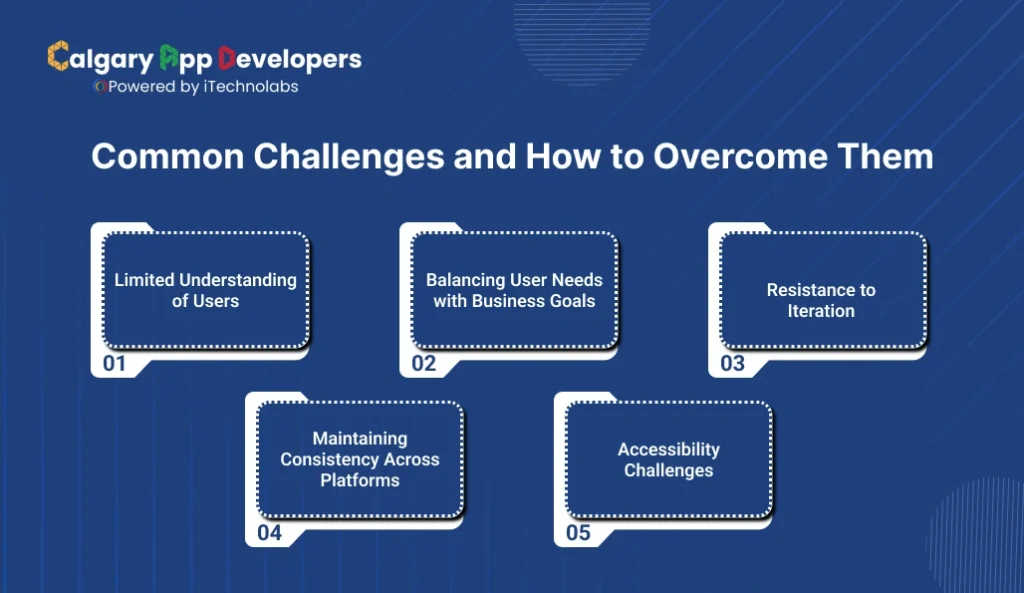
Implementing user-centered design can transform mobile apps, but it comes with its own set of challenges. Recognizing these obstacles and addressing them strategically is key to success.
- Limited Understanding of Users
One of the biggest challenges is insufficient insight into user needs and behaviors. Without proper research, design decisions may be based on assumptions rather than real data.
Solution: Conduct thorough user research, including surveys, interviews, and usability testing. Developing detailed personas ensures the team understands who they are designing for.
- Balancing User Needs with Business Goals
Sometimes user preferences conflict with business objectives, such as feature prioritization or monetization strategies.
Solution: Align design decisions with both user requirements and business goals. Prioritize features that add value to users while supporting strategic objectives.
- Resistance to Iteration
Teams may be reluctant to revise designs after testing due to time or budget constraints. This can result in apps that do not fully meet user expectations.
Solution: Emphasize an iterative development process. Small, continuous improvements based on real user feedback lead to higher-quality, more successful apps.
- Maintaining Consistency Across Platforms
Ensuring a consistent experience on different devices and operating systems can be difficult. Inconsistencies can confuse users and diminish usability.
Solution: Establish design guidelines and component libraries that standardize elements across platforms, ensuring a cohesive user experience.
- Accessibility Challenges
Creating apps that are accessible to users with diverse abilities is often overlooked, which limits usability and reach.
Solution: Incorporate accessibility standards from the beginning. Regular testing with diverse users ensures the app is inclusive and usable for everyone.
By anticipating these challenges and applying practical strategies, teams can fully leverage user-centered design. The result is mobile apps that are intuitive, engaging, and aligned with the needs of the people who use them.
Real-World Examples of User-Centered Mobile Apps
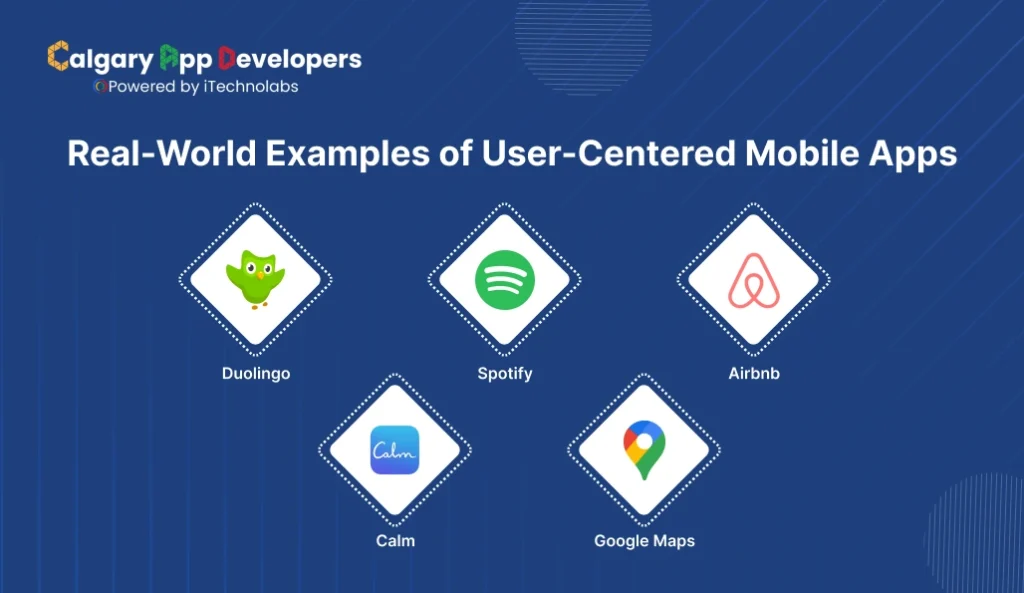
User-centered design is not just a theoretical approach; it is the driving force behind some of the most successful mobile apps in the market. By focusing on user needs and behavior, these apps demonstrate how thoughtful design improves engagement and satisfaction.
- Duolingo:
Founded by: Luis von Ahn and Severin Hacker
Launch Year: 2011
Duolingo prioritizes simplicity and motivation. Lessons are broken into small, manageable steps, and the interface uses clear visuals and gamification to keep users engaged. Every update is informed by user feedback, reflecting a strong commitment to user-centered design.
Key Features:
- Bite-sized lessons
- Gamification with points and streaks
- Personalized learning paths
- Progress tracking
- Reminders for consistent practice
- Spotify:
Founded by: Daniel Ek and Martin Lorentzon
Launch Year: 2008
Spotify’s app experience revolves around personalization. Features like curated playlists, recently played recommendations, and intuitive navigation are designed based on user behavior and preferences. User-centered design ensures the app feels seamless and intuitive for millions of listeners.
Key Features:
- Personalized playlists
- Algorithm-based recommendations
- Offline listening
- Social sharing
- Easy navigation for discovering new music
- Airbnb
Founded by: Brian Chesky, Joe Gebbia, and Nathan Blecharczyk
Launch Year: 2008
Airbnb focuses on clarity and ease of use. From searching accommodations to booking and payment, every step is optimized to reduce friction. The design is guided by real user feedback, making complex processes feel simple and straightforward.
Key Features:
- Simple search and booking process,
- User reviews and ratings
- Wish lists
- Clear accommodation details
- Secure payment options
- Calm
Founded by: Michael Acton Smith and Alex Tew
Launch Year: 2012
Calm demonstrates user-centered design by catering to mental wellness needs. The app offers customizable meditation sessions and reminders, providing a tailored experience that adapts to individual goals and schedules.
Key Features:
- Guided meditation sessions
- Sleep stories
- Customizable reminders
- Mood tracking, and calming music and sounds
- Google Maps
Founded by: Developed by Google
Launch Year: 2005
Google Maps emphasizes usability and reliability. Features like real-time traffic updates, route optimization, and voice-guided navigation are designed based on user needs, ensuring efficiency and accuracy in everyday use.
Key Features:
- Real-time navigation
- Route optimization
- Traffic updates
- Offline maps
- Street view
- Local business information
These examples show how user-centered design directly impacts usability, engagement, and satisfaction. When apps prioritize real user needs at every stage, they create experiences that feel natural, intuitive, and indispensable.
Future Trends in User-Centered Mobile App Design
User-centered design continues to evolve as technology and user expectations advance. Mobile apps that embrace these emerging trends will be better positioned to deliver engaging and meaningful experiences.
- Personalization through AI and Machine Learning
Apps will increasingly leverage AI to deliver highly personalized experiences. From content recommendations to predictive features, user-centered design will ensure these systems respond to individual behaviors and preferences rather than generic patterns. - Voice and Gesture-Based Interfaces
With voice assistants and gesture recognition becoming mainstream, mobile apps will focus on designing intuitive interactions beyond traditional touchscreens. User-centered design will play a key role in making these interactions natural and effortless. - Enhanced Accessibility
There is growing awareness of designing apps that are inclusive for users with diverse abilities. Future user-centered design will prioritize accessibility features such as screen readers, customizable interfaces, and adaptive layouts to make apps usable by everyone. - Immersive Experiences with AR and VR
Augmented and virtual reality are transforming mobile experiences. User-centered design will guide how these immersive technologies are implemented, ensuring interactions are intuitive, comfortable, and aligned with user expectations. - Continuous Feedback and Iteration
Apps will increasingly rely on real-time analytics and user feedback to refine experiences. User-centered design will integrate these insights into ongoing updates, allowing apps to adapt quickly to changing user needs. - Ethical Design and Privacy
As users become more concerned about data privacy, user-centered design will emphasize transparency, informed consent, and ethical handling of personal information while maintaining seamless functionality.
By embracing these trends, mobile apps can stay ahead of user expectations while continuing to deliver meaningful, intuitive, and engaging experiences. User-centered design remains the guiding principle in shaping the future of mobile app development.
Final Words:
User-centered design is not just a methodology; it is the foundation for creating mobile apps that resonate with real users. By understanding user needs, applying core design principles, and continuously iterating based on feedback, developers can build apps that are intuitive, engaging, and effective. From boosting usability and retention to driving business results, the impact of user-centered design is clear. Companies like Calgary App Developers demonstrate that putting users at the heart of the process leads to meaningful experiences that stand out in a competitive market. Embracing this approach ensures that mobile apps are not only functional but also valuable and enjoyable for the people who rely on them every day.
FAQ’s About User-Centered Design in Custom Apps
- What is user-centered design in mobile app development?
User-centered design is an approach where every design and development decision is based on real user needs, behaviors, and expectations. It involves user research, testing, and iteration to create intuitive and efficient experiences. The goal is to reduce friction, improve usability, and ensure the app feels natural and valuable to users.
- Why is user-centered design important for mobile apps?
User-centered design improves usability, engagement, and retention by aligning the app with how users actually think and behave. Apps built this way reduce frustration, increase satisfaction, and perform better in the long term. Focusing on users early also lowers development risk and avoids costly redesigns after launch.
- How does user-centered design improve user retention?
Apps designed around real user needs feel easier and more enjoyable to use. Clear navigation, logical flows, and meaningful interactions encourage users to return. When people can complete tasks quickly and without confusion, they are less likely to abandon the app and more likely to build long-term usage habits.
- What role does user research play in user-centered design?
User research provides the foundation for effective design decisions. Through interviews, surveys, usability testing, and behavioral analysis, teams learn what users want and where they struggle. These insights guide layouts, features, and interactions, ensuring the app is shaped by evidence rather than assumptions or guesswork.
- How does user-centered design reduce development costs?
By validating ideas early and testing designs before full development, teams can identify issues sooner. This reduces rework, prevents unnecessary features, and minimizes late-stage changes. Iterative feedback helps ensure the product meets user expectations from the start, saving time, budget, and development effort.
- How is user-centered design applied throughout the app lifecycle?
User-centered design starts with research and continues through wireframing, prototyping, testing, launch, and post-release updates. Feedback and analytics guide ongoing improvements, ensuring the app evolves with user needs. This continuous approach keeps the experience relevant, usable, and aligned with changing expectations over time.


Pankaj Arora is a seasoned technology leader and the Founder of Calgary App Developer, with 10+ years of expertise in crafting high-performance digital solutions. His core competencies include full-stack app development, cloud-native architecture, API integration, and agile product delivery. Under his leadership, Calgary App Developers has empowered startups and enterprises alike with scalable mobile applications, secure web platforms, and AI-driven SaaS products.