





How to Build a Dating App: Dating App Development Guide
The idea of building a dating app is not just a passing fad. With the way that people connect, communicate and form relationships in today’s technological world, it is a serious business opportunity. With millions seeking to meet new people online, there will always be an appetite for something innovative and engaging to help make those connections.
You can’t just have a great idea for a dating app. You need an actionable plan, a clear scope of features, and a sound technical base. Ideas for dating apps such as Tinder, Bumble and Hinge did not become popular by accident; they took into account user behavior, were designed with thought and built in a technical context where people stayed engaged.
This guide explains how to create a dating app from the ground up. It outlines every stage of the process, from research and planning to development and launch, so you can turn your idea into a platform that attracts real users and delivers measurable results.
Overview of the Dating App Market
- As per grand view research market report, the global online dating application market earned about USD 8.64 billion in 2023. It is projected to climb to USD 14.42 billion by 2030, growing at a compound annual growth rate of roughly 7.6%.
- Another estimate puts the market size even higher: from around USD 9.4 billion in 2023 to USD 18.1 billion by 2033, with a similar CAGR near 6.8%.
- In terms of geography, North America remains the largest contributor to market revenue, making up over 35-40% of global sales. Europe follows, while markets in Asia-Pacific and Latin America are among the fastest growing.
- As of 2024, there are more than 300 million people worldwide using dating apps regularly. Many use more than one platform.
- Subscription models dominate how dating apps make money. In several reports, subscriptions and freemium upgrades are the largest revenue streams. Ad revenue plays a role, but premium features are where the growth is strongest.
- Growth is driven by several trends: wider smartphone & internet access, changing social norms toward dating online, demand for safety and authenticity features, increasing use of video and live social engagement tools, and rising interest in AI-powered matchmaking.
This indicates that the dating app market is both substantial and poised for further growth.
Business Advantages of Building a Dating App
Building a dating app is not just about following a trend. It is about tapping into a business model that benefits from recurring demand, strong user engagement, and scalable revenue. Here are the key benefits of entering the dating app business.
- Consistent Market Demand: People are always looking to form new connections, whether for relationships, companionship, or social discovery. This creates a steady, year-round demand that is not tied to seasons or short-term trends. As digital interactions become more accepted, dating apps continue to attract new users across age groups and regions.
- Multiple Revenue Streams: Dating apps are not limited to a single income model. Subscriptions, in-app purchases, premium features, and advertising can all run in parallel. This flexibility allows businesses to optimize revenue without restricting access for free users, creating a healthy balance between growth and profitability.
- High User Engagement: Dating apps naturally encourage frequent interaction. Swiping, messaging, profile updates, and notifications keep users active on a daily basis. High engagement increases retention, improves lifetime value, and creates more opportunities to introduce paid features without hurting the core experience.
- Scalable Business Model: Once the core platform is built, scaling a dating app is primarily a technology challenge rather than a linear cost increase. Cloud infrastructure, automated moderation, and data-driven matchmaking allow the app to grow from thousands to millions of users without proportional increases in operational expenses.
- Data Driven Product Growth: Dating apps generate valuable behavioral data. Insights from user preferences, interactions, and engagement patterns help refine matching algorithms, personalize experiences, and guide future feature development. This continuous feedback loop enables smarter decisions and sustained product improvement.
- Opportunity for Niche Positioning: Unlike generic social platforms, dating apps can be built around specific audiences, interests, or values. Niche positioning reduces competition, improves user loyalty, and allows targeted marketing. Focused communities often convert better and stay longer than broad, one-size-fits-all platforms.
- Strong Long-Term Monetization Potential: As users become invested in their profiles and connections, their willingness to pay for enhanced features increases. This creates long-term monetization opportunities through upgrades, renewals, and feature expansions, making dating apps one of the most durable consumer app business models available today.
The dating app business is built on repeat usage, emotional investment, and long-term value. When done right, it creates a product users return to daily and are willing to pay for over time.
Popular Types of Dating Apps
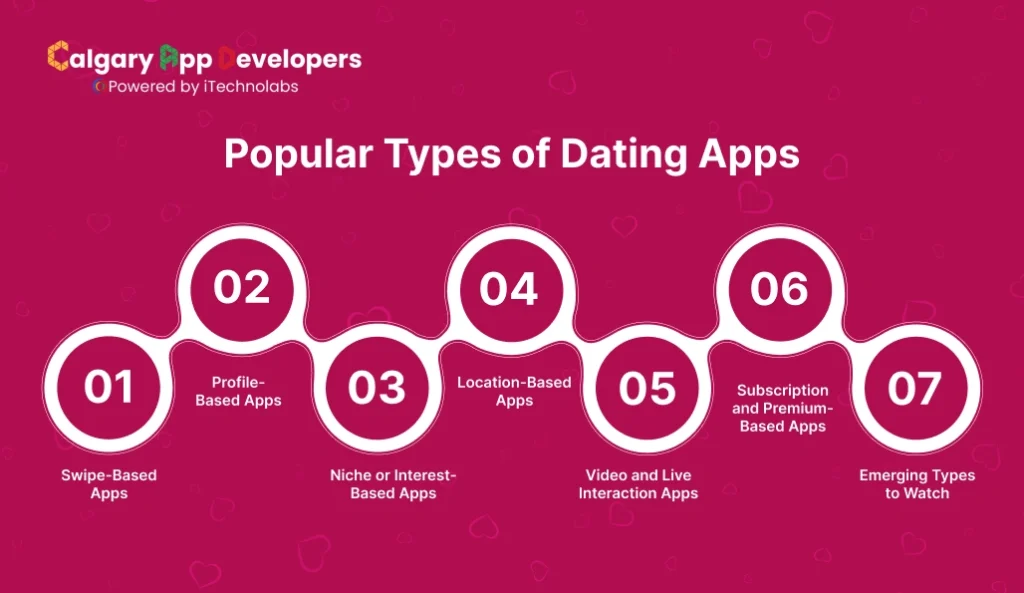
Dating apps have diversified to meet a wide range of user needs and preferences. When you plan to create a dating app, understanding the different categories can help you define your niche, features, and marketing strategy. Here’s a detailed look at the main types along with global examples:
- Swipe-Based Apps
These apps focus on quick visual impressions. Users browse profiles and swipe right to like or left to pass. The simplicity and gamified experience drive high engagement. This model is ideal for casual dating and social discovery.
Examples: Tinder, Bumble, happn
- Profile-Based Apps
These apps emphasize detailed user information and personality compatibility. Matches are suggested based on shared interests, values, or behavioral algorithms rather than quick judgments. This model works well for users seeking serious, long-term relationships.
Examples: eHarmony, Match.com, OkCupid
- Niche or Interest-Based Apps
These apps cater to specific communities, lifestyles, or preferences. They allow users to connect over shared interests, hobbies, or beliefs, creating highly engaged and loyal communities.
Examples: Veggly, Muzmatch, Bristlr
- Location-Based Apps
These apps leverage geolocation to connect users with nearby matches. The focus is on real-time proximity and facilitating spontaneous interactions. This category suits users who prefer meeting people close to their location.
Examples: Grindr (LGBTQ+), Happn, LOOVO
- Video and Live Interaction Apps
Video and live features enhance trust, authenticity, and engagement. Users can interact through live streams, video calls, or interactive events, which is particularly appealing in markets prioritizing safety and genuine connections.
Examples: Badoo, Chispa, The League
- Subscription and Premium-Based Apps
These apps offer advanced functionality through paid subscriptions. Features may include unlimited messaging, profile boosts, seeing who liked you, and access to AI-driven match suggestions. This model combines monetization with enhanced user experience.
Examples: Bumble Premium, Hily, Coffee Meets Bagel
- Emerging Types to Watch:
Some dating apps are experimenting with futuristic features such as AI matchmaking, virtual reality meetups, and gamified social experiences. These are expected to grow in popularity as technology adoption increases.
Examples: AI-driven matchmaking apps like SwoonMe, VR dating platforms like Flirtual
Understanding these types helps you design the right features and positioning when you create a dating app. Choosing the right model ensures your platform meets user expectations while standing out in a highly competitive market.
Also Check: Importance of User-Centered Design in App Development
Inside Look: How a Dating App Actually Works
A dating app may seem simple from the user perspective, but behind the scenes, it relies on several interconnected systems to provide a smooth and engaging experience. Understanding these components is essential if you plan to create a dating app.
1. User Registration and Onboarding
The first step is account creation, which may involve email, phone verification, or social media integration. Onboarding often includes collecting basic profile information, interests, and preferences. A smooth onboarding process is critical for user retention.
2. Profile Management
Users can create, edit, and manage profiles that include photos, bios, preferences, and sometimes personality traits. Well-structured profiles enhance matching accuracy and improve user engagement.
3. Matching Algorithm
At the heart of any dating app is the algorithm that suggests matches. This may use:
- Swipe-based interactions to filter potential matches quickly
- Compatibility scoring based on interests, location, and personality
- Behavioral data such as app activity and messaging patterns
AI and machine learning increasingly play a role in improving match accuracy over time.
4. Communication Tools
Messaging, video calls, and reactions allow users to interact securely. Some apps incorporate features like icebreakers, prompts, or video chat to encourage meaningful conversation.
5. Location Services
Many apps use geolocation to suggest nearby matches. This requires continuous updating and privacy safeguards to ensure users feel safe while exploring local connections.
6. Monetization Layers
Dating apps generate revenue through subscription plans, premium features, in-app purchases, or advertising. Popular monetized features include unlimited swipes, seeing who liked your profile, and boosting visibility.
7. Security and Privacy
Protecting user data is crucial. Apps implement encryption, secure authentication, reporting mechanisms, and content moderation to prevent harassment and fraud.
8. Analytics and Feedback Loops
Successful apps continuously analyze user behavior to optimize engagement, suggest better matches, and improve the overall experience. Analytics also inform marketing strategies and product updates.
In short, a dating app combines user-friendly design, smart matching algorithms, secure communication, and scalable backend systems. Each of these elements contributes to creating a platform that is both engaging and reliable for users.
Read Also: How Much Does It Cost to Maintain an App?
Essential Features Every Dating App Needs
When you plan to make a dating app, including the right features is critical to attracting and retaining users. A well-designed app balances usability, engagement, and security. Here are the essential features that every successful dating app should include:
- User Registration and Authentication: A smooth and secure sign-up process is the first step. Users should be able to register via email, phone number, or social media accounts. Verification options, such as OTP or photo verification, add an extra layer of trust.
- Profile Creation and Customization: Profiles should allow users to add photos, write bios, and highlight interests or preferences. The ability to customize profiles makes the app more personal and increases the chances of meaningful matches.
- Advanced Search and Matching Algorithms: The core of any dating app is its matching system. Incorporate filters like age, location, interests, and lifestyle choices. AI-powered algorithms can improve match quality by analyzing user behavior, preferences, and engagement patterns.
- Swipe, Like, and Super Like Features: Interactive features like swiping, liking, or boosting profiles keep users engaged. These mechanisms make the matching process intuitive and game-like, encouraging frequent app use.
- In-App Messaging and Communication: Once a match is made, users need a secure messaging system. This can include text chat, voice notes, and video calling. Some apps also offer icebreakers or prompts to start conversations.
- Location-Based Services: Geolocation helps users find matches nearby. Location filters improve relevance and enable real-world meetups while maintaining privacy controls.
- Push Notifications and Alerts: Timely notifications keep users engaged by alerting them about new matches, messages, or profile interactions. Push notifications should be customizable to avoid overwhelming users.
- Safety and Privacy Features: Dating apps must prioritize user safety. Features like reporting, blocking, and content moderation are essential. Secure data storage, encryption, and clear privacy policies build user trust.
- Monetization Options: Integrating premium features or subscription plans is key to generating revenue. Options like unlimited swipes, profile boosts, or seeing who liked your profile encourage users to upgrade while keeping the basic experience free.
- Analytics and User Feedback: Analytics help track user engagement, app performance, and feature effectiveness. Feedback mechanisms allow users to report issues and suggest improvements, ensuring the app evolves with user needs.
Including these features ensures your app delivers a smooth, engaging, and secure experience. By carefully combining usability with intelligent matchmaking, you can make a dating app that attracts users and keeps them active over time.
Also Check: How Much Money Can You Make if You Own an App?
Step-by-Step Guide to Build a Dating App
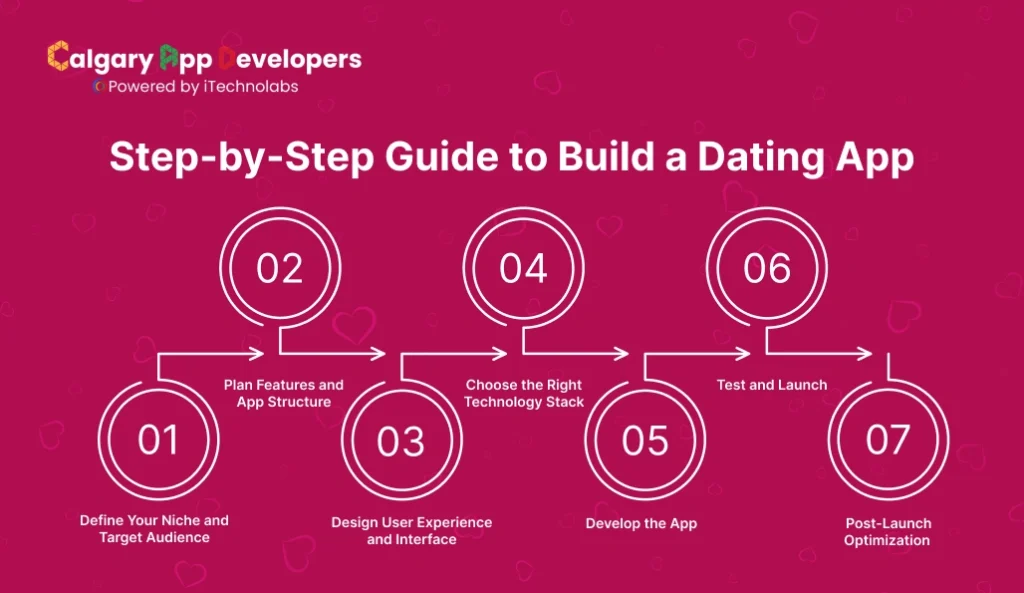
Building a dating app requires more than just coding a swipe feature. It involves careful planning, strategic design, and precise execution to ensure the app not only attracts users but also keeps them engaged over time. Each step in the development process plays a crucial role in creating a platform that is intuitive, secure, and capable of scaling as your user base grows. Here’s a detailed guide to build a dating app:
- Define Your Niche and Target Audience
The first step is to identify the type of dating app you want to build. Are you targeting casual dating, serious relationships, niche communities, or a hybrid model? Once the niche is defined, research your target audience thoroughly. Understand their preferences, behaviors, and pain points. Competitive analysis is equally important. Study existing apps in your niche to see what works, what doesn’t, and where opportunities exist to differentiate your platform.
- Plan Features and App Structure
Once your target audience is clear, list the features your app will need. Start with a Minimum Viable Product (MVP) that includes essential elements such as:
- User registration and profile creation
- Matching algorithms
- Chat and communication tools
- Geolocation and search filters
- Safety and privacy features
After the MVP, you can plan advanced features for future updates, such as AI-powered match suggestions, video calls, live interactions, or gamified experiences. Prioritizing features ensures efficient development while keeping costs manageable.
- Design User Experience and Interface
A dating app’s success heavily depends on user experience. Design an intuitive interface that allows users to navigate the app effortlessly. The onboarding process should be simple yet engaging, encouraging users to complete their profiles and start interacting immediately. Use visually appealing designs, readable fonts, and clear calls to action. Mobile-first design is essential, but also consider accessibility to ensure users with disabilities can interact seamlessly.
- Choose the Right Technology Stack
Selecting the appropriate technology stack is critical for performance, scalability, and security. Key considerations include:
- Platform choice: native, cross-platform, or hybrid development
- Backend: scalable servers, databases, APIs for real-time data, and cloud integration
- Frontend: frameworks for smooth interfaces on both iOS and Android
- Third-party integrations: payment gateways, push notifications, location services, and chat systems
Choosing the right technologies upfront reduces development challenges and ensures a smoother user experience.
Below is a typical tech stack for building a modern dating app:
| Layer | Recommended Technologies | Purpose |
| Frontend (iOS) | Swift, SwiftUI | Smooth and native user experience |
| Frontend (Android) | Kotlin, Jetpack Compose | Native interface and performance |
| Cross-Platform Option | React Native, Flutter | Build once, deploy on both iOS and Android |
| Backend | Node.js, Django, Ruby on Rails | Handles app logic, APIs, and integrations |
| Database | PostgreSQL, MongoDB | Store user profiles, messages, and app data |
| Real-Time Communication | WebSocket, Firebase Realtime Database | Instant messaging and live notifications |
| Cloud/Hosting | AWS, Google Cloud, Azure | Scalability, storage, and server management |
| Payment Integration | Stripe, PayPal | In-app subscriptions and premium features |
| Push Notifications | Firebase Cloud Messaging, OneSignal | User engagement and updates |
| Geolocation Services | Google Maps API, Mapbox | Nearby matches and location-based features |
| Analytics & Monitoring | Google Analytics, Mixpanel | Track user behavior and app performance |
- Develop the App
Development begins with building the backend infrastructure, which handles data storage, user management, security, and integrations. Simultaneously, develop the frontend to ensure an engaging and responsive interface. Continuous testing during development is essential to catch and fix bugs early, improve performance, and ensure features work as intended.
- Test and Launch
Before a public launch, conduct extensive beta testing. Engage a small group of users to test functionality, usability, and overall experience. Collect feedback, identify pain points, and optimize features accordingly. Once testing is complete, prepare your app for launch on the App Store and Google Play. Plan marketing campaigns that target your specific audience to generate initial traction and user downloads.
- Post-Launch Optimization
Releasing the app is just the starting point. Track user behavior, engagement rates, and performance on an ongoing basis. Analyze with the help of analytics to see how your users are interacting with the app and where it needs improvement. Periodic updates, new feature rollouts, and security patches are a must to keep the app up-to-date and users’ trust intact.
Building a dating app is a multi-stage process that demands careful attention to strategy, design, development, and ongoing optimization. Following this structured approach allows you to create a platform that not only meets the expectations of modern users but also establishes a strong presence in the competitive dating app market.
Also Read: How Much Does it Cost to Build an App in Calgary, Canada?
Dating App Development Cost Breakdown
The cost to create a dating app typically starts around USD 20,000 to 40,000 for a basic version with essential features. However, a fully featured, scalable app can cost significantly more depending on complexity, design, and technology choices.
| Development Process | Estimated Cost (USD) | Estimated Timeline |
| Planning & Research | 1,500–3,000 | 2–4 Weeks |
| UI/UX Design | 3,000–7,000 | 3–6 Weeks |
| Backend Development | 8,000–20,000 | 6–10 Weeks |
| Frontend Development | 7,000–18,000 | 6–10 Weeks |
| Testing & Quality Assurance | 2,000–5,000 | 3–5 Weeks |
| Launch & Deployment | 1,000–2,500 | 1–2 Weeks |
| Post-Launch Optimization & Maintenance | 1,500–5,000 per year | Ongoing |
Key Factors Affecting the Cost to build a dating app
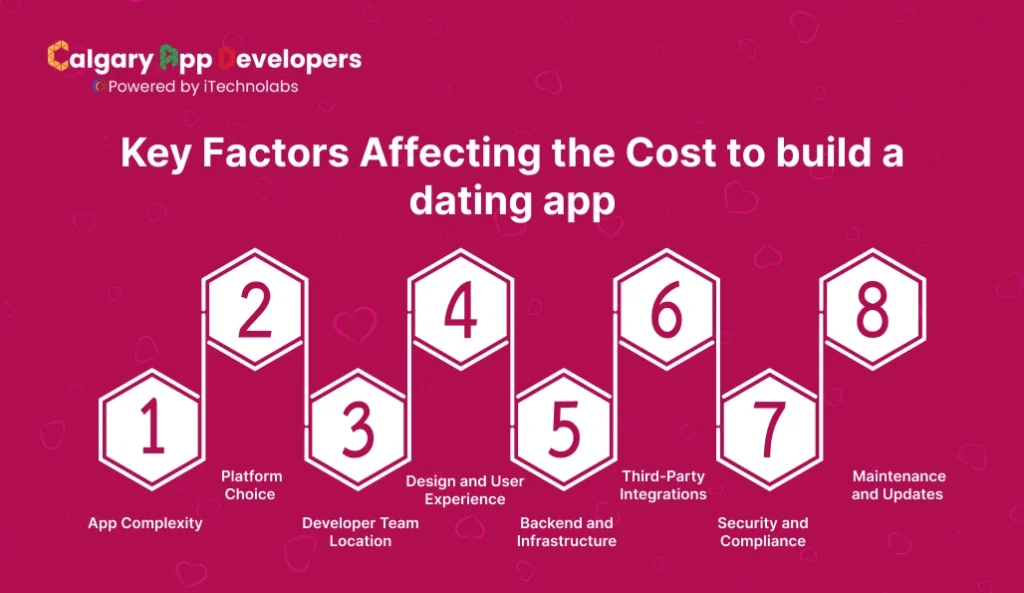
The price of developing a dating app is determined by various factors. Each development phase impacts the overall cost. Knowledge of these factors enables planning and investing in the right way when developing a dating app.
- App Complexity
The complexity of the app determines the higher price. The features and interactions are the determiners of complexity.
Cost Drivers:
- Video Calls and Live Streaming: Requires high-quality real-time communication infrastructure.
- AI-Powered Matching: Advanced algorithms for compatibility scoring or predictive suggestions require machine learning models and data processing.
- Gamified Features: Interactive swipes, badges, or rewards add additional design and development work.
- User Segmentation: Advanced filters, preferences, and matching logic increase backend complexity.
Estimated Additional Cost for Complexity: USD 5,000–15,000
- Platform Choice
The choice of platform directly affects development time and budget.
| Platform | Pros | Cons | Approximate Cost Impact |
| iOS Native | High performance, smooth animations | Limited to Apple users | +15–20% of base cost |
| Android Native | Broad user base, flexibility | Device fragmentation | +15–20% of base cost |
| Cross-Platform | Single codebase, faster deployment | Potential performance limitations | Slightly lower than dual native |
- Developer Team Location
Where your development team is located significantly impacts costs. Labor rates vary globally, affecting overall budget while maintaining quality.
| Location | Average Hourly Rate (USD) | Notes |
| North America (USA/Canada) | 50–150 | High-quality, reliable, and ideal for startups seeking premium development. Calgary has several top-rated app development firms with expertise in dating apps. |
| Western Europe | 40–120 | Experienced developers, slightly lower cost than North America |
| Eastern Europe | 25–60 | Cost-effective, skilled developers, good for medium-complexity apps |
| Asia (India, Philippines) | 15–40 | Budget-friendly, large talent pool, may require stronger project management for quality assurance |
Calgary-based development teams are a strong choice if you want high-quality expertise in North America combined with access to innovative approaches in app design and development.
- Design and User Experience
UI/UX design is critical for user retention. Investing in design ensures your app is intuitive and engaging.
Key Considerations:
- Custom UI Components: Animations, transitions, and interactive layouts
- Onboarding Experience: Engaging tutorials and profile creation flows
- Accessibility: Ensures all users can navigate the app seamlessly
Estimated Design Cost: USD 3,000–7,000 for MVP; higher for fully customized designs
- Backend and Infrastructure
| Component | Function | Cost Impact |
| Server Infrastructure | Handles requests, stores data | USD 3,000–10,000 |
| Database Management | Stores profiles, messages, app data | USD 2,000–6,000 |
| Real-Time Communication | Messaging, notifications, video calls | USD 2,000–8,000 |
| Cloud Integration | Scalable storage and processing | USD 1,500–5,000 |
- Third-Party Integrations
External services save development time but add licensing costs.
Common Integrations:
- Payment gateways (Stripe, PayPal)
- Geolocation APIs (Google Maps, Mapbox)
- Analytics platforms (Mixpanel, Firebase)
- Chat and notification services (Twilio, Firebase Cloud Messaging)
Estimated Integration Cost: USD 2,000–6,000
- Security and Compliance
Protecting user data is non-negotiable.
Key Elements:
- Data encryption and secure storage
- User verification and reporting mechanisms
- Compliance with GDPR, CCPA, and local privacy laws
- Content moderation systems
Estimated Security & Compliance Cost: USD 2,000–5,000
- Maintenance and Updates
Post-launch costs are essential for sustainability.
Ongoing Requirements:
- Server hosting and cloud services
- Bug fixes and performance optimization
- Feature updates based on user feedback
- Continuous security monitoring
Estimated Annual Maintenance Cost: USD 1,500–5,000
Also Check: Augmented Reality in Mobile Apps: Trends and Insights
How Dating Apps Earn Revenue
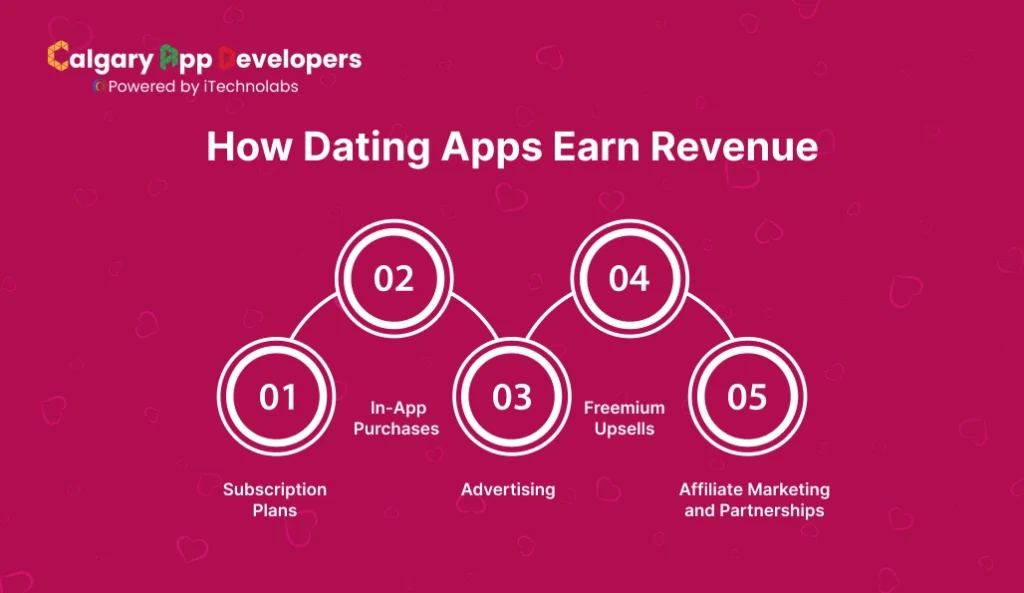
When you plan to make a dating app, understanding monetization strategies is crucial. Successful dating apps generate revenue through multiple channels, combining free access to attract users with paid features that enhance engagement and convenience.
- Subscription Plans
Most dating apps offer tiered subscription models. Users can access basic features for free, while premium subscriptions unlock additional functionality. Common subscription benefits include:
- Unlimited swipes or likes
- Advanced search filters
- Seeing who liked your profile
- Access to premium match suggestions
Example: Bumble and Hily generate significant revenue from monthly or annual subscription plans.
- In-App Purchases
In-app purchases allow users to pay for specific features or temporary boosts without committing to a subscription. These purchases often include:
- Profile boosts to increase visibility
- “Super Likes” or other attention-grabbing interactions
- Extra matches per day
This model is popular because it encourages occasional spending while keeping the app accessible to free users.
- Advertising
Some dating apps integrate advertisements into their free versions. Ad revenue can come from:
- Display banners or native ads within the app
- Sponsored profiles or content
- Video ads between interactions
While this strategy is less lucrative than subscriptions, it provides a steady income from the free user base.
- Freemium Upsells
Freemium models combine free access with optional paid features. Users can try the app without financial commitment, then upgrade for enhanced experiences. Examples of freemium upsells include:
- Unlocking exclusive filters or search options
- Access to premium events or community features
- Priority in match suggestions
- Affiliate Marketing and Partnerships
Some apps generate revenue by partnering with brands, services, or events. For example:
- Promoting local venues or experiences to matches
- Collaborating with lifestyle or dating-related products
- Offering affiliate discounts to users
Revenue models in dating apps are often combined to maximize profitability. Subscription plans, in-app purchases, freemium upgrades, advertising, and partnerships create multiple income streams while keeping the app attractive to a wide audience.
By strategically implementing these monetization methods, you can make a dating app that not only delivers value to users but also generates sustainable revenue.
Learnings from Leading Apps like Tinder, Zoosk, and Hily
Analyzing successful dating apps provides valuable insights for anyone planning to create a dating app. Tinder, Zoosk, and Hily have each carved a niche in the competitive market by focusing on user experience, technology, and engagement strategies. Here are the key takeaways:
- Tinder: Simplicity and Engagement
Tinder revolutionized the dating industry with its swipe-based interface. Key lessons from Tinder include:
- Intuitive User Interface: Simple swiping mechanics make the app accessible to new users and encourage frequent use.
- Gamification Elements: Features like swipes, likes, and Super Likes increase user engagement and retention.
- Quick Onboarding: Minimal barriers to registration allow users to start interacting immediately.
- Zoosk: Behavioral Data and Smart Matching
Zoosk emphasizes compatibility through behavioral data, which sets it apart from casual dating platforms. Key lessons include:
- Data-Driven Matching: Zoosk’s SmartPick algorithm analyzes user activity and preferences to suggest more compatible matches.
- Detailed Profiles: Encouraging users to provide more information improves match accuracy and user satisfaction.
- Global Reach: Localized versions and multiple language support help attract diverse audiences.
- Hily: Community and Safety Features
Hily focuses on building a safe and engaging community while using technology to improve matches. Lessons from Hily include:
- AI-Powered Recommendations: Advanced algorithms enhance matching based on user behavior and preferences.
- Safety Measures: Features like profile verification, reporting, and moderation improve trust and retention.
- Interactive Features: Live streams, stories, and video calls make the app more engaging beyond simple text chat.
Summary of Key Takeaways
| App | Strengths | Lessons for Your App |
| Tinder | Simple UI, gamification, fast onboarding | Keep the app intuitive and engaging; reduce friction for new users |
| Zoosk | Smart matching, detailed profiles, global reach | Use data intelligently to improve match quality; cater to international users |
| Hily | AI recommendations, safety features, interactive tools | Incorporate AI and safety features to enhance trust; offer varied engagement options |
By studying these successful apps, you can identify strategies that work and apply them to your own platform. A strong combination of intuitive design, smart matching, community safety, and interactive features is essential when you create a dating app that can compete in today’s market.
Read Also: How to Choose the Best Company for Calgary Mobile App Development
Future Trends in Dating App Development
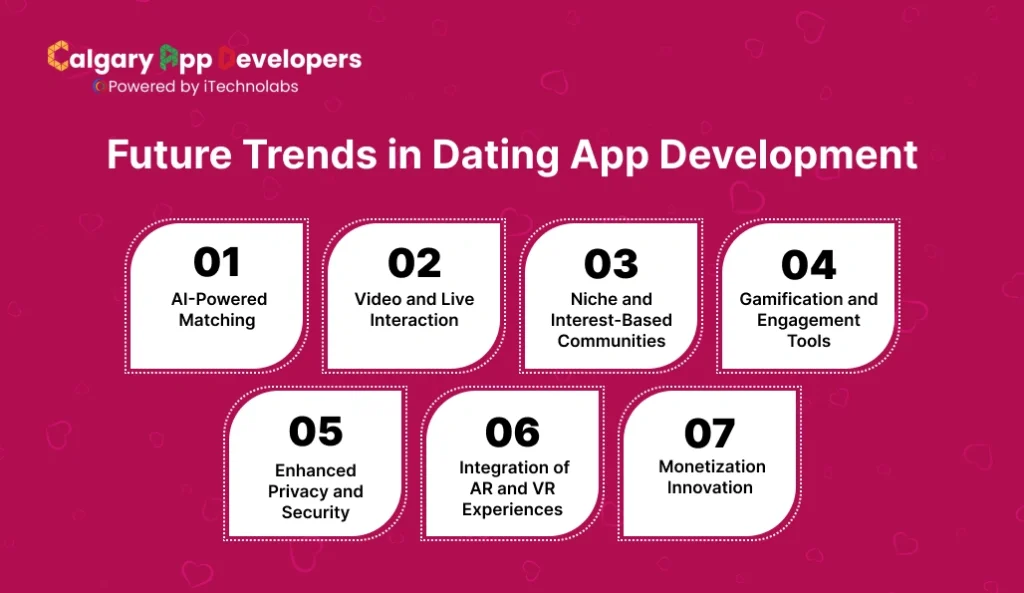
The dating app industry continues to evolve rapidly, driven by technological innovations, changing user behaviors, and growing expectations for personalized experiences. When planning to create a dating app, staying ahead of these trends can provide a competitive edge and help deliver a platform that resonates with modern users.
- AI-Powered Matching
Artificial intelligence is increasingly used to analyze user behavior, preferences, and interactions to provide smarter match suggestions. Predictive algorithms can improve compatibility and engagement by learning from user patterns over time.
Implication: Apps that integrate AI for matchmaking can offer personalized experiences that feel more accurate and reliable.
- Video and Live Interaction
Video calls, live streaming, and interactive sessions are becoming standard features. Users increasingly value authentic, real-time connections rather than purely text-based communication.
Implication: Integrating secure video and live features enhances trust, reduces ghosting, and increases user engagement.
- Niche and Interest-Based Communities
Users are seeking more than casual matches; they want platforms that align with specific lifestyles, hobbies, or values. Interest-based and niche dating apps are on the rise.
Implication: Targeting a specific niche can attract highly engaged users and improve retention rates.
- Gamification and Engagement Tools
Gamified elements such as swipes, badges, quizzes, and challenges keep users active and invested in the platform. Engagement tools extend beyond matching to community-building features, such as events, contests, or interactive polls.
Implication: Gamification increases user activity and creates opportunities for in-app monetization.
- Enhanced Privacy and Security
Data privacy and user safety remain top concerns. Features such as end-to-end encryption, profile verification, and content moderation are becoming mandatory. Compliance with GDPR, CCPA, and other regulations is increasingly scrutinized.
Implication: Ensuring strong security and privacy protocols not only protects users but also builds trust and credibility for the app.
- Integration of AR and VR Experiences
Augmented and virtual reality technologies are beginning to create immersive dating experiences. Virtual meetups, shared environments, and interactive avatars offer new ways to connect beyond conventional messaging.
Implication: AR and VR can differentiate your app and attract early adopters seeking innovative experiences.
- Monetization Innovation
Beyond subscriptions and in-app purchases, apps are exploring partnerships, affiliate programs, and event-based monetization. Monetization strategies are becoming more integrated with user engagement rather than standalone features.
Implication: Diversifying revenue streams allows apps to scale sustainably while maintaining free access for casual users.
Our Experience in Dating App Development
With years of expertise in mobile app development, we have successfully delivered dating platforms that combine intuitive design, smart matching, and secure user interactions. Our experience spans building apps with standard features as well as innovative functionalities that enhance user engagement and trust.
- Safar Dating App
Safar is a comprehensive dating platform designed to provide a seamless experience for users seeking meaningful connections. Key aspects of the app include:
- User registration and profile creation
- Swipe-based matching and advanced search filters
- In-app messaging and notifications
- Safety and privacy measures to ensure a trusted environment
Our work on Safar demonstrates our ability to deliver generic dating features with a focus on usability and scalability, ensuring the app performs reliably across different devices.
- Second Chance
Second Chance takes traditional dating app functionality a step further by integrating live location sharing for real-time connections. Key features include:
- Standard dating features such as profiles, swipes, and chat
- Live location sharing to help users discover nearby matches
- Enhanced engagement through interactive notifications
- Secure backend to manage real-time location and messaging
Developing Second Chance showcased our expertise in incorporating advanced features while maintaining user privacy and app performance.
Our experience with these apps illustrates our ability to create versatile dating platforms that cater to both standard user expectations and more advanced, location-based experiences. We combine strategic planning, robust development, and thoughtful design to ensure every app we build delivers measurable value and user satisfaction.
Also Check: Avail Right Calgary IT Support for Your App Development Needs
Conclusion
The dating app industry is growing rapidly, driven by evolving user expectations and technological innovation. Whether it’s swipe-based interfaces, AI-powered matching, or interactive live features, creating a platform that stands out requires careful planning, robust development, and a seamless user experience. When you decide to build a dating app, focusing on features, security, and engagement is essential to attract and retain users.
At Calgary App Developers, we specialize in helping businesses make a dating app that meets modern standards and delivers real value. From core functionalities to advanced features like real-time location sharing and AI matchmaking, our team combines technical expertise with design excellence to create platforms that are scalable, secure, and engaging.
Partnering with us means you get more than just development; you get a strategic approach to launching a successful dating app that resonates with your audience and grows with your business. Whether you aim to launch a basic MVP or a fully featured, cutting-edge platform, Calgary App Developers is equipped to bring your vision to life.
Dating app development is no small task, but with the right team and strategy, your app can become a trusted, widely used platform in today’s competitive market.
FAQ’s About Dating App Development
How can I create my own dating app?
To create a dating app, start with market research, define your target audience, and outline key features like matching, chat, and profiles. Next, design a smooth UI, choose the right tech stack, and hire an experienced team of dating app developers to build and launch your app. Partnering with Calgary App Developers ensures expert guidance through every stage.
How much does it cost to develop a dating app?
The cost to build a dating app typically ranges from USD 20,000 to 40,000, depending on complexity, features, and platform choice. A simple MVP takes about 4–6 months, while advanced apps with live streaming or AI features may cost more. Calgary App Developers provides scalable solutions tailored to your goals and budget.
Is it profitable to make a dating app?
Yes, dating apps can be highly profitable when built strategically. Revenue comes from subscriptions, in-app purchases, and advertising. Global demand for digital connections continues to rise, creating strong long-term potential. When you make a dating app with Calgary App Developers, you get the right technology and design foundation to turn engagement into revenue.


Pankaj Arora is a seasoned technology leader and the Founder of Calgary App Developer, with 10+ years of expertise in crafting high-performance digital solutions. His core competencies include full-stack app development, cloud-native architecture, API integration, and agile product delivery. Under his leadership, Calgary App Developers has empowered startups and enterprises alike with scalable mobile applications, secure web platforms, and AI-driven SaaS products.