





Top 15 Best Food Ordering App for Restaurants
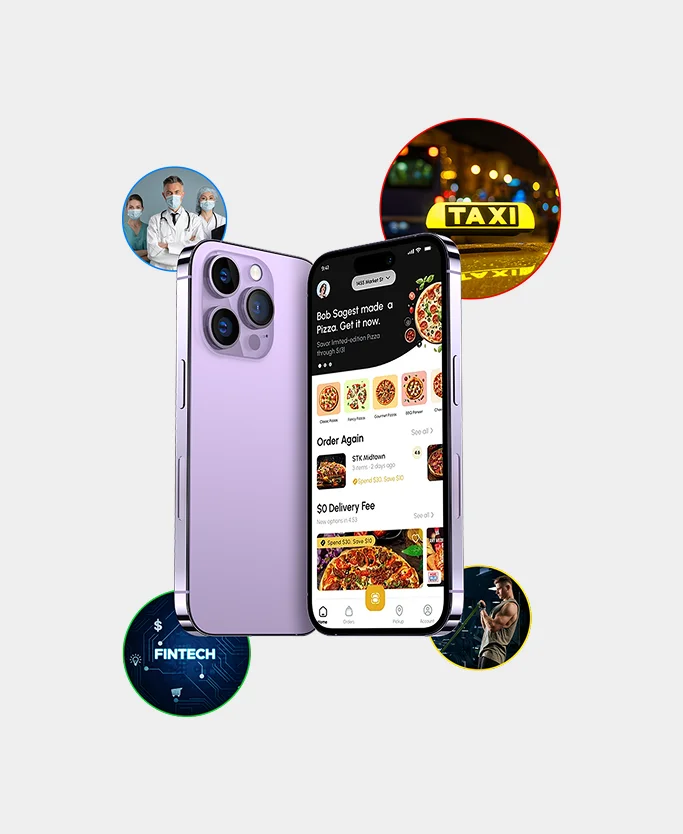
Running a restaurant today means more than setting the best table or perfecting the menu. It’s about delivering meals in ways that match what customers expect, and that means speed, convenience, mobile-first ordering, and a smart partner on the tech side. That’s where a well-designed Food Ordering App for Restaurants comes in.
The data makes that clear. The global online food delivery market is projected to grow from about USD 350.6 billion in 2026 toward nearly USD 729 billion by 2034, reflecting sustained demand for digital ordering and convenience-first experiences.
The opportunity for restaurants isn’t a short-lived trend; it’s a structural shift. Online ordering is now core to customer expectations, not an optional add-on. Restaurants that succeed will be the ones that integrate smart, user-friendly food ordering apps that improve experience, boost sales, and deepen loyalty.
What this really means is for restaurants the opportunity isn’t just big; it’s essential. If you’re still treating online ordering as an add-on, you’re missing out on what customers now assume: that you do online orders and you do them well.
In this blog we’ll explore how to pick the right mobile food ordering app, what features you should insist on, and how different platforms stack up. Everyone’s racing for the next-gen solution and your restaurant should lead, not follow.
TL;DR
- Online food ordering is now essential for restaurant growth and customer retention.
- A Food Ordering App for Restaurants improves efficiency, visibility, and direct customer engagement.
- Both third-party platforms and custom-built apps have advantages, depending on business goals.
- The right app helps restaurants expand reach, boost profits, and strengthen brand identity in 2026 and beyond.
Key Points
- The global online food delivery market is projected to reach USD 350.6 billion in 2026, proving that digital ordering is now a central part of restaurant operations.
- A high-performing Food Ordering App for Restaurants must offer essential features such as real-time tracking, secure payments, smart menu management, and built-in analytics.
- Popular global platforms like Uber Eats, DoorDash, Deliveroo, Meituan, and iFood continue to dominate the delivery landscape with advanced logistics and marketing tools.
- Restaurant-owned apps provide complete control, customer data access, and stronger brand loyalty but require higher investment and independent marketing.
- Third-party platforms offer instant reach and easy onboarding but reduce profit margins through commission fees and limited branding flexibility.
- For new restaurants, third-party apps are ideal for quick exposure, while established brands benefit more from developing their own custom ordering platforms.
- In 2026, investing in a personalized digital ordering solution is no longer optional. It’s a strategic move for restaurants that want to stay competitive, grow sustainably, and connect directly with their customers.
Essential Features Every Food Ordering App Should Have
A great Food Ordering App for Restaurants isn’t just about letting customers place an order. It’s about building trust, simplifying operations, and creating an experience that keeps people coming back. Let’s break down the features that separate a good app from a must-have one.
- Easy and Engaging User Experience
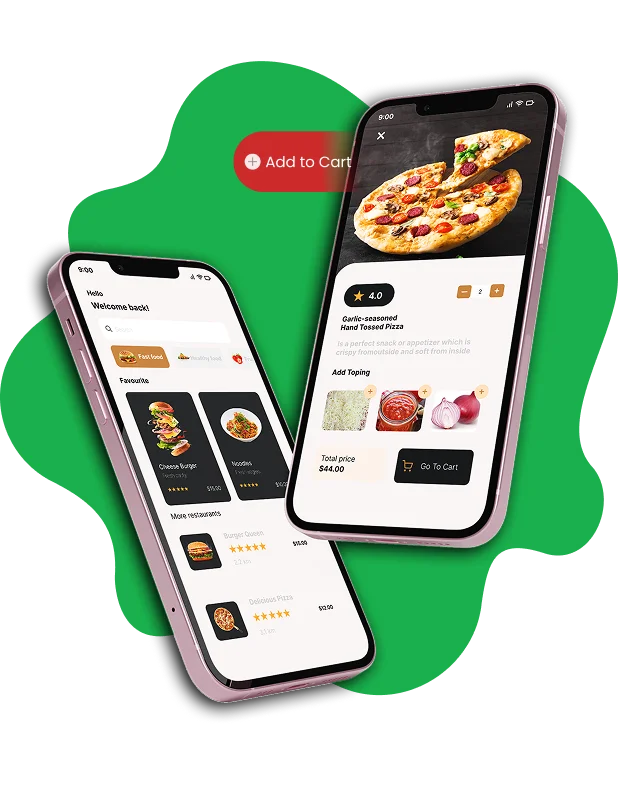
A great food ordering app should feel natural to use. Clear menus, quick navigation, and minimal steps to complete an order create a smooth flow for customers. When browsing and ordering feels effortless, people are more likely to return, recommend the app, and trust your restaurant as their go-to choice for convenience.
- Real-Time Order Tracking and Updates
Customers value transparency, especially when they’re hungry. Real-time tracking helps them follow their order from kitchen to doorstep, reducing anxiety and unnecessary support calls. Instant updates on order confirmation, preparation, and delivery status make the experience more reliable and engaging while building customer satisfaction and long-term trust.
- Multiple and Secure Payment Options
A reliable Food Ordering App for Restaurants must support various payment methods like credit cards, digital wallets, and UPI. Security is equally important because customers should feel confident their data is safe. Fast, secure payments improve conversion rates, reduce cart abandonment, and create a frictionless checkout experience that encourages repeat orders.
- Smart Menu Management for Restaurants
Restaurant owners need control over their digital menus. The ability to add, edit, or remove items instantly keeps listings accurate and prevents customer disappointment. Highlighting specials or limited-time dishes can drive more sales. A dynamic menu system ensures both customers and staff stay informed about availability and pricing in real time.
- Built-in Analytics and Customer Insights
Understanding your audience is key to growth. Advanced analytics help restaurants identify best-selling items, track peak ordering times, and measure customer loyalty. These insights guide smarter business decisions, from menu design to marketing strategy. With data-driven feedback, restaurants can continually refine their offerings and strengthen customer relationships over time.
Every successful food business today relies on more than great recipes. It relies on technology that understands what diners want. The right app simplifies the process for both sides, turning every order into an opportunity to impress. If your app checks these boxes, you’re already a step ahead in 2026’s competitive market.
Our Evaluation Framework for Selecting the Best Food Ordering Apps for Restaurants
With dozens of food delivery platforms competing for restaurant partnerships, visibility alone is not enough. Popularity does not always translate into profitability, control, or long-term growth. Every platform featured in this guide was assessed against practical criteria that reflect what restaurant owners actually need in 2026 and beyond.
Here is how the platforms were evaluated.
- Market Reach and Customer Base: We analyzed each platform’s active user base, geographic presence, and brand recognition. Apps with strong regional or global reach scored higher because they offer restaurants faster exposure and consistent order volume. A wide audience directly impacts visibility, discoverability, and sales potential.
- Commission Structure and Cost Transparency: Pricing models were examined carefully. Platforms that clearly outline commission percentages, subscription fees, and promotional costs ranked higher than those with unclear fee structures. For restaurants, predictable margins are critical. Hidden charges can quickly erode profitability, especially for high-volume operators.
- Restaurant Control and Branding Flexibility: Ownership matters. We evaluated how much control restaurants have over menu presentation, pricing, promotions, and customer data. Platforms that allow better branding, loyalty integration, and marketing customization received stronger consideration, since control directly affects long-term growth and retention.
- Logistics and Delivery Infrastructure: Reliable delivery determines customer satisfaction. We assessed the strength of each platform’s courier network, average delivery times, real-time tracking capabilities, and operational stability during peak hours. Strong logistics reduce order errors and protect the restaurant’s reputation.
- Technology and Integration Capabilities: Modern restaurants rely on POS systems, kitchen display systems, inventory tools, and CRM software. Platforms that integrate smoothly with existing restaurant technology ranked higher. Seamless data syncing reduces manual errors and keeps operations efficient.
- Analytics and Business Insights: Data-driven decision-making is essential in a competitive market. We examined the depth of reporting tools, including sales trends, peak hour analysis, repeat customer metrics, and campaign performance tracking. Platforms offering actionable insights provide restaurants with a measurable growth advantage.
- Scalability and Multi-Location Support: Not every restaurant stays small. We evaluated how well each platform supports expansion, including centralized menu management, multi-location dashboards, and consistent branding across branches. Scalable systems offer stronger long-term value for growing brands.
- Customer Experience and App Performance: User experience directly affects order completion rates. We considered interface design, ease of navigation, payment flexibility, and real-time updates. Apps that deliver fast, intuitive, and reliable ordering experiences scored higher because customer satisfaction drives repeat revenue.
By applying these criteria, we prioritize long-term sustainability over short-term exposure. The platforms included here are not just widely used. They demonstrate measurable value, operational reliability, and strategic alignment with how restaurants grow in a digital-first market.
Top 15 Mobile Food Ordering Apps for Restaurants:
| App | Launch Year | Founded By / Parent Company | Unique Selling Points (USPs) |
| Uber Eats | 2014 | Uber Technologies (founders Garrett Camp & Travis Kalanick) | Global scale, strong logistics network (leveraging Uber rides infrastructure), pickup and delivery options |
| DoorDash | 2013 | Tony Xu, Andy Fang, Stanley Tang, Evan Moore | Dominant U.S. market share, strong in convenience and grocery delivery, many merchant tools |
| Grubhub | 2004 | Matt Maloney & Mike Evans | Extensive U.S. restaurant network, strong brand recognition in U.S. markets |
| Just Eat Takeaway | 2000 (as Takeaway.com) | Jitse Groen (original), merged with Just Eat in 2020 | Strong in Europe & Australia, multi-brand platform spanning many countries |
| Deliveroo | 2013 | Will Shu & Greg Orlowski (UK-based) | Premium service, high-quality restaurant partnerships, and a focus on speed in urban markets |
| Meituan | 2015 (merger) | Founded as Meituan (2010) and merged with Dianping (2003) | Massive scale in China, integrated services beyond food (local life services) |
| Ele.me | 2008 | Zhang Xuhao & Kang Ping (China) | Strong China presence, O2O local-life platform, backed by Alibaba |
| iFood | 2011/12 (Brazil) | Brazilian food-tech company (now part of Prosus) | Leading platform in Latin America, high regional penetration |
| SkipTheDishes | 2012 | Founded in Canada, now under Just Eat Takeaway umbrella | Strong Canadian presence, local-market expertise |
| Postmates | 2011 | Bastian Levy, Sean Plaice & Yawn Raacci (USA) | Flexible pick-up / delivery model, acquired by Uber in 2020, leverages on-demand logistics |
| Delivery Hero | 2011 | Niklas Östberg, Lukasz Gadowski, Kolja Hebenstreit, Markus Fuhrmann | Operates across 70+ countries, strong presence in Europe, the Middle East, Asia, and Latin America, multi-brand strategy with localized platforms |
| Glovo | 2015 | Oscar Pierre & Sacha Michaud (Spain-based, majority-owned by Delivery Hero) | On-demand multi-category delivery, strong Southern Europe presence, fast urban logistics model |
| Bolt Food | 2019 | Bolt (founded by Markus Villig, Estonia) | Lower commission model for restaurants, integrated with Bolt ride-hailing network, growing European footprint |
| Caviar | 2012 | Founded by Jason Wang (acquired by DoorDash in 2019) | Premium restaurant focus, curated dining experience, strong presence in major U.S. metropolitan areas |
| Gopuff | 2013 | Rafael Ilishayev & Yakir Gola | Instant delivery model, vertically integrated fulfillment centers, strong focus on convenience, and late-night orders |
1. Uber Eats

Uber Eats was launched in 2014 as part of Uber’s expansion into the food delivery industry. It combines technology, convenience, and a massive logistics network to connect customers with local restaurants across 45 countries. The platform’s success comes from its fast delivery times, real-time tracking, and easy integration for restaurant owners. Uber Eats also supports multiple cuisines and price ranges, making it one of the most inclusive and reliable platforms globally.
Key Features
- Real-time order tracking with accurate delivery updates
- Pickup and doorstep delivery options for customers
- Multiple payment integrations through the Uber ecosystem
- Insights dashboard for restaurants to track sales and performance
- Promotional tools that help restaurants increase visibility
2. DoorDash

Founded in 2013 by four Stanford graduates, DoorDash has become the largest food delivery service in the United States. It connects local restaurants with customers through a fast and easy ordering process. DoorDash emphasizes supporting small and medium-sized businesses by offering delivery logistics, marketing opportunities, and customer data insights. With its growing reach in Canada, Australia, and Japan, DoorDash is evolving into a global brand focused on empowering restaurants and communities.
Key Features
- Extensive coverage across North America and expanding markets
- DashPass subscription for customer loyalty and repeat orders
- Merchant tools to manage menus and track performance
- Marketing and promotion options within the app
- Order scheduling and priority delivery for restaurants
Also Check: Top Food Delivery Apps in Canada
3. Grubhub

Grubhub was launched in 2004 and is one of the oldest names in the online food delivery industry. It built its foundation on strong partnerships with local restaurants, offering them visibility and delivery support long before delivery apps became mainstream. The platform provides a user-friendly interface for customers and a feature-rich dashboard for restaurant owners. Grubhub’s loyalty programs and marketing tools continue to make it a preferred choice among independent eateries in the United States.
Key Features
- Large restaurant network across major U.S. cities
- Customizable menus and restaurant profiles
- Integration with rewards programs for customer retention
- Transparent performance reports for partner restaurants
- Discount campaigns and promotional tools for better visibility
4. Just Eat Takeaway

Just Eat Takeaway was created through the merger of Just Eat and Takeaway.com, forming one of the largest online food delivery companies in the world. With operations in Europe, Canada, and Australia, it provides both delivery logistics and digital ordering solutions for restaurants. The platform focuses on reliability, wide coverage, and strong local partnerships. Its robust support system helps restaurants handle high order volumes while improving marketing visibility through targeted campaigns.
Key Features
- Presence across multiple international markets
- Real-time order tracking and customer notifications
- Marketing and advertising support for partner restaurants
- Secure online payment system and transaction history
- Comprehensive analytics dashboard for sales insights
5. Deliveroo

Deliveroo was founded in London in 2013 by Will Shu and Greg Orlowski with the goal of bringing high-quality restaurant food to customers quickly and conveniently. The platform built its reputation by focusing on premium restaurants and quick delivery times. Deliveroo’s innovation lies in its “Editions” concept, a network of delivery-only kitchens that help restaurants expand without opening new locations. This approach has positioned Deliveroo as a pioneer in efficient, technology-driven restaurant growth.
Key Features
- Curated partnerships with high-quality restaurants
- Optimized delivery routes for faster service
- Virtual kitchen model to support restaurant expansion
- In-app customer feedback and live tracking
- Restaurant performance analytics and order insights
6. Meituan

Meituan is one of the largest online-to-offline service platforms in China, founded in 2010 by Wang Xing. It became a dominant force in the delivery industry after merging with Dianping in 2015. Meituan handles millions of orders daily, covering not only food delivery but also grocery, travel, and lifestyle services. For restaurants, Meituan provides powerful tools for customer engagement, order management, and marketing, supported by one of the most advanced logistics systems in Asia.
Key Features
- Massive delivery network covering thousands of cities in China
- Integrated services for food, groceries, and lifestyle
- Smart logistics powered by AI and predictive analytics
- Marketing tools for restaurant promotions and customer retention
- Seamless merchant app for managing orders in real time
Read Also: How to Create a Food Delivery App
7. Ele.me

Ele.me, launched in 2008 by Zhang Xuhao, is a leading food delivery platform in China and a key player in the Alibaba ecosystem. The name translates to “Are you hungry?” which perfectly captures its mission. Ele.me offers an extensive range of restaurant options and a user-friendly experience that emphasizes speed and reliability. For restaurant owners, the platform provides strong business analytics, digital marketing options, and access to Alibaba’s massive e-commerce infrastructure.
Key Features
- Backed by Alibaba for enhanced digital integration
- Wide coverage in China’s major and mid-sized cities
- Merchant support with analytics and performance tracking
- In-app marketing campaigns to attract more orders
- Multiple delivery modes for flexibility and speed
8. SkipTheDishes

SkipTheDishes is a Canadian food delivery platform founded in 2012, now operating under the Just Eat Takeaway group. It focuses on connecting customers with local restaurants through a simple and transparent interface. The platform’s strength lies in its understanding of regional markets and strong relationships with local eateries. For restaurants, SkipTheDishes provides cost-effective onboarding, excellent customer support, and tools to boost visibility across Canada’s competitive food delivery scene.
Key Features
- Localized services tailored for Canadian restaurants
- Reliable delivery logistics with live tracking
- Restaurant dashboard for managing menus and orders
- Access to promotional and marketing campaigns
- Focus on community-based partnerships and growth
9. iFood

iFood was launched in 2011 in Brazil and has since become Latin America’s most dominant food delivery platform. It focuses on supporting local restaurants through technology-driven solutions and fair pricing. iFood’s strength lies in its deep understanding of regional dining preferences and data-driven recommendations for users. For restaurants, it offers advanced analytics, automated order management, and consistent brand exposure, helping them grow efficiently in one of the world’s fastest-rising delivery markets.
Key Features
- Market leader in Brazil and Latin America
- AI-powered order recommendations for customers
- Strong analytics and restaurant performance tracking
- Customizable promotions and campaign tools
- Fast delivery network with dedicated drivers
10. Postmates

Postmates, founded in 2011 by Bastian Lehmann, Sean Plaice, and Sam Street, changed how delivery works in the United States. It was one of the first to combine food, groceries, and retail into one on-demand platform. Acquired by Uber in 2020, Postmates continues to operate under the Uber network while keeping its distinctive local-first approach. Its focus on flexibility allows restaurants to reach customers quickly while optimizing logistics for faster and cheaper deliveries.
Key Features
- Part of the Uber ecosystem for wider reach and reliability
- Support for multiple product categories beyond food
- Flexible delivery and pickup options for restaurants
- Real-time order and courier tracking
- Marketing and loyalty features to grow restaurant visibility
Also Check: Top Grocery Delivery Apps in Canada
11. Delivery Hero

Delivery Hero was founded in 2011 in Germany and has grown into one of the largest global food delivery companies. Instead of operating under a single brand worldwide, Delivery Hero manages a portfolio of regional platforms across Europe, Asia, the Middle East, and Latin America. Its strength lies in localized operations combined with centralized technology and logistics infrastructure that help restaurants scale efficiently across different markets.
Key Features
- Presence in more than 70 countries through local brands
- Advanced logistics and fleet management systems
- Marketing tools and in-app promotional campaigns
- Merchant analytics dashboard with performance insights
- Multi-category delivery, including groceries and quick commerce
12. Glovo

Glovo was launched in 2015 in Spain and quickly expanded across Europe, Latin America, and parts of Africa. It operates as a multi-category delivery platform, allowing customers to order food, groceries, pharmacy items, and more. For restaurants, Glovo offers strong urban logistics, efficient delivery routing, and marketing tools designed to increase visibility in competitive city markets.
Key Features
- Fast urban delivery network in major international cities
- Multi-category ordering beyond food
- Integrated merchant tools for menu and order management
- Real-time tracking and customer notifications
- Promotional campaigns to increase in-app exposure
13. Bolt Food

Bolt Food was introduced in 2019 as part of the Bolt mobility ecosystem, which includes ride-hailing and micromobility services. The platform operates mainly in Europe and Africa, leveraging Bolt’s transportation network to support food delivery logistics. It is known for competitive commission structures and an expanding presence in urban markets seeking cost-effective delivery solutions.
Key Features
- Integration with Bolt ride-hailing infrastructure
- Lower commission model for restaurant partners
- Real-time courier tracking and route optimization
- In-app marketing and promotional placements
- Growing footprint across European and African cities
14. Caviar

Caviar was founded in 2012 and later acquired by DoorDash in 2019. It positions itself as a premium food delivery platform focused on high-quality and upscale restaurant partnerships. Caviar emphasizes curated dining experiences and higher-end food options, helping restaurants maintain brand value while accessing digital customers in major metropolitan areas.
Key Features
- Curated selection of premium restaurant partners
- Integrated within the DoorDash logistics network
- High-value customer base in major urban markets
- Advanced order tracking and delivery management
- Marketing support for brand positioning and visibility
Also Read: How To Build Restaurant App For Food Ordering Business
15. Gopuff

Gopuff was founded in 2013 in the United States and operates on a vertically integrated delivery model. Unlike marketplace platforms, Gopuff manages its own micro-fulfillment centers, allowing for rapid delivery of food, snacks, groceries, and convenience items. Its infrastructure enables consistent delivery times, often within minutes, particularly in dense urban locations.
Key Features
- Vertically integrated fulfillment and delivery system
- Rapid delivery model focused on convenience items
- Late-night and on-demand ordering capabilities
- Real-time inventory and order tracking
- Subscription-based loyalty programs for repeat customers
Comparing Restaurant-Owned Apps with Third-Party Delivery Platforms
Choosing the right Food Ordering App for Restaurants can shape how your business grows online. Some restaurants invest in building their own branded app, while others rely on third-party delivery platforms like Uber Eats or DoorDash. Both models have clear benefits, but they also come with trade-offs.
Let’s break it down.
1. Restaurant-Owned Food Ordering Apps
A restaurant-owned app is a dedicated digital platform built specifically for one brand. It allows full control over the ordering process, customer data, and marketing. Restaurants can personalize every detail, from the design and loyalty programs to push notifications and in-app offers. While the setup cost can be higher, the long-term value often outweighs the expense because it builds direct customer relationships without commissions.
| Pros | Cons |
| Full control over branding and customer experience | Higher initial development and maintenance cost |
| Direct access to customer data and insights | Requires marketing effort to attract downloads |
| No third-party commission fees | Needs ongoing tech updates and support |
| Custom loyalty programs and promotions | Limited reach compared to popular delivery apps |
| Stronger customer retention through personalized offers | May take longer to build traction in the beginning |
2. Third-Party Delivery Platforms
Third-party platforms like Uber Eats, DoorDash, or Deliveroo provide instant visibility to millions of users. Restaurants can onboard quickly, access a ready audience, and benefit from the platform’s delivery infrastructure. However, these apps charge commissions on each order and limit data access. For small restaurants, they are an easy entry point, but over time, the dependence can affect profitability.
| Pros | Cons |
| Fast setup and easy onboarding | High commission rates per order |
| Access to a massive customer base | Limited branding and customization |
| No need for in-house delivery logistics | Customer data controlled by the platform |
| Strong marketing exposure through app listings | Competitive visibility among thousands of restaurants |
| Reliable payment and delivery systems | Lower profit margins and reduced customer loyalty |
Which Option Works Best?
If you’re a new or small restaurant, third-party platforms can help you reach customers fast. They’re great for testing new markets or scaling quickly without heavy investment.
If you already have a loyal customer base or plan long-term, building your own Food Ordering App for Restaurants is the smarter move. It gives you ownership, branding power, and higher profitability in the long run.
In short, third-party apps help you start. Your own app helps you grow.
Read Also: How to Create Online Store in Calgary
Conclusion
The restaurant industry is evolving faster than ever, and digital ordering is now a core part of that growth. A well-designed Food Ordering App for Restaurants helps you reach customers directly, strengthen your brand, and streamline operations. Choosing between a third-party platform or developing your own app depends on your business goals, but both paths demand the right technology partner.
If you are a business owner aiming to build a third-party delivery platform or a restaurant ready to launch your own ordering app, Calgary App Developers can support you at every stage. Our expertise lies in creating scalable, user-focused solutions that combine functionality with design excellence.
We help you turn ideas into reliable digital products that enhance customer experience and drive measurable growth. Partner with Calgary App Developers to create an app that not only keeps up with the market but positions your business ahead of it.
FAQ’s About Mobile Food Ordering Apps
1. Should a restaurant build its own app or use third-party platforms?
Third-party platforms provide quick exposure and built-in delivery infrastructure, which is helpful for new restaurants. However, building your own app gives full control over branding, customer data, and long-term profitability. Many restaurants use a hybrid approach, starting with third-party platforms and later investing in a branded app.
2. How much commission do food delivery apps typically charge?
Commission rates usually range from 15 percent to 35 percent per order, depending on the platform, location, and service level. Some apps also offer subscription-based or flat-fee models. Understanding the full pricing structure, including marketing and promotion fees, is essential before committing to a platform.
3. What features should a restaurant look for in a food ordering app?
Key features include real-time order tracking, multiple secure payment options, POS integration, menu management tools, analytics dashboards, and marketing support. A strong platform should simplify operations while giving access to customer insights that help improve retention and repeat orders.
4. Do food ordering apps help increase restaurant revenue?
Yes, when used strategically. Digital ordering expands reach beyond walk-in traffic, increases convenience for customers, and supports upselling through smart menu design. However, profitability depends on commission rates, operational efficiency, and how well the restaurant leverages promotions and customer engagement tools.
5. How can restaurants reduce dependence on third-party platforms?
Restaurants can encourage direct ordering by launching a branded app or website, offering loyalty rewards for direct purchases, and promoting in-house ordering through social media and in-store marketing. Building direct customer relationships reduces commission costs and strengthens long-term brand loyalty.


Pankaj Arora is a seasoned technology leader and the Founder of Calgary App Developer, with 10+ years of expertise in crafting high-performance digital solutions. His core competencies include full-stack app development, cloud-native architecture, API integration, and agile product delivery. Under his leadership, Calgary App Developers has empowered startups and enterprises alike with scalable mobile applications, secure web platforms, and AI-driven SaaS products.