








How to Create a Fitness App in 2026: A Step-by-step Guide
Fitness has moved far beyond gym walls. Today’s users expect personalized workout plans, nutrition tracking, wearable integration, live coaching, and real-time performance insights in one seamless mobile experience. Digital fitness is no longer a trend. It is part of everyday life.
As demand grows, competition grows with it. Launching a fitness app now requires more than uploading exercise videos or tracking steps. Users expect intelligent recommendations, smooth performance, engaging design, and features that adapt to their goals. Retention depends on experience, personalization, and measurable progress.
This guide is built from our hands-on experience in fitness app development. We have worked closely with fitness entrepreneurs and businesses to transform ideas into scalable, user-focused platforms. From identifying the right niche and defining core features to selecting technology, designing for engagement, and planning monetization, every insight shared here reflects practical lessons learned in real projects.
If you are planning to build a fitness app, this roadmap will help you move from concept to launch with structure, strategy, and confidence.
TL;DR
- The fitness app market is expanding rapidly, creating strong opportunities for digital-first fitness businesses.
- Building a successful fitness app requires clear positioning, essential features, and the right technology stack.
- Costs vary based on complexity, integrations, and development approach.
- Long-term success depends on user engagement, personalization, and continuous improvement.
Key Points
- The global fitness app market is growing at a strong pace, driven by rising health awareness, mobile adoption, and demand for personalized digital wellness solutions.
- Fitness business owners face challenges such as limited retention, high operational costs, restricted geographic reach, and growing digital competition.
- Developing a fitness app helps extend reach beyond physical locations, improve client retention, create recurring revenue models, and strengthen brand authority.
- Choosing the right type of fitness app, whether workout-based, nutrition-focused, hybrid, or move-to-earn, is critical to standing out in a competitive market.
- Essential features such as personalization, progress tracking, wearable integration, gamification, and secure data handling directly impact user engagement and long-term retention.
- Development costs typically range from USD 25,000 to USD 120,000 or more, depending on feature complexity, platform choice, integrations, design quality, and team expertise.
- A structured development process that includes market research, feature planning, technology selection, testing, and post-launch optimization significantly increases the chances of building a scalable and successful fitness app.
Overview of the Fitness App Market
The fitness app market is growing rapidly. In 2024 global revenue from fitness apps was about USD 10.59 billion, and it is forecasted to reach around USD 23.21 billion by 2030, at a compound annual growth rate (CAGR) of 13.9%.
A different forecast up to 2032 sees the market rising even further to around USD 31.2 billion, driven by increased demand for digital wellness and remote fitness solutions.
Some niche segments are outperforming the market average. “Move-to-earn” fitness apps, where users earn rewards for physical activity, are expected to grow from USD 669.9 million in 2024 to nearly USD 1.8 billion by 2030, at a CAGR of 17.7%.
North America remains the largest regional market, accounting for nearly half of global revenue in 2024. Canada is expected to show strong growth over the next few years.
What this means is the fitness app market is big now but will be much bigger soon. If you plan to create a fitness app, there’s both opportunity and competition what really counts is having a clear niche, strong features, and excellent user experience.
Common Problem every Fitness Business Owners Face
Running a fitness business today is not just about delivering great workouts. The market is crowded, user expectations are rising, and competition is no longer limited to local gyms.
- Limited Member Retention: Many fitness businesses struggle to keep members engaged long term. Motivation drops, routines become repetitive, and without consistent interaction, users lose interest.
- High Operational Costs: Physical spaces, equipment maintenance, trainers, and administrative staff increase overhead. Scaling often means higher expenses, not higher margins.
- Restricted Reach: Traditional fitness models depend on geography. A local gym or studio can only serve people within commuting distance, limiting growth potential.
- Inconsistent Client Engagement: Outside scheduled sessions, many businesses lose contact with clients. This gap reduces accountability and weakens long-term loyalty.
- Growing Digital Competition: Global fitness apps, online coaches, and subscription platforms compete for attention. Businesses without a digital presence risk falling behind.
Why Fitness App Development Is a Smart Move
Building a fitness app is not about replacing your gym, studio, or coaching sessions. It is about extending your presence, deepening client relationships, and creating a scalable business model that works even when your physical space is closed.
- Expand Beyond Location Limits
A physical fitness business is tied to a city or neighborhood. An app removes that limitation. With a digital platform, your workouts, programs, and coaching services can reach users across different cities, states, or even countries.
This opens new revenue streams without the cost of opening new branches. Instead of investing in rent and equipment, you invest in digital growth. The result is a business that scales faster and more efficiently.
- Improve Client Retention
Retention is one of the biggest challenges in the fitness industry. People start strong, then lose motivation. A fitness app keeps your brand present in their daily routine.
Push notifications, goal tracking, streak counters, personalized workout plans, and progress dashboards create consistent touchpoints. When users see measurable improvement and feel supported, they are more likely to stay committed.
Regular engagement builds habits. And habits build loyalty.
- Create Recurring Revenue Models
Fitness apps make it easier to build a predictable income. Instead of relying only on monthly memberships or one-time sessions, you can offer subscription tiers, exclusive programs, virtual coaching, nutrition plans, or premium content.
Recurring billing creates financial stability. It also allows you to plan marketing, product improvements, and expansion with more confidence.
- Enhance Brand Authority
In today’s market, a strong digital presence signals credibility. A well-designed fitness app shows that your brand is serious about innovation and user experience.
Clients increasingly expect convenience. When they can book sessions, track workouts, and access guidance from their phone, your brand feels modern and reliable. That perception strengthens trust and sets you apart from competitors who rely only on traditional models.
- Collect Actionable Data
An app does more than deliver workouts. It provides insights. You can analyze user engagement, workout completion rates, preferred training styles, and drop-off points.
This data helps you refine programs, improve retention strategies, and tailor offerings to real user behavior. Instead of guessing what your clients want, you respond to measurable trends.
For fitness business owners facing rising costs and digital competition, fitness app development is not just a tech upgrade. It is a strategic investment. It transforms your business from location-bound to scalable, from reactive to data-driven, and from one-dimensional to multi-channel.
Also Read: Fitness App Development Cost
Popular Types of Fitness Apps
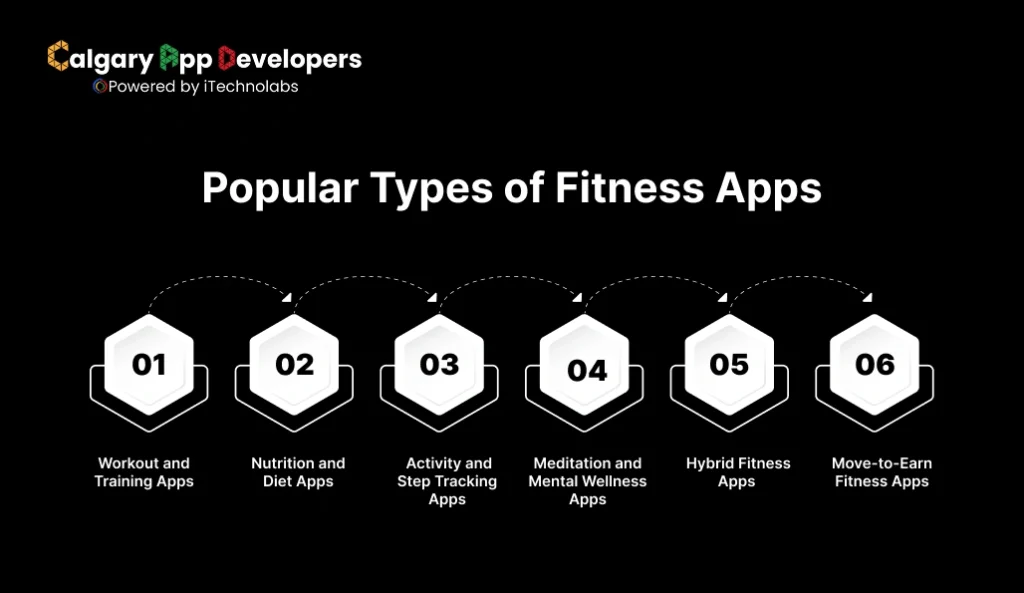
If you’re planning to build a fitness app, understanding the most popular categories is essential. Each type of app caters to different user goals and lifestyles, and the global market is filled with successful examples that can guide your strategy.
- Workout and Training Apps
These are the backbone of the fitness app industry. They provide structured workout routines, video tutorials, and personalized training plans that users can follow at home or in the gym. Apps like Nike Training Club and Fitbod have built loyal audiences by offering accessible, trainer-quality workouts that adapt to fitness levels and goals. - Nutrition and Diet Apps
Fitness is as much about food as it is about exercise. Nutrition apps focus on calorie tracking, meal planning, and building healthy eating habits. MyFitnessPal and Lifesum are standout examples, helping millions of users log meals, analyze macros, and integrate nutrition with their overall fitness journey. - Activity and Step Tracking Apps
These apps sync with smartphones and wearables to track daily movement, steps, distance, and even sleep. The appeal lies in simple, everyday use and long-term habit building. Fitbit and Google Fit remain leaders, setting the benchmark for seamless integration with devices and easy-to-read health dashboards. - Meditation and Mental Wellness Apps
Modern fitness is no longer limited to the body; it’s about mind-body balance. Meditation and mindfulness apps like Calm and Headspace promote stress reduction, focus, and sleep improvement. They’ve grown rapidly as users increasingly link mental wellness with physical performance. - Hybrid Fitness Apps
Hybrid apps combine multiple functions like training, nutrition, and wellness into a single platform. This all-in-one model appeals to users looking for convenience. Centr by Chris Hemsworth is a good example, blending workouts, meal plans, and mindfulness practices into one subscription service. - Move-to-Earn Fitness Apps
A newer trend is gamifying fitness. Move-to-earn apps reward users with points, tokens, or cryptocurrency for completing physical activities. STEPN has pioneered this model, merging fitness with Web3 and creating fresh incentives for people to stay active.
When you build a fitness app, it’s not just about following trends but choosing the right type that aligns with your audience. Whether you’re creating a specialized app for workouts or a hybrid solution that covers fitness from every angle, clarity of purpose is what sets your app apart in a competitive market.
Key Features Every Fitness App Needs
If you want to make a fitness app that people actually use and keep using, features matter as much as design. The right functionality turns a good idea into a valuable tool that keeps users engaged and motivated. Here are the essentials:
- Easy Onboarding and Personalization: Users should be able to set goals, fitness levels, and preferences right away. Personalization ensures workouts, diet tips, or activity tracking feel tailored rather than generic.
- Activity Tracking and Progress Monitoring: Whether it’s steps, calories burned, or completed workouts, tracking progress keeps users accountable. Clear dashboards, charts, and streaks motivate users to stick with their plan.
- Workout and Training Programs: Offer guided routines with video demonstrations, instructions, and difficulty levels. Variety is key, from strength training to yoga to HIIT, so users can find what fits their lifestyle.
- Nutrition and Meal Planning: Since fitness is also about diet, many users expect features like calorie counting, recipe suggestions, and meal tracking. This integration strengthens overall results.
- Wearable and Device Integration: Syncing with smartwatches, fitness trackers, and even medical devices makes your app more useful and accurate. Seamless integration is now an industry standard.
- Gamification and Rewards: Badges, leaderboards, or point systems keep fitness fun. Features that reward progress can significantly increase user engagement and retention.
- Social and Community Features: Connecting users with groups, challenges, or friends adds accountability. Community-driven features make fitness more engaging and build loyalty to your app.
- Notifications and Reminders: Timely nudges for workouts, hydration, or rest days help users stay consistent. These should feel supportive, not spammy.
- Data Security and Privacy: When you make a fitness app, protecting sensitive health data is critical. Compliance with regional privacy laws builds trust with users.
- Post-Workout Analytics: Detailed breakdowns of sessions, including time, intensity, and recovery suggestions, help users see the impact of their efforts and improve performance.
The best fitness apps combine these features with clean design and reliable performance. Think of it this way: the more your app can simplify a user’s fitness journey while keeping them motivated, the more likely they are to stick with it long-term.
Step-by-Step Guide to Building a Fitness App
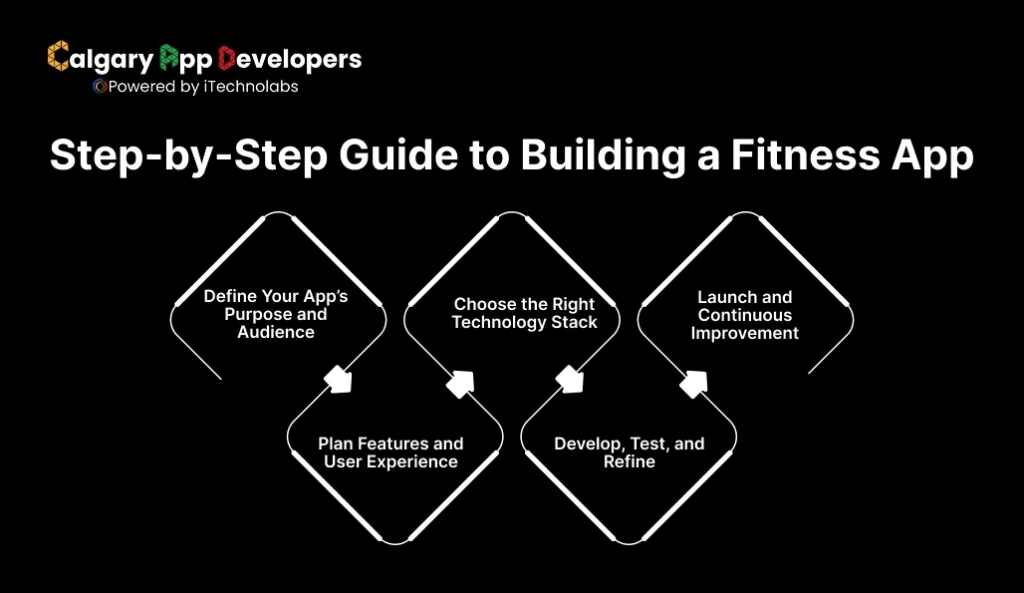
If you want to create a fitness app that actually works in the market, you need more than just an idea. Success comes from a clear roadmap that balances user needs, technical execution, and long-term strategy. Here’s a breakdown of the five key steps.
- Define Your App’s Purpose and Audience
Before writing a single line of code, you need clarity on who your app is for and what problem it solves.
- Identify your target audience (athletes, beginners, busy professionals, seniors, etc.)
- Decide what category your app will fall under: workouts, nutrition, mental wellness, hybrid, or move-to-earn
- Research competitors to understand gaps in the market
- Set measurable goals such as boosting retention rates, driving daily engagement, or hitting subscription targets
This step ensures your app has a strong identity and avoids becoming just another generic fitness tracker.
- Plan Features and User Experience
Features make or break user adoption. To create a fitness app that keeps people engaged, focus on both functionality and usability.
- Prioritize must-have features like onboarding, tracking, and workout programs
- Add motivational features such as gamification, rewards, and social sharing
- Design a user-friendly interface with simple navigation and minimal friction
- Create wireframes or prototypes to visualize the app flow before development
Think of this as laying the blueprint of your app, one that’s simple, intuitive, and motivating to use.
- Choose the Right Technology Stack
Technology decisions affect performance, scalability, and cost. Work with your developers to select tools that fit your vision.
- Decide between native apps (Swift for iOS, Kotlin for Android) or cross-platform frameworks like Flutter or React Native
- Plan for backend services like databases, APIs, and cloud hosting to handle user data securely
- Integrate with wearables and third-party health APIs for a more connected experience
- Keep security a priority, ensuring compliance with privacy regulations in your target regions
The right tech stack helps your app scale smoothly as your user base grows.
- Develop, Test, and Refine
Now it’s time to bring your app to life through structured development. A strong process reduces risks and ensures high quality.
- Break development into sprints, focusing on core features first
- Test early and often unit tests, usability testing, and beta testing with real users
- Collect feedback and refine the app flow before launch
- Prioritize speed, stability, and security in every development cycle
This stage is about building the foundation of reliability so users trust your app from day one.
- Launch and Continuous Improvement
Launching your app is just the beginning. Long-term success comes from ongoing updates, marketing, and support.
- Plan a marketing strategy with app store optimization, influencer partnerships, and targeted ads
- Offer onboarding tutorials to help new users get the most out of the app
- Collect analytics on user behavior to guide future updates
- Provide ongoing maintenance, bug fixes, and new features to keep engagement high
When you create a fitness app, think beyond the launch. Continuous improvement ensures your app stays relevant and competitive in a fast-changing market.
Building a fitness app takes strategy, design, technology, testing, and ongoing growth efforts. Following these five steps gives you a clear path to move from concept to a fitness product that users love and keep coming back to.
Cost Breakdown of Developing a Fitness App
If you want to build a fitness app, expect development costs to range from USD 25,000 to USD 120,000+, depending on complexity, features, and platform choices. Simple apps cost less, while advanced, multi-feature solutions with wearable integrations or AI coaching land on the higher side.
Estimated Cost Table for Fitness App Development
| App Complexity | Features Included | Estimated Cost (USD) | Development Timeline |
| Basic App | User onboarding, workout library, activity tracking, push notifications | 25,000 – 40,000 | 2 – 3 months |
| Mid-Level App | Personalization, meal planning, wearable integration, gamification, community features | 45,000 – 75,000 | 4 – 6 months |
| Advanced App | AI-driven recommendations, video streaming, offline access, advanced analytics, multi-device sync | 80,000 – 120,000+ | 6 – 10 months |
Factors Affecting the Cost of Building a Fitness App
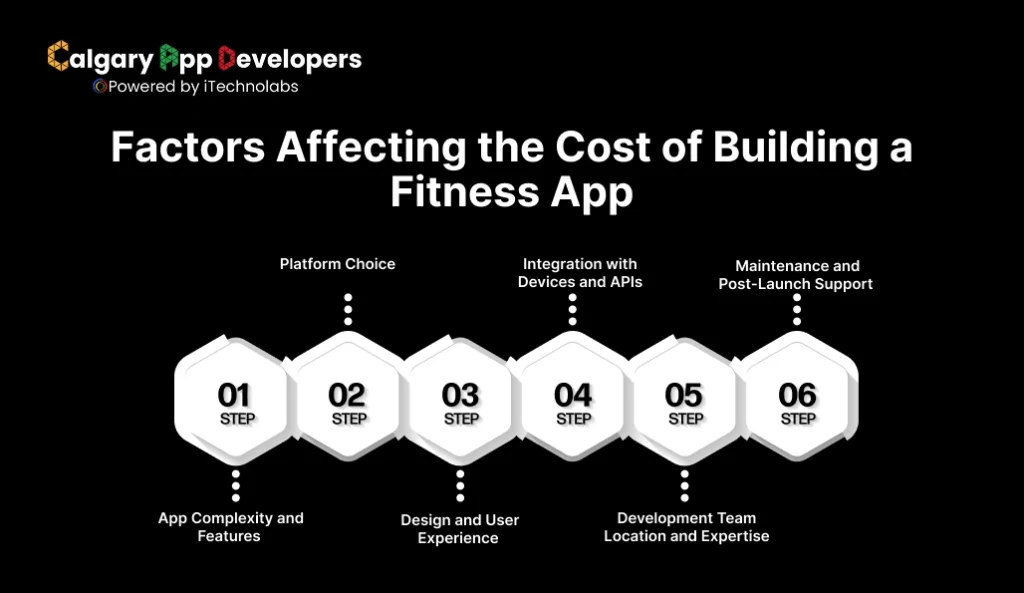
- App Complexity and Features
The more advanced your app, the higher the cost.
- Basic apps: Limited to workout lists and progress tracking
- Mid-level apps: Add personalization, nutrition, gamification, and integrations
- Advanced apps: AI-driven recommendations, video content, advanced analytics
Example Feature Cost Impact Table
| Feature | Impact on Cost | Reason |
| Workout library | Low | Preloaded static content, minimal backend |
| Wearable integration | Medium | Requires APIs, syncing, and testing across multiple devices |
| Gamification & rewards | Medium | Needs points system, achievements, leaderboards |
| AI coaching & analytics | High | Involves machine learning, predictive models, and higher processing |
| Video streaming | High | Needs strong backend, CDN support, and more storage |
- Platform Choice
Choosing the right platform has a direct impact on cost.
- Single platform (iOS or Android): More affordable, good for MVPs
- Cross-platform (Flutter, React Native): Cost-efficient, shared codebase
- Native apps for both platforms: More expensive, best for large-scale apps
Platform Cost Table
| Approach | Pros | Cons | Cost Impact |
| Single Platform | Lower cost, faster development | Limits audience reach | Low |
| Cross-Platform | Shared code, faster time-to-market | May limit advanced performance tweaks | Medium |
| Native for Both | Best performance and flexibility | Highest cost and time investment | High |
- Design and User Experience
Design is crucial for engagement and retention.
- Basic UI: Simple templates, minimal animations
- Custom UI/UX: Tailored design with branding, smooth transitions, advanced visuals
Design Cost Factors
- Custom illustrations and icons
- Interactive animations
- Personalized dashboards and reports
- Accessibility features (voice commands, larger text, etc.)
- Integration with Devices and APIs
Integrations make your app powerful but add to the workload.
- Wearables: Apple Watch, Fitbit, Garmin
- APIs: Nutrition databases, payment gateways, chat or video SDKs
Integration Example Table
| Integration Type | Examples | Cost Impact |
| Fitness wearables | Fitbit, Apple Health, Garmin | Medium |
| Payment gateways | Stripe, PayPal | Low |
| Nutrition databases | Edamam, Nutritionix | Medium |
| Video/Chat SDKs | Twilio, Agora | High |
- Development Team Location and Expertise
Where you choose to build a fitness app has a big impact on cost. Popular hubs for software development include San Francisco, Toronto, London, Berlin, Warsaw, and Bangalore. Each region offers different advantages in terms of pricing, expertise, and communication styles.
Average Hourly Rate Table
| Region | Hourly Rate (USD) | Popular Cities | Notes |
| North America | 80 – 150 | San Francisco, Toronto, Calgary | High expertise, premium costs, strong industry standards |
| Western Europe | 60 – 120 | London, Berlin, Amsterdam | Skilled teams, slightly more affordable than the US |
| Eastern Europe | 30 – 60 | Warsaw, Kyiv, Bucharest | Cost-efficient, growing reputation for quality work |
| South Asia | 20 – 50 | Bangalore, Pune, Dhaka | Budget-friendly, though quality can vary widely |
While larger tech hubs like San Francisco and London often set premium rates, cities like Calgary are increasingly attractive for businesses seeking a balance between affordability and North American expertise. Development teams in Calgary deliver quality aligned with Canadian and US standards while offering more cost-effective options compared to bigger, high-priced hubs.
- Maintenance and Post-Launch Support
Don’t forget long-term costs. Maintenance typically adds 15–20% of the initial development cost annually.
Ongoing tasks include:
- Bug fixes and security updates
- Feature upgrades
- Scaling infrastructure as user base grows
- Customer support and user feedback handling
The cost to build a fitness app is shaped by features, design, platform, integrations, and developer expertise. A lean MVP can start small, but if you want a full-featured app with advanced capabilities, expect higher investment and ongoing maintenance.
Our Proven Experience in Fitness App Development
When you decide to make a fitness app, experience matters. Our team has successfully designed, developed, and launched apps that engage users, drive results, and simplify wellness routines. One of our flagship projects, Fitster Health, perfectly illustrates this approach.
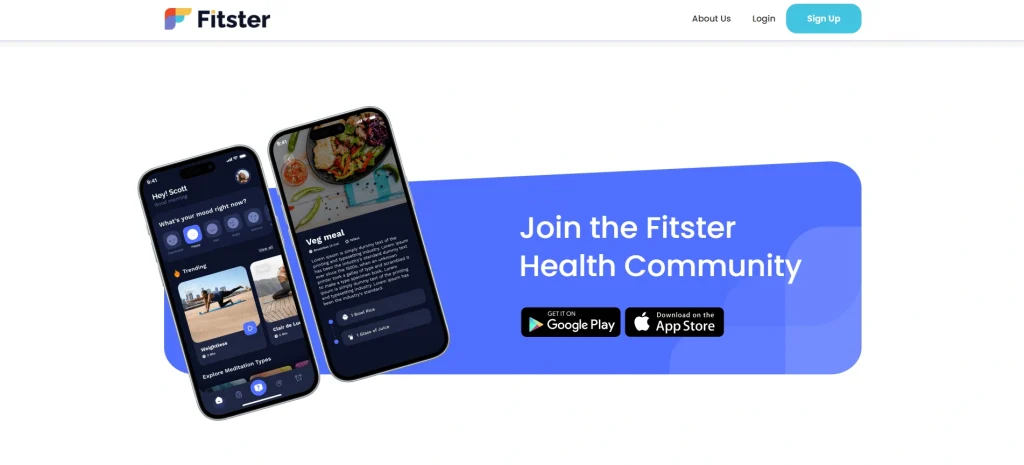
Fitster Health was built with a simple yet powerful goal: help users take control of their wellness, not just manage it. The app transforms daily health habits into effortless routines, making fitness, nutrition, and mindfulness easy to follow.
Key highlights of Fitster:
- Guided Workouts: A library of exercises tailored to various fitness levels and goals.
- Nutrition Made Simple: Recipes that users can instantly add to their grocery lists, saving time while supporting healthy eating.
- Mindfulness and Meditation: Calming sessions that adapt to mood and stress levels.
- Smart Planning: Calendar synchronization to organize workouts, meals, and wellness activities seamlessly.
- User-Centric Design: Clean, intuitive interface that motivates consistent engagement without overwhelming users.
The idea behind Fitster came from a personal journey—our founder recognized that many preventable health issues, like diabetes, can be managed with proactive lifestyle choices. This insight drove the creation of an app that makes healthy living enjoyable and sustainable.
Through Fitster, we demonstrated how thoughtful strategy, modern technology, and user-focused design can come together to create a product that truly improves lives. It’s proof that when you make a fitness app with care and expertise, it’s possible to turn wellness into a seamless part of daily life.
Conclusion
The fitness app market is growing rapidly, offering immense opportunities for businesses and entrepreneurs. Whether you aim to track workouts, provide nutrition guidance, or create a full wellness ecosystem, the key to success lies in careful planning, thoughtful design, and seamless execution.
If you want to create a fitness app that stands out, partnering with an experienced fitness app development company can make all the difference. At Calgary App Developers, we combine technical expertise, user-focused design, and market insights to bring your fitness app idea to life. From concept to launch, we ensure your app delivers real value, engages users, and drives long-term growth.
Let us help you turn your vision into a powerful fitness solution that inspires healthy habits and transforms lives.
FAQ’s About Fitness App Development:
- What is the typical cost to build a fitness app?
The cost to build a fitness app depends on features, platform, and complexity. A basic app with core workout and tracking features can cost USD 25,000–40,000, while advanced apps with AI coaching, video content, and wearable integration may exceed USD 120,000. Ongoing maintenance and updates add roughly 15–20% annually. - How long does it take to develop a fitness app?
Development timelines vary by app complexity. A simple fitness app can be ready in 2–3 months, while a mid-level app with personalized features and integrations may take 4–6 months. Advanced apps with AI, video streaming, or cross-platform deployment can require 6–10 months. Proper planning and testing help ensure quality and user satisfaction. - What are common ways fitness apps generate revenue?
Fitness apps make money through multiple channels, including subscription models, in-app purchases, premium features, advertising, and affiliate partnerships. Some apps also monetize via branded content, corporate wellness programs, or move-to-earn models. Choosing the right revenue model depends on your target audience, app type, and long-term business strategy.


Pankaj Arora is a seasoned technology leader and the Founder of Calgary App Developer, with 10+ years of expertise in crafting high-performance digital solutions. His core competencies include full-stack app development, cloud-native architecture, API integration, and agile product delivery. Under his leadership, Calgary App Developers has empowered startups and enterprises alike with scalable mobile applications, secure web platforms, and AI-driven SaaS products.