








Fitness App Development Cost in 2026 | Complete Guide
People spend most of their time thinking about features, design, or how the app will compete in a saturated market when it comes to developing a fitness app. What usually gets ignored is the question that can either make or break the venture: how much will it cost? The fitness app development cost is more than just seeing a sticker price.
Fitness app development is not about chasing a single number or a rough estimate. It is about understanding where the money actually goes, which choices drive expenses up or down, and how those decisions affect performance, timelines, and user retention. An app that looks great but fails to engage users is far more expensive than one built with the right priorities from the start.
In this guide, we break down the real cost of developing a fitness app. You will learn what influences pricing, where trade-offs make sense, and how to budget realistically so you can build a product users keep coming back to without running into avoidable surprises.
TL;DR
- Fitness app development cost varies widely based on features, complexity, and platform choices.
- Building an MVP first is the most cost-effective way to validate ideas and control spending.
- Design, integrations, and technology decisions have the biggest impact on total cost.
- Smart planning reduces long-term expenses and improves user retention.
Key Points
- Fitness apps can cost anywhere from $25,000 to over $120,000 depending on scope, features, and technical requirements.
- App complexity, platform selection, and third-party integrations are the primary drivers of development cost.
- Starting with an MVP helps reduce risk, gather user feedback, and avoid overspending on low-value features.
- Cross-platform development can significantly lower build and maintenance costs compared to separate native apps.
- Ongoing maintenance, security updates, and scalability planning are essential for long-term success and should be included in the budget from the start.
What Is a Fitness App and Its Types
A fitness app is a digital tool designed to help users improve their physical health, track progress, and stay motivated. It goes beyond simple workout logging by offering features like personalized exercise plans, diet tracking, progress analytics, and even social challenges. Fitness apps make health and wellness more accessible, allowing users to manage their routines anytime and anywhere.
There are several types of fitness apps, each catering to different user needs:
- Workout and Exercise Apps: These apps provide guided workouts, exercise routines, and video tutorials. They often include tracking features to monitor repetitions, sets, and calories burned.
- Nutrition and Diet Apps: Focused on meal planning, calorie counting, and nutritional guidance, these apps help users maintain a balanced diet and meet specific fitness goals.
- Hybrid Fitness Apps: These combine workouts and nutrition tracking in one platform, offering a holistic approach to health and wellness.
- Activity and Tracking Apps: Primarily used for tracking steps, distance, heart rate, or sleep patterns, these apps integrate with wearable devices to provide detailed insights into daily activity.
- Community-Based Fitness Apps: These apps emphasize social interaction, challenges, and group goals, helping users stay motivated through shared progress and competition.
The Fitness Industry: A Snapshot of Market Statistics
The fitness industry is experiencing a significant transformation, driven by technological advancements and changing consumer behaviors. Here’s a look at the current landscape:
- Global Market Value: The global health and fitness club market is projected to be worth about USD 135.71 billion in 2026, with steady growth expected through 2031.
- Fitness App Market: The global fitness app market was estimated at $12.12 billion in 2025 and is expected to reach $33.58 billion by 2033, growing at a CAGR of 13.40% from 2026 to 2030.
- Wearable Technology: The global wearable technology market is estimated to reach USD 188.67 billion in 2026, driven by growing demand for fitness tracking, health monitoring, and connected devices.
- Online Fitness Growth: The online fitness market is projected to grow at a rate of 33.1% per year, reaching approximately $59.23 billion by 2027.
These statistics highlight the dynamic and rapidly evolving nature of the fitness industry, underscoring the importance of staying informed about current trends and developments.
Also Read: How to Build a Fitness App: A Step-by-step Guide
How Much Does Fitness App Development Cost?
Developing a fitness app can cost anywhere from $25,000 to over $120,000, depending on the complexity, features, and platform. Understanding the full cost breakdown helps you plan your budget effectively and avoid unexpected expenses.
Total Cost Estimation for Complete Fitness App Development
| Stage of Development | Basic App | Mid Range App | Complex App |
| UI and UX Design | $3,000 to $6,000 | $6,000 to $12,000 | $12,000 to $20,000 |
| Frontend and Backend Development | $8,000 to $18,000 | $18,000 to $35,000 | $35,000 to $60,000 |
| Fitness Tracker and Wearable Integration | $1,000 to $3,000 | $3,000 to $8,000 | $8,000 to $15,000 |
| Social and Community Features | $1,000 to $3,000 | $3,000 to $6,000 | $6,000 to $12,000 |
| Testing and Quality Assurance | $2,000 to $4,000 | $4,000 to $8,000 | $8,000 to $15,000 |
| Deployment and App Store Submission | $1,000 to $2,000 | $2,000 to $4,000 | $4,000 to $6,000 |
| Maintenance Annual | $2,000 to $5,000 | $5,000 to $10,000 | $10,000 to $20,000 |
| Total Estimated Cost | $25,000 to $40,000 | $40,000 to $80,000 | $80,000 to $120,000 |
Cost by Fitness App Type
-
Basic Fitness App
Estimated Cost: $25,000 – $40,000
Ideal For: Startups or small businesses launching a simple fitness tracker.
Features:
- Basic workout logging
- Calorie counting
- User registration and profiles
Example: MyFitnessPal (basic version)
-
Mid-range Fitness App
Estimated Cost: $45,000 – $75,000
Ideal For: Companies looking for more interactive features and better UX.
Features:
- Personalized workout plans
- Nutrition tracking
- Social/community features
- Integration with wearable devices
Example: Fitbit, Strava
-
Complex Fitness App
Estimated Cost: $80,000 – $120,000+
Ideal For: Large enterprises or global brands targeting high engagement.
Features:
- AI-driven coaching
- Video tutorials and live classes
- Advanced analytics and progress tracking
- Multi-platform support and third-party integrations
Example: Nike Training Club, Peloton
Factors Influencing the Fitness App Development Cost
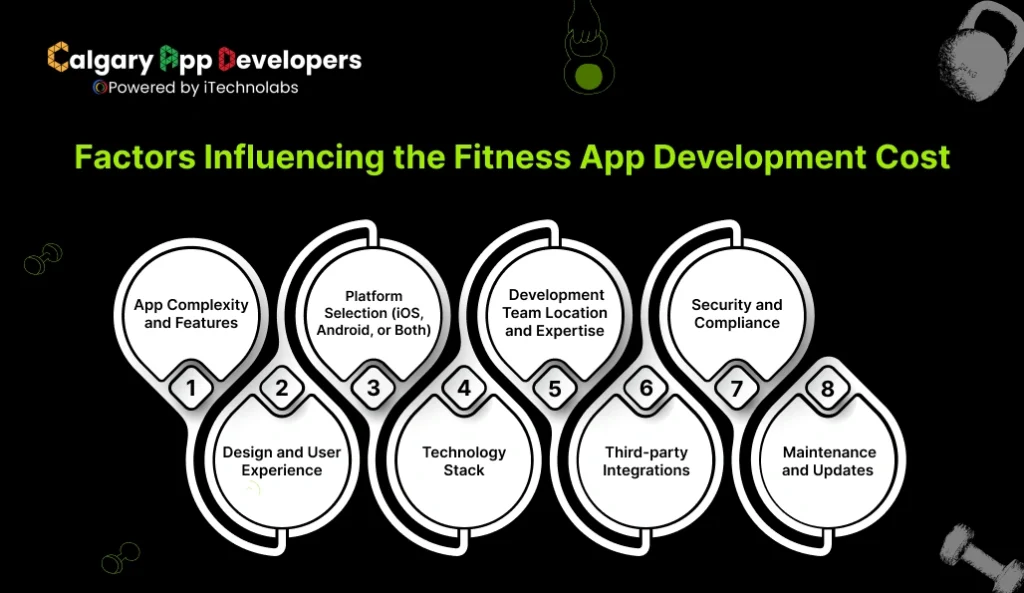
The fitness app development cost depends on several variables that shape the functionality, user experience, and overall performance of the app. Understanding these factors helps you budget effectively and avoid surprises during development. Let’s break down the most significant ones.
- App Complexity and Features
The more features you include, the higher the fitness app development cost. A simple app with workout tracking, step counting, and basic user profiles is faster and cheaper to develop. Adding features like AI-driven coaching, live video classes, nutrition planning, wearable device integration, or social challenges increase coding, design, and testing efforts. Each additional feature directly impacts the total investment. - Design and User Experience
A smooth, intuitive interface is critical for engagement and retention. Custom UI/UX design involves wireframing, prototyping, and user testing. Basic template-based designs are affordable, while custom animations, interactive elements, and seamless navigation can significantly raise fitness app development costs. The goal is to balance visual appeal with ease of use. - Platform Selection (iOS, Android, or Both)
The platforms you target affect the development cost. Building for one platform, such as Android, is cheaper than developing separate native apps for Android and iOS. Native apps offer optimal performance and full device feature access but require two codebases. Cross-platform solutions like Flutter or React Native reduce cost and development time but may have some performance or feature limitations.
| Platform Type | Estimated Cost Basic App | Estimated Cost Mid Range App | Estimated Cost Complex App | Notes |
| Android Only | $25,000 to $35,000 | $35,000 to $60,000 | $60,000 to $90,000 | Single platform with native Android performance |
| iOS Only | $25,000 to $40,000 | $40,000 to $70,000 | $70,000 to $100,000 | Strong iOS ecosystem and monetization potential |
| Android and iOS Native | $30,000 to $50,000 | $50,000 to $90,000 | $90,000 to $120,000 | Separate native builds for maximum performance |
| Cross-platform Flutter or React Native | $25,000 to $45,000 | $45,000 to $80,000 | $80,000 to $110,000 | Single codebase shared across both platforms |
- Technology Stack
The tools, frameworks, and backend architecture you choose influence fitness app development cost. Cloud-based platforms like AWS or Firebase improve scalability but increase expenses. Advanced capabilities such as AI recommendations, real-time analytics, or wearable integration require specialized expertise and add to the development time and cost.
| Technology Stack Type | Basic App Cost | Mid-Range App Cost | Complex App Cost |
| LAMP Stack Linux Apache MySQL PHP | $25,000 to $35,000 | $35,000 to $60,000 | $60,000 to $85,000 |
| MEAN or MERN Stack MongoDB Express Angular or React Node | $25,000 to $40,000 | $40,000 to $75,000 | $75,000 to $110,000 |
| Cloud-based AWS or Firebase | $30,000 to $45,000 | $45,000 to $80,000 | $80,000 to $120,000 |
| AI and ML-Enabled Stack | $35,000 to $50,000 | $50,000 to $90,000 | $90,000 to $120,000 |
- Development Team Location and Expertise
The location and expertise of your development team significantly influence fitness app development cost. Teams in North America or Western Europe typically charge higher rates, while India, Eastern Europe, or Southeast Asia offer more affordable options. Choosing an experienced team may cost more upfront but often saves money by preventing delays, bugs, and performance issues.
| Region or City | Hourly Rate | Estimated Cost Basic App | Estimated Cost Mid Range App | Estimated Cost Complex App |
|---|---|---|---|---|
| USA | $80 to $150 | $30,000 to $45,000 | $60,000 to $100,000 | $100,000 to $120,000 |
| Western Europe | $70 to $130 | $28,000 to $40,000 | $55,000 to $95,000 | $95,000 to $120,000 |
| Eastern Europe | $40 to $80 | $25,000 to $35,000 | $45,000 to $80,000 | $80,000 to $110,000 |
| India or Southeast Asia | $25 to $50 | $25,000 to $30,000 | $40,000 to $70,000 | $70,000 to $100,000 |
| Calgary Canada | $18 to $40 | $25,000 to $28,000 | $35,000 to $60,000 | $60,000 to $90,000 |
Calgary stands out for offering competitive rates while maintaining strong communication standards and North American market alignment, making it a practical choice for cost-conscious yet quality-focused app development.
- Third-party Integrations
Integrating payment gateways, wearable devices, analytics tools, or social platforms requires extra development and testing. Each integration adds to both cost and maintenance requirements. - Security and Compliance
Protecting user data is critical. Features like encryption, two-factor authentication, GDPR compliance, and secure payment handling increase development costs but are necessary for trust and regulatory compliance. - Maintenance and Updates
Ongoing updates, bug fixes, server monitoring, and performance optimization are part of long-term maintenance. Allocate roughly 15 to 20 percent of your initial fitness app development cost for annual upkeep to keep your app competitive and reliable.
How to Reduce Fitness App Development Cost
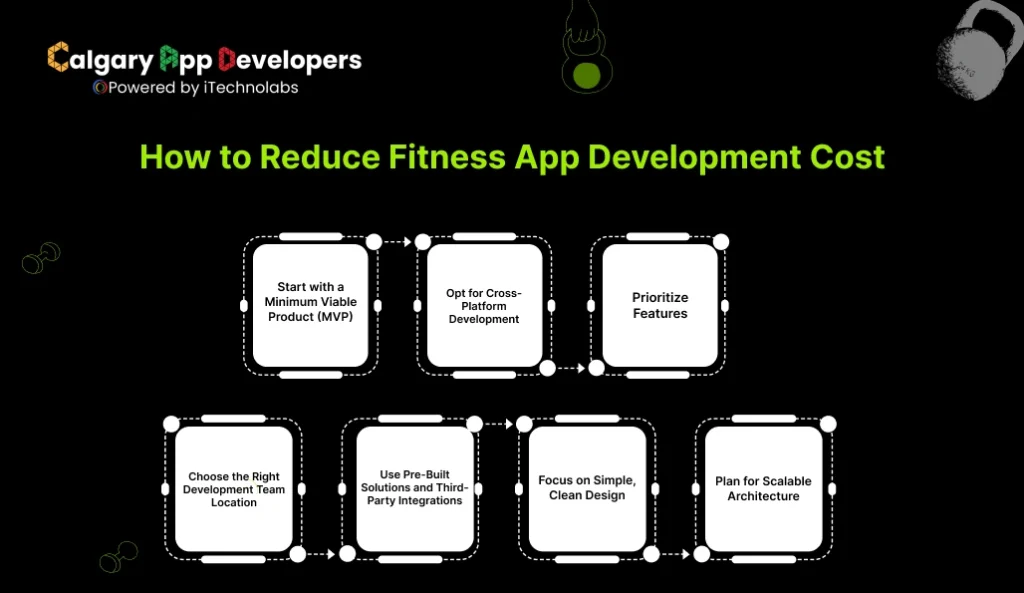
Reducing fitness app development cost doesn’t mean compromising on quality. It’s about making strategic decisions that save time, effort, and money while delivering an app that meets user expectations. Here’s how you can approach it effectively:
- Start with a Minimum Viable Product (MVP)
Launching an MVP focuses only on the core features necessary for users to engage with your app. For a fitness app, this could include basic workout tracking, user registration, and progress monitoring. By avoiding advanced features like AI coaching, live video classes, or in-depth analytics in the initial version, you reduce development time and cost significantly. Collecting real user feedback from the MVP helps you prioritize enhancements for later versions, ensuring your resources are invested where they truly matter.
- Opt for Cross-Platform Development
Developing separate native apps for Android and iOS can double your coding, testing, and maintenance costs. Cross-platform frameworks such as Flutter or React Native allow you to write a single codebase that runs on both platforms. This approach not only reduces development time but also lowers long-term maintenance expenses. While there may be minor performance limitations compared to fully native apps, modern frameworks deliver excellent results for most fitness app functionalities.
- Prioritize Features
Not every feature adds equal value to your users. Identify the most impactful functions, such as workout logging, progress tracking, and basic nutrition guidance and focus on implementing them first. Features like gamification, AI-driven suggestions, or social challenges can be added in later updates once you have a clear understanding of user needs. This phased approach keeps the initial fitness app development cost lower while ensuring the app remains functional and engaging.
- Choose the Right Development Team Location
Developer rates vary greatly depending on location and experience. While North America and Western Europe have higher hourly rates, regions like Calgary, India, and Eastern Europe provide highly skilled developers at significantly lower costs. Hiring a team from these cost-effective locations can reduce your budget substantially without sacrificing quality. Additionally, experienced teams from these regions can often deliver projects faster, saving time-related costs.
- Use Pre-Built Solutions and Third-Party Integrations
Building every feature from scratch can be expensive and time-consuming. Leveraging pre-built APIs, SDKs, or third-party integrations for functions like wearable device syncing, payment gateways, or social logins allows you to save both development hours and costs. Choosing reliable third-party solutions ensures your app benefits from tested, secure, and scalable technology without reinventing the wheel.
- Focus on Simple, Clean Design
While flashy animations and highly interactive designs may look impressive, they also require more development and testing, increasing costs. A simple and intuitive design that emphasizes usability ensures a smooth user experience without unnecessary expenses. Investing in well-structured layouts, clear navigation, and responsive design achieves the same goal of engagement while keeping fitness app development costs manageable.
- Plan for Scalable Architecture
Building an app that can handle growth from the start prevents costly redesigns and re-engineering in the future. Using a flexible backend and cloud-based services allows you to scale features, user capacity, and integrations as your audience grows. Planning for scalability from the beginning saves money in the long run and ensures your fitness app can evolve with user demand without major overhauls.
By following these strategies, you can significantly reduce fitness app development costs while delivering an app that is functional, user-friendly, and positioned for long-term growth.
Read Also: How to Build an MVP for Startups: Complete Guide
How a Startup Can Build a Fitness App
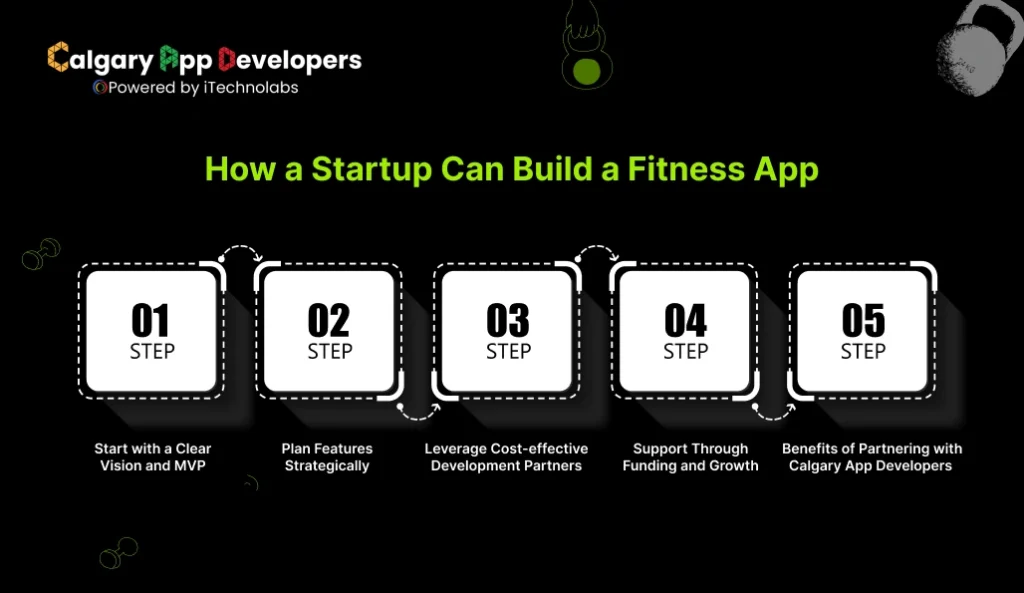
For startups, developing a fitness app can seem overwhelming. From defining core features to managing development costs and preparing for growth, there are many moving parts. Understanding fitness app development cost and planning carefully is essential to building a successful, scalable product.
Here’s how startups can approach the process efficiently:
- Start with a Clear Vision and MVP
Every successful fitness app begins with a Minimum Viable Product (MVP) that addresses the core needs of your target audience. Focus on essential features like workout tracking, user profiles, progress monitoring, and basic analytics. Launching an MVP reduces initial costs, validates your idea, and attracts early users or investors. It also provides valuable feedback before investing in advanced features such as AI coaching, live classes, or wearable device integration. - Plan Features Strategically
Once the MVP is validated, additional features can be added in phases. Prioritizing features based on user demand and potential ROI ensures each addition contributes to growth. This approach helps startups manage the overall fitness app development cost effectively, avoiding unnecessary expenses on features users may not need. - Leverage Cost-effective Development Partners
Choosing the right development partner can make a huge difference in cost, quality, and timeline. Calgary App Developers specializes in helping startups build fitness apps from concept to launch. Our team provides full support throughout the development process, including:
- MVP development and prototyping
- Scalable architecture and technology selection
- UI/UX design tailored for fitness users
- Third-party integrations for payments, wearable devices, and analytics
- Ongoing maintenance and support
By working with Calgary App Developers, startups gain access to high-quality development services at competitive rates, keeping fitness app development costs manageable without compromising performance or user experience.
- Support Through Funding and Growth
Beyond development, Calgary App Developers guides startups in preparing for funding and scaling their apps. From investor-ready prototypes to technology optimized for growth, we ensure your startup is positioned for long-term success while controlling development costs. - Benefits of Partnering with Calgary App Developers
- Complete end-to-end support from MVP to launch.
- Cost-effective solutions for startups without sacrificing quality.
- Expertise in modern technologies, integrations, and scalable architectures.
- Focus on minimizing fitness app development cost while maximizing user engagement and market impact.
With Calgary App Developers, startups can confidently build fitness apps that meet market demands, stay within budget, and scale efficiently. We handle the complexities so founders can focus on strategy, growth, and customer satisfaction.
Our Proven Experience in Fitness App Development
Building a fitness app is not just about writing code. It is about understanding behavior, motivation, and long-term engagement. Our team has delivered health and wellness apps that combine smart technology with thoughtful user experience. Two of our standout projects, Fitster Health and Evecare, reflect that philosophy in action.
1. Fitster Health
Fitster Health was created to help users take control of their overall wellness rather than simply track workouts. The focus was clarity, simplicity, and sustainable habits.
Key highlights of Fitster
- Guided Workouts: A structured exercise library tailored to different fitness levels and goals, helping users stay consistent without confusion.
- Nutrition Planning: Smart recipe suggestions that can be added directly to grocery lists, making healthy eating practical and time-efficient.
- Mindfulness Support: Built-in meditation and stress management sessions that adjust based on mood and daily patterns.
- Smart Scheduling: Calendar synchronization that organizes workouts, meals, and wellness activities in one place.
- Clean User Experience: An intuitive interface designed to encourage repeat use without overwhelming the user.
The concept behind Fitster was inspired by a personal realization that many preventable health conditions can be managed through consistent lifestyle improvements. That insight shaped a platform focused on prevention, structure, and long-term habit building.
2. Evecare
Evecare was designed as a comprehensive women’s health app focused on awareness, tracking, and empowerment. The goal was to create a safe and reliable digital space where women can better understand their bodies and make informed decisions.
Key highlights of Evecare
- Cycle and Symptom Tracking: Accurate period tracking with detailed symptom logging for better health awareness.
- Personalized Insights: Data-driven recommendations tailored to individual patterns and health goals.
- Health Reminders: Smart alerts for cycle phases, hydration, medication, and wellness routines.
- Secure Data Handling: Strong privacy controls to protect sensitive health information.
- Supportive Design: A calm and welcoming interface built to reduce stress and encourage daily use.
Evecare demonstrates how specialized health apps require more than functionality. They demand empathy, accuracy, and strong data protection. By combining user research, thoughtful UX, and scalable architecture, we built a platform that supports women through every stage of their health journey.
Together, Fitster Health and Evecare showcase our ability to design and develop fitness and wellness applications that are not only technically sound but genuinely meaningful to users.
Final Words:
Fitness app development cost is influenced by many factors, from app complexity and features to design, platform choice, technology stack, and development team location. For startups and businesses, understanding these variables is crucial to budgeting wisely and avoiding unexpected expenses.
By starting with a clear MVP, prioritizing features, choosing cost-effective development partners, and planning for scalability, you can create a high-quality fitness app without overspending. Partnering with Calgary App Developers offers startups the expertise, guidance, and competitive pricing needed to build apps that engage users, scale efficiently, and stay within budget.
With careful planning and the right team, developing a fitness app doesn’t have to be overwhelming or prohibitively expensive. You can focus on delivering value to your users while keeping fitness app development costs under control, setting your app up for long-term success.
FAQ’s on Fitness App Development Cost
1: How much does it cost to develop a fitness app?
The cost to develop a fitness app can range from $25,000 to $120,000, depending on various factors such as:
-
App complexity (basic tracker vs. AI-driven personal coach)
-
Features (workout videos, diet plans, integrations, real-time tracking)
-
Platforms (iOS, Android, or both)
-
Development team rates (freelancers vs. agencies, local vs. offshore)
-
UI/UX design quality
-
Backend infrastructure and data storage needs
For a MVP (Minimum Viable Product) with essential features, expect to spend around $25,000–$50,000.
2: Is a fitness app profitable?
Yes, fitness apps can be highly profitable, especially with the growing demand for health and wellness solutions. Key revenue streams include:
-
Subscription models (e.g., monthly or annual premium plans)
-
In-app purchases (custom plans, coaching sessions, etc.)
-
Ads and sponsorships
-
Affiliate marketing (partnering with fitness brands or products)
Top fitness apps like MyFitnessPal, Fitbit, and Strava generate millions in annual revenue, proving the market’s potential. However, profitability depends on user acquisition, retention, and monetization strategies.
3: How much does a fitness app cost?
On average, a fitness app can cost between $25,000 and $120,000+, based on:
-
Type of app (simple tracker vs. feature-rich platform)
-
Required integrations (e.g., Apple Health, wearables, third-party APIs)
-
Custom content (videos, plans, AI features)
-
Developer rates (hourly rates can vary from $25 to $200+)
A basic app with core features (login, activity tracking, and content library) may cost around $25,000–$60,000, while a full-featured app with personalization, analytics, and social elements may exceed $120,000.
4: How much does it cost to develop an app like MyFitnessPal?
Developing an app like MyFitnessPal can cost between $100,000 and $300,000+, depending on:
-
Core features: calorie tracking, barcode scanning, food database, integration with wearables
-
AI and analytics: personalized recommendations, progress tracking
-
Backend complexity: user data storage, real-time syncing, database management
-
Platform support: iOS, Android, Web
-
Security and compliance: GDPR, HIPAA (if handling sensitive health data)
5: How long does it take to develop a fitness app?
A basic fitness app usually takes 1 to 3 months to build. Mid-range apps with personalization and integrations can take 4 to 6 months. Complex fitness apps with advanced features, analytics, and scalability often require 8 months or more, including testing and launch preparation.
6: What features impact fitness app development cost the most?
AI-based coaching, live video classes, wearable device integration, advanced analytics, and social community features increase costs significantly. These features require more development time, backend infrastructure, and testing. Core features like workout tracking and user profiles are far more affordable and faster to build.
7: Is cross-platform development cheaper than native apps?
Yes, cross-platform development using Flutter or React Native is usually more cost-effective than building separate native apps. A single codebase reduces development and maintenance time. For most fitness apps, cross-platform performance is more than sufficient and helps keep overall costs under control.
8: How much should I budget for fitness app maintenance?
You should plan to spend around 15 to 20 percent of the initial development cost each year on maintenance. This includes bug fixes, security updates, performance improvements, server costs, and compatibility updates for new devices and operating system versions.
9: Can startups build a fitness app on a limited budget?
Yes, startups can manage fitness app development costs by launching an MVP with essential features only. Starting small, validating user demand, and adding features in phases allows startups to control spending while still building a competitive and scalable product.
10: Do fitness apps need to comply with data privacy regulations?
Yes, fitness apps often handle sensitive health data, which requires strong security and regulatory compliance. Depending on the target market, this may include GDPR, secure data storage, encryption, and user consent mechanisms. Compliance adds cost but is essential for trust and long-term success.


Pankaj Arora is a seasoned technology leader and the Founder of Calgary App Developer, with 10+ years of expertise in crafting high-performance digital solutions. His core competencies include full-stack app development, cloud-native architecture, API integration, and agile product delivery. Under his leadership, Calgary App Developers has empowered startups and enterprises alike with scalable mobile applications, secure web platforms, and AI-driven SaaS products.