








How to Find Mobile App Investors in 2026
Developing a mobile app idea is just the first step. Bringing that idea to life as a successful venture requires funding, planning, and investors who believe in your vision. Mobile app investors help startups get from idea to product-ready for market.
The mobile app industry is massive and still growing rapidly. The global mobile application market reached over $330 billion in 2025 and is forecast to expand even further in the coming years as usage, monetization, and engagement rise worldwide.
According to our research, users are spending trillions of hours in apps annually, and in-app purchase revenue alone is expected to surpass $170 billion by 2026, underscoring the economic opportunity for successful startups.
In 2026, investors are focused not just on ideas, but on execution, scalability, and evidence that an app can capture attention, retain users, and generate revenue. Whether you’re building a social platform, a productivity tool, or an e-commerce app, securing the right funding can shape how fast your startup grows and how effectively you compete.
Finding mobile app investors today is about more than asking for capital. It is about building relationships, presenting a compelling roadmap, and showing how your product solves real problems in a large, monetizable market. From angel investors and venture capital to accelerators and crowdfunding, there are multiple paths to funding for founders who come prepared.
This guide explains how to find investors for your mobile app startup in 2026, what investors look for, and how to position your idea to unlock serious funding opportunities.
- Securing investors is essential to turn a mobile app idea into a successful startup in the USA and Canada.
- Investors look for a strong value proposition, market understanding, scalability, and early traction.
- Funding options include angel investors, venture capital, crowdfunding, accelerators, and bootstrapping.
- Preparation, a compelling pitch, and strategic networking are critical to attracting the right investors.
- Understand what app investors value: unique solutions, scalability, revenue potential, market knowledge, traction, and a capable team.
- Funding stages: seed/early-stage for MVP development, growth/series funding for scaling, and exit strategies for investor returns.
- Types of investors: bootstrappers, co-founders, angel investors, venture capital firms, crowdfunding, and grants/competitions.
- Estimate funding needs based on app complexity, design, development, marketing, and maintenance costs.
- Prepare thoroughly: define your idea, research the market, build an MVP, and strengthen branding.
- Find investors through networking, online platforms, accelerators, pitch events, referrals, and competitions.
- Build credibility with market knowledge, traction metrics, professional presentation, and a strong team.
- Maintain transparency post-funding with regular updates, open communication, and financial accountability.
- Leverage specialized ecosystems like Platform Calgary and top North American startup cities for growth opportunities.
What App Investors Look For
When you attempt to identify app investors, it is beneficial to be well aware of exactly what they consider prior to investing money. Major considerations are:
- Unique Value Proposition: How your app stands out from competitors and solves a real problem.
- Scalability: The potential for your app to grow in users and revenue over time.
- Revenue Potential: Clear paths to generate income and sustain business growth.
- Target Market Understanding: Evidence that you know your audience and their needs.
- Traction: Early signs of success, such as downloads, user engagement, or feedback from a minimum viable product.
- Strong Team: A capable team that can execute the idea and navigate challenges.
- Business Model and Growth Plan: A clear roadmap showing how the app will expand and generate returns.
How App Funding Works
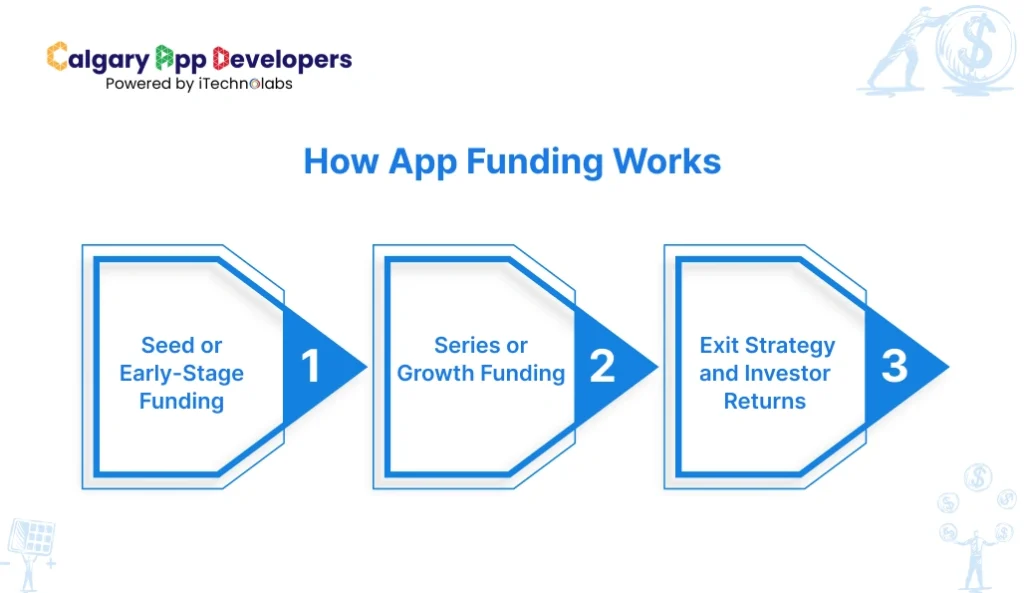
Understanding how app funding works is essential for approaching investors confidently and effectively. Funding for a mobile app is usually structured in stages, each designed to support specific phases of development, growth, and scaling. By knowing these stages and what investors expect, you can better position your startup and increase your chances of securing the right investment.
1. Seed or Early-Stage Funding
Seed funding is typically the first round of investment and is used to turn your idea into a tangible product. This stage covers costs such as:
- Developing a minimum viable product (MVP)
- Conducting market research and testing the concept
- Initial marketing and user acquisition efforts
Investors at this stage are taking higher risks because the app is not yet proven in the market. They evaluate factors such as your team’s experience, the uniqueness of your app, and the potential market size.
2. Series or Growth Funding
Once your app shows traction and a validated business model, growth funding rounds focus on scaling. The funds may be used for:
- Expanding app features and functionality
- Increasing marketing campaigns to acquire more users
- Hiring additional team members or expanding operations
Investors in this stage expect evidence of traction, such as user metrics, revenue growth, or engagement data. They also assess scalability and long-term profitability before committing capital.
3. Exit Strategy and Investor Returns
All investors aim to see a return on their investment. This can come from a variety of outcomes, including acquisitions, app monetization, or public offerings. Understanding this helps you align your strategy with investor expectations. Clear projections of revenue, user growth, and market share make your startup more attractive to potential backers.
Also Read: How to Find a Trustworthy App Developer & Protect Your App Idea?
Types of App Investors
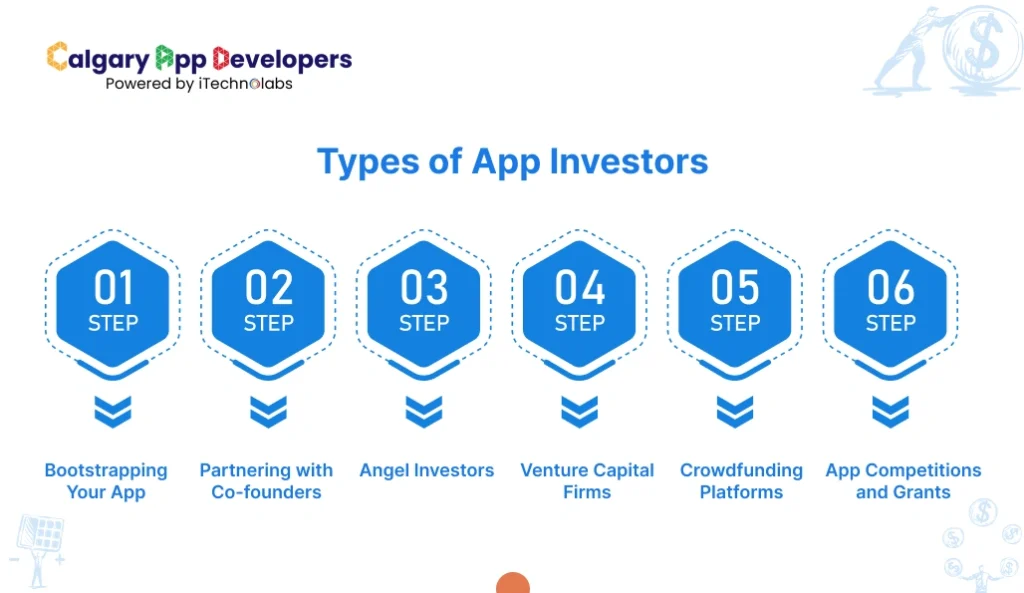
When you want to find app investors for your mobile app startup, knowing the different sources of funding can help you choose the right approach. Each type has advantages and trade-offs depending on your stage, app idea, and growth plans.
- Bootstrapping Your App: This means funding your app using your own money or revenue from other sources. It gives you full ownership and control over your project without outside influence. The main advantage is independence, but it can limit how quickly you can scale, especially if development costs are high. Bootstrapping works well for small apps or MVPs where initial costs are manageable.
- Partnering with Co-founders: Bringing in a co-founder who can contribute capital, technical skills, or business expertise is a common way to reduce financial pressure. Co-founders share both risk and responsibility, which can strengthen your startup. However, equity sharing and decision-making dynamics need to be clearly defined to avoid conflicts later.
- Angel Investors: Angel investors are individuals who invest personal funds into early-stage startups. They often provide smaller amounts of capital compared to venture capital but bring valuable guidance, mentorship, and industry connections. Angel investors typically look for innovative ideas, early traction, and a strong founding team.
- Venture Capital Firms: Venture capital (VC) firms invest larger sums in startups with high growth potential. They usually come in during later stages, after the app has shown some traction. VC funding can accelerate development, marketing, and scaling, but it often comes with demands for equity, reporting, and some control over business decisions.
- Crowdfunding Platforms: Crowdfunding allows you to raise small amounts of money from a large number of people, usually through platforms like Kickstarter, Indiegogo, or GoFundMe. This method not only generates funding but also validates your app idea and builds an early community of users. Crowdfunding works best for apps with clear consumer appeal.
- App Competitions and Grants: Startup competitions and grants provide funding without requiring equity in return. Competitions often include mentorship and exposure to investors, while grants from governments or organizations support innovation in specific sectors. Winning these opportunities can enhance credibility and attract additional funding from other sources.
Read Also: How to Build MVP for Startup
Estimating the Investment for Your App
Before you start seeking investors, you need a clear picture of how much funding your app requires. Investors expect founders to have realistic budgets and a plan for how the money will be used. This not only builds credibility but also helps you target the right type of investor.
How Much Funding You Need
The amount of funding required for your app depends on its development stage, feature set, and growth plans. Breaking this down in a table helps visualize the investment needed and makes it easier to present to potential investors.
| App Stage | Description | Typical Funding Range | What It Covers |
| Early-stage MVP | Basic version to test your idea | $5,000 – $25,000 | Simple design, core functionality, initial testing, and limited user feedback |
| Feature-rich App | Full version with advanced functionality | $30,000 – $150,000+ | Complex features, integrations, backend systems, multi-platform support, and extended testing |
| Scaling & Growth | Post-launch expansion | $10,000 – $50,000+ | Marketing campaigns, server costs, app updates, user acquisition, and ongoing support |
Cost to Develop and Launch a Mobile App
Estimating the cost to develop and launch a mobile app is crucial when you want to find investors for an app. Breaking down costs into categories helps investors see exactly where their funds will be used.
| Cost Component | Description | Typical Cost Range (2026) |
| Design | UI/UX design including screens, layouts, and animations | $1,000 – $15,000 |
| Development | Building app functionality, backend, and integrations | $5,000 – $100,000 |
| Testing and QA | Bug fixes, usability testing, and performance optimization | $1,000 – $10,000 |
| App Store Fees | Google Play and Apple App Store registration fees | $25 – $99 per year |
| Marketing and Launch | Pre-launch campaigns, influencer marketing, app store optimization | $5,000 – $50,000 |
| Maintenance and Updates | Regular updates, server costs, and feature upgrades | $500 – $5,000 per month |
For example, a simple fitness tracking app for both Android and iOS with standard features might cost around $25,000 for development and $5,000 for initial marketing. That brings the total early-stage funding need to approximately $30,000.
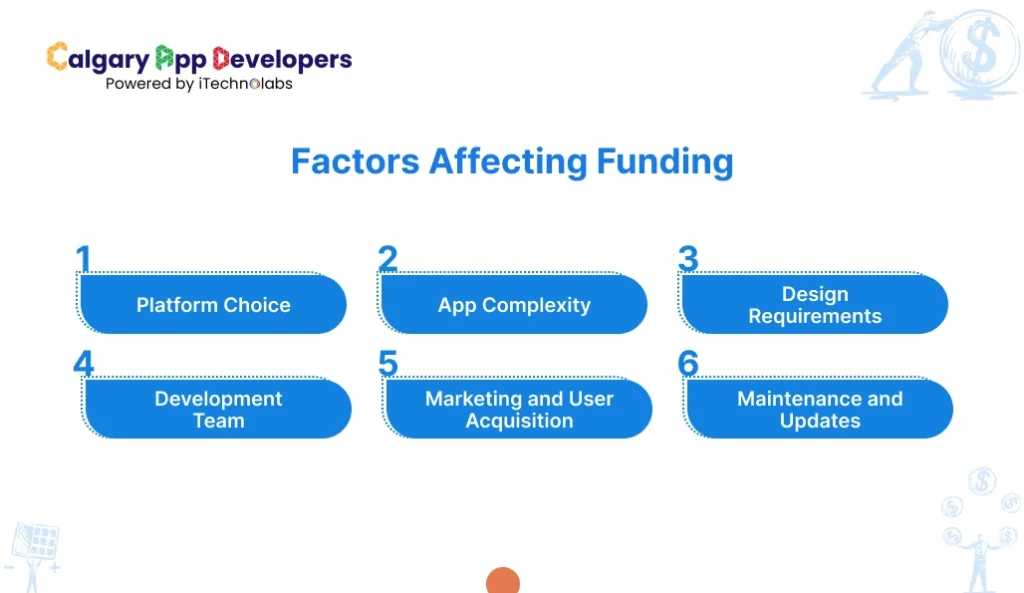
Factors Affecting Funding
-
Platform Choice
Developing for a single platform like Android or iOS costs less, typically reducing development by 30–40%. Building for both platforms or using native apps increases costs, while cross-platform frameworks like Flutter or React Native can save money but may require trade-offs in performance.
-
App Complexity
Apps with basic functionality are cheaper. Adding features like real-time chat, AI, AR/VR integration, payment gateways, or location tracking increases both development and testing costs significantly.
-
Design Requirements
Custom UI/UX designs with animations, transitions, and interactive elements are more expensive than using standard templates. Professional designers can charge from $1,000 to $15,000 depending on complexity.
-
Development Team
Choosing the right development team can have a big impact on both cost and quality. Hiring freelancers may reduce expenses but can extend timelines due to limited availability or coordination challenges. Agencies, on the other hand, offer faster delivery, structured project management, and reliable quality assurance, though at a higher cost. Cities like Calgary have a growing tech ecosystem with skilled developers and agencies, making them an attractive option for startups looking for professional app development without the premium prices of larger markets.
-
Marketing and User Acquisition
Even a well-built app needs marketing to gain traction. Costs vary based on campaigns, channels, influencer partnerships, and app store optimization. Initial marketing can range from $5,000 to $50,000.
-
Maintenance and Updates
Post-launch maintenance includes bug fixes, OS updates, server management, and feature upgrades. Budgeting $500 to $5,000 per month depending on app complexity is realistic for long-term sustainability.
Also Read: Why Startups in the U.S. Are Hiring Fractional Dev Teams
Preparing Your App for Investment
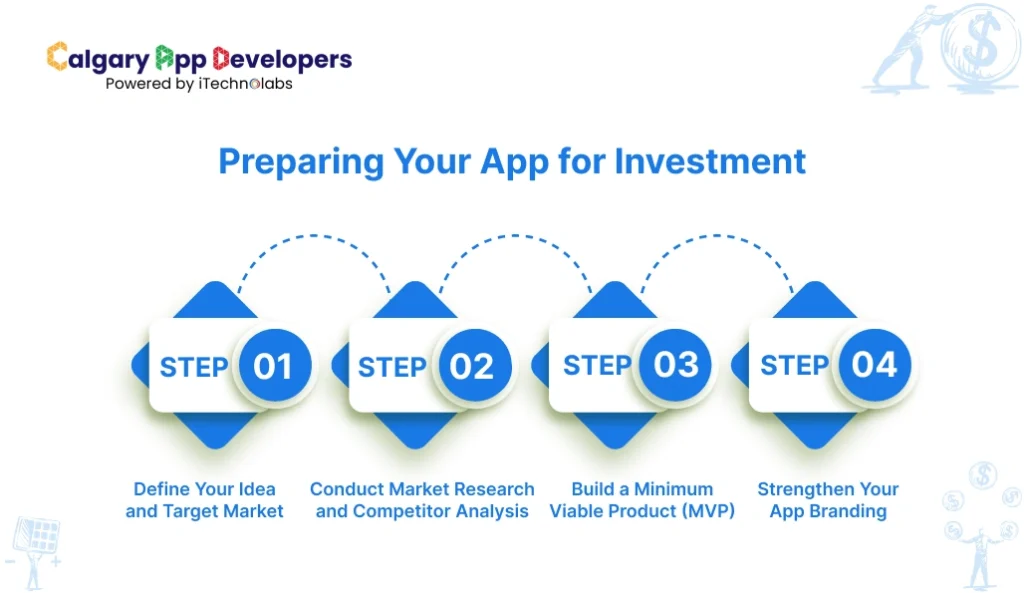
Before approaching investors, preparation is critical. Investors are more likely to fund startups that demonstrate a clear plan, market understanding, and growth potential. Knowing how to find investors for an app starts with presenting a well-structured strategy and showing that your app has a solid foundation. Thorough preparation also signals professionalism, which increases investor confidence and differentiates your startup from others competing for funding.
-
Define Your Idea and Target Market
Your app idea should clearly address a specific problem or need in the market. Define the core purpose of your app, the audience it serves, and why it matters to users. Understanding your target market is essential because investors want to see evidence that you know who will use your app, how they behave, and why they will choose your product over alternatives. The more precisely you define your audience and their pain points, the easier it is to demonstrate market demand and potential revenue opportunities.
-
Conduct Market Research and Competitor Analysis
Thorough market research helps identify trends, customer preferences, and gaps in existing solutions. Analyzing competitors allows you to understand what works, what does not, and where your app can stand out. This insight reassures investors that you have a clear strategy to differentiate your product, reduce risk, and position your app effectively in the market. It also allows you to anticipate challenges and craft strategies to overcome barriers to entry, which adds credibility when pitching to investors.
-
Build a Minimum Viable Product (MVP)
An MVP is a functional version of your app with only the core features needed to demonstrate value. It allows you to test your concept with real users, gather feedback, and refine the product. Presenting an MVP to investors shows that your idea has practical viability and demonstrates exactly how their investment will be used to grow the product. A well-executed MVP also provides valuable metrics and insights, which can strengthen your pitch and support projections for user adoption and growth.
-
Strengthen Your App Branding
Branding is more than visual design. It represents your app’s identity, values, and the experience users can expect. A strong brand signals professionalism, credibility, and market readiness. Elements such as a polished website, consistent visual design, and a clear narrative about your app’s purpose make your startup more appealing to investors. Thoughtful branding also conveys a long-term vision and commitment to quality, which investors view as a strong indicator of your startup’s potential for success.
By completing these steps, you create a structured and compelling case for investors. This preparation is essential for anyone looking to learn how to find investors for an app and secure the funding needed to move from concept to launch. With a clear plan, validated product, and strong brand presence, you demonstrate readiness to execute and scale, which significantly increases your chances of attracting the right investors.
Read Also: Building Canadian Startup on Budget: Tips for New Founders
Finding the Right App Investors
Securing funding is not just about getting money. The right investors bring experience, networks, and guidance that can significantly impact the success of your mobile app startup. Knowing how to find app investors effectively means identifying those who align with your startup’s vision, stage, and market.
1. Best Ways to Find Investors for a Mobile App
There are multiple avenues to connect with potential investors. Each has its advantages depending on your app’s stage and target market:
- Networking Events and Meetups: Industry conferences, tech events, and startup meetups are excellent for face-to-face interaction. Investors attending these events are often looking for promising startups, and personal connections can increase your credibility.
- Online Platforms: Websites like AngelList, LinkedIn, SeedInvest, and crowdfunding platforms connect startups with a wide range of investors globally. Online platforms make it easier to reach investors who may not be local but are actively seeking mobile app opportunities.
- Startup Accelerators and Incubators: These programs provide early-stage funding, mentorship, and access to a network of investors. They also serve as a credibility signal, showing investors that your startup has been vetted and supported by industry experts.
- Referrals and Introductions: Leveraging existing professional networks to get warm introductions to investors significantly increases your chances of getting noticed. Investors are more likely to respond to a trusted referral than a cold outreach.
- Industry Competitions and Pitch Events: Participating in app competitions or startup pitch events can attract investor attention. Winning or even presenting in these events validates your idea and demonstrates market potential, making it easier to secure funding.
2. How to Identify the Right Fit for Your Startup
Finding investors is not only about who has money but also who can help your app grow. Consider these factors:
- Investment Stage Preference: Some investors specialize in seed-stage funding, while others focus on growth-stage startups. Align your funding stage with the investor’s focus to improve the chances of success.
- Industry Expertise: Investors with experience in your app’s sector bring valuable guidance, connections, and credibility. Their insights can help you avoid common mistakes and accelerate growth.
- Investment Size and Terms: Ensure the investor can provide the required funding and that their expectations regarding equity, control, and returns align with your startup’s plan.
- Networks and Connections: Investors with strong industry networks can help with partnerships, marketing, hiring, and scaling operations, adding value beyond the capital.
- Reputation and Track Record: A solid history of successfully funding startups indicates reliability and can add credibility to your venture, making it easier to attract additional investors.
Approaching the right investors saves time and increases your startup’s chance of success. Investors aligned with your vision are more likely to offer ongoing support, mentorship, and introductions that accelerate growth. Learning how to find app investors strategically ensures that your startup not only secures funding but also builds the relationships necessary for long-term success.
Creating a Winning Pitch
Securing investment for your mobile app requires more than a great idea. Mobile app investors are looking for clear, compelling evidence that your app has potential for growth, revenue, and long-term success. A well-structured pitch communicates this efficiently and makes investors confident in your startup.
1. How to Build a Pitch Deck That Converts
A pitch deck is your startup’s story in visual form. It should be concise, engaging, and data-driven. Here are key principles to keep in mind when building a pitch deck for mobile app investors:
- Keep It Simple and Direct: Your deck should explain the problem your app is solving, the solution it provides, and why it is special and avoid cluttered content, focusing more on content that shows potential value.
- Use Data and Evidence: Mobile app investors respond to things they can measure. Include market research, or user metrics, or other noticeable evidence that shows early traction in your MVP to show market demand.
- Tell a Story: Investors are more likely to remember your app if you present it through a narrative. Share the problem, say this is the app that you believe is the solution, and share the impact your app can make on the user or the market.
- Design Matters: A visually appealing deck reinforces professionalism and credibility. Use clean layouts, readable fonts, and consistent branding to leave a strong impression.
2. What to Include in Your Presentation
Your pitch deck should cover key areas that investors expect to see:
- Problem and Solution: Clearly define the problem your app addresses and explain how your app provides a practical, innovative solution.
- Market Opportunity: Show the size of the market, target audience, and growth potential. This demonstrates that your app has room to scale and generate revenue.
- Business Model: Explain how your app will make money, including pricing, subscription plans, or monetization strategies.
- Traction and Validation: Present evidence that your app works in the market. Metrics from your MVP, beta users, or pre-launch campaigns help prove viability.
- Competitive Analysis: Highlight competitors, your differentiation, and why users would choose your app over existing options.
- Go-to-Market Strategy: Describe how you plan to attract users, build engagement, and scale your app.
- Team: Showcase the experience and skills of your founding team. Investors invest in people as much as in ideas.
- Financials and Funding Needs: Include projected revenue, expenses, and how much funding you need. Be clear about how investor capital will be used.
A strong pitch deck is a critical tool when approaching mobile app investors. It demonstrates that you have done the necessary research, understand your market, and are prepared to use investment wisely. A clear, compelling, and professional presentation can significantly increase your chances of securing the funding needed to bring your app to life.
Gaining Investor Trust
Finding funding is only part of the journey. Mobile app investors want to know that their investment is in capable hands. Building trust and maintaining credibility is essential for securing funding and fostering long-term relationships. Understanding how to find investors for an app involves not just identifying potential backers but also showing that you are reliable, professional, and transparent.
1. How to Build Credibility with App Investors
Credibility is built before and during the pitch process. Investors evaluate founders based on their preparation, knowledge, and ability to execute. Key ways to establish credibility include:
- Demonstrate Market Knowledge: Show a deep understanding of your target audience, market trends, and competitive landscape. Investors trust founders who know their market inside out.
- Show Evidence of Traction: Even minimal traction from an MVP, early downloads, or user engagement indicates that your app has potential. Numbers and metrics provide proof that your concept works.
- Professional Presentation: A polished pitch deck, clear communication, and well-organized documentation signal professionalism and preparation.
- Expert Team: Highlight the skills and experience of your team members. Investors invest in teams as much as ideas. A capable and committed team builds confidence.
2. Maintaining Transparency After Funding
Trust continues after funding is secured. Investors expect regular updates and honesty regarding progress, challenges, and financials. Maintaining transparency helps strengthen relationships and may increase the likelihood of additional funding in the future. Key practices include:
- Regular Reporting: Provide updates on development milestones, user metrics, financial performance, and marketing progress.
- Open Communication: Be upfront about challenges, delays, or setbacks. Investors value honesty and problem-solving over concealment.
- Financial Accountability: Clearly show how funds are used. Detailed reports and budgets reassure investors that their capital is managed responsibly.
Building and maintaining trust is essential for anyone learning how to find investors for an app. It ensures that investors are confident in your ability to execute, supports long-term partnerships, and positions your startup for continued success.
Read Also: MVP Development Services for Startups in Canada
Key Steps to Secure App Funding
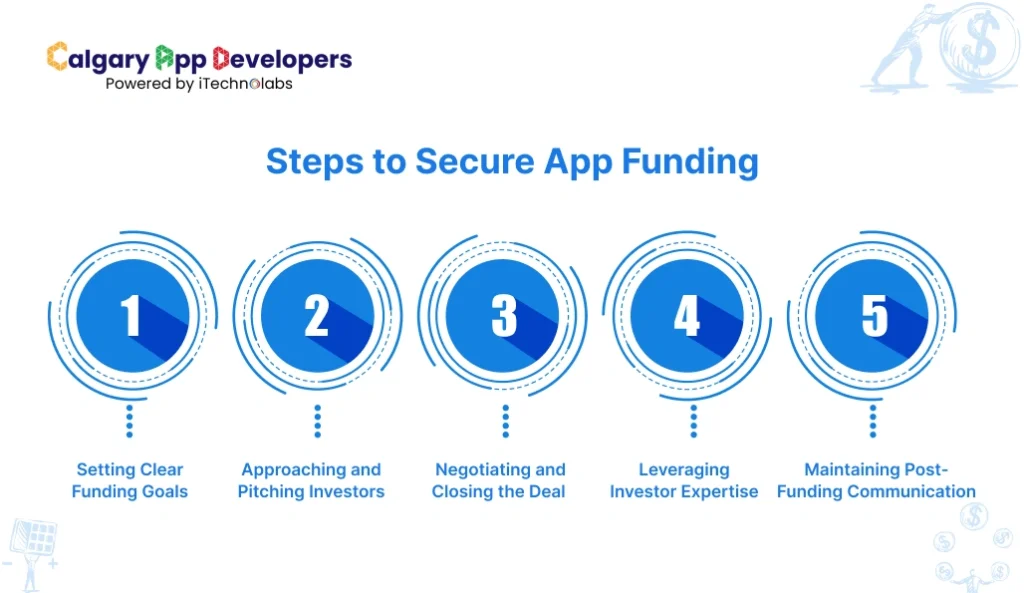
Securing funding is a structured process that goes beyond identifying potential investors. Understanding each step increases your chances of success and ensures that the investors you target are aligned with your vision. Learning how to find app investors is only the first part; you also need to plan your approach, pitch effectively, and negotiate terms that support your startup’s growth.
1. Setting Clear Funding Goals
Before reaching out to investors, define exactly how much funding you need and what it will be used for. Clear funding goals demonstrate preparation and credibility. Consider breaking your funding requirements into categories such as:
- App development and design
- Marketing and user acquisition
- Operational costs and maintenance
- Contingency for unexpected expenses
Having specific, realistic goals makes it easier for investors to understand the scale of your project and the impact of their investment.
2. Approaching and Pitching Investors
Once your goals are clear, identify investors who align with your stage, industry, and funding requirements. Approaching the right investors increases efficiency and the likelihood of a positive response. Key steps include:
- Personalized Outreach: Tailor your message to each investor, highlighting why your app fits their investment profile.
- Professional Pitch Deck: Present a clear, concise, and visually appealing pitch that communicates the problem, solution, market opportunity, and growth potential.
- Follow-up and Engagement: Maintain communication after the initial pitch. Answer questions, provide additional information, and demonstrate enthusiasm and commitment.
3. Negotiating and Closing the Deal
After securing investor interest, negotiations define the terms of funding. Focus on transparency, fairness, and aligning expectations:
- Equity and Ownership: Clearly define how much equity investors will receive and how it affects your control over the startup.
- Milestones and Deliverables: Agree on funding tranches tied to development milestones, performance metrics, or product launches.
- Legal and Financial Documentation: Ensure all agreements are formalized through proper contracts, protecting both parties and avoiding future disputes.
4. Leveraging Investor Expertise
Investors bring more than money to the table. Engage them as mentors and advisors to gain strategic guidance, industry connections, and insights into scaling your app. Demonstrating openness to collaboration can strengthen relationships and increase investor confidence in your startup.
5. Maintaining Post-Funding Communication
Securing funding is not the final step. Regular updates, progress reports, and transparent communication ensure investors remain confident in your execution. Providing clear reports on milestones, revenue, and challenges builds trust and positions your startup for potential future funding rounds.
Following these five steps ensures your approach to funding is structured, professional, and effective. Learning how to find app investors is only the beginning; planning, pitching, leveraging expertise, and maintaining transparent communication will help secure the capital needed to bring your app to market and drive sustainable growth.
Also Read: Top Features to Include in Your Next App Platform Calgary Project
How & Where to find investors in the USA & Canada?
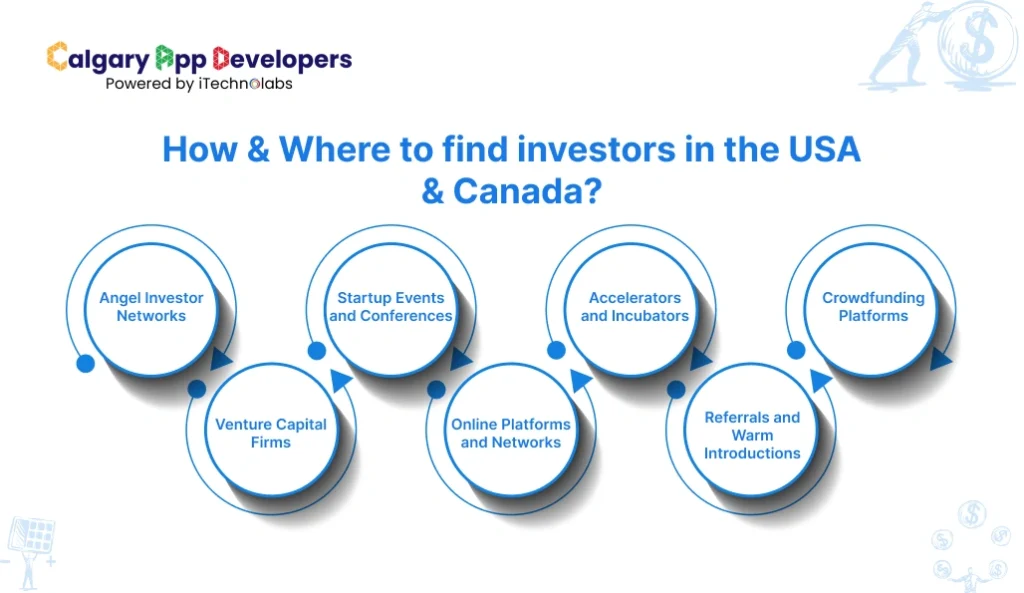
Securing funding for a mobile app in the USA and Canada requires a strategic approach. Investors are not just sources of capital; they bring mentorship, networks, and market expertise. Here’s how to identify and connect with the right investors.
-
Angel Investor Networks:
Angel investors often fund early-stage startups and provide valuable guidance. In the USA, networks such as AngelList, Tech Coast Angels, and Golden Seeds allow founders to connect with investors actively seeking tech and mobile app opportunities.
In Canada, Maple Leaf Angels, Angel One Network, and Platform Calgary provide similar access. These networks let you filter investors by industry, funding stage, and location, making it easier to target those aligned with your startup.
-
Venture Capital Firms:
Venture capital (VC) firms typically invest in startups with high growth potential. In the USA, notable firms include Sequoia Capital, Accel, and Andreessen Horowitz.
In Canada, Real Ventures, Inovia Capital, and Platform Calgary’s investment initiatives offer funding and strategic support for tech startups. Research each firm’s portfolio, investment focus, and stage preferences to ensure your app aligns with their objectives.
-
Startup Events and Conferences:
Face-to-face networking is essential for establishing credibility and building relationships. In the USA, conferences like TechCrunch Disrupt, Startup Grind, and Collision Conference attract investors seeking high-potential startups.
In Canada, Elevate Toronto, Startupfest Montreal, SaaS North Ottawa, and Platform Calgary-hosted events provide opportunities to pitch directly to investors. Prepare a concise pitch and supporting materials to make a strong impression.
-
Online Platforms and Networks:
Digital platforms expand your reach beyond local networks. LinkedIn, SeedInvest, and Crowdcube allow you to present your startup, showcase traction, and connect with investors who specialize in mobile apps.
Engaging in online communities and forums also provides insights into investor priorities and emerging market trends.
-
Accelerators and Incubators:
Accelerators and incubators offer funding, mentorship, and investor connections. In the USA, programs such as Y Combinator, 500 Startups, and Techstars are highly respected. In Canada, Creative Destruction Lab, MaRS Discovery District, Founder Institute, and Platform Calgary support startups through structured programs that enhance credibility and growth potential. Participation signals to investors that your startup has been vetted and guided by experienced industry mentors.
-
Referrals and Warm Introductions:
Warm introductions significantly improve your chances of securing funding. Leverage existing networks, advisors, and mentors to connect with investors.
A trusted referral carries more weight than a cold approach and can lead to more meaningful investor conversations.
-
Crowdfunding Platforms:
Crowdfunding provides early-stage capital and market validation simultaneously. Platforms like Kickstarter, Indiegogo, and GoFundMe allow startups to demonstrate demand while attracting attention from investors in the USA and Canada.
Strong engagement on these platforms can act as proof of concept, making your startup more appealing to professional investors.
Finding investors in North America is about more than having a strong app idea. It requires understanding the landscape, identifying investors who align with your stage and market, and building credibility through preparation, research, and relationship-building. Leveraging networks, events, accelerators, and digital platforms, including resources like Platform Calgary, position your startup for funding success and long-term growth.
Read Also: Top Reasons USA Firms Choose Calgary App Developers
Conclusion
Finding the right funding is one of the most important steps in turning your mobile app idea into a successful business. Knowing how to find investors for an app is not just about identifying potential backers; it is about preparation, strategy, and building trust. From understanding different types of investors and estimating your funding needs to creating a compelling pitch and maintaining credibility, each step plays a crucial role in attracting the right partners.
By clearly defining your app idea, conducting thorough market research, building a minimum viable product, and presenting a professional pitch, you position yourself to secure investment that aligns with your goals. Maintaining transparency and fostering strong relationships with investors ensures long-term support and sets the stage for sustainable growth.
Ultimately, learning how to find investors for an app is a combination of research, planning, and execution. With the right approach, your startup can gain the funding, mentorship, and connections needed to turn your vision into a successful and scalable mobile app.
FAQ’s on Mobile App Investors:
1. How Can I Find Investors for My Mobile App?
Finding investors starts with research and networking. Identify investors who focus on mobile apps or your specific industry, attend startup events, leverage online platforms like AngelList, and seek warm introductions through your professional network. A well-prepared pitch and clear funding plan significantly increase your chances of attracting serious investors.
2. How Do I Get Funding to Launch an App?
Funding an app can come from multiple sources: bootstrapping, co-founders, angel investors, venture capital, crowdfunding, or startup competitions. Start by defining your funding requirements, building an MVP, and preparing a compelling pitch. The more prepared and credible you appear, the more likely investors are to support your app financially.
3. I Have an App Idea but No Capital. What Should I Do?
If you have an idea but no funds, focus on low-cost ways to validate it. Build a simple MVP, seek co-founders or angel investors, participate in competitions, or explore crowdfunding platforms. Demonstrating traction and market potential can help you secure the initial investment needed to develop and launch your app.
4. How Can I Find an Investor for My Startup Idea?
Start by identifying investors who align with your startup’s stage, industry, and vision. Attend industry events, use online networks, and leverage referrals to get introductions. A clear business plan, strong pitch deck, and early traction increase investor confidence and improve your chances of securing funding for your app.
5. How Much Funding Do I Need to Start a Mobile App?
The funding required depends on your app’s complexity, platform, and stage. A simple MVP may need $5,000–$25,000, while a full-featured app can cost $30,000–$150,000 or more. Include costs for design, development, marketing, and maintenance. Accurate budgeting shows investors that your funding request is realistic and well-planned.
6. Top Cities in North America to start a startup?
In the USA, cities like San Francisco, New York, Austin, and Boston lead the startup scene, offering access to investors, talent, and tech infrastructure. In Canada, Toronto, Vancouver, Montreal, and Calgary stand out for strong tech ecosystems, supportive accelerators, and growing investor networks. These cities combine resources, mentorship, and market opportunities, making them ideal for launching and scaling a mobile app startup.


Pankaj Arora is a seasoned technology leader and the Founder of Calgary App Developer, with 10+ years of expertise in crafting high-performance digital solutions. His core competencies include full-stack app development, cloud-native architecture, API integration, and agile product delivery. Under his leadership, Calgary App Developers has empowered startups and enterprises alike with scalable mobile applications, secure web platforms, and AI-driven SaaS products.