





Top 25 Best Restaurant Management Software in 2026
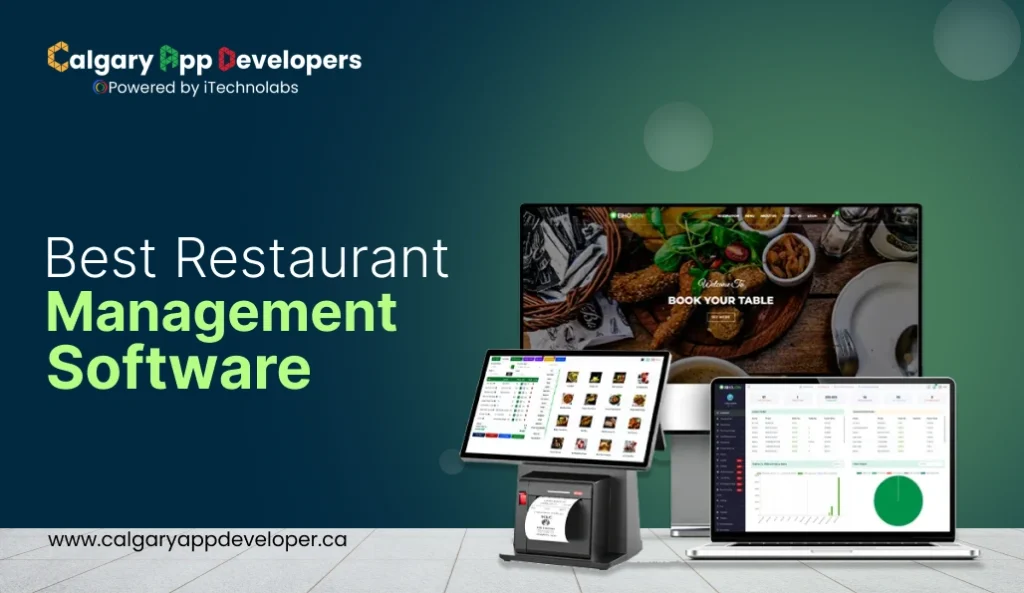
Running a restaurant today is about far more than delicious food and friendly service. What this really means is that operations, staffing, orders, inventory, and customer experience all must work in sync. Software designed for restaurant management is no longer a nice-to-have; it has become a decisive factor in whether a business thrives or stalls.
And the numbers tell the story clearly. The global restaurant management software market was valued at around USD 5.69 billion in 2024 and is projected to grow to approximately USD 28.03 billion by 2034, at a compound annual growth rate of about 17.3 percent.
When you pair that with the fact that the wider restaurant and foodservice industry is expected to hit USD 4.03 trillion in 2025, you see the scale of opportunity that modern tools unlock.
For a restaurant owner, manager or owner, it is clear: choosing the right tools isn’t simply a matter of convenience. It’s about unlocking performance, speeding up decisions, elevating guest experience and boosting sales.
In the sections that follow, we’ll explore the top software solutions geared for this purpose and how each one contributes to smarter operations and stronger growth.
- Restaurant management software helps teams work smarter and boosts overall sales.
- The right platform improves ordering, staffing, inventory control and guest experience.
- Modern tools support both growth and day-to-day efficiency for any restaurant.
- Choosing software that fits your operation leads to smoother service and better decisions.
- Restaurant management software has become essential because it connects operations, staff and customer experience in one system.
- Modern tools streamline ordering, reservations, inventory management and reporting so restaurants can work with more accuracy and less effort.
- Direct ordering platforms help restaurants reduce commission costs while keeping full ownership of their customer relationships.
- Advanced POS systems support faster service, better payment options and stronger insights into sales patterns.
- Scheduling and labor tools improve shift planning, reduce conflicts and help managers maintain cost control.
- Websites and online ordering platforms strengthen a restaurant’s digital presence and attract more diners.
- Customizable systems and integrated suites give restaurants the flexibility to grow without being limited by preset templates.
How We Evaluated Restaurant Management Software
Most restaurant software looks impressive on paper but falls apart during a real dinner rush. To make this guide genuinely useful, we evaluated each platform through the lens of daily restaurant operations, not feature checklists or brand recognition. The goal was to highlight systems that actually help restaurants run better, serve guests faster, and scale without friction.
Below are the criteria that guided our evaluation.
- Built for Real Restaurant Workflows: We looked at how well each platform supports actual restaurant operations, including dine-in service, takeout, delivery, cloud kitchens, and multi-setups. Software designed specifically for hospitality ranked higher than general-purpose tools.
- Ease of Use for Staff and Managers: Speed matters in restaurants. We evaluated how intuitive each system feels for servers, cashiers, kitchen teams, and managers, with attention to training time, screen layout, and day-to-day usability.
- Menu, Order, and Inventory Accuracy: Small mistakes add up quickly. We reviewed how effectively each platform handles menu updates, modifiers, recipe costing, and real-time inventory tracking to reduce waste, errors, and lost revenue.
- Integration and Operational Flexibility: Restaurants rely on more than one tool to operate smoothly. We assessed how easily each system connects with POS hardware, online ordering, reservations, accounting software, and delivery platforms.
- Scalability as the Business Grows: What works for one location should still work for five. We evaluated how well each platform supports higher order volumes, new outlets, franchises, and evolving service models without forcing a costly migration later.
- Reporting That Drives Better Decisions: Data is only useful when it is clear. We examined reporting quality, sales insights, labor visibility, and performance analytics that help managers spot issues early and act quickly.
- System Reliability and Support Quality: Downtime during service is not an option. We considered system stability, offline capabilities, and how responsive customer support is when problems happen at critical moments.
- Pricing Clarity and Overall Value: Predictable costs matter. We reviewed how transparent pricing is, including subscriptions, add-ons, and long-term commitments, and whether the value matches what restaurants actually get.
Every platform featured in this blog was evaluated as a long-term operational partner, not just a software purchase. The systems highlighted here are built to support smoother service, smarter management, and sustainable growth for restaurants at every stage.
Top Restaurant Management Software for Real Growth
| Software | Launch Year | Starting Plan Pricing | USP/Highlights |
| TouchBistro | ~2010 | $69 Solo Plan | iPad-based system with strong menu, table and staff management plus flexible license tiers |
| Menufy | ~2018 | Approx. US $1.75 per order (with Clover POS integration) | Online ordering focus with built-in delivery tools, marketing features and loyalty programs |
| ChowNow | ~2011 | $99 (2-year annual plan) | Commission-free ordering with branded apps and flat, predictable pricing |
| Zoho Restaurant Suite | Not restaurant specific | Not restaurant-specific; Zoho Creator $8/user | Large business suite that can be customized for restaurant operations with integrated finance tools |
| Resy | 2014 | $249 (Basic Platform) | Reservation management with guest insights, analytics and American Express ecosystem reach |
| Clover POS | 2012 | $16 (Retail Starter Plan) | Hardware and software bundles for restaurants with flexible configurations |
| Supy | Not listed | Basic: $750/month (implementation cost) | Inventory and procurement platform with recipe control and multi-branch support |
| Bentobox | ~2017 | Starting at $119 | Restaurant websites with marketing automation and online ordering |
| Revel Systems | 2010 | Starting at $99 per terminal | iPad POS with offline mode and omnichannel integrations |
| Sling | Not listed | Free for up to 30 users, Premium $2/user | Employee scheduling, labor optimization and team messaging |
| Lightspeed Restaurant | 2012 | $69 Starter Plan | POS with payments, ordering, inventory and reporting |
| Toast POS | 2011 | $69 (Point of Sale plan) | Restaurant-focused POS with integrated hardware and scalable add-ons |
| Square POS | 2009 | Free plan available, Plus $49, Premium $149 | Simple setup with restaurant templates and scalable pricing |
| HungerRush | Not listed | Starting $99 | All-in-one restaurant system with marketing and online ordering |
| OpenTable | 1998 | $149/month + per diner fees | Reservation platform with table management and a large diner network |
| Upserve | 2009 | $59 Core, $199 Pro | Strong data insights, customizable workflows and staff management |
| Bbot | Not listed | Not listed | Digital ordering for contactless table service and payment |
| Squarespace | 2004 | $16 Basic Plan (annual billing) | Website builder with e-commerce and restaurant-friendly templates |
| 7Shifts | Not listed | Starts free, paid from $17/user | Labor scheduling, communication and compliance tools |
| Posist | Not listed | Pricing not clearly provided | All-in-one restaurant management with POS, CRM and analytics |
| Oracle MICROS | 1977 | Custom pricing | Enterprise-grade POS trusted by global chains with deep reporting and multi-location control |
| Loyverse | 2014 | Free plan available | Free POS with inventory tracking, loyalty programs, and basic analytics for small restaurants |
| Foodics | 2014 | Custom pricing | Cloud-based POS popular in MENA markets with strong inventory and franchise support |
| Eat App | 2015 | Starts around $129 | Reservation and guest management platform focused on fine dining and hospitality groups |
| Kounta | 2012 | Custom pricing | Cloud POS built for cafes and restaurants with real-time reporting and Xero integration |
1. TouchBistro

Here is the thing. TouchBistro is built specifically for restaurants, so everything about it feels familiar to anyone who has worked in service. It runs on iPads, which keeps the workflow light and fast, and its layout mirrors real dining room operations. Managers get better visibility into sales, menu performance and staff activity, which helps them make smarter decisions each day.
Key Features
- Tableside ordering that reduces wait times and helps staff handle more tables with smoother conversations.
- Detailed menu and modifier management that makes it easy to update dishes, specials and prices without confusion.
- Staff scheduling tools with insights on performance, clock-in and clock-out data and labor cost tracking.
- Inventory controls that link with menu items to show real usage, helping teams cut waste and predict stock needs.
- Reporting dashboards that break down sales, trends and shifts so managers can act faster and plan better.
2. Menufy

Menufy helps restaurants build a strong direct ordering system without dealing with heavy commissions that eat into profits. It supports both online ordering and delivery coordination, giving restaurants more freedom and control over customer relationships. What this really means is predictable revenue and a better long-term customer base.
Key Features
- Free basic setup that lets restaurants start receiving online orders instantly, with only a platform convenience fee applied.
- Custom branded ordering pages that match the restaurant’s identity, helping customers feel connected and confident.
- Built-in delivery tools that help restaurants manage orders, drivers, delivery zones and timing
- Loyalty programs that reward regular customers and keep them returning more often.
- Marketing and promotional tools that support upselling, coupon codes and customer engagement campaigns.
Also Read: How To Build Restaurant App For Food Ordering Business
3. ChowNow

ChowNow focuses on helping restaurants break free from commission-driven delivery platforms. It gives restaurants their own ordering system along with branded apps and reliable customer data. The strength of ChowNow is in long-term customer retention, not short-term order volume.
Key Features
- Commission-free ordering model that lets restaurants keep more of their revenue while building stronger relationships.
- Fully branded mobile apps and websites that make the restaurant look professional and consistent across all channels.
- Complete ownership of customer data, giving restaurants insight into buying patterns and loyalty behavior.
- Marketing automation tools for email campaigns, re-engagement offers and promotional messages.
- Easy integrations with POS systems so orders flow directly into existing workflows without extra steps.
4. Zoho Restaurant Suite

Zoho offers a broad ecosystem of tools that restaurants can customize to match their exact processes. Even though it is not built only for restaurants, it becomes incredibly powerful when set up with workflows for inventory, finance, menu planning and customer management. It suits businesses that want everything connected under one roof without jumping between different systems.
Key Features
- Customizable apps built through Zoho Creator that support menu engineering, order management and daily operations.
- Integrated finance and billing tools that simplify accounting, invoicing and payment tracking.
- Inventory and stock tracking with automated alerts that help prevent shortages and overpurchasing.
- CRM tools that allow customer segmentation, communication and personalized marketing.
- Analytics across all Zoho applications that reveal trends, performance issues and opportunities for improvement.
Also Check: Custom Software Development in Canada: Guide for Canadian Businesses
5. Resy

Resy helps restaurants deliver a smoother reservation and guest experience from start to finish. Its design supports busy dining rooms with pacing tools, waitlist management and deep guest insights. Restaurants also benefit from Resy’s connection with the American Express network, which helps attract more high-value diners.
Key Features
- Smart reservation management that improves seating flow and reduces empty tables during peak hours.
- Guest profiles that store preferences, visit history and special notes, helping staff personalize every visit.
- Real-time waitlist tools that organize walk-ins, estimated times and table assignments more efficiently.
- Analytics that track booking patterns, cancellations, peak traffic periods and guest behavior.
- Access to the American Express dining audience, which strengthens visibility among frequent diners.
6. Clover POS

Clover works well for restaurants that want a flexible combination of hardware and software. It supports both counter service and full service setups, which makes it easy for teams to adapt without much training. What this really means is smoother daily operations and a system that grows with the business.
Key Features
- A wide range of hardware options that include handheld devices, countertop stations and kitchen displays for better workflow.
- Menu and order customization tools that help staff handle modifiers, combos and special requests with fewer errors.
- Built-in payment processing that supports cards, wallets and contactless options for faster checkout.
- App marketplace with add-ons for loyalty, accounting, marketing and delivery management.
- Employee time tracking and basic labor controls that support daily scheduling needs.
Read Also: How to Create Restaurant Inventory Tracking Software
7. Supy

Supy focuses strongly on procurement and inventory, which makes it ideal for restaurants with multiple branches or large supply needs. It helps teams track ingredient usage, purchase orders and supplier relationships in a more organized way. The platform brings structure to operations that usually get messy behind the scenes.
Key Features
- Centralized inventory tracking that connects recipes, ingredients and usage patterns for better forecasting.
- Supplier and procurement management tools that automate purchase orders and track delivery accuracy.
- Recipe management with cost calculations that show exactly how each dish affects profit margins.
- Multi-branch monitoring that helps owners compare performance and purchasing patterns across locations.
- Real-time insights that highlight stock shortages, waste issues and pricing inconsistencies.
8. Bentobox

Bentobox helps restaurants present a strong online presence with a website designed specifically for hospitality needs. It supports online ordering, menu updates, gift cards and marketing tools in one place. Here is the thing. It gives restaurants a polished brand image without needing a dedicated designer.
Key Features
- Restaurant-friendly website templates that showcase menus, photos, reservations and online orders.
- Built-in online ordering that sends direct customers to the restaurant instead of third-party platforms.
- Email marketing tools for promotions, announcements and repeat customer engagement.
- SEO features that improve online visibility and help new diners discover the restaurant.
- Integrations with reservations, POS systems and loyalty programs for a unified digital experience.
9. Revel Systems

Revel Systems is a powerful iPad POS built for restaurants that need reliability and advanced management tools. It offers strong offline mode support, so operations continue even if internet connectivity drops. Restaurants with multiple locations appreciate how easy it is to manage everything from one dashboard.
Key Features
- Hybrid cloud and offline mode that keep ordering and payments running during outages.
- Advanced reporting with insights on sales trends, employee performance and multi-location comparisons.
- Kitchen display system that streamlines communication between servers and the kitchen team.
- Integrated online ordering and delivery management tools.
- Inventory tracking with automated depletion linked to menu items for accurate stock control.
10. Sling

Sling is built to simplify scheduling, communication and labor control for restaurants. It helps managers organize shifts, reduce scheduling conflicts and maintain labor compliance. What this really means is fewer staffing problems and smoother shift planning every week.
Key Features
- Drag-and-drop scheduling that allows managers to build weekly or monthly shifts with ease.
- Messaging tools that keep teams aligned with announcements, shift changes and daily updates.
- Labor cost tracking that shows how schedules affect profitability.
- Availability and shift swap features that reduce last-minute staff issues.
- Time clock integration that brings attendance and payroll data into one place.
11. Lightspeed Restaurant

Lightspeed Restaurant works well for modern dining spaces that want a connected system for orders, payments and analytics. It supports everything from quick service to fine dining, and its cloud-based setup helps managers keep track of operations from anywhere. Here is the thing. It gives restaurants a clearer view of what drives their performance each day.
Key Features
- Fast order entry that supports tableside service, counter service and bar operations
- Integrated payments that speed up checkout and reduce errors at the register
- Inventory tracking with ingredient-level control and automated low stock alerts
- Menu management that supports seasonal items, modifiers and real-time updates
- Reporting tools that highlight sales trends, top performers and operational bottlenecks
Also Read: Restaurant Management Software Development Guide
12. Toast POS

Toast POS is built specifically for restaurants, so every feature is shaped around real service challenges. It offers reliable hardware, a smooth ordering flow and a wide range of add-ons for loyalty, online ordering and payroll. What this really means is a system that adapts as the restaurant grows.
Key Features
- Purpose-built hardware that holds up well in busy kitchens and high-volume dining rooms.
- Tableside ordering and payments that help staff turn tables faster and improve guest experience.
- Integrated online ordering and delivery modules that reduce dependence on third-party apps.
- Payroll and team management tools that simplify compliance and daily HR work.
- Detailed performance dashboards for menu insights, sales patterns and operational forecasting.
13. Square POS

Square POS is known for being easy to set up and simple to use, which makes it a popular choice for small and mid-sized restaurants. It supports both takeout and dine-in operations, and its flexible add-ons help restaurants grow at their own pace.
Key Features
- Free starter plan that gives new restaurants an easy entry point.
- Menu and order management with intuitive controls and quick setup.
- Built-in payment processing with support for cards, wallets and contactless payments.
- Add-ons for loyalty, marketing, invoicing and online ordering.
- Real-time analytics that show sales breakdowns, busy hours and customer behavior.
14. HungerRush

HungerRush is an all-in-one system built for restaurants that want to combine POS, online ordering and marketing in one place. It gives restaurants more control over customer engagement and makes daily operations more predictable.
Key Features
- Full-service POS that coordinates front-of-house and kitchen workflows.
- Online ordering tools that send customers directly to the restaurant instead of third-party apps.
- Integrated marketing features that support email campaigns, promotions and customer retention.
- Delivery management that tracks drivers, delivery zones and order timing.
- Reporting dashboards with insights into sales, labor and order trends.
15. OpenTable

OpenTable is one of the most recognized reservation platforms in the world. Restaurants use it to manage seating, reduce wait times and reach millions of potential diners. What this really means is better table turnover and stronger visibility in the dining community.
Key Features
- Reservation and table management tools that improve seating efficiency.
- Large diner network that helps restaurants attract new guests and fill more tables.
- Guest profiles that store preferences, visit history and dining patterns.
- Automated waitlist and notifications for walk-ins and peak times.
- Analytics that track booking behavior, cancellation patterns and high-demand shifts.
Must Check: Best Food Ordering App for Restaurants
16. Upserve

Upserve gives restaurants deeper insights into their daily operations by combining POS, analytics and staff management in one platform. It focuses on showing managers what affects revenue, service quality and guest satisfaction. Here is the thing. Restaurants using Upserve often discover problems and opportunities that were previously hidden.
Key Features
Smart analytics that break down sales, menu performance and guest behavior in a simple visual format.
- Staff management tools that help track performance, attendance and training needs.
- Menu intelligence that highlights high-margin dishes, slow sellers and real profitability.
- Integrated payments with fast processing and reliable uptime.
- Customizable workflows that adjust to fine dining, cafes or multi-location operations.
17. Bbot

Bbot is built for contactless ordering, which makes it valuable for restaurants, bars and hotels looking to streamline service. Guests can order and pay from their phone without waiting for staff, which frees teams to focus on food quality and hospitality.
Key Features
- QR-based ordering that reduces pressure on servers and speeds up ordering.
- Contactless payments with support for cards, wallets and digital methods.
- Menu customization with photos, modifiers and availability controls.
- Easy integration with major POS systems to keep orders organized.
- Tools for takeout, delivery and room service in hotel and hospitality environments.
18. Squarespace

Squarespace helps restaurants create polished, professional websites without needing a developer. It offers templates made for menus, reservations and online ordering, making it easier for guests to learn about the restaurant and place orders.
Key Features
- Clean and modern website templates that showcase menus, photos and stories.
- Built-in e-commerce tools for ordering, gift cards and merchandise.
- Simple content editing that makes updates quick and consistent.
- SEO features that improve search visibility and attract new diners.
- Integrations for reservations, email campaigns and delivery apps.
19. 7Shifts

7Shifts specializes in helping restaurants run their teams more efficiently. It improves communication, scheduling and labor forecasting so managers spend less time fixing schedules and more time running the business. What this really means is more predictable staffing and fewer shift conflicts.
Key Features
- Intuitive scheduling that helps managers build balanced shifts with fewer mistakes.
- Built-in communication tools for announcements, shift swaps and updates.
- Labor forecasting that helps prevent overspending on staff during slow periods.
- Attendance tracking and rule-based compliance features.
- Integrations with major POS systems to match labor costs with real sales data.
Read Also: Top POS Systems for Restaurants with AI Tools
20. Posist

Posist is a cloud-based restaurant management platform used widely across Asia and the Middle East. It works well for multi-outlet restaurants, cloud kitchens and large dining chains. Its strength lies in its ability to unify POS, inventory, CRM and analytics in one dashboard.
Key Features
- Centralized control for menus, pricing and inventory across multiple locations.
- CRM tools that support loyalty programs, customer segmentation and targeted offers.
- Real-time inventory tracking that reduces pilferage and over-purchasing.
- Cloud kitchen features that manage orders from multiple delivery platforms.
- Detailed analytics that help owners understand sales patterns and branch performance.
21. Oracle MICROS

Oracle MICROS is built for restaurants that operate at scale and need consistency across locations. It is widely used by global chains, hotels, and enterprise dining groups that rely on stability, deep reporting, and centralized control. The platform is designed to handle complex operations without slowing down service.
Key Features
- Enterprise-grade POS built to support high-volume restaurants and large dining groups.
- Centralized menu and pricing control across multiple locations and regions.
- Advanced reporting and analytics for sales, labor, and operational performance.
- Strong security and reliability standards trusted by global hospitality brands.
- Integration with broader Oracle hospitality and financial systems.
22. Loyverse

Loyverse is a practical choice for small restaurants and cafes that want a simple POS without heavy upfront costs. It focuses on core operations like billing, inventory, and customer loyalty while remaining easy to learn for new teams.
Key Features
- Free POS system with essential tools for order and payment management.
- Inventory tracking that helps monitor stock levels and prevent shortages.
- Built-in loyalty programs that reward repeat customers automatically.
- Sales reports that show daily performance and popular items.
- Mobile-friendly setup that works well for small teams and quick service models.
23. Foodics

Foodics is a cloud-based restaurant management platform popular across the Middle East and growing globally. It is designed for restaurants that want strong control over POS, inventory, and integrations while scaling across locations.
Key Features
- Cloud POS that supports dine-in, takeout, delivery, and cloud kitchens.
- Real-time inventory tracking with ingredient-level visibility.
- Centralized management for multi-branch and franchise operations.
- Extensive integrations with payment providers, delivery apps, and accounting tools.
- Analytics dashboards that help owners track growth and operational efficiency.
24. Eat App

Eat App focuses on reservations, guest management, and table optimization for hospitality-driven restaurants. It is commonly used by fine dining venues and restaurant groups that care deeply about guest experience and repeat visits.
Key Features
- Reservation and table management tools that improve seating flow.
- Guest profiles with visit history and dining preferences.
- Waitlist management that keeps front-of-house teams organized during peak hours.
- Insights into booking patterns, no-shows, and guest behavior.
- Integrations with POS and CRM systems for a connected guest journey.
Also Read: How to Boost Sales With Online Ordering Platform for Restaurants
25. Kounta

Kounta is a cloud POS designed for cafes, restaurants, and hospitality businesses that want real-time visibility into operations. It works well for teams that value speed, clean reporting, and simple integrations with accounting tools.
Key Features
- Cloud-based POS with real-time sales and performance tracking.
- Menu and order management suited for cafes and fast-paced service.
- Inventory tools that help control stock and reduce waste.
- Strong integration with accounting platforms like Xero.
- Multi-location support with centralized reporting and management.
Final Words:
Choosing the right restaurant management software shapes how smoothly your business runs each day. It affects your revenue, your guest experience and the way your team works together. After exploring the top tools in the industry, one thing is clear. Every restaurant reaches a stage where generic platforms stop feeling enough. Growth needs something more aligned, more thoughtful and more personal to the way you operate.
That is where Calgary App Developers steps in. Our team builds custom restaurant management systems created around real workflows, not templates. You get technology that fits your service style, menu structure and daily challenges without forcing you to adjust to someone else’s idea of how a restaurant should run.
Our custom solutions deliver:
- A system built around your kitchen flow, staff routines and menu layout.
- Clear and simple dashboards that show exactly what you need to know each day.
- Tools for inventory, orders, reservations and reporting that match your restaurant’s reality.
- Smooth integrations with the platforms you already use.
- Room to grow so your software evolves with your business and never limits you.
This means freedom. You move faster. You make decisions with confidence. Your team spends less time fixing problems and more time serving guests. If you are ready to build your own restaurant management software, Calgary App Developers is here to help you create something that truly supports your success.
FAQ’s For Best Restaurant Management Software:
1. Which software is best for restaurant management?
The best option depends on your restaurant’s size, workflow and goals. Platforms like Toast, Lightspeed, TouchBistro and Posist are strong choices because they cover ordering, payments, inventory and reporting in one place. The ideal pick is the one that fits your daily operations without unnecessary complexity.
2. What POS is best for restaurants?
A good POS should be fast, reliable and easy for staff to learn. Toast and TouchBistro work well for full-service dining, while Square is a strong fit for smaller restaurants and cafes. Lightspeed is a great choice for multi-location setups. The right POS is the one that supports your service style.
3. Does restaurant management software boost customer engagement?
Yes. Modern systems help restaurants understand guest preferences, personalize service and improve communication. Features like loyalty tools, targeted promotions, smooth ordering and faster service all create a better experience. When customers feel understood and valued, they return more often and spend more.
4. What features should restaurant software include?
A complete system should offer order management, payments, inventory tracking, staff scheduling, menu controls and reporting. Extras like loyalty programs, reservation tools, online ordering and delivery management help restaurants stay competitive. The more these features work together, the easier it is to run daily operations.
5. How much does software cost for a restaurant?
Pricing varies widely based on features. Basic plans can start at 0 to 50 dollars per month, mid-tier systems often fall between 50 and 150 dollars, while advanced platforms may cost more. Many tools add fees for hardware, transactions or premium modules, so the total cost depends on your setup.


Pankaj Arora is a seasoned technology leader and the Founder of Calgary App Developer, with 10+ years of expertise in crafting high-performance digital solutions. His core competencies include full-stack app development, cloud-native architecture, API integration, and agile product delivery. Under his leadership, Calgary App Developers has empowered startups and enterprises alike with scalable mobile applications, secure web platforms, and AI-driven SaaS products.