











How to Start a Pet-Sitting Business in 2026: A Brief Guide

The evolution of pet care has given rise to a flourishing industry that predominantly relies on trust, empathy, and dependability. What originally was just casual help among the neighbors has turned into a well-organized, profitable business model with huge potential for growth. With the increasing number of pets in households and the emphasis placed on their well-being, the need for trustworthy pet-sitting services is also increasing.
- Recent data shows the global pet-sitting market is projected to reach USD 3.4 billion in 2025, expanding at an annual rate of around 9.5 percent through 2033.
- In the U.S. alone, spending on pet care has surpassed USD 152 billion in 2024, with pushing it USD 157 billion in 2025.
These figures reflect a global shift toward professional pet services, fueled by rising disposable incomes and a growing preference for personalized care.
For aspiring entrepreneurs, this creates a timely opportunity to enter a market that blends passion with steady demand. A pet-sitting business doesn’t just offer flexibility and independence; it allows you to build meaningful client relationships while providing an essential service that helps pet owners feel confident and at ease.
This guide breaks down each stage of launching your pet-sitting venture, from business setup and client acquisition to pricing, operations, and long-term growth.
TL;DR
- The pet sitting business is a fast-growing industry built on trust, care, and reliability.
- Success starts with strong planning, professional setup, and effective marketing.
- A dedicated app can streamline bookings, payments, and communication.
- Focusing on quality service and customer trust drives long-term growth.
Key Points
- A pet sitting business provides customized, in-home care that reduces stress for pets and builds lasting client relationships.
- Setting up the business requires research, a solid business plan, legal compliance, and professional insurance coverage.
- Investing in digital tools like booking and communication apps helps automate operations and build credibility with clients.
- Effective marketing combines local SEO, partnerships with other pet services, and consistent social media engagement.
- Expanding services like dog walking, overnight stays, and grooming can increase revenue and client loyalty.
- Long-term success depends on delivering reliable, compassionate care and maintaining transparent communication with pet owners.
Understanding Pet-Sitting?
Pet-sitting is a professional service where an individual or business takes care of pets while their owners are away. This can include feeding, walking, grooming, administering medication, providing companionship, and maintaining the pet’s routine in a familiar environment. Unlike boarding services, pet-sitting typically happens at the pet’s home, which minimizes stress and ensures comfort.
At its core, a pet sitting business revolves around trust, reliability, and genuine care. Pet owners rely on sitters to ensure their pets are safe, healthy, and emotionally comfortable. Whether it’s a short daily visit or extended overnight care, the sitter becomes a temporary guardian of the animal’s well-being.
Key Features of a Pet-Sitting Business
- Customized Care Plans: Every pet has a unique personality and routine. A strong pet-sitting business tailors its services to meet individual needs, including feeding schedules, playtime, walks, and special care instructions.
- In-Home Comfort: Pet-sitting allows pets to stay in their familiar surroundings instead of adapting to new environments. This reduces anxiety and maintains normal behavior patterns.
- Flexible Service Options: Pet-sitting services often include daily visits, overnight stays, weekend care, or extended vacation sitting. Some sitters also offer grooming, training support, or vet appointment coordination.
- Professional Communication and Updates: Many pet-sitting businesses use digital tools or apps to share real-time updates, photos, and notes with pet owners, ensuring transparency and peace of mind.
- Safety and Accountability: A trusted pet-sitting business emphasizes background-checked professionals, insurance coverage, and emergency preparedness to handle any situation responsibly.
- Emotional and Social Well-being: Beyond basic care, sitters provide companionship and attention, which is important for pets that may feel lonely during their owner’s absence.
In short, a pet sitting business combines professionalism with compassion. It’s not just about caring for animals but building long-term trust with pet owners who see their pets as family.
Also Read: IT Outsourcing Calgary: A Smart Move for U.S. Businesses
A Step-by-Step Guide to Launching a Successful Dog Walking Business

Starting a dog walking business takes more than a love for animals. It calls for strategy, professionalism, and a deep sense of responsibility. This guide walks you through each phase, from market research to full-scale operations, so you can build a thriving and trustworthy venture that can evolve into a full pet sitting business.
Phase 1: Foundation and Planning
The first stage focuses on establishing a strong legal and operational base.
Step 1: Conduct Market Research and Define Your Niche
Analyze Your Local Competition
- Research existing dog walkers and pet sitting businesses in your area.
- Note their pricing, services, and client feedback to identify gaps.
Identify Your Target Market
- Define who you want to serve: busy professionals, families, or senior citizens.
- Shape your offerings and schedule around your ideal client base.
Define Your Service Niche
- Standard Services: Solo or group walks, puppy visits, and midday breaks.
- Specialized Services: Senior dog care, adventure hikes, or training walks.
- Expansion: Add in-home pet sitting, cat visits, or overnight stays to grow your revenue and transition toward a complete pet sitting business model.
Step 2: Create a Business Plan
A clear plan keeps you focused and helps attract investors or partners.
- Executive Summary: Capture your mission, goals, and business vision.
- Services and Pricing: Detail your packages for walking and pet sitting.
- Market Analysis: Summarize your findings and client demographics.
- Marketing Strategy: Outline how you’ll attract and retain clients.
- Financial Projections: Include startup costs, income forecasts, and cash flow estimates.
Step 3: Handle Legal Formalities and Insurance
Protecting yourself and your clients is non-negotiable.
Choose a Business Structure
- Sole Proprietorship: Simple setup, but no personal liability protection.
- LLC: Recommended for separating personal and business assets.
Register Your Business Name
- File a DBA if needed and check name availability.
Obtain Licenses and Permits
- Confirm requirements with your city or county clerk’s office.
Get Bonded and Insured
- Liability Insurance: Covers injuries, damage, or accidents.
- Bonding: Builds client confidence by covering theft-related risks.
- Commercial Auto Insurance: Necessary if you transport pets.
Phase 2: Operational Setup
Turn your plan into a professional, fully functioning operation.
Step 4: Develop Service Protocols and Policies
Create a Service Contract
- Include liability waivers, vet release forms, and payment terms.
- Outline cancellation policies and key handling procedures.
Establish Safety Procedures
- Set rules for extreme weather, aggressive behavior, and emergencies.
- Require leashes in public and carry waste bags at all times.
Implement Client Onboarding
- Schedule a meet-and-greet before the first walk.
- Record pet details: vet info, medical needs, behavior triggers, and emergency contacts.
Step 5: Invest in Essential Equipment and Software
Basic Equipment
- Durable leashes, harnesses, waste bags, and water bowls.
- First-aid kits for both pets and humans.
Professional Tools
- Use GPS tracking apps or trackers to share walk routes with clients.
- Adopt pet sitting business management software like Time To Pet or Pet Sitter Plus for scheduling, invoicing, and communication.
Phase 3: Marketing and Client Acquisition
Even the best service needs visibility and trust to grow.
Step 6: Build a Professional Brand and Online Presence
Develop Your Brand Identity
- Choose a memorable name and consistent logo.
- Reflect trust, care, and professionalism in all materials.
Create a Website
- List your services, pricing, and an authentic “About Me” section.
- Add client testimonials and easy contact options.
Leverage Social Media
- Use Instagram and Facebook to share updates, client stories, and pet care tips.
- Post high-quality photos of happy dogs (with permission).
Step 7: Execute a Local Launch Strategy
Network with Pet Professionals
- Connect with veterinarians, groomers, and local pet stores for referrals.
Use Local Online Channels
- List your business on Google Maps and Nextdoor.
- Engage with community Facebook groups.
Generate Initial Word-of-Mouth
- Offer introductory discounts to your first clients.
- Encourage friends and neighbors to recommend your service.
Phase 4: Growth and Management
Consistency and reputation fuel long-term success.
Step 8: Deliver Exceptional Service and Gather Reviews
- Always be punctual, professional, and communicative.
- Send post-walk updates with photos and notes.
- Request client reviews on Google or social platforms to boost credibility.
Step 9: Scale Your Business
Raise Your Rates
- Adjust pricing as demand and experience increase.
Hire Additional Walkers
- Vet and train staff to maintain your service standards.
Expand Your Offerings
- Add services like overnight stays or pet sitting visits for a complete pet sitting business model.
- This diversification builds consistent, year-round revenue.
By following these steps, you’ll create a dog walking business built on reliability, safety, and genuine care and one that can grow naturally into a trusted, full-service pet sitting business.
Read Also: Why Your Business Needs a Custom Mobile App
Essential Features Your Pet-Sitting Business App Should Include
A pet sitting business app should do more than just schedule visits. It must streamline operations, strengthen client communication, and build trust. Here’s a breakdown of the key features every professional app in this space should include.
- User Profiles for Pet Owners and Sitters: Allow both clients and sitters to create detailed profiles. Pet owners should be able to add information about their pets’ age, breed, allergies, routines, and medical notes, while sitters can showcase experience, certifications, and availability. This builds transparency and confidence from the start.
- Smart Booking and Scheduling System: A built-in calendar and booking module let clients request services instantly. Sitters can confirm or decline requests, sync appointments with personal calendars, and manage recurring visits easily. This keeps schedules organized and reduces missed appointments.
- Real-Time GPS Tracking: Clients value visibility. Integrate GPS tracking so pet owners can follow walks or check-in durations in real time. This feature adds accountability and enhances the credibility of your pet sitting business.
- Secure Payment Gateway: Simplify transactions by offering in-app payments. Include support for credit/debit cards, wallets, and UPI options. Automated billing and receipts save time and improve cash flow management.
- In-App Chat and Media Sharing: A built-in chat function allows sitters to share updates, photos, or short videos directly from the app. Real-time communication keeps pet owners reassured and strengthens client relationships.
- Push Notifications and Reminders: Automated reminders for bookings, upcoming visits, and payment due dates ensure smooth coordination. Notifications can also alert pet owners when a sitter starts or completes a service.
- Reviews and Ratings System: Feedback builds reputation. Enable pet owners to rate sitters after each session. A transparent rating system helps new users choose trusted professionals and motivates sitters to maintain quality service.
- Pet Health and Activity Logs: Offer an optional feature where sitters can log meals, walks, medications, and playtime activities. Over time, this creates a record that helps pet owners monitor behavior and health trends.
- Multi-Service Support: Your app shouldn’t just focus on walks. Include options for pet sitting, grooming, training, and daycare. This allows your business to evolve into a full-service pet care platform.
- Admin Dashboard and Analytics: A robust backend dashboard lets business owners track bookings, earnings, sitter performance, and customer trends. Data insights help optimize pricing, staffing, and marketing.
- Safety and Verification Features: Implement ID verification, background checks, and emergency contact tools. Safety builds client confidence and protects both pets and sitters.
A professional app for your pet sitting business should blend usability, security, and transparency. The right features not only improve daily operations but also shape how pet owners perceive your brand as reliable, caring, and always connected.
Also Read: Top 10 Business Mobile App Features to Scale Your Business
How Much Does a Pet-Sitting Business App Startup Cost?
Developing a pet sitting business app typically costs between USD 20,000 and USD 80,000, depending on features, platform choice, and development region. Apps with advanced functionality such as GPS tracking, real-time chat, and analytics dashboards may push costs higher, especially if designed for both Android and iOS.
| Component | Estimated Cost (USD) | Description |
| UI/UX Design | 2,000 – 6,000 | Wireframing, interface design, and user flow optimization |
| Front-End Development | 5,000 – 15,000 | Building the user-facing side for both mobile platforms |
| Back-End Development | 8,000 – 25,000 | Database setup, API integrations, and admin dashboard |
| Core Features (Booking, Profiles, Chat) | 5,000 – 12,000 | Essential functions that define the pet sitting app |
| GPS Tracking and Map Integration | 3,000 – 8,000 | Real-time location tracking for walks and visits |
| Payment Gateway Integration | 2,000 – 5,000 | Secure online payments and automated invoicing |
| Notifications and Messaging | 1,500 – 3,000 | Push alerts, reminders, and in-app chat setup |
| Testing and QA | 2,000 – 4,000 | Debugging, functionality, and performance testing |
| Deployment and App Store Launch | 1,000 – 2,000 | App submission and optimization for both stores |
| Total Estimated Cost | 20,000 – 80,000 | Varies based on scale, complexity, and region |
Key Factors Influencing the Cost
- App Complexity and Features:
The number and depth of features directly affect cost. A simple booking and scheduling app sits at the lower end, while an advanced pet sitting business platform with GPS, AI-based recommendations, and analytics requires a larger budget.
- Platform Choice:
Building for one platform (iOS or Android) is more affordable. A cross-platform app or two native versions will nearly double costs but reach a wider audience.
- Design Quality:
Custom UI/UX design that enhances usability and reflects your brand can raise design costs but makes a significant difference in how users engage with the app.
- Development Team Location:
Rates differ widely:
- North America (Calgary, Canada): USD 70–130 per hour
- Europe: USD 50–100 per hour
- Asia (India, Philippines): USD 25–60 per hour
Calgary is becoming a preferred tech development hub, known for skilled app developers, competitive pricing, and strong communication standards. It offers the quality and reliability of North American development without the high costs often found in major U.S. cities.
- Maintenance and Updates:
After launch, plan for ongoing expenses such as server hosting, bug fixes, feature upgrades, and customer support. Expect maintenance to cost around 15–20% of the initial development budget annually.
Launching a pet sitting business app requires a strategic balance between essential features and cost efficiency. Starting lean with a minimum viable product (MVP) allows you to validate demand early, gather user feedback, and scale gradually without overspending.
Read Also: 20 Best AI Business Solutions Driving Business Growth
How to Market Your Pet Walking Business
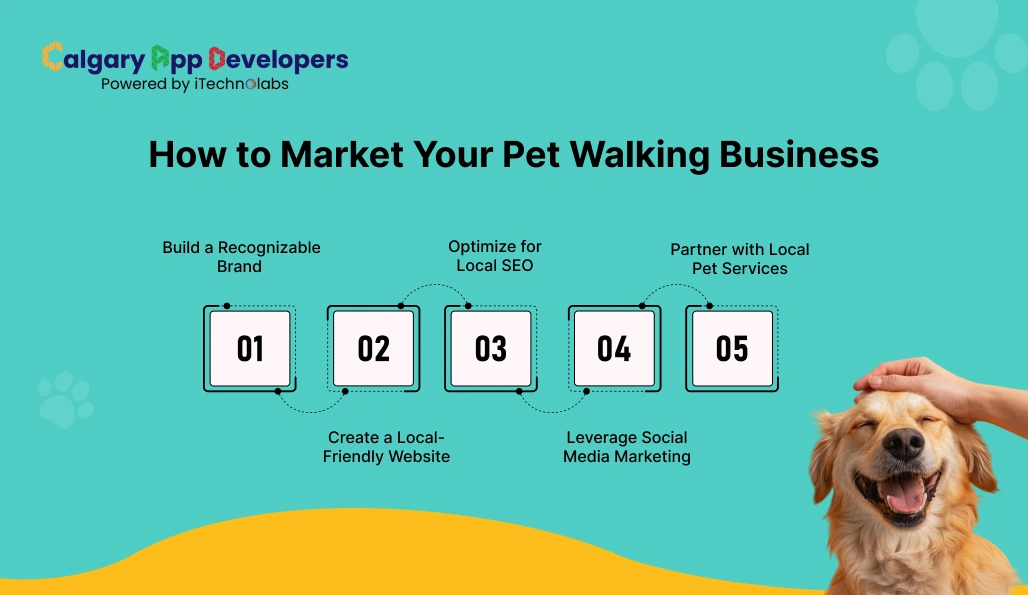
Marketing your pet-walking business is all about visibility, trust, and reputation. People don’t just hire anyone to care for their pets; they choose someone they believe in. Here’s how to build that trust and attract steady clients while positioning your venture as part of a professional pet sitting business.
- Build a Recognizable Brand
Start with a name, logo, and tone that reflect reliability and care. Use consistent branding across your website, business cards, and social media pages. A polished brand gives clients confidence that your service is organized and professional.
- Create a Local-Friendly Website
Design a simple website that clearly lists your services, pricing, and contact information. Include a short bio about your background, experience with pets, and what makes your pet sitting business different. Add a booking form and live chat option to simplify inquiries.
- Optimize for Local SEO
Most clients search online using terms like “dog walker near me” or “pet sitting business in [your city].”
- Register on Google Business Profile and keep details updated.
- Add location keywords throughout your website content.
- Encourage reviews to improve your search ranking.
- Leverage Social Media Marketing
Platforms like Instagram and Facebook are powerful for pet-related businesses.
- Post daily updates, walk photos, and pet care tips.
- Use local hashtags and geotags to reach nearby audiences.
- Share client testimonials (with permission) and short behind-the-scenes videos.
Social media helps your brand feel personal and trustworthy—two traits pet owners value most.
- Partner with Local Pet Services
Build relationships with veterinarians, groomers, pet supply stores, and shelters. Offer referral discounts or co-host community events. Networking with complementary services not only broadens your exposure but also positions your brand within the trusted local pet sitting business ecosystem.
Conclusion
Building a successful pet sitting business takes dedication, planning, and the right digital tools. From managing bookings and payments to maintaining client communication, technology can simplify every part of the journey. A well-designed app not only improves efficiency but also helps you build long-term trust with pet owners who expect reliability and transparency.
That’s where Calgary App Developers can make a real difference. Our team specializes in creating custom mobile apps for service-based businesses, including pet care and pet sitting solutions. We design apps that are intuitive, secure, and built to scale so you can focus on what matters most: providing exceptional care for every pet you look after.
If you’re ready to take your pet sitting business to the next level, partner with Calgary App Developers to bring your idea to life with smart, dependable technology that works as hard as you do.


Pankaj Arora is a seasoned technology leader and the Founder of Calgary App Developer, with 10+ years of expertise in crafting high-performance digital solutions. His core competencies include full-stack app development, cloud-native architecture, API integration, and agile product delivery. Under his leadership, Calgary App Developers has empowered startups and enterprises alike with scalable mobile applications, secure web platforms, and AI-driven SaaS products.