






Top 15 Best Last Mile Delivery Apps in 2026
Customers rarely remember how efficiently a product moved through warehouses, distribution centres, and transportation hubs. They remember whether it arrived on time, in good condition, and with a smooth delivery experience.
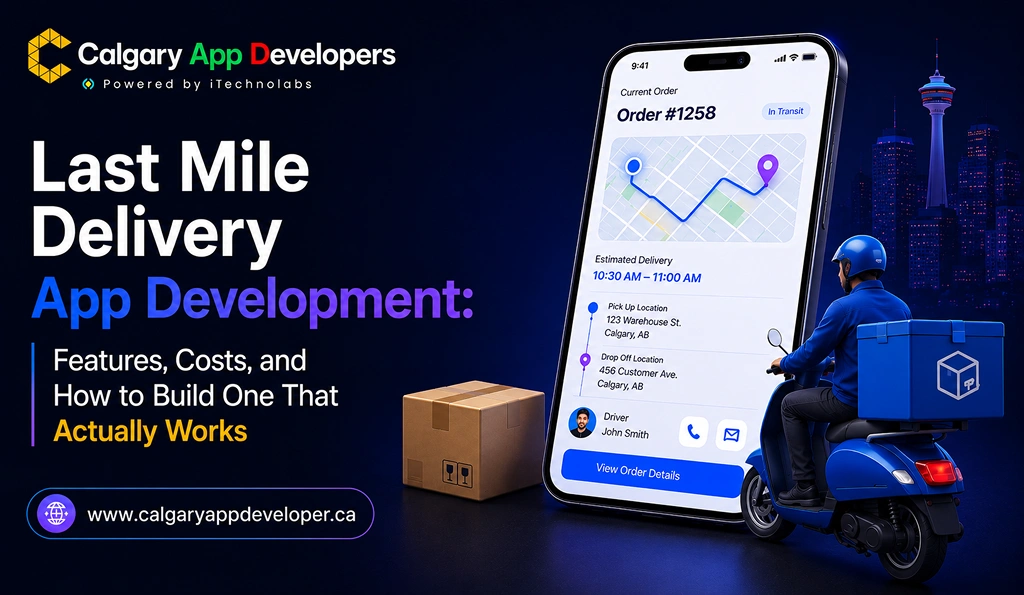
That’s why last mile delivery has become one of the most critical parts of the modern supply chain. It’s the final stage of the journey, where products move from a local distribution point to the customer’s doorstep. It’s also the most expensive, complex, and customer-facing part of the entire fulfillment process.
For Canadian businesses, the challenge is even greater. Long travel distances, rural delivery routes, unpredictable weather conditions, and rising customer expectations have made efficient last mile logistics a major competitive advantage. Consumers now expect real-time tracking, accurate delivery windows, and increasingly, same-day or next-day delivery.
The right last mile delivery app can help businesses optimize routes, reduce operational costs, improve driver productivity, and deliver a better customer experience. Whether you’re managing local deliveries, operating a large distribution network, or running a specialized logistics service, choosing the right platform can have a direct impact on profitability and customer retention.
In this guide, we’ll break down the 15 best last mile delivery apps available in 2026, compare their strengths and limitations, explore the features that matter most, and help you determine whether an off-the-shelf solution is enough or if a custom-built delivery platform makes more sense for your business.
What Are Last Mile Delivery Apps?
Last mile delivery apps are software solutions built to handle the most complex and costly stage of the supply chain: getting a product from a local distribution hub or warehouse to the customer’s front door.
These apps can be desktop platforms, mobile apps for drivers, or, most commonly, a combination of both that connects dispatchers, drivers, and customers in real time. What they do varies widely. Some focus purely on route optimization. Others handle the entire delivery lifecycle from the moment an order is received through to the electronic proof of delivery captured on the customer’s doorstep.
At their core, last mile delivery apps exist to solve a cluster of problems that plague delivery operations: inefficient routing that wastes fuel and driver time, zero visibility for dispatchers and customers, failed delivery attempts that trigger costly re-routes, and the manual admin burden of tracking hundreds of daily drops across a fleet.
The right app doesn’t just make deliveries faster. It cuts costs, reduces customer service calls, improves first-attempt delivery rates, and gives your team the data to keep getting better over time.
Why Last Mile Delivery Is a Bigger Challenge in Canada
Most last mile delivery apps were designed with urban US markets in mind. Canadian businesses have a different reality, and it’s worth understanding before you choose a platform.
- Geography and Distance: Canada is the second-largest country in the world by land area. Even within Alberta, delivery routes can span enormous distances between urban centres, suburban corridors, and rural areas. In Calgary, you might be managing efficient city drops one day and long-haul rural routes the next. Most apps handle dense urban routing well, but sparse rural coverage is where many struggle.
- Weather: Canadian winters are not a footnote. Road closures, snowstorms, and icy conditions affect route viability in ways that a routing algorithm built for San Francisco or Miami simply doesn’t account for. Your last mile app needs to allow real-time rerouting and handle dynamic changes without falling apart when a driver’s planned route becomes impassable at 7 a.m. in January.
- PIPEDA Compliance: The Personal Information Protection and Electronic Documents Act governs how Canadian businesses collect, store, and use personal data, including delivery addresses, customer contact information, and GPS tracking data. Many US-based SaaS tools store data on American servers and haven’t been built with PIPEDA in mind. This matters, especially for businesses in regulated industries like healthcare, cannabis, or financial services.
- Bilingual Requirements: Businesses with national reach need to communicate with customers in both English and French. Driver apps, customer notification systems, and tracking portals all need bilingual capability if you’re shipping beyond Alberta.
- Industry-Specific Verticals: Calgary and Alberta run on industries that have unique last mile needs. Oil and gas operations require deliveries to remote wellsites with no standard addressing. Agri-food businesses need temperature-aware routing. Cannabis retailers require age-verification workflows baked into proof of delivery. Off-the-shelf apps rarely handle any of these natively.
Understanding these realities before you pick a platform will save you a lot of frustration down the road.
Also Read: Last Mile Delivery App Development: Costs & Key Features
10 Must-Have Features in Any Last Mile Delivery App
Competitors in this space tend to highlight four or five features. Here’s the complete list of what you actually need to evaluate before committing to any platform:
- Route Optimization Engine: Not just basic GPS navigation, but a genuine optimization algorithm that accounts for multi-stop routes, vehicle capacity, driver hours, break times, traffic conditions, and preferred road types. The difference between a good and a mediocre engine is measured in fuel savings and deliveries per day.
- Real-Time GPS Fleet Tracking: Dispatchers need live visibility into where every driver is, how far through their route they are, and whether they’re running on time. Customers need it too; a live ETA link sent at dispatch eliminates a huge proportion of customer service calls.
- Electronic Proof of Delivery (ePOD): Photo capture, digital signature, barcode scanning, and timestamped delivery confirmation are all captured in the driver’s mobile app and instantly synced to the dispatcher’s dashboard. Non-negotiable for any operation handling disputes or chargebacks.
- Automated Customer Notifications: SMS and email alerts that fire automatically at key stages: dispatch confirmation, en-route notification, ETA updates, and delivery confirmation. The best platforms let you customize these messages and send them under your brand, not the software’s.
- Driver Mobile App: A well-designed driver app is half the battle. It should handle navigation, delivery status updates, ePOD capture, communication with dispatch, and exception reporting all from a clean, intuitive interface that doesn’t require training to use.
- Failed Delivery Management: What happens when nobody’s home? Your app needs a clean workflow for capturing failed attempts, rescheduling, and notifying customers without creating extra manual work for your dispatcher.
- Analytics and Reporting Dashboard: Route performance, on-time delivery rates, driver efficiency, cost per delivery, and failed delivery metrics. If you can’t see the data, you can’t improve the operation.
- API Integrations and Connectivity: Your last mile app doesn’t exist in isolation. It needs to connect with your eCommerce platform (Shopify, WooCommerce), your order management system, your CRM, and potentially your ERP. Poor integration capability is one of the highest hidden costs in choosing the wrong platform.
- Capacity and Load Planning: Vehicle capacity constraints, weight limits, and load sequencing. A proper platform accounts for all of this when building routes, so driversaren’t overloaded and deliveries are organized for efficient unloading.
- White-Label Customer Experience: Your customers should see your brand, not the software’s. Tracking pages, notification emails, and proof of delivery receipts should all be customizable with your logo and brand colours.
The 15 Best Last Mile Delivery Apps in 2026
Choosing between these platforms is easier when you can see them side by side. Here’s how the top options stack up across the criteria that matter most for Canadian businesses:
| App | Best For | Pricing Model | Custom Integration | Free Trial |
| SmartRoutes | SMB all-in-one | Per driver/month | Yes (API) | Yes (7-day) |
| Onfleet | Mid-market & enterprise | Per task or per driver | Yes (API + Zapier) | Yes |
| Cigo Tracker | Canadian businesses | Per driver/month | Yes (API + ERP) | Yes |
| DispatchTrack | Large enterprise | Custom quote | Yes (enterprise) | Demo only |
| eLogii | Scaling businesses | Modular tiers | Yes | Yes |
| Circuit | Small teams | Per driver/month | Limited | Yes |
| Routific | Dynamic scheduling | Per driver/month | Yes (API) | Yes (7-day) |
| OptimoRoute | Complex multi-depot | Per driver/month | Yes (API) | Yes (30-day) |
| Bringg | Enterprise multi-carrier | Custom quote | Yes (enterprise) | Demo only |
| Upper Route Planner | Small CA businesses | Per driver/month | Yes (API) | Yes |
| Dispatch Science | Courier & 3PL | Custom quote | Yes | Demo |
| RouteXL | Solo drivers | Free/low-cost | Limited | Free tier |
| Tookan | On-demand platforms | Per task/month | Yes (API) | Yes |
| LogiNext | Enterprise analytics | Custom quote | Yes (enterprise) | Demo only |
| Shipsy | Customer communication | Custom quote | Yes | Demo |
1. SmartRoutes
Best for: Small to mid-size delivery operations wanting an all-in-one platform
SmartRoutes is one of the most complete end-to-end last mile platforms on the market. It handles everything from automated route planning triggered when orders are imported, through driver dispatch and real-time GPS tracking, to branded customer notifications and electronic proof of delivery. The management platform is desktop-based; drivers use a clean, intuitive mobile app. It’s particularly strong for businesses that want everything in one place without needing to stitch together multiple tools. The route optimization engine accounts for driver hours, break times, and road categories, not just the shortest distance. For Canadian SMBs managing their own fleet, it’s a strong starting point.
Key features:
- Automated Route Import from eCommerce/OMS
- Real-time GPS Fleet Tracking
- Branded SMS/Email Notifications
- Electronic POD with Photo and Signature
- Driver Mobile App
2. Onfleet
Best for: Mid-market and enterprise businesses prioritizing driver UX and analytics
Onfleet has built one of the best driver mobile apps in the category, clean, intuitive, and fast. Dispatchers get a real-time dashboard with drag-and-drop task management, auto-dispatch, and detailed analytics. Barcode scanning, live chat between dispatch and drivers, and predictive ETAs round out a strong feature set. It’s pricier than some alternatives, but the interface quality and analytics depth are genuinely ahead of most competitors.
Key features:
- Drag-And-Drop Dispatch
- Barcode Scanning
- Driver Analytics
- Live Chat, Predictive ETAs
- Shopify and Zapier Integration
Also Check: How to Create a Food Delivery App
3. Cigo Tracker
Best for: Canadian businesses wanting a North American-focused platform
Cigo Tracker is headquartered in Canada, which makes it one of the few options on this list with a genuine Canadian-first perspective. It offers AI-driven route optimization, real-time two-way SMS with customers, capacity management, and a strong integration library. Their upcoming Foresight AI feature promises natural language querying of your entire delivery operation, asking questions like “which routes lost money this week?” and getting instant data-backed answers. For Canadian businesses concerned about data residency and local support, Cigo Tracker deserves serious consideration.
Key features:
- AI Route Optimization
- 2-Way Customer SMS
- Capacity Management
- ERP/CRM Integrations
- Cigo Pay For On-Delivery Payment Collection
4. DispatchTrack
Best for: Large enterprises needing end-to-end delivery network management
DispatchTrack is a Gartner-recognized platform built for enterprise-scale last mile operations. It covers route optimization, driver execution, customer delivery experience, delivery network management, and technology ecosystem management under one platform. If you’re managing hundreds of drivers across multiple regions, it’s one of the most capable systems available. It’s enterprise-first, which means implementation timelines and pricing reflect that it’s not the right fit for a 5-truck fleet.
Key features:
- Enterprise Route Optimization
- Delivery Network Management
- Customer Experience Suite
- 3PL Connectivity
- Deep Analytics
5. eLogii
Best for: Fast-growing businesses that need modular, scalable software
eLogii’s modular architecture is its defining strength. You pay for the features you need now and add modules as your operation scales, including white-labeling, customer-specific driver skills, CSV import mapping, and more. That flexibility makes it well-suited to seasonal businesses or companies on a steep growth trajectory that don’t want to migrate platforms every 18 months. The core features route planning, fleet management, and customer notifications are solid. The ability to expand without switching is genuinely valuable.
Key features:
- Modular Pricing
- Route Planning
- Fleet Management
- Customer Experience Module
- White-Label Option
Read Also: How Much Does It Cost To Develop A Delivery App
6. Circuit for Teams
Best for: Small businesses and owner-operators wanting simplicity
Circuit positions itself as a supercharged Google Maps for delivery drivers, and that’s pretty accurate. It’s approachable, fast to set up, and works well for smaller operations that don’t need enterprise complexity. Route optimization, driver tracking, customer notifications, and proof of delivery are all present. The trade-off is a ceiling: once you’re managing more than 20–30 drivers or need serious integration depth, Circuit starts to show its limits. For solo drivers or small courier businesses, it’s an excellent entry point.
Key features:
-
- Easy Route Optimization
- Customer Notifications
- ePOD
- Simple Driver App
- Quick Onboarding
7. Routific
Best for: Operations with frequent last-minute changes and dynamic scheduling
Routific’s standout capability is handling real-time adjustments without breaking the whole routing plan. When a new order drops in at 11 am for same-day delivery, Routific can slot it into existing routes intelligently rather than forcing a full re-optimization. It’s strong for food delivery operations, local couriers, and any business where the delivery manifest changes constantly throughout the day. What it doesn’t do well: barcode scanning, label printing, and deep customization, so if those matter, look elsewhere.
Key features:
- Dynamic Route Adjustment
- Real-Time Driver Tracking
- Customer Notifications
- Mobile Driver App
- API Access
8. OptimoRoute
Best for: Multi-depot operations and businesses with complex route constraints
OptimoRoute handles complexity that simpler tools can’t: multi-depot planning, driver skill matching, vehicle capacity parameters, and weekly route scheduling. If you’re running a fleet with mixed vehicle types, drivers who are authorized for specific delivery types, or multiple warehouse locations, OptimoRoute’s constraint handling is genuinely impressive. Reporting and analytics are strong. It’s not the flashiest interface, but for operations that need serious routing logic, it delivers.
Key features:
- Multi-Depot Support
- Driver Skill Constraints
- Vehicle Capacity Planning
- Weekly Scheduling
- Analytics Dashboard
Also Check: On Demand Delivery App Development Guide
9. Bringg
Best for: Large retail enterprises integrating third-party carriers
Bringg goes beyond routing to connect the entire fulfillment ecosystem inventory systems, retail management platforms, white-glove delivery providers, and third-party carriers under one orchestration layer. If your business regularly uses multiple courier providers or 3PLs alongside your own fleet, Bringg’s carrier management capabilities are hard to match. It’s a platform for businesses that have already solved basic last mile logistics and want to orchestrate a more complex multi-carrier delivery network.
Key features:
- Multi-Carrier Orchestration
- 3PL Integration
- Inventory-Aware Scheduling
- White-Glove Delivery Support
- Customer Delivery Experience
10. LogiNext Mile
Best for: Data-led enterprises wanting deep analytics and AI optimization
LogiNext is used by large enterprises, including clients in Microsoft’s and IBM’s ecosystems. Its differentiation is in data: continuous route learning, real-time analytics, resource management, and AI-powered capacity planning. The platform captures data from every delivery and uses it to continuously improve routing decisions over time. It’s overkill for smaller operations, but for enterprise logistics teams with the data maturity to leverage it, LogiNext is a serious performance engine.
Key features:
- AI-Powered Route Optimization
- Real-Time Analytics
- Resource Management
- Geofence-Based Alerts
- Capacity Planning
11. Shipsy
Best for: Operations prioritizing unified customer communication
Shipsy’s standout feature is its customer communication layer. Customers can reschedule deliveries themselves, add alternate delivery contacts, and pin precise drop-off locations all without calling customer service. White-labeling is included, so the entire experience carries your brand. The platform also offers geofence-based driver allocation, which is useful for businesses managing large delivery zones. For operations where customer experience and communication are the primary pain points, Shipsy solves them well.
Key features:
- Customer Self-Service Reschedule
- Geofence-Based Driver Allocation
- White-Label Portal
- Zero-Contact Delivery Option
- Customizable ePOD
Read Also: Top Food Delivery Apps in Canada
12. Upper Route Planner
Best for: Small Canadian businesses and field service teams
Upper is one of the few platforms on this list built in Canada. The company is based in North America with a Canadian focus. It’s designed for small and mid-sized businesses, with an emphasis on route planning for industries like meal delivery, food distribution, and field service maintenance. It’s not as feature-rich as enterprise options, but the Canadian focus, straightforward pricing, and solid routing core make it a strong option for smaller Calgary businesses looking for a local-market-aware solution.
Key features:
- Multi-Stop Route Planning
- Driver Tracking
- Customer Notifications
- Api Access
- Import From Spreadsheets
13. Dispatch Science
Best for: Courier operations and 3PLs that run on analytics
Dispatch Science is built for courier businesses and third-party logistics providers that need clean, actionable data without the spreadsheet gymnastics. Its dashboard surfaces real-time comprehensive analytics in a format that’s actually readable, not raw data exports that require an analyst to interpret. Pricing, order management, driver dispatch, and route optimization are all present, but the analytics experience is what separates it. If you run a courier operation in Calgary or Alberta and you want to see every efficiency opportunity clearly, Dispatch Science is worth a serious look.
Key features:
- Real-Time Analytics Dashboard
- Courier-Specific Pricing Engine
- Order Management
- Driver Dispatch
- Route Optimization
14. RouteXL
Best for: Solo drivers and micro-businesses on a tight budget
RouteXL is the budget play on this list. Up to 20 stops are free; unlimited stops cost just a few dollars per day. There’s no driver app, no customer notifications, no analytics, just a route planning tool that tells a driver the most efficient order to run their stops. For a single delivery driver or a very small business doing infrequent deliveries, it does exactly what it promises. Don’t expect it to scale beyond that.
Key features:
- Multi-Stop Route Calculation
- Web-Based Interface
- Export To Navigation Apps
- Free Tier Available
15. Tookan
Best for: Businesses building a delivery marketplace or on-demand platform
Tookan is a flexible delivery management platform designed for businesses that operate more like delivery marketplaces than traditional fleets, think on-demand services, hyperlocal delivery, or white-label logistics platforms. It’s highly customizable through an API and supports agent management, customer tracking, and automated dispatch. If you’re building a delivery product rather than running a traditional fleet, Tookan’s architecture suits that use case well. For Calgary startups in the on-demand delivery space, it’s worth exploring.
Key features:
- On-Demand Dispatch
- Agent Management
- Customer Tracking
- Marketplace-Ready Architecture
- Extensive API
Read Also: Top Same Day Grocery Delivery Apps in Canada
Off-the-Shelf vs. Custom-Built: Which Is Right for Your Business?
This is the conversation nobody in the SaaS space wants you to have, but it’s the most important one if your operation has real complexity.
Off-the-shelf last mile delivery apps are built to serve a broad market. That means they’re optimized for the most common delivery patterns: urban routes, standard parcel sizes, simple proof of delivery, basic customer notifications. If your business fits that mold, they’re excellent value. You’re up and running in days, support is handled by the vendor, and you pay a predictable monthly fee.
| Factor | Off-the-Shelf Solution | Custom Built Solution |
| Deployment Speed | Ready to use within days or weeks | Typically takes several months to design, develop, and test |
| Upfront Cost | Low initial investment with subscription pricing | Higher upfront development investment |
| Monthly Costs | Ongoing subscription fees that increase with scale | Lower recurring costs after launch, aside from maintenance |
| Customization | Limited to available settings and features | Built around your exact workflows and business rules |
| Branding | Basic white labeling options | Complete control over customer and driver experience |
| Integrations | Standard integrations with popular platforms | Deep integration with ERP, CRM, inventory, eCommerce, and internal systems |
| Scalability | Dependent on vendor capabilities and pricing model | Scales according to your operational needs |
| Data Ownership | Data is stored and managed by the platform provider | Full ownership and control of all business data |
| Compliance | Generic compliance features | Tailored compliance workflows for industry-specific requirements |
| Specialized Deliveries | May struggle with complex or niche delivery scenarios | Designed specifically for age verification, temperature-controlled logistics, remote site deliveries, white-glove services, and more |
| Competitive Advantage | Similar functionality available to competitors | Creates unique operational and customer experience advantages |
| Long-Term Flexibility | Limited by vendor roadmap | Future enhancements driven entirely by your business goals |
But here’s what actually happens in practice: businesses grow, and their delivery operations develop rules that generic platforms weren’t designed to handle.
Signs you’ve outgrown an off-the-shelf app:
- You’re paying for workarounds, manual steps your team does every day, because the platform can’t handle a specific business rule.
- Your customer experience is limited by the platform’s white-labeling ceiling; you can’t fully brand the tracking experience or notification system.
- Integration with your existing tech stack (ERP, CRM, eCommerce platform) is held together with brittle API connections that break regularly.
- You’re in a regulated industry- cannabis, healthcare, food safety, and the platform’s compliance capabilities don’t match your requirements.
- You’re handling specialized delivery types: age-verified deliveries, temperature-sensitive routing, remote-site logistics (oilfield, construction), or white-glove installation services.
- Your delivery volume has crossed the threshold where per-driver or per-task SaaS pricing becomes more expensive than owning the solution outright.
For Calgary businesses in oil and gas, agri-food, cannabis retail, or large-scale distribution, these scenarios aren’t edge cases. They’re the operating reality.
A custom-built last mile delivery app gives you full control over every workflow, every integration point, and every customer-facing touchpoint. You own the data. You define the business rules. You build exactly the experience your customers and drivers need, not a configuration of someone else’s template.
How to Choose the Right Last Mile Delivery App for Your Business
With 15 options reviewed and the custom-build path mapped out, here’s a practical decision framework for getting to the right answer without wasting months on trials:
Step 1: Define Your Delivery Volume:
Volume determines pricing model fit. Under 50 deliveries per day? Most SaaS tools work fine, and per-driver pricing is manageable. Over 200 deliveries per day across a fleet? Start running the math on whether monthly SaaS costs are approaching custom-build territory.
Step 2: Map Your Must-Have Integrations:
List every system your delivery operation touches: your OMS, eCommerce platform, CRM, inventory system, and accounting software. Then confirm with each shortlisted vendor how those integrations actually work. “We integrate with Shopify” can mean a one-click native connection or a fragile webhook that requires manual maintenance. Know which one you’re getting.
Step 3: Assess Your Compliance Requirements:
If you’re in cannabis, healthcare, food delivery, or any federally regulated industry, verify PIPEDA compliance, data residency, and any industry-specific workflow requirements before you commit to any platform.
Step 4: Run a Real Trial, Not a Demo:
Demos show you the product at its best. Trials show you how it performs under your actual operating conditions. Get your dispatcher, a driver, and a customer service rep to use the platform for a full week of real deliveries. Their friction points will tell you more than any feature comparison matrix.
Step 5: Consider Canadian Support and Data Residency:
When something breaks at 6 a.m. during a peak delivery day, you want support in your timezone. Canadian-based or North American-based vendors with local support teams are worth prioritizing, especially for operations where downtime has real financial consequences.
Step 6: Scale Plan:
The platform that fits your operation today should still fit it in three years. Think about where your delivery volume is heading, whether you’ll expand into new regions, and whether the platform’s architecture can accommodate that growth without forcing a migration.
Conclusion
Last Mile delivery is the most expensive, most visible, and most failure-prone stage of your entire supply chain. Getting it right with the right app, the right features, and the right fit for your operation isn’t just an operational decision. It’s a competitive one.
For most Calgary and Canadian businesses, one of the 15 apps reviewed here will be the right starting point. Canadian-market options like Cigo Tracker, Routific, and Upper Route Planner are worth prioritizing for their local focus and PIPEDA awareness. For larger operations, platforms like Onfleet, eLogii, and DispatchTrack offer the depth and scalability to grow with you.
But if your operation has outgrown what a generic SaaS platform can offer, if you’re dealing with specialized delivery types, complex integration requirements, or a business model that off-the-shelf tools weren’t designed for, a custom-built solution is often the smarter long-term play. You own the product, you control the experience, and you build exactly what your operation needs.
Calgary App Developer builds custom delivery and logistics applications for Canadian businesses. If you’re ready to explore what a purpose-built last mile delivery app could do for your operation, our team is ready to talk. Visit calgaryappdeveloper.ca to get started.
FAQs
1. What is a last mile delivery app, and how does it work?
A last mile delivery app is software designed to manage the final stage of shipping from a local distribution hub or warehouse to the customer’s address. It works by importing orders, building optimized delivery routes for each driver, dispatching those routes to a driver mobile app, tracking deliveries in real time, notifying customers with live ETAs, and capturing electronic proof of delivery once a drop is complete. Most platforms combine a web-based dispatcher dashboard with a mobile app for drivers.
2. Which last mile delivery app is best for small Canadian businesses?
For small Canadian businesses, Cigo Tracker, Routific, and Upper Route Planner are the strongest options. All three have Canadian roots or a Canadian-market focus, offer competitive per-driver pricing, and include the core features most small operations need: route optimization, driver tracking, customer notifications, and ePOD. Circuit is also worth considering for very small teams or solo drivers who prioritize ease of use over feature depth.
3. How much do last mile delivery apps cost?
Most SaaS last mile delivery apps are priced on a per-driver-per-month basis, typically ranging from $30 to $150 CAD per driver depending on the platform and feature tier. Enterprise platforms like DispatchTrack, Bringg, and LogiNext use custom pricing models based on delivery volume and feature scope. Free or very low-cost options like RouteXL exist for solo drivers doing basic route planning. Custom-built solutions range from $40,000 to $200,000+ CAD depending on complexity.
4. When does it make sense to build a custom last mile delivery app instead of using an off-the-shelf platform?
It makes sense to consider a custom build when your operation has business rules that off-the-shelf platforms can’t accommodate, when SaaS per-driver pricing has scaled to the point where it approaches custom-build cost, when you need deep integration with existing systems, or when you operate in a regulated industry with specific compliance requirements. Cannabis delivery, oilfield logistics, temperature-sensitive food distribution, and white-glove installation services are common examples where custom development delivers better long-term value than any generic platform.
5. Are last mile delivery apps PIPEDA compliant for Canadian businesses?
Not automatically. PIPEDA compliance depends on where data is stored, how it’s handled, and whether the vendor has implemented the required privacy controls. Many US-based SaaS platforms store customer data on American servers and haven’t been built specifically for Canadian privacy law. If your operation collects personal delivery data, addresses, contact info, and GPS tracking records, it’s worth explicitly confirming PIPEDA compliance with any vendor you shortlist. Canadian-based platforms like Cigo Tracker and Routific are better starting points for this conversation.
6. How long does it take to build a custom last mile delivery app?
A well-scoped MVP covering core route optimization, driver mobile app, dispatcher dashboard, and basic ePOD typically takes 3 to 5 months to build with an experienced Canadian development team. A full-featured platform with AI optimization, real-time fleet tracking, branded customer portal, and deep system integrations is more realistically a 6 to 12-month project. Timeline depends heavily on integration complexity, the number of platforms required, and how clearly the requirements are defined before development begins.
7. Can last mile delivery software handle rural routes in Alberta?
Some can, some can’t. The routing quality for sparse rural areas varies significantly between platforms. Routific and OptimoRoute tend to perform better on non-urban routes than platforms optimized purely for dense city delivery. For operations with regular rural coverage in Alberta, particularly oilfield, agricultural, or remote site deliveries, it’s worth testing any platform specifically on your actual rural routes before committing. Alternatively, a custom-built solution can be designed to handle your specific rural routing requirements from the ground up.


Pankaj Arora is a seasoned technology leader and the Founder of Calgary App Developer, with 10+ years of expertise in crafting high-performance digital solutions. His core competencies include full-stack app development, cloud-native architecture, API integration, and agile product delivery. Under his leadership, Calgary App Developers has empowered startups and enterprises alike with scalable mobile applications, secure web platforms, and AI-driven SaaS products.