




How to Create a Shein Like App: A Complete Guide for 2026

Fashion and technology no longer just influence each other. They operate as one system. Discovery, trends, pricing, and purchasing now happen inside mobile apps, not magazines or shopping malls. Platforms like Shein have reshaped how people browse and buy fashion by combining speed, affordability, personalization, and nonstop product discovery into a single habit forming experience.
Building an app like Shein in 2026 goes far beyond launching another ecommerce store. Success now depends on understanding how users expect instant access, AI powered recommendations, rapid fulfillment, and constantly refreshed catalogs. The brands that win are the ones that design for scale, data driven decision making, and user behavior that changes by the week.
This guide breaks down what it actually takes to build an app like Shein, including the business model, core features, development process, cost considerations, and practical growth strategies. It is written from our hands on experience building ecommerce and marketplace apps, shaped by real project challenges, technical decisions, and lessons learned in production environments.
TL;DR
- Building a Shein-like app in 2026 requires more than eCommerce basics and demands speed, scale, and personalization.
- The Shein model succeeds through fast fashion, data-driven decisions, and mobile-first user experiences.
- Costs, timelines, and technology choices vary widely based on features and market reach.
- Strategic planning and the right tech stack are critical for long-term success.
Key Points
- A Shein-like app combines fast trend discovery, agile supply chains, and AI-powered personalization to drive high user engagement.
- Core features span user, admin, and seller workflows, making scalability and performance essential from day one.
- Development typically takes six to twelve months, with costs ranging from $60,000 to $250,000 depending on complexity and integrations.
- Modern tech stacks in 2026 rely on AI, cloud infrastructure, microservices, and data analytics to support rapid growth.
- Monetization comes from product sales, marketplace commissions, advertising, subscriptions, and gamified promotions.
- Success depends on continuous optimization, strong logistics, ethical compliance, and a well-executed launch strategy.
What Makes Shein So Popular
Shein rose quickly and smartly. It built a model that’s all about spotting trends, producing fast, keeping prices low, and using social media like an ace.
Business Model of an App Like Shein
Here’s the breakdown of what drives Shein’s success:
- Fast fashion at scale. Shein turned small-batch production into a strength by spotting trends quickly and pushing designs to manufacturing in days. It shares early-stage risk before demand becomes clear.
- Agile supply chain. It built a streamlined operation from design to delivery without relying on brick-and-mortar. That structure keeps costs low and delivery fast.
- Digital-first buzz. Influencer power and user-generated content help Shein stay cultural. Haul videos go viral on TikTok and Instagram, creating loops of awareness and sales.
- Behavior-driven performance. They use every swipe, click, and view to fine-tune their recommendation engine. That data keeps shoppers hooked.
- Low-cost lure. Affordable pricing targets younger shoppers, supported by frequent promos, rewards, and gamified experiences inside the app.
Key Market Stats and Insights for 2026
Let’s go to the numbers that show how Shein is performing this year and what’s coming next.
- Shein’s revenue growth: In 2026, Shein’s annual revenue is estimated at around $98.6 billion globally, reflecting significant expansion beyond apparel into categories like beauty tools and home goods.
- Global app reach: The Shein mobile app has been downloaded over 500 million times worldwide, demonstrating strong user adoption across regions.
- Market share: Shein holds roughly 18 percent of the global fast fashion market, making it one of the leading players internationally.
- Product range and pace: The platform adds thousands of new products daily, with an inventory exceeding 600,000 styles and rapid trend cycling.
- User engagement trends: The app drove 85+ million downloads in 2025 and continues to attract large audiences as online fashion consumption grows.
Shein’s influence is growing fast. Its 2026 trajectory shows strong quarterly growth and big ambitions for the year ahead. Its revenue, global reach, and move toward a hybrid retail-plus-marketplace model spotlight why it remains a formidable force in fashion e-commerce.
Also Read: How Much Does It Cost to Develop an App Like Shein in Calgary, Canada
Why Build an App Like Shein in 2026
The appetite for digital fashion has never been bigger. Consumers want variety, quick delivery, and prices that feel within reach. At the same time, the mobile-first shopping culture has turned apps into the new storefronts. That is exactly why building a Shein like app in 2026 makes sense. The model has already proven its ability to scale, and the demand for personalized shopping experiences keeps climbing.
Fashion E-commerce Trends in 2026
- AI-driven personalization: Shoppers now expect recommendations that match their style and budget instantly. Retailers that deliver this see longer browsing sessions and higher conversion.
- Social shopping integration: TikTok, Instagram, and YouTube aren’t just for inspiration anymore. They are direct sales channels where haul videos and live shopping events drive real-time purchases.
- Sustainability pressure: Consumers are becoming more eco-conscious. Brands that combine affordability with transparent sustainability practices stand out in a crowded market.
- Marketplace dominance: Hybrid models where third-party sellers join curated platforms are thriving. This widens product choice and boosts retention without heavy inventory risks.
Opportunities for Niche Shopping Apps
While Shein operates at a massive scale, there is plenty of room for focused players. A Shein like app can succeed in 2026 by targeting specific niches such as sustainable fashion, ethnic wear, plus-size collections, or premium budget-friendly apparel. Shoppers are actively looking for platforms that feel curated rather than overwhelming. Add to that features like AI styling, virtual try-ons, or community-driven fashion boards, and you have a clear opportunity to capture a loyal audience that feels underserved by the giants.
Core Features of an App Like Shein
An app like Shein thrives because it makes fashion discovery addictive for users while giving administrators and sellers strong tools to manage growth. Here’s a closer look.
User-facing Features
- Easy sign-up and login: Quick onboarding is key. Options like Google, Facebook, or mobile OTP reduce drop-offs and make it effortless for new users to get started.
- Personalized home feed: Instead of showing the same catalog to everyone, AI tailors product suggestions based on browsing history, wishlists, and past purchases. This creates a sense of exclusivity and keeps users engaged longer.
- Advanced search and filters: Fashion shoppers hate endless scrolling. Smart filters for size, material, color, and price cut the search time and help users find exactly what they want.
- Wishlist and favorites: These features drive repeat visits. A user may not buy today, but a saved product reminder tomorrow could push the conversion.
- Virtual try-on or AR preview: Trying clothes digitally reduces hesitation and return rates. For accessories like sunglasses or jewelry, AR adds a fun, engaging experience.
- In-app promotions: Flash sales, gamified spin-to-win coupons, and seasonal deals trigger urgency and make users check the app more often.
- Order tracking: Real-time delivery updates build trust and reduce post-purchase anxiety.
- Reviews and ratings: Peer feedback boosts credibility. Shoppers rely heavily on these when buying from new brands.
- Multiple payment options: From UPI and wallets to credit cards and Buy Now Pay Later, flexible payment choices increase conversions across different markets.
- Push notifications: Timely nudges for restocks, price drops, or limited deals keep customers coming back.
Admin-side Features
- Dashboard overview: Gives a real-time snapshot of orders, revenues, active users, and top-selling items to keep decision-making quick.
- Product catalog management: Admins can add, edit, or remove products instantly, ensuring only the right listings appear in the app.
- Analytics and reporting: Insights on best-performing categories, high-return items, and customer lifetime value help shape smarter strategies.
- Discount and campaign tools: Admins can set up flash sales, promo codes, or bundled deals and track how these affect sales.
- User management: Helps resolve customer complaints, issue refunds, and manage loyalty programs.
- Inventory and logistics control: Syncs warehouse stock levels with app listings so customers never face an out-of-stock issue after ordering.
- Fraud detection and security: Protects the platform from fake orders, scams, and payment risks, keeping both business and shoppers safe.
Seller or Vendor Features for a Marketplace Setup
- Seller dashboard: Gives vendors a single view of sales, returns, and earnings so they can manage performance independently.
- Simple product upload system: Vendors can upload products one by one or in bulk through spreadsheets, saving time and reducing errors.
- Performance tracking: Sellers get insights on conversion rates, customer feedback, and repeat orders to help them improve.
- Commission and payout management: Transparent statements and automated payouts build trust with vendors and encourage them to scale their presence.
- Customer chat support: Direct communication helps vendors resolve questions about size, shipping, or quality quickly, improving the buying experience.
- Promotional tools: Vendors can participate in site-wide discounts or run their own offers, boosting visibility during big sales events.
How to Build an App Like Shein: Step-by-Step Guide
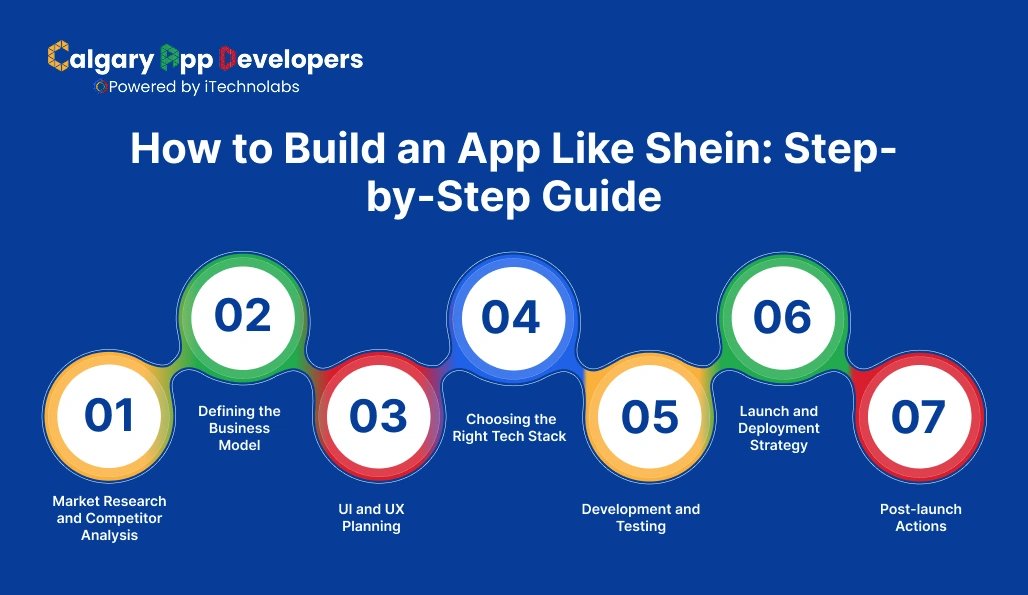
Creating a Shein like app is not just about coding and design. It is about building a strong foundation that combines strategy, technology, and user experience. Let’s walk through the essential steps.
Step 1: Market Research and Competitor Analysis
- Identify your target audience: Research demographics, behaviors, and shopping preferences.
- Study competitors: Analyze leading apps like Shein and others. Examine their features, business models, user acquisition strategies, and customer feedback.
- Find your unique angle: Study market trends, surveys, and insights to pinpoint gaps or opportunities for differentiation like personal recommendations, sustainability, or exclusive collections.
Step 2: Defining the Business Model
- Direct-to-consumer (D2C) or marketplace: Decide if you’ll sell your own products or allow multiple sellers. Shein follows D2C, but a multi-vendor approach is possible.
- Outline sourcing, inventory, and logistics: Determine your strategy for product procurement, warehousing (or drop shipping), shipping, and returns.
- Monetization strategy: Define revenue streams, product sales, ads, third-party commissions, and premium offerings.
Step 3: UI and UX Planning
- Wireframing and prototyping: Map out app screens and flows before development.
- Design principles: Focus on a clean, clutter-free interface with easy navigation, prominent visuals, smooth checkout, and responsive layouts.
- Localization: Consider region-specific design elements, language support, and culturally relevant details to make your app truly global.
- Personalization: Plan features like product recommendations, wish lists, and visual search.
Step 4: Choosing the Right Tech Stack
- Frontend: Popular choices include React Native, Flutter, or native development for iOS/Android.
- Backend: Use reliable frameworks like Node.js, Python (Django/Flask), or Ruby on Rails; cloud hosting on AWS or Azure.
- Database: Scalable options like MySQL, MongoDB, or Firebase.
- Security: Implement secure payment gateways, data encryption, and robust user authentication systems.
- Third-party integrations: Integrate analytics, payment processors, AI for recommendations, and marketing tools.
Step 5: Development and Testing
- Agile development: Build your app in phases or modules for speed and flexibility.
- Feature implementation: Develop a core features catalog, advanced search and filters, user profiles, cart, checkout, order tracking, and notifications. Add innovative features (AI recommendations, visual search, social sharing) for engagement.
- Testing: Conduct thorough functional, usability, security, and performance testing across devices and platforms. Fix bugs, optimize speed and reliability, and gather beta user feedback for refinements.
Step 6: Launch and Deployment Strategy
- App store submissions: Prepare optimized descriptions, screenshots, and keywords. Launch simultaneously on major platforms (iOS/Android).
- Marketing: Build pre-launch buzz through teasers, influencer collaborations, social media, and email campaigns.
- Analytics: Monitor downloads, user engagement, and issues to ensure a smooth rollout.
Step 7: Post-launch Actions
- Customer support: Offer efficient user help via chatbots, FAQs, and support tickets.
- Gather feedback: Use surveys, reviews, analytics, and user behavior metrics to spot improvement areas.
- Maintenance and updates: Regularly release security patches, bug fixes, new features, and seasonal content to keep users engaged and protect data.
- Growth strategies: Invest in promotions, referral programs, loyalty rewards, and expansion plans, always adapting to user needs and staying competitive.
Building a “Shein like app” demands strategic planning, cutting-edge technology, and relentless attention to user experience. Focus on market insights, deliver unique value, and iterate quickly based on feedback to create a fashion app that stands out in today’s crowded market.
Read Also: Cost to Develop a Shopping App Like Costco Canada
Estimated Cost to Build an App Like Shein
Building an app like Shein can cost between $60,000 and $250,000, shaped by factors like features, design quality, third-party integrations, and ongoing maintenance. Location also matters: hiring developers in Calgary offers some of the most cost-effective rates in North America without compromising on reliability or quality.
Total Cost Estimation
| Development Stage | Estimated Cost (USD) |
| Market Research & Planning | $5,000 – $15,000 |
| UI/UX Design | $8,000 – $20,000 |
| Core Development (Frontend & Backend) | $25,000 – $90,000 |
| Integrations (Payment, AI, Logistics APIs) | $10,000 – $40,000 |
| Testing & QA | $5,000 – $15,000 |
| Deployment & Launch | $3,000 – $8,000 |
| Post-launch Maintenance (annual) | $4,000 – $12,000 |
| Total Estimated Range | $60,000 – $250,000 |
Factors Affecting the Cost
Building a Shein like app is not a one-size-fits-all process. Each factor directly impacts budget, timeline, and scalability. Let’s break them down in detail.
- App Complexity and Features
The number and depth of features you choose is the single biggest cost driver.
- A basic e-commerce app that covers catalog browsing, cart, checkout, and simple order tracking is on the lower end of the cost spectrum.
- An advanced Shein like app with AI-driven recommendations, AR-based try-ons, influencer-led campaigns, gamified rewards, and multi-language support can cost two to three times more.
The more interactive and data-driven the app, the more development hours it will require.
- Platform Choice (iOS, Android, or Both)
- If you choose to build for just one platform, the upfront cost drops significantly. For instance, targeting Android first can be cost-effective in markets like India or Brazil.
- Building separate native apps for both iOS and Android is more expensive but provides the best performance.
- Cross-platform frameworks like Flutter or React Native are a middle ground. They allow you to launch on both platforms faster and at a lower cost without compromising too much on quality.
- UI and UX Design Quality
Fashion is a highly visual category, so design plays a critical role in customer loyalty.
- A minimal design with basic layouts is affordable but may not stand out in the crowded fashion app market.
- A premium design that includes animations, smooth transitions, and visually rich product galleries costs more but can dramatically improve engagement and conversions.
The truth is that in a Shein like app, design is not just decoration; it is a sales tool.
- Third-party Integrations
Contemporary fashion applications lean heavily on third-party applications.
- Payments: Payment gateways such as Stripe, Razorpay, or PayPal must be safely integrated.
- Shipping APIs: Live shipping and logistics updates require integration with carriers.
- AI and Analytics: Data dashboards and recommendation engines may depend on third-party or custom-made AI.
- Advanced features: Live shopping, AR try-ons, or BNPL (Buy Now Pay Later) services all add extra complexity and cost.
The more integrations you add, the more development and testing time is needed.
- Testing and Maintenance
Testing often feels like an afterthought, but it has major cost implications.
- With multiple platforms, devices, and operating systems, testing ensures your Shein like app works everywhere.
- Poor testing leads to glitches that drive away users quickly.
- Maintenance is another hidden cost. Post-launch, you need constant bug fixes, security updates, and feature upgrades to keep pace with user expectations. Skipping maintenance may save money in the short term but risks higher churn rates later.
- Location of the Development Team
Where your developers are based can double or halve the total cost.
| Location | Average Hourly Rate (USD) | Approximate Project Cost |
| United States | $80 – $150 | $150,000 – $250,000 |
| Western Europe | $70 – $130 | $130,000 – $220,000 |
| Eastern Europe | $40 – $70 | $80,000 – $150,000 |
| India / Southeast Asia | $25 – $50 | $60,000 – $100,000 |
| Calgary, Canada | $35 – $55 | $70,000 – $120,000 |
Calgary offers a sweet spot for startups that want North American quality but at more affordable rates than the US or Western Europe. The developer ecosystem in Calgary has matured, making it a cost-efficient choice for companies that want reliability without overspending.
Also Read: How Much Does It Cost to Maintain an App?
How an App Like Shein Makes Money
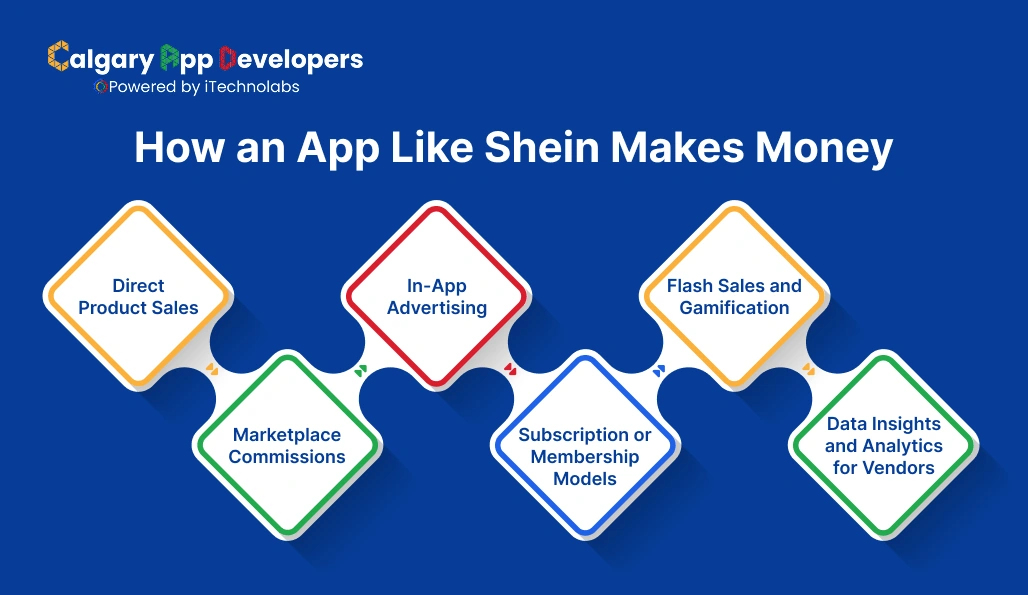
The real strength of a Shein like app lies in how it turns traffic and engagement into revenue. Instead of relying on just one source, it mixes multiple streams that support both short-term profits and long-term growth. Here’s a detailed look at how a Shein like app generates income.
- Direct Product Sales
At its core, a Shein like app functions as a digital retail store. Products are sourced from manufacturers, often at lower costs due to bulk orders and global supplier networks. The app then sells these products to customers at retail prices. The profit comes from the margin between sourcing and selling. Because fashion trends shift quickly, the constant addition of new, affordable items encourages repeat purchases and steady cash flow.
- Marketplace Commissions
Many Shein like apps evolve into marketplace models where third-party vendors list products. Instead of holding all the inventory, the app earns by taking a percentage from every transaction. This model allows rapid expansion of product variety without heavy warehousing costs. The bigger the marketplace grows, the higher the commission revenue scales.
- In-App Advertising
With millions of active users, the app itself becomes valuable advertising space. Vendors and brands are willing to pay for sponsored product placements, homepage banners, or even push notification promotions. Since these ads are shown directly to an audience already interested in fashion, they deliver strong conversion rates, making them a high-margin revenue stream.
- Subscription or Membership Models
To build customer loyalty, some fashion apps offer premium membership plans. These plans may include benefits such as free shipping, priority delivery, early access to collections, or exclusive discounts. The subscription creates recurring monthly or yearly revenue while also improving customer retention since members are more likely to shop regularly to maximize their benefits.
- Flash Sales and Gamification
Urgency sells. Limited-time deals, countdown timers, and gamified rewards drive users to act quickly. Flash sales not only increase sales volume but also attract new users looking for deals. Features like daily check-in rewards, discount spin wheels, or shopping challenges boost engagement and create an addictive shopping experience, which translates into higher order frequency.
- Data Insights and Analytics for Vendors
Over time, a Shein like app gathers valuable insights about shopper behavior, trending styles, and regional demand. This data can be packaged and offered to vendors who want to make better decisions about product design, pricing, or inventory planning. While not every app monetizes data, those that do unlock a powerful, high-value revenue source.
Read Also: How Long Does it Take to Develop an App?
Challenges in Building an App Like Shein
- Staying Ahead of Fast Fashion Trends
Shein thrives because it turns fashion inspiration into real products in record time. To replicate that, an app like Shein must build systems that track real-time social media trends, connect with manufacturers who can deliver quickly, and ensure constant product updates. Without speed and variety, the app risks irrelevance.
- High Competition in E-commerce
The fashion e-commerce space is saturated with global players like Amazon, Zara, and H&M, as well as countless boutique apps. A Shein like app must do more than offer low prices. Standing out requires personalized shopping experiences, engaging app design, and brand positioning that resonates with a specific audience.
- Complex Logistics and Inventory Management
Managing thousands of SKUs across multiple regions is no easy task. Logistics must cover warehousing, shipping, returns, and last-mile delivery. An app like Shein needs sophisticated inventory management and reliable logistics partners to keep operations smooth. Any delays or stock mismatches can directly damage customer trust and retention.
- Balancing Quality and Affordability
Customers expect affordable fashion but also want quality that matches their expectations. A Shein like app must carefully choose suppliers, enforce quality checks, and control return rates. Poor product quality can quickly tarnish brand reputation. The real challenge lies in keeping prices competitive without sacrificing reliability and long-term trust.
- Technology and Scalability
Behind the scenes, a Shein like app requires powerful technology to manage millions of users, product updates, and AI-driven recommendations. Scalability means more than cloud hosting; it demands data-driven personalization, seamless performance during flash sales, and ironclad cybersecurity. Building this level of tech infrastructure requires both high investment and ongoing maintenance.
- Regulatory and Ethical Concerns
Fast fashion is under global scrutiny for its environmental footprint and labor practices. Any app like Shein entering the market must prioritize compliance with local laws, ethical sourcing, and transparent sustainability efforts. Consumers are increasingly conscious, and ignoring these concerns can not only damage brand image but also invite legal risks.
- Marketing and Customer Acquisition Costs
Launching an app like Shein means competing for customer attention in a crowded market. Acquiring new users through ads, influencer marketing, and discounts can become very expensive. The key is not just to drive installs but also to build customer loyalty, ensuring repeat purchases that balance out acquisition costs over time.
Also Read: How Much Money Can You Make if You Own an App?
Best Technologies to Use for a Shein Like App Development
Building a Shein like app requires more than coding skills. The right technology stack ensures smooth performance, scalability, and engaging user experiences. With competition in fashion e-commerce heating up, here are the most important technologies to consider.
- Artificial Intelligence for Personalization
AI powers personalized recommendations, virtual try-ons, and smart search functions. A Shein like app can use AI to study browsing behavior, predict what users are likely to buy, and even generate style suggestions. This technology keeps users engaged and increases order frequency.
- Augmented Reality for Virtual Try-Ons
Shoppers want to see how clothing looks before buying. Augmented Reality (AR) lets users try products virtually using their phone cameras. This not only reduces returns but also builds confidence in purchases. In 2026, AR will be a must-have for any fashion-focused app.
- Cloud Computing for Scalability
A Shein like app can experience sudden traffic spikes during flash sales or new launches. Cloud platforms like AWS, Google Cloud, or Azure allow apps to scale resources instantly, ensuring smooth performance. Cloud infrastructure also supports global availability and better data security.
- Blockchain for Transparency
Shoppers are becoming conscious of sustainability and ethical sourcing. Blockchain helps track supply chains, giving users visibility into where and how products are made. Integrating blockchain in a Shein like app builds trust and can also support secure digital payments.
- Progressive Web Apps (PWA) for Accessibility
PWAs make the app accessible across devices without heavy downloads. For a Shein like app, PWAs can increase reach in regions with low internet speeds or limited storage capacity. They also enhance SEO visibility compared to native-only apps.
- Payment Gateway Integrations with AI Fraud Detection
Payment security is critical. Using AI-driven fraud detection ensures safe transactions and builds customer trust. A Shein like app should integrate global payment methods, including cards, wallets, and Buy Now Pay Later services, to serve diverse audiences.
- Big Data Analytics for Business Growth
With millions of users, an app like Shein generates massive amounts of data. Big Data tools help analyze customer behavior, optimize pricing strategies, predict demand, and guide inventory planning. These insights give the app a competitive edge in decision-making.
- Microservices Architecture
Instead of building the app as a single block, microservices break it into independent modules like payments, search, or product catalogs. This makes updates faster, improves performance, and ensures the app can grow with new features without downtime.
Read Also: How to Choose the Best Company for Calgary Mobile App Development
Essential Integrations for an App Like Shein
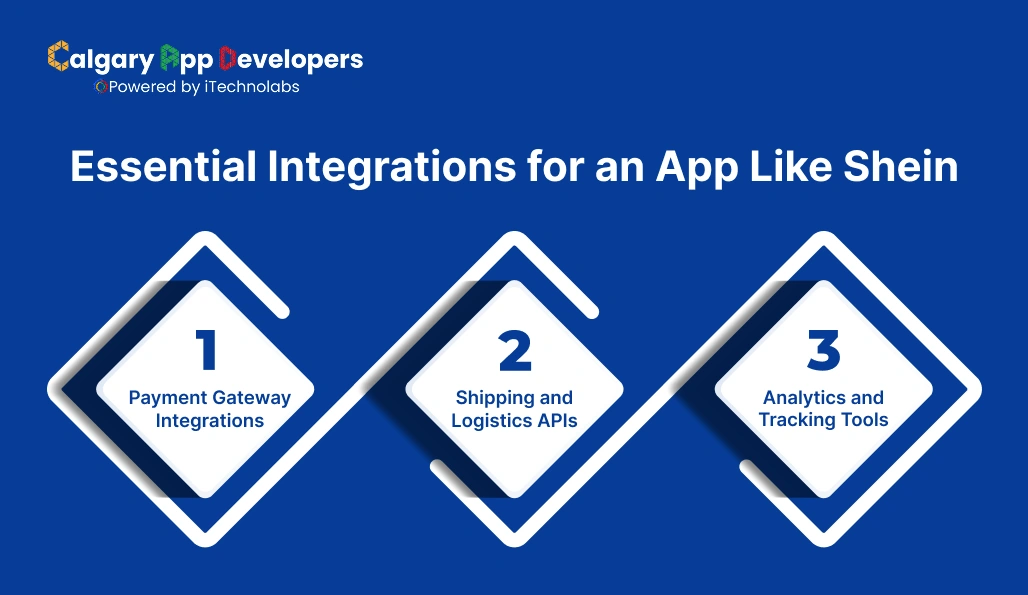
For an app like Shein to succeed, it must go beyond attractive design and product variety. The real game-changer lies in smart integrations. Connecting the right tools ensures smooth operations for customers, vendors, and admins while making the app more scalable and user-friendly. Let’s break down the must-have integrations.
- Payment Gateway Integrations
A Shein like app relies heavily on trust at checkout. Secure, versatile, and convenient payment options encourage customers to complete purchases without hesitation.
- Global Gateways: Stripe and PayPal handle multiple currencies and cards, making them essential for international sales.
- Local Gateways: For regions like the UAE and Saudi Arabia, options such as PayFort and Telr ensure compliance with local regulations.
- Mobile Wallets: Apple Pay, Google Pay, and Samsung Pay offer one-tap convenience that customers now expect.
- Buy Now, Pay Later (BNPL): Services like Tabby and Tamara boost conversion rates and increase order value by offering flexible payment terms.
Always integrate with PCI-DSS compliant systems to reduce fraud risk and safeguard sensitive payment data.
- Shipping and Logistics APIs
Fast delivery is non-negotiable in fashion e-commerce. A Shein like app should integrate both local and global shipping solutions to create a reliable logistics network.
- Local Couriers: APIs from providers like Aramex and Fetchr ensure smooth regional deliveries.
- Global Couriers: DHL and FedEx handle international orders with reliable tracking.
- Real-Time Tracking: Customers can monitor their orders, reducing frustration and lowering support tickets.
- Automated Fulfillment: Label printing, bulk order processing, and warehouse sync speed up operations.
- Return Management: Automated exchange and refund workflows improve the customer experience.
Including regional preferences like flexible delivery slots or locker pickups can further increase user satisfaction.
- Analytics and Tracking Tools
To grow a Shein like app, data is everything. Analytics tools uncover what customers want, which products drive revenue, and how to optimize marketing spend.
- Google Analytics & Firebase: Track app performance, crashes, and basic user behavior.
- Mixpanel & Amplitude: Offer deep insights into user journeys, feature engagement, and retention.
- Sales Dashboards: Provide real-time revenue tracking and highlight best-performing products.
- Marketing Attribution Tools: Connect ad campaigns directly to conversions, making budget allocation smarter.
With these integrations, you can fine-tune personalization, reduce churn, and improve lifetime value.
A Shein like app thrives when payments, logistics, and analytics are tightly integrated. In 2026, shoppers demand speed, convenience, and transparency. By connecting these systems, your app not only enhances user trust but also creates a backbone for sustainable growth.
Also Read: How to Develop an iOS App
The Team You Need to Build a Shein Like App
A Shein like app is not built overnight and definitely not by one person. It takes a specialized team with a mix of technical, creative, and strategic skills to handle everything from design to deployment. If you want an app that can scale globally while delivering a smooth shopping experience, here are the key people you’ll need on board.
- Project Manager
Think of the project manager as the captain of the ship. They oversee timelines, budgets, and team coordination. Their job is to ensure that developers, designers, and marketers all work in sync. For a Shein like app, this is critical because multiple integrations such as payments, logistics, and vendor dashboards need to move together without delays. A strong PM prevents bottlenecks and keeps everyone focused on the bigger picture.
- Business Analyst
Before development starts, a business analyst maps out the goals, features, and workflows of the app. They conduct market research, benchmark competitors, and document exactly how the Shein like app should function. For example, they might identify whether your app should run on a single-vendor model like Zara or a marketplace model with multiple sellers. This role ensures you’re building what the market actually needs.
- UI/UX Designers
In fashion apps, user experience is made or broken by design. UI designers design the visual appearance, color, product layout, typeface, and banners. UX designers care about how buyers navigate through the app, from arriving at the home page to checkout. For a Shein like app, the design should blend beauty with simplicity, keeping users browsing longer while easily discovering and purchasing products.
- Frontend Developers
These developers bring the designs to life by coding everything users see and interact with. They ensure the app is fast, responsive, and consistent across devices. For a Shein like app, frontend developers work on dynamic product catalogs, filters, cart functions, and smooth image loading. Their work directly impacts user experience and conversion rates.
- Backend Developers
Backend developers handle the invisible but vital systems that power the app. They build databases for storing user accounts, product listings, and transaction details. They also integrate APIs for payments, logistics, and analytics. For a Shein like app, scalability is a big challenge. Backend developers must ensure the system can handle spikes in traffic during sales or seasonal promotions without slowing down.
- Mobile App Developers
Since most Shein users shop on smartphones, mobile development is a top priority. Native developers specialize in iOS or Android, while cross-platform developers build apps that work on both systems with shared code. They optimize performance, integrate device-specific features like push notifications, and ensure smooth navigation. Without skilled mobile developers, a Shein like app cannot attract or retain modern shoppers.
- QA Testers
Releasing a buggy shopping app is a fast way to lose customers. QA testers step in to prevent that. They run extensive tests on usability, security, speed, and device compatibility. For a Shein like app, they also test integrations such as payment flows, delivery tracking, and return processes. Their work guarantees that the final product works reliably for every shopper.
- Marketing Specialists
Building the app is only half the journey. You also need users. Marketing experts craft strategies to generate downloads and engagement. They manage influencer collaborations, social media campaigns, email marketing, and paid ads. For a Shein like app, where competition is fierce, strong marketing is often the difference between fading into the background and becoming the next big name in fashion shopping.
- Customer Support Team
Customer experience doesn’t end after checkout. Buyers may have issues with sizes, deliveries, or payments. A customer support team ensures they get quick and helpful responses. Whether it’s through chatbots, email, or call centers, this role is essential for retention. A Shein like app thrives when users feel supported and valued.
A Shein like app is the result of teamwork between strategists, creatives, developers, testers, and marketers. Each role plays a unique part in delivering an app that is scalable, attractive, and user-friendly. The stronger your team, the higher your chances of creating an app that stands out in the crowded fashion e-commerce market.
Read Also: How Much Does it Cost to Hire App Developers in Canada?
Tips for a Successful Launch of an App Like Shein
Launching a Shein like app is not only about the product itself but also about how you present it to the market. With thousands of fashion apps competing for attention, your strategy has to blend marketing, user experience, and community-building. Here’s a detailed roadmap to make your launch impactful.
- Build Pre-launch Buzz
Success begins before launch day. Start by creating curiosity on platforms like Instagram, TikTok, and Pinterest, where fashion shoppers are most active. Share sneak peeks of your app design, teaser videos of the shopping experience, and upcoming product categories. Collect early sign-ups through a landing page offering exclusive rewards for first users. For a Shein like app, building hype is about positioning your brand as trendy and affordable from the start.
- Focus on a Smooth Onboarding Experience
The onboarding flow should be as simple as possible. Long sign-up forms or complicated verifications can kill enthusiasm. Instead, let users log in quickly through Google, Apple, or social media accounts. Highlight trending products or personalized picks immediately after login. A Shein like app should feel rewarding in the first session so users are motivated to browse and shop, not just explore and leave.
- Offer Attractive Launch Discounts
Nothing grabs attention faster than a good deal. Shein built loyalty by consistently offering value for money, and your launch should follow the same principle. Offer limited-time discounts, first-purchase coupons, or referral bonuses for inviting friends. For example, give 20% off to the first 1,000 shoppers. A Shein like app needs that initial push to turn installs into conversions, and discounts are the easiest trigger.
- Collaborate with Micro-Influencers
Micro-influencers with 10k–100k followers often have higher engagement than big celebrities. They are trusted voices within niche fashion communities and can generate authentic word-of-mouth buzz. Partner with influencers across beauty, lifestyle, and streetwear segments to reach different buyer personas. For a Shein like app, these collaborations help create relatability and trust, which ads alone cannot achieve.
- Leverage Social Proof Early
Shoppers rarely trust a new platform unless others have validated it. Actively collect reviews from your first batch of users and showcase them prominently in the app and on social media. Display testimonials, star ratings, and user-generated content such as outfit photos. A Shein like app can grow rapidly when early customers publicly share positive shopping experiences.
- Invest in Strong Customer Support from Day One
Fashion e-commerce often faces challenges like delayed deliveries, incorrect sizes, or refund requests. If your team is slow or unhelpful, users will abandon your app instantly. Set up multi-channel support with live chat, chatbots, and responsive email systems. Quick, empathetic problem-solving turns frustrated users into loyal repeat buyers. A Shein like app with reliable support builds a reputation faster than one with flashy ads.
- Track and Optimize Post-launch
The work doesn’t end after going live. Monitor key metrics like user retention, cart abandonment, average order value, and churn rates. Use A/B testing to fine-tune designs, experiment with push notification strategies, and adjust discount campaigns. A Shein like app that continuously improves based on real data will outlast competitors who launch strong but fail to adapt.
A powerful launch requires a mix of marketing energy, flawless execution, and customer-centric thinking. By building buzz early, making the first user experience delightful, rewarding shoppers with irresistible offers, and ensuring fast support, you give your Shein like app the momentum it needs to scale quickly and compete in the fast-changing fashion e-commerce market.
Also Check: Top Features to Include in Your Next App Platform Calgary Project
Our Experience in eCommerce Marketplace App Development
Our experience in eCommerce marketplace app development comes from building real, high-traffic platforms designed for scale, performance, and conversion. We focus on marketplaces that manage complex catalogs, multiple sellers, and rapidly changing user behavior while maintaining stability and speed in production environments.
Below are two representative projects from our work.
Client identities are not disclosed due to privacy and confidentiality agreements.
1. Canada-Based Fashion Marketplace App
This application was developed for a Canada-based fashion brand evolving into a multi-vendor fashion marketplace. The goal was to support trend-driven shopping, fast inventory turnover, and a highly personalized browsing experience.
Key features
- Multi-vendor seller onboarding with role-based dashboards
- AI-driven product recommendations and visual search
- Advanced filtering by size, style, price, and trends
- Secure payments with regional tax and compliance handling
- Scalable backend built for seasonal and flash-sale traffic
Business impact
- Significant improvement in product discovery and engagement
- Higher repeat purchase rates driven by personalization
- Reduced operational load through automated seller workflows
2. Global Cross-Border Marketplace App
This global marketplace app was built as a complete multi-category platform similar to large-scale marketplaces. It supported millions of listings across diverse product categories with cross-border operations.
Key features
- Multi-currency and multi-language support for global users
- Vendor management with commission and payout automation
- Personalized home feeds powered by behavioral data
- End-to-end order management with logistics integrations
- High-performance search and recommendation engine
Business impact
- Enabled expansion across multiple international markets
- Reduced cart abandonment through optimized checkout flows
- Supported rapid catalog growth without performance degradation
Our approach centers on building marketplace apps that are reliable, scalable, and aligned with measurable business outcomes. Every feature is designed to support growth, efficiency, and user retention.
To get a complete view of our work, explore our portfolio section for a detailed look at our projects and capabilities.
Final Thoughts
Building an app like Shein is no small task. From market research and tech stack choices to customer experience and monetization, every step requires careful planning. What this really means is that success is possible if you combine the right strategy with strong execution.
Fashion shoppers in 2026 want speed, personalization, and affordability. A Shein like app that delivers these consistently can carve out its place in the competitive e-commerce market. But getting there calls for more than just a good idea; it needs expert developers who understand both fashion retail and technology.
That’s where Calgar App Developers comes in. Our team specializes in designing and building powerful e-commerce platforms, including marketplace apps modeled after leaders like Shein. With cost-effective solutions, deep technical expertise, and a commitment to long-term growth, we help brands launch apps that not only look great but also perform at scale.
If you’re ready to turn your vision into a thriving Shein like app, partner with Calgar App Developers and bring your fashion business into the future.
FAQs:
- What is the estimated cost of building a Shein-style fashion e-commerce app?
The cost of developing an app like Shein typically ranges from $60,000 to $250,000. The price varies depending on app complexity, features, design quality, tech stack, and development location. Choosing Calgary-based developers can offer excellent value because of lower rates compared to major tech hubs, while still maintaining high-quality standards. This makes Calgary a smart option for budget-conscious yet ambitious businesses.
- How long does it typically take to develop an app similar to Shein from start to launch?
A full-featured app like Shein usually takes 6 to 12 months to develop, depending on scope and complexity. A basic MVP with essential shopping and checkout features can launch within 4–6 months. Adding marketplace capabilities, AR try-ons, AI personalization, and international payment options will extend the timeline. Careful planning of sprints, testing, and a strong post-launch roadmap can help speed up time-to-market.
- What is the optimal tech stack for creating a mobile shopping app like Shein?
The ideal stack balances scalability and speed. For the frontend, React Native or Flutter works well for cross-platform apps. Backend frameworks like Node.js or Django ensure smooth operations. Databases like MongoDB or PostgreSQL handle inventory and user data. Integrations with Stripe, PayPal, and local gateways enable payments. Cloud hosting on AWS or Google Cloud provides elasticity to handle traffic spikes, vital for scaling a Shein like app.
- Is adopting a marketplace model necessary to achieve success similar to Shein?
Not necessarily. Shein itself runs on a direct-to-consumer (D2C) model, sourcing from manufacturers and selling directly. A marketplace model can widen product range and reduce inventory risk, but it adds complexity with vendor management and quality control. Many startups launch with a D2C approach first and then transition into a hybrid or marketplace structure as they grow and gain a loyal customer base.
- Can I launch with a Minimum Viable Product (MVP) before scaling up to a full-featured app like Shein?
Yes, starting with an MVP is a smart approach. You can include core features like product catalogs, user registration, payments, and order tracking. This allows you to test market response, refine your business model, and gather user feedback before investing heavily. Once you validate demand, scaling into a fully featured Shein-like app with AR, AI personalization, and advanced analytics becomes much more cost-effective.
- What are the primary obstacles faced when building and launching a Shein-inspired app?
The biggest challenges include inventory management, ensuring fast delivery, handling high traffic, and competing with established players. Customer trust is another hurdle, as shoppers expect reliable payment systems, smooth returns, and high-quality products. From a technical perspective, ensuring scalability, security, and a smooth user experience is critical. Strong logistics partnerships and continuous optimization are essential for overcoming these obstacles and building credibility in the market.
- Which strategies are most effective for attracting users to a new fashion e-commerce app in today’s market?
Fashion shoppers respond best to visual storytelling, influencer marketing, and discounts. Social platforms like TikTok, Instagram, and Pinterest should be your primary launchpads. Micro-influencer collaborations build authenticity, while referral bonuses and first-purchase coupons encourage word-of-mouth. Personalized push notifications and gamified shopping experiences also work well. A Shein like app succeeds when it creates both affordability and excitement, driving repeat engagement alongside new downloads.
- Can I add augmented reality (AR) features such as virtual try-on to my app?
Yes, AR is increasingly accessible. With tools like ARKit (Apple) and ARCore (Google), you can integrate virtual try-on features for clothes, accessories, or even makeup. This improves customer confidence, reduces returns, and boosts conversion rates. AR requires careful optimization to avoid slowing down the app, but when done right, it gives your Shein like app a futuristic edge in customer experience.
- In what ways does Shein leverage artificial intelligence for personalization and product recommendations?
Shein uses AI to track browsing behavior, past purchases, and engagement patterns. Its algorithms then recommend products, optimize pricing, and predict trending items. AI also powers personalized feeds and improves inventory decisions by analyzing what shoppers are likely to buy. For a Shein like app, integrating AI-driven product suggestions boosts customer satisfaction, increases cart value, and makes users feel the app truly understands their preferences.
- What are some budget-friendly marketing tactics for promoting a new Shein-like app?
Cost-effective strategies include referral programs, influencer partnerships, and social media challenges. Creating viral TikTok or Instagram reels showcasing affordable looks can drive organic growth. Push notifications with personalized discounts keep users engaged. Partnering with student communities or offering discounts during events can expand reach. A Shein like app can grow on a tight budget by combining creativity with data-driven targeting.
- Is app monetization through advertisements feasible for fashion e-commerce platforms like Shein?
Yes, but it should be secondary to sales. Most revenue for an app like Shein comes from product sales, but ads can provide an additional income stream. Native ads, sponsored product placements, or collaborations with fashion brands work best. Avoid cluttering the shopping experience with excessive banners, as this reduces trust. Subtle, well-integrated ads are effective without compromising user satisfaction.
- How can I ensure my app’s scalability in case of rapid user growth?
Scalability depends on the right architecture and infrastructure. Using microservices, cloud hosting (AWS, Azure, GCP), and load balancers ensures your app can handle traffic surges. A strong database strategy with caching systems like Redis helps manage large volumes of transactions. Continuous monitoring and stress testing should be part of your growth plan. This way, a Shein like app can scale smoothly as demand increases.
- What legal considerations should I keep in mind when operating a fashion e-commerce application?
You need to comply with consumer protection laws, data privacy regulations (like GDPR), and payment security standards (PCI-DSS). Return policies, shipping terms, and seller agreements should be transparent to avoid disputes. Intellectual property concerns are important, especially when dealing with fashion designs. For marketplace models, legal contracts with vendors are critical. Covering these areas builds customer trust and keeps your Shein like app legally secure.
- How is inventory effectively managed within a Shein-like online store?
Inventory is managed using real-time tracking systems linked to the app. Automation ensures that stock levels update instantly as sales happen, preventing overselling. Predictive analytics can forecast demand, helping with supplier orders. For Shein like apps running on a marketplace model, vendor-side inventory management tools are integrated. This ensures smooth operations, reduces waste, and helps maintain customer satisfaction through timely fulfillment.
- Which payment gateways are recommended for fashion marketplace apps?
Global gateways like Stripe and PayPal are essential for international reach, supporting multiple currencies and cards. For regional expansion, local gateways such as PayFort or Telr (Middle East) or Razorpay (India) are crucial. Mobile wallets like Apple Pay, Google Pay, and Samsung Pay add convenience. For apps like Shein, offering Buy Now Pay Later (BNPL) solutions increases order values and boosts conversion rates.
- Should I outsource the development of my Shein-like app or hire an in-house team? What’s best?
It depends on budget and timeline. Outsourcing to experienced agencies like Calgary App Developers gives you access to skilled talent, faster delivery, and cost savings, especially compared to building an in-house team from scratch. In-house teams provide more control but require higher investment in salaries, training, and infrastructure. For startups launching a Shein like app, outsourcing is often the most practical and cost-efficient choice.


Pankaj Arora is a seasoned technology leader and the Founder of Calgary App Developer, with 10+ years of expertise in crafting high-performance digital solutions. His core competencies include full-stack app development, cloud-native architecture, API integration, and agile product delivery. Under his leadership, Calgary App Developers has empowered startups and enterprises alike with scalable mobile applications, secure web platforms, and AI-driven SaaS products.