




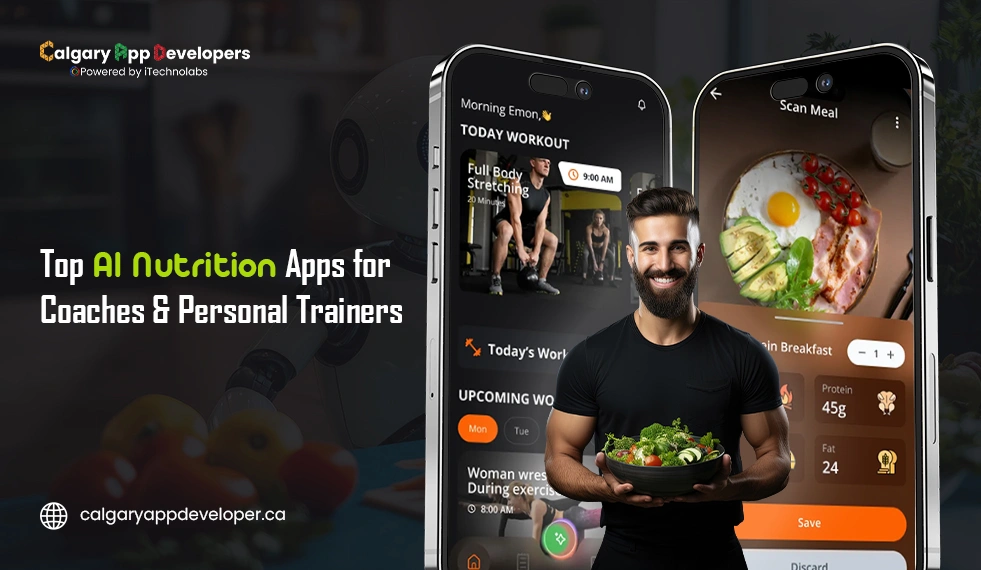
10 Best AI Nutrition Apps for Coaches & Personal Trainers
Nutrition coaching has moved far beyond static meal plans and generic calorie charts. Clients today expect precision, personalization, and real-time guidance that adapts to their lifestyle, goals, and progress. This shift has pushed coaches and personal trainers to seek smarter tools that can keep pace with evolving client needs without adding hours to their workloads.
That is where AI Nutrition Apps are making a clear impact. These platforms combine data, behavior tracking, and intelligent recommendations to deliver tailored nutrition strategies at scale. Instead of manually adjusting plans or relying on guesswork, coaches can now offer data-backed guidance that evolves with each client’s habits, preferences, and results.
For fitness professionals, this is not just about convenience. It is about delivering better outcomes, improving client retention, and building a more efficient coaching process. From automated meal planning to real-time feedback and progress insights, AI-powered tools are reshaping how nutrition coaching is delivered.
In this blog, we will explore the best AI Nutrition Apps designed specifically for coaches and personal trainers, along with how they work, what makes them valuable, and how to choose the right one for your practice.
- AI Nutrition Apps enable personalized, data-driven nutrition coaching at scale.
- They automate planning, tracking, and adjustments, improving efficiency and results.
- Coaches can manage more clients without compromising personalization.
- The future of nutrition coaching is increasingly driven by AI and predictive insights.
- AI Nutrition Apps help coaches deliver highly personalized nutrition strategies by analyzing client data such as habits, goals, and progress, allowing recommendations to evolve.
- These tools significantly reduce manual workload by automating tasks like meal planning, calorie tracking, and progress monitoring, enabling coaches to focus on strategy and client engagement.
- Real-time insights and data-driven analytics improve decision-making, helping coaches identify patterns, adjust plans quickly, and achieve more consistent client outcomes.
- A wide range of AI Nutrition Apps such as MacroFactor, Nutrium, and Lumen, offer specialized features, from metabolic tracking to client management, catering to different coaching needs.
- Choosing the right app depends on factors like personalization, usability, integrations, and scalability, ensuring alignment with coaching style and business goals.
- AI is shaping the future of nutrition coaching through predictive recommendations, deeper health integrations, and more advanced personalization, making it a core component of modern fitness practices.
What Are AI Nutrition Apps for Coaches and Personal Trainers
AI Nutrition Apps are intelligent software platforms designed to help coaches and personal trainers deliver personalized nutrition guidance with greater accuracy and efficiency. These apps use data-driven algorithms to analyze client information such as dietary habits, activity levels, health goals, and progress patterns, then generate tailored recommendations that evolve.
Unlike traditional nutrition tools that rely on static plans, AI-powered solutions continuously learn from user behavior. This allows coaches to move beyond one-size-fits-all meal plans and offer dynamic nutrition strategies that adapt to each client’s real-world lifestyle.
For coaches managing multiple clients, AI Nutrition Apps reduce manual effort while improving consistency and quality of guidance. They act as both an assistant and an analytics engine, helping professionals make smarter decisions without being overwhelmed by data.
Key Components of AI Nutrition Apps
- Personalized Meal Planning: AI Nutrition Apps create customized meal plans based on client preferences, dietary restrictions, and fitness goals. Plans are adjusted automatically as the client progresses or logs new data.
- Smart Calorie and Macro Tracking: These apps track calorie intake and macronutrients with high accuracy, often using image recognition or food databases to simplify logging and reduce human error.
- Behavioral Insights and Recommendations: AI analyzes eating patterns, adherence levels, and lifestyle habits to provide actionable suggestions that improve consistency and long-term results.
- Real-Time Progress Monitoring: Coaches can track client progress through dashboards that highlight trends in weight, body composition, and nutrition compliance, enabling timely adjustments.
- Automation for Coaches: Routine tasks such as plan updates, reminders, and feedback can be automated, freeing up time for coaches to focus on client relationships and strategy.
- Integration with Fitness Ecosystems: Many AI Nutrition Apps integrate with wearables and fitness platforms, enabling a more complete view of a client’s health and performance data.
AI Nutrition Apps are not just tools for convenience. They are becoming essential for delivering scalable, personalized, and results-driven coaching. By combining automation with intelligent insights, these apps help professionals maintain high-quality service while managing a growing client base.
How AI Is Transforming Nutrition Coaching
AI Nutrition Apps are shifting nutrition coaching from static planning to continuous, data-driven guidance. Coaches can now deliver highly personalized recommendations, automate routine tasks, and respond to client behavior in real time.
Key Shifts Backed by Data
- Rapid market growth signals adoption: The AI-driven personalized nutrition market is growing at over 27% annually and is expected to reach more than $10 billion by 2033, showing strong demand for intelligent nutrition tools.
- AI-powered apps dominate the space: AI Nutrition Apps already account for nearly 49% of the market share, highlighting their central role in modern nutrition coaching.
- Accuracy and automation are improving outcomes: AI systems can achieve over 99% accuracy in food recognition and nutrient detection, reducing manual effort and improving tracking reliability.
- Long-term growth reflects future potential: The market is projected to grow from about $1.5 billion in 2025 to over $17 billion by 2035, indicating a major shift toward AI-led nutrition ecosystems.
AI Nutrition Apps are enabling a more scalable and precise coaching model. Instead of reacting to client updates, coaches can anticipate needs, automate adjustments, and deliver consistent, high-quality guidance across a larger client base.
Best 10 AI Nutrition Apps for Coaches and Personal Trainers
Choosing the right AI Nutrition Apps can significantly improve how coaches deliver personalized guidance, track progress, and scale their services. The following tools stand out for their intelligent features, ease of use, and ability to support both client outcomes and coaching efficiency in real-world fitness environments.
| App Name | Launch Year | Founded By | USP |
| MacroFactor | 2021 | Greg Nuckols, Eric Trexler | Dynamic calorie and macro adjustments based on metabolism and real data tracking |
| Nutrium | 2015 | André Santos, Pedro Guimarães | End-to-end platform for nutrition professionals with client management and meal planning |
| Lumen | 2018 | Merav Mor, Michal Mor | Breath-based metabolism tracking with real-time nutrition recommendations |
| MyFitnessPal | 2005 | Mike Lee, Albert Lee | Massive food database with calorie tracking and integrations across fitness apps |
| EatLove | 2017 | Jean LaMantia (associated) | Personalized meal planning with AI-driven food recommendations and health condition support |
| Diet ID | 2016 | Dr. David Katz (associated) | Image-based dietary assessment using visual recognition instead of manual logging |
| Cronometer Pro | 2011 | Aaron Davidson | Highly accurate micronutrient tracking with professional-grade analytics |
| Metabolic Living | 2016 | Dr. Jade Teta (associated) | Metabolism-focused nutrition programs combining coaching with AI insights |
| Evolution Nutrition | 2013 | Adam Bornstein (associated) | Coaching software with automated meal planning and client tracking tools |
| Nutrigenomix | 2011 | Dr. Ahmed El-Sohemy | DNA-based nutrition recommendations using genetic testing insights |
1. MacroFactor

MacroFactor is a precision-focused nutrition app designed for coaches who rely on data rather than assumptions. What sets it apart is its ability to continuously adjust calorie and macronutrient targets based on real client behavior. Instead of depending on estimated metabolism or static formulas, the app analyzes actual food intake, body weight trends, and adherence patterns to refine recommendations over time. This creates a feedback loop where every logged input improves the accuracy of plans.
For coaches, this eliminates much of the manual effort involved in recalculating macros or troubleshooting plateaus. The app’s trend analysis also filters out daily weight fluctuations, giving a clearer picture of true progress. This is particularly valuable when working with clients who feel discouraged by inconsistent scale readings.
Key Features
- Dynamic calorie and macro adjustments based on real-time data
- Advanced trend analysis for accurate progress tracking
- Reliable food database with detailed nutritional insights
- Adherence-neutral approach that focuses on consistency over perfection
- Visual dashboards for long-term performance monitoring
Use Case
Best suited for coaches handling fat loss, muscle gain, or recomposition clients who require precise and evolving nutrition strategies backed by measurable data.
Also Check: How to Create a Fitness App: A Step-by-step Guide
2. Nutrium

Nutrium is a comprehensive nutrition management platform built specifically for professionals who need structure, scalability, and client engagement in one place. Unlike basic tracking apps, it functions as a complete ecosystem where coaches can design meal plans, communicate with clients, and monitor progress without switching between tools. This makes it highly efficient for managing a growing client base.
The platform allows deep customization of meal plans based on individual goals, dietary preferences, and health conditions. Coaches can also automate reminders, track compliance, and maintain consistent communication through integrated messaging features. This level of organization helps maintain accountability while improving the overall client experience.
Nutrium also supports branding, which is valuable for coaches looking to build a professional identity and offer a more personalized service experience.
Key Features
- Fully customizable meal planning system
- Centralized dashboard for managing multiple clients
- Automated reminders and built-in messaging tools
- Integration with fitness and health tracking apps
- Option to deliver services through a branded mobile app
Use Case
Ideal for nutrition professionals and personal trainers running structured coaching programs who need a scalable platform to manage clients efficiently while maintaining a high level of personalization.
3. Lumen

Lumen brings a unique scientific dimension to nutrition coaching by focusing on metabolism rather than just calorie tracking. It uses a handheld device that measures breath to determine whether the body is primarily burning fats or carbohydrates. This real-time metabolic insight allows coaches to make more informed decisions about a client’s nutrition plan daily.
Instead of following fixed meal plans, clients receive recommendations that align with their current metabolic state. This approach is particularly useful for improving metabolic flexibility, which plays a key role in weight management and overall health. Coaches can use this data to adjust carb intake, optimize meal timing, and guide clients through plateaus more effectively.
The app also tracks trends over time, helping both coaches and clients understand how lifestyle factors such as sleep, stress, and activity influence metabolism.
Key Features
- Breath-based metabolism tracking with instant feedback
- Daily insights into fuel usage patterns
- Personalized nutrition recommendations based on metabolic data
- Progress tracking focused on metabolic flexibility
- Integration with broader lifestyle and fitness data
Use Case
Best for coaches working on metabolic health, weight loss plateaus, or performance optimization, where understanding how the body uses energy is critical.
4. MyFitnessPal

MyFitnessPal is one of the most widely adopted nutrition apps globally, known for its simplicity and accessibility. While it may not be as advanced in AI-driven personalization as some newer platforms, it remains a powerful tool for building foundational nutrition habits. Its strength lies in its massive food database, which allows users to log meals quickly and accurately with minimal friction.
For coaches, this ease of use translates into better client compliance. When tracking feels simple, clients are more likely to stay consistent, which ultimately leads to better results. The app also integrates with a wide range of fitness trackers and wearable devices, allowing coaches to connect nutrition data with activity levels.
Although it offers basic insights rather than deep analytics, it serves as a reliable starting point for clients who are new to structured nutrition tracking.
Key Features
- Extensive global food database with millions of entries
- Simple and intuitive calorie and macro tracking
- Barcode scanning for quick food logging
- Integration with wearables and fitness platforms
- Basic progress tracking and reporting tools
Use Case
Ideal for coaches working with beginners or general fitness clients who need a straightforward, easy-to-adapt tracking system to build consistency before moving to more advanced tools.
5. EatLove

EatLove focuses on making personalized nutrition practical and easy to follow. It uses intelligent algorithms to generate meal plans based on individual preferences, dietary restrictions, and health goals. What makes it stand out is its emphasis on real-world usability. Instead of just providing nutritional targets, it delivers complete meal solutions that clients can actually follow in their daily lives.
The platform includes a large recipe library with detailed nutritional breakdowns, allowing coaches to offer variety without sacrificing structure. It also automatically generates grocery lists based on selected meal plans, reducing the friction between planning and execution. This is particularly useful for clients who struggle with consistency due to time constraints or a lack of planning.
EatLove also supports condition-specific nutrition, making it a strong option for clients with medical or dietary needs.
Key Features
- AI-driven personalized meal planning
- Extensive recipe database with nutritional insights
- Automated grocery list generation
- Customization based on dietary preferences and restrictions
- Support for health condition-specific nutrition plans
Use Case
Well-suited for coaches working with clients who need structured, practical meal plans that are easy to implement, especially those with dietary restrictions or lifestyle challenges that require a more guided approach.
Read Also: Fitness App Development Cost | Complete Guide
6. Diet ID

Diet ID takes a different approach to nutrition tracking by removing the need for manual food logging. Instead of asking users to input every meal, it uses image-based dietary assessment to estimate eating patterns. Clients select food images that best match their typical diet, and the system analyzes this data to generate insights about nutritional quality and habits. This makes the process faster, less intrusive, and easier to maintain over time.
For coaches, this approach is especially useful when working with clients who struggle with traditional tracking methods. It provides a high-level overview of dietary behavior without requiring constant input, allowing coaches to identify patterns and make targeted recommendations. The platform is grounded in research and is often used in both clinical and wellness settings.
Key Features
- Image-based dietary assessment instead of manual logging
- Quick evaluation of overall diet quality
- Behavior-focused insights for coaching decisions
- Scientifically backed methodology
- Minimal user effort required for tracking
Use Case
Ideal for coaches working with clients who find traditional food tracking overwhelming or inconsistent, and for those who want to focus on improving overall eating patterns rather than precise macro tracking.
7. Cronometer Pro

Cronometer Pro is known for its high level of accuracy and detailed nutrient tracking. Unlike many apps that focus primarily on calories and macros, Cronometer provides in-depth insights into micronutrients, including vitamins and minerals. This makes it a powerful tool for coaches who need a more clinical or data-intensive approach to nutrition.
The platform uses verified food data sources to ensure accuracy, which is critical when working with clients who have specific nutritional requirements. Coaches can analyze detailed reports, track deficiencies, and make precise adjustments to improve overall health outcomes. It also supports professional features such as client management and advanced reporting.
Key Features
- Highly accurate nutrient tracking, including micronutrients
- Verified food database for reliable data
- Detailed reports and analytics
- Custom nutrient targets and tracking
- Professional tools for client management
Use Case
Best suited for coaches, dietitians, and health professionals working with clients who require detailed nutritional analysis, such as those with specific deficiencies, medical conditions, or performance goals.
8. Metabolic Living

Metabolic Living focuses on improving metabolic health through structured nutrition programs supported by technology and coaching principles. Rather than offering just a tracking tool, it provides a guided system that helps clients understand how their metabolism responds to different foods and habits. This approach is particularly useful for addressing common issues such as weight loss resistance and energy imbalances.
For coaches, the platform offers frameworks and insights that can be applied to clients who need more than basic calorie tracking. It emphasizes education and behavior change, helping clients build sustainable habits rather than relying on short-term fixes. The combination of metabolic insights and structured programs makes it a valuable addition to a coaching toolkit.
Key Features
- Metabolism-focused nutrition programs
- Structured coaching frameworks
- Insights into energy balance and metabolic function
- Educational resources for clients
- Tools to support long-term habit change
Use Case
Ideal for coaches working with clients who struggle with slow metabolism, weight plateaus, or long-term health challenges that require a deeper understanding of metabolic processes.
9. Evolution Nutrition

Evolution Nutrition is a coaching-focused platform designed to simplify meal planning and client management. It allows coaches to create customized nutrition plans quickly while maintaining flexibility for different client needs. The platform is built with scalability in mind, enabling professionals to manage multiple clients without losing control over personalization.
One of its strengths is the balance between automation and customization. Coaches can generate meal plans efficiently while still tailoring them to individual preferences and goals. The platform also includes tools for tracking progress and maintaining client engagement, making it suitable for both online and in-person coaching models.
Key Features
- Fast and customizable meal plan creation
- Client management and progress tracking tools
- Flexible nutrition templates
- User-friendly interface for both coaches and clients
- Support for scalable coaching operations
Use Case
Best for personal trainers and online coaches who need a practical system to deliver personalized nutrition plans efficiently while managing a growing client base.
10. Nutrigenomix
Nutrigenomix brings genetic science into nutrition coaching by offering DNA-based dietary recommendations. It analyzes specific genetic markers to provide insights into how an individual’s body responds to nutrients, caffeine, carbohydrates, and more. This allows coaches to design highly personalized nutrition strategies based on biological data rather than general guidelines.
While genetic testing is not required for all clients, it can provide an added layer of precision for those seeking deeper insights. Coaches can use this information to refine nutrition plans, improve adherence, and address unique challenges that may not be visible through standard tracking methods.
Key Features
- DNA-based nutrition analysis
- Personalized recommendations based on genetic markers
- Insights into nutrient metabolism and sensitivities
- Reports that support tailored coaching strategies
- Backed by scientific research in nutrigenomics
Use Case
Ideal for coaches working with clients who want a highly personalized, science-driven approach to nutrition, especially those interested in optimizing performance, health, or long-term wellness through genetic insights.
How to Choose the Right AI Nutrition App
Selecting the right AI Nutrition App is not just about features. It is about finding a tool that aligns with your coaching style, client needs, and long-term business goals. With so many options available, the focus should be on practical usability, scalability, and the kind of results you want to deliver.
- Define Your Coaching Approach: Start by identifying how you deliver nutrition guidance. Some coaches rely on macro tracking and data analysis, while others focus on structured meal plans or behavior change. The right AI Nutrition App should support your methodology rather than force you to adapt to its system.
- Evaluate Level of Personalization: Not all apps offer the same depth of personalization. Look for platforms that go beyond basic calorie tracking and provide adaptive recommendations based on client progress, preferences, and lifestyle. The more dynamic the system, the better your ability to deliver tailored results.
- Check Client Experience: An app is only effective if your clients use it consistently. A clean interface, easy food logging, and simple navigation play a major role in adherence. If the app feels complicated, clients are less likely to stay engaged, which directly affects outcomes.
- Look for Automation and Efficiency: AI Nutrition Apps should reduce your workload, not add to it. Features like automated meal adjustments, reminders, and progress tracking can save time and allow you to focus more on strategy and client relationships.
- Integration with Other Tools: A good app should connect with fitness trackers, wearables, and health platforms. This gives you a more complete view of your client’s activity, recovery, and nutrition, helping you make better decisions.
- Scalability for Growing Client Base: If you plan to scale your coaching business, choose an app that can handle multiple clients without compromising personalization. Features like dashboards, bulk management, and automated workflows become essential as your client base grows.
- Data Accuracy and Insights: Reliable data is the foundation of effective coaching. Choose AI Nutrition Apps that provide accurate tracking, verified food databases, and meaningful insights rather than just raw numbers.
- Budget and Value: Finally, consider pricing in relation to value. The cheapest option is not always the best. Focus on what the app helps you achieve in terms of efficiency, client results, and business growth.
Choosing the right AI Nutrition App comes down to fit. The best tool is the one that integrates smoothly into your workflow, enhances your coaching process, and helps your clients stay consistent and achieve measurable results.
Key Benefits of Using AI Nutrition Apps
AI Nutrition Apps are changing how coaches and personal trainers deliver nutrition guidance by combining automation, data, and personalization into one system. The result is a more efficient workflow and better client outcomes without increasing manual effort.
- Personalized Nutrition at Scale: AI Nutrition Apps analyze individual data such as eating habits, activity levels, and progress trends to deliver tailored recommendations. Coaches can provide customized plans to each client without spending hours on manual adjustments.
- Time Efficiency for Coaches: Routine tasks like meal planning, calorie calculations, and progress tracking are automated. This allows coaches to focus more on strategy, client communication, and results rather than repetitive administrative work.
- Improved Client Accountability: With real-time tracking, reminders, and feedback, clients stay more engaged with their nutrition plans. Consistent logging and instant insights make it easier for clients to stay on track and follow recommendations.
- Data Driven Decision Making: Instead of relying on assumptions, coaches can use accurate data to understand what is working and what is not. AI Nutrition Apps highlight trends and patterns, making it easier to adjust plans based on real performance.
- Better Accuracy in Tracking: Advanced food databases, barcode scanning, and image recognition improve the accuracy of calorie and nutrient tracking. This reduces errors and provides a clearer picture of a client’s actual intake.
- Scalability Without Compromise: AI Nutrition Apps enable coaches to manage a larger number of clients without sacrificing personalization. Automation and centralized dashboards make it possible to deliver consistent quality at scale.
- Enhanced Client Experience: A smooth and interactive app experience improves client satisfaction. Features like easy logging, personalized insights, and progress visualization make the coaching journey more engaging and easier to follow.
- Continuous Adaptation and Improvement: AI systems learn from user behavior over time. This means nutrition recommendations evolve as clients progress, helping them overcome plateaus and achieve long-term results.
AI Nutrition Apps are not just tools for convenience. They are a core part of modern nutrition coaching, helping professionals deliver smarter, faster, and more effective guidance in a competitive fitness landscape.
Future of AI in Fitness and Nutrition
AI is set to play a defining role in how fitness and nutrition are delivered over the next decade. What started as basic tracking and automation is evolving into deeply personalized, predictive, and integrated health systems. For coaches and personal trainers, this shift will reshape both service delivery and client expectations.
- Hyper Personalization Through Advanced Data: AI will move beyond calories and macros to analyze genetics, biomarkers, sleep patterns, and lifestyle data. This will enable highly individualized nutrition strategies tailored to how each body responds, not just general guidelines.
- Predictive and Preventive Coaching: Future AI systems will anticipate issues before they arise. Instead of reacting to weight gain or plateaus, coaches will receive early signals and recommendations to prevent setbacks and maintain consistent progress.
- Deeper Integration with Health Ecosystems: AI Nutrition Apps will increasingly connect with wearables, medical records, and fitness platforms. This will create a unified view of health, allowing coaches to align nutrition with recovery, stress, and performance metrics.
- Voice and Conversational Coaching: AI-powered assistants will provide real-time guidance through voice and chat, making nutrition support more accessible and continuous without increasing coach workload.
- Expansion into Clinical and Wellness Use Cases: AI-driven nutrition will extend into healthcare, supporting chronic disease management, metabolic health, and preventive care with greater precision.
The future points toward a more intelligent, connected, and personalized coaching model where AI Nutrition Apps become essential tools rather than optional add-ons.
Final Words
AI Nutrition Apps are redefining how coaches and personal trainers approach nutrition. What once required hours of manual planning and constant follow-ups can now be managed with intelligent systems that deliver personalized, data-driven guidance at scale. This shift is not just about efficiency. It is about improving the quality, consistency, and impact of coaching.
From adaptive meal planning to real-time insights and predictive recommendations, these tools enable coaches to make better decisions and help clients achieve more reliable results. At the same time, they enhance the client experience by making nutrition easier to follow, track, and sustain.
Choosing the right AI Nutrition App depends on your coaching style, client base, and long-term goals. The right platform should support your workflow, strengthen client engagement, and help you scale without losing personalization.
As demand for intelligent nutrition solutions continues to grow, partnering with Calgary App Developer, an experienced AI development company for AI-powered nutrition apps, becomes essential. We specialize in building scalable, data-driven solutions tailored for fitness and health businesses, helping you turn innovative ideas into high-performing digital products.
AI will continue to shape the future of fitness and nutrition, and those who invest in the right technology and development expertise today will lead the next generation of coaching.
FAQs
- What are AI Nutrition Apps and how do they work?
AI Nutrition Apps are software platforms that use data, algorithms, and user behavior analysis to deliver personalized nutrition guidance. They track inputs like food intake, activity levels, and progress, then adjust recommendations automatically. This allows coaches to provide dynamic meal plans and insights without manually recalculating nutrition strategies for every client.
- Are AI Nutrition Apps suitable for professional coaches?
Yes, AI Nutrition Apps are specifically designed to support coaches and personal trainers by improving efficiency and scalability. They automate repetitive tasks such as meal planning and tracking while offering data-driven insights. This enables professionals to manage more clients, maintain personalization, and focus more on strategy and client relationships.
- Can AI Nutrition Apps replace human nutrition coaches?
AI Nutrition Apps cannot replace human coaches but rather enhance their capabilities. While AI handles data analysis, tracking, and automation, coaches provide context, motivation, and personalized guidance. The combination of human expertise and AI tools leads to better client outcomes compared to relying on either one alone.
- How accurate are AI Nutrition Apps in tracking nutrition?
Most AI Nutrition Apps offer high accuracy in tracking calories and nutrients, especially with advanced food databases and image recognition features. While no system is perfect, these apps significantly reduce manual errors and improve consistency. Accuracy also depends on how consistently and correctly users log their meals and habits.
- What features should coaches look for in AI Nutrition Apps?
Coaches should look for features like personalized meal planning, real-time tracking, automation, and client management tools. Integration with fitness devices and accurate data reporting are also important. The ideal app should align with the coach’s workflow, support scalability, and enhance the overall client experience without adding complexity.
- Are AI Nutrition Apps worth the investment for coaches?
AI Nutrition Apps are generally worth the investment as they improve efficiency, client outcomes, and scalability. By automating routine tasks and providing data-driven insights, they save time and enhance service quality. For coaches aiming to grow their business and deliver consistent results, these tools offer strong long-term value.


Pankaj Arora is a seasoned technology leader and the Founder of Calgary App Developer, with 10+ years of expertise in crafting high-performance digital solutions. His core competencies include full-stack app development, cloud-native architecture, API integration, and agile product delivery. Under his leadership, Calgary App Developers has empowered startups and enterprises alike with scalable mobile applications, secure web platforms, and AI-driven SaaS products.